Reading Time: 10 minutes
How Is Colon Cancer Diagnosed? Tests, Colonoscopy, Biopsy & What to Expect
Meta Title
How Is Colon Cancer Diagnosed? | Complete Patient Guide
Meta Description
Learn how colon cancer is diagnosed, including blood tests, stool tests, colonoscopy, biopsy, CT scan, MRI and PET scan. Understand the step-by-step diagnostic process and what to expect.
URL Slug
/blog/how-is-colon-cancer-diagnosed/
H1
How Is Colon Cancer Diagnosed?
Featured Snippet Answer
Colon cancer is diagnosed using a combination of medical history, physical examination, blood tests, stool tests, colonoscopy with biopsy, and imaging scans. If a patient has symptoms such as blood in the stool, persistent changes in bowel habits, unexplained anemia, abdominal pain, or weight loss, doctors usually recommend a colonoscopy because it is the most accurate test for detecting colon cancer. During the procedure, any suspicious growth can be biopsied, and the tissue is examined under a microscope to confirm whether cancer is present. Once cancer is confirmed, CT scans, MRI, or PET scans may be used to determine the stage of the disease and help plan the most appropriate treatment.
Why Patients Ask This Question
After experiencing symptoms such as rectal bleeding, constipation, abdominal pain, or receiving a positive stool screening test, one of the first questions patients ask is:
“How do doctors know if I have colon cancer?”
Many people worry about whether the diagnosis will involve painful tests or surgery. Others are unsure whether blood tests alone can detect colon cancer or if a colonoscopy is always necessary.
Understanding how colon cancer is diagnosed helps reduce anxiety and prepares patients for the next steps. It also emphasizes the importance of early evaluation, since timely diagnosis offers the best chance for successful treatment.
Fortunately, modern diagnostic techniques are highly accurate and allow doctors to identify not only whether cancer is present but also its exact location, extent, and stage.
The Short Answer
Colon cancer cannot usually be diagnosed by symptoms alone. Doctors use several investigations to confirm the diagnosis.
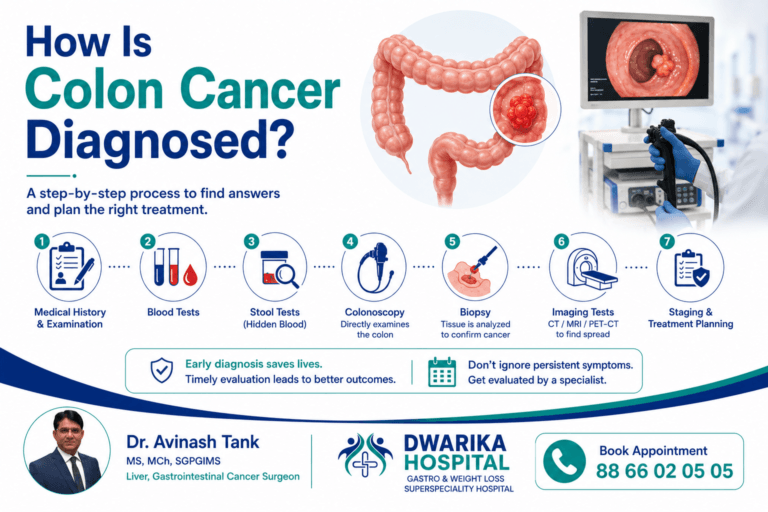
The diagnostic process usually includes:
- Medical history
- Physical examination
- Blood tests
- Stool tests
- Colonoscopy
- Biopsy
- CT scan
- MRI (in selected patients)
- PET-CT (when appropriate)
Among these tests, colonoscopy with biopsy is considered the gold standard because it allows doctors to directly examine the inside of the colon and obtain tissue for microscopic examination.
Understanding the Background
Why Is Early Diagnosis Important?
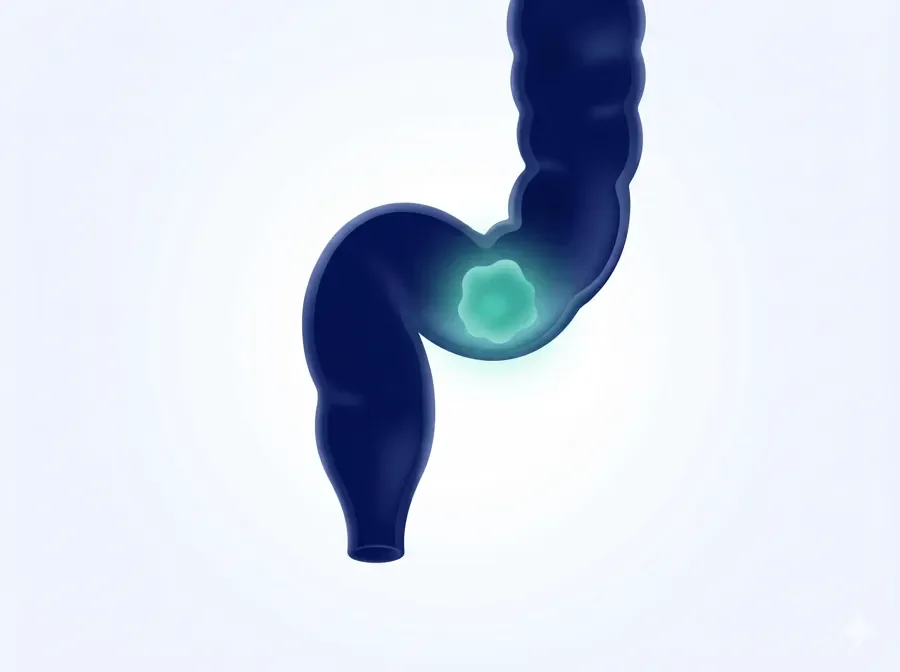
Colon cancer usually develops slowly from small growths called polyps. These polyps may remain harmless for years, but some gradually become cancerous.
Because of this slow progression, colon cancer is one of the few cancers that can often be prevented through screening. Detecting and removing precancerous polyps during colonoscopy may prevent cancer from developing altogether.
If cancer has already formed, diagnosing it while it is still confined to the colon offers the best chance of cure.
Who Should Be Investigated?
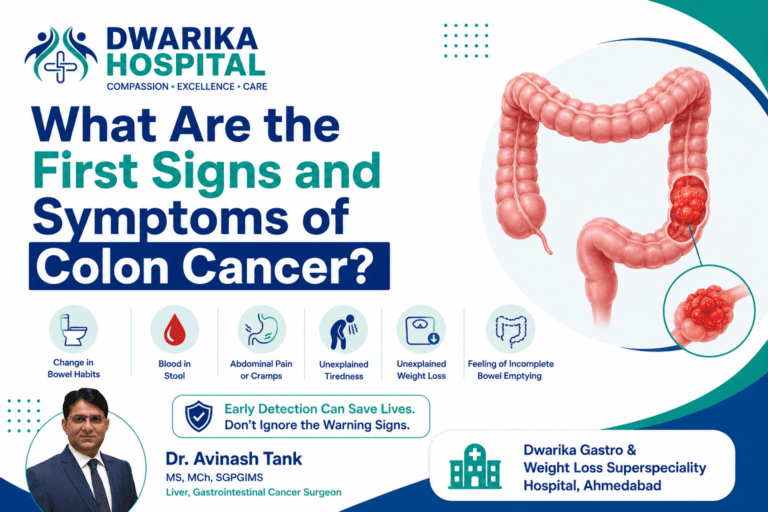
Doctors recommend further evaluation if a patient has:
- Blood in the stool
- Persistent constipation or diarrhea
- Change in bowel habits lasting more than 2–3 weeks
- Iron-deficiency anemia
- Unexplained weight loss
- Persistent abdominal pain
- Family history of colorectal cancer
- Positive FIT or stool occult blood test
- Abnormal findings on screening colonoscopy
Even in the absence of symptoms, routine screening is recommended for adults beginning at the appropriate age or earlier for people at increased risk.
Detailed Answer
Step 1: Medical History
The first step is a detailed discussion with your doctor.
Important questions include:
- What symptoms are you experiencing?
- When did they begin?
- Is there blood in the stool?
- Have you lost weight?
- Have your bowel habits changed?
- Do you have anemia?
- Has anyone in your family had colon cancer or colon polyps?
- Do you have inflammatory bowel disease?
This information helps determine how urgently further tests are needed.
Step 2: Physical Examination
Your doctor performs a general physical examination looking for signs such as:
- Weight loss
- Pallor caused by anemia
- Abdominal swelling
- Abdominal tenderness
- Palpable abdominal masses
A digital rectal examination (DRE) may also be performed to assess the lower rectum for bleeding, masses, or other abnormalities.
Although a physical examination alone cannot diagnose colon cancer, it provides important clues.
Step 3: Blood Tests
Blood tests cannot diagnose colon cancer by themselves, but they provide valuable information.
Common blood tests include:
Complete Blood Count (CBC)
May detect:
- Iron-deficiency anemia
- Low hemoglobin
- Chronic blood loss
Liver Function Tests
These help determine whether the liver is functioning normally and may provide clues if cancer has spread to the liver.
Kidney Function Tests
These are important before performing CT scans with contrast or planning treatment.
Tumor Marker (CEA)
Carcinoembryonic Antigen (CEA):
- Not useful as a screening test
- Cannot confirm colon cancer
- Helpful for monitoring treatment and detecting recurrence after surgery
Step 4: Stool Tests
Several stool-based tests are available.
Fecal Immunochemical Test (FIT)
Detects hidden blood in stool.
Advantages:
- Simple
- Non-invasive
- Useful for screening
Limitation:
A positive FIT does not diagnose cancer.
It means that a colonoscopy is required.
Stool DNA Test
Some screening programmes use stool DNA testing.
These tests detect abnormal DNA shed by colon cancers or advanced polyps.
Again, an abnormal result requires colonoscopy.
Step 5: Colonoscopy (Gold Standard)
Colonoscopy is the most important test for diagnosing colon cancer.
During the procedure:
- A flexible camera is passed through the rectum.
- The entire colon is examined.
- Polyps can be removed.
- Suspicious growths can be biopsied.
- Bleeding sites can be identified.
The examination usually takes 20–40 minutes and is commonly performed under sedation, making it comfortable for most patients.
Why Is Colonoscopy the Gold Standard?
Unlike blood tests or CT scans, colonoscopy allows doctors to:
- Directly see the tumour
- Determine its exact location
- Measure its size
- Remove polyps
- Obtain biopsy samples
- Detect multiple lesions during the same examination
No other investigation provides all of these advantages.
Step 6: Biopsy – Confirming the Diagnosis
Finding a suspicious growth during colonoscopy does not automatically mean cancer.
A biopsy is required.
During the procedure:
- Small tissue samples are taken.
- A pathologist examines the tissue under a microscope.
- The report determines:
- Whether cancer is present
- The type of cancer
- Tumour grade
- Other microscopic features that help guide treatment
A biopsy is considered the definitive test for confirming colon cancer.
Diagnostic Tests at a Glance

| Test | Purpose | Can It Confirm Colon Cancer? |
| Medical history | Identify symptoms and risk factors | No |
| Physical examination | Detect clinical signs | No |
| Blood tests | Detect anemia, assess health | No |
| FIT / Stool test | Detect hidden blood | No |
| Colonoscopy | Visualize colon and obtain biopsy | Yes (with biopsy) |
| Biopsy | Confirm cancer under microscope | Yes |
| CT Scan | Assess spread and stage | No |
| MRI | Evaluate selected cases | No |
| PET-CT | Assess selected advanced cases | No |
What Happens After the Diagnosis Is Confirmed?
Once the biopsy confirms colon cancer, additional tests are performed to determine:
- How deep the tumour has grown
- Whether lymph nodes are involved
- Whether cancer has spread to other organs such as the liver or lungs
This process is called staging and helps doctors decide the most appropriate treatment plan.
Step 7: CT Scan – Has the Cancer Spread?
Once a biopsy confirms colon cancer, the next step is determining whether the cancer has spread beyond the colon. This is called staging.
A contrast-enhanced CT (Computed Tomography) scan of the chest, abdomen, and pelvis is the most commonly used imaging test.
A CT scan helps doctors evaluate:
- Size of the primary tumour
- Nearby lymph nodes
- Spread to the liver
- Spread to the lungs
- Spread to other abdominal organs
- Whether surgery appears possible
A CT scan is not used to diagnose colon cancer itself, but it is essential for planning treatment.
Step 8: MRI – When Is It Needed?
MRI is not routinely required for every patient with colon cancer.
It may be recommended when:
- Liver lesions seen on CT require further evaluation.
- Additional information is needed before liver surgery.
- A pelvic tumour is suspected.
- There is uncertainty after CT imaging.
MRI provides excellent soft tissue detail and is particularly useful in assessing liver metastases.
Step 9: PET-CT Scan – Is It Always Necessary?
Many patients ask:
“Do I need a PET scan?”
The answer is not always.
PET-CT is usually reserved for selected situations, such as:
- Suspicion of metastatic disease
- Uncertain findings on CT or MRI
- Planning surgery for metastatic cancer
- Suspected recurrence after previous treatment
- When conventional imaging is inconclusive
PET-CT is not recommended as a routine investigation for every newly diagnosed patient.
Step 10: Molecular and Genetic Testing
Modern colon cancer treatment is becoming increasingly personalized.
After cancer is confirmed, the tumour may be tested for specific genetic or molecular markers that help guide treatment.
These may include:
- Mismatch Repair (MMR) status
- Microsatellite Instability (MSI)
- KRAS mutation
- NRAS mutation
- BRAF mutation
- HER2 amplification (selected patients)
- NTRK fusion (rare cases)
These tests are especially important in advanced disease because they help determine whether targeted therapy or immunotherapy may be beneficial.
How Is Colon Cancer Staged?
After completing all investigations, doctors assign a stage to the cancer.
| Stage | What It Means |
| Stage I | Cancer is confined to the inner layers of the colon. |
| Stage II | Cancer has grown through the bowel wall but has not spread to lymph nodes. |
| Stage III | Cancer has spread to nearby lymph nodes. |
| Stage IV | Cancer has spread to distant organs such as the liver, lungs, or peritoneum. |
Staging is essential because it determines:
- Whether surgery is appropriate
- Whether chemotherapy is recommended
- Whether targeted therapy or immunotherapy is needed
- Long-term prognosis
- Follow-up strategy
What Current Evidence Shows
International guidelines from the National Comprehensive Cancer Network (NCCN), American Society of Clinical Oncology (ASCO), European Society for Medical Oncology (ESMO), and World Health Organization (WHO) consistently recommend colonoscopy with biopsy as the gold standard for diagnosing colon cancer.
Current evidence shows that:
- Colonoscopy remains the most accurate investigation for detecting colon cancer and precancerous polyps.
- Biopsy is essential before beginning cancer treatment.
- CT scans are the preferred method for staging newly diagnosed colon cancer.
- MRI is valuable for selected patients, particularly when liver lesions require further evaluation.
- Molecular testing helps personalize treatment, especially in advanced disease.
- Early diagnosis through screening colonoscopy significantly reduces colon cancer deaths.
Perhaps the most important message is that screening can detect polyps before they become cancerous, making colon cancer one of the most preventable cancers.
Common Myths and Facts

Myth 1: A blood test can diagnose colon cancer.
Fact: Blood tests may detect anemia or other abnormalities, but they cannot confirm colon cancer. Colonoscopy with biopsy is required for diagnosis.
Myth 2: A CT scan alone can diagnose colon cancer.
Fact: CT scans help determine the stage of cancer but cannot replace a biopsy. Tissue confirmation is essential before treatment.
Myth 3: Colonoscopy is painful.
Fact: Most colonoscopies are performed under sedation. Patients usually experience little or no pain and remember very little of the procedure.
Myth 4: If my stool test is positive, I definitely have cancer.
Fact: A positive FIT or stool DNA test indicates that further evaluation is needed. Many positive tests are caused by non-cancerous conditions such as polyps or hemorrhoids.
Myth 5: A normal blood test means I don’t have colon cancer.
Fact: Early colon cancer may produce completely normal blood test results. Persistent symptoms still require appropriate evaluation.
Myth 6: If my symptoms improve, I don’t need a colonoscopy.
Fact: Colon cancer symptoms may come and go. Persistent or recurrent symptoms should still be investigated, even if they temporarily improve.
Dr. Avinash Tank’s Perspective
Many patients are understandably anxious when they hear that they need a colonoscopy. The procedure itself is often the greatest source of worry, but in reality, the investigation is usually well tolerated and provides invaluable information.
One of the most rewarding aspects of my practice is diagnosing precancerous polyps during screening colonoscopy. Removing these polyps can prevent cancer from developing, making colonoscopy both a diagnostic and preventive procedure.
If cancer is found, the next priority is careful staging. High-quality imaging, accurate pathology, and multidisciplinary discussion allow treatment to be tailored to each individual patient.
I encourage patients not to delay evaluation because of fear. In many cases, the investigation provides reassurance. When cancer is detected early, treatment is generally simpler and outcomes are significantly better.
Key Takeaways
- ✓ Colonoscopy with biopsy is the gold standard for diagnosing colon cancer.
- ✓ Blood tests alone cannot diagnose colon cancer.
- ✓ Stool tests are useful screening tools but require colonoscopy if abnormal.
- ✓ CT scans determine whether cancer has spread.
- ✓ MRI and PET-CT are used in selected situations.
- ✓ Molecular testing helps personalize treatment.
- ✓ Screening colonoscopy can prevent colon cancer by removing precancerous polyps.
- ✓ Early diagnosis greatly improves treatment options and survival.
- ✓ Persistent bowel symptoms should never be ignored.
Related Resources
Disease Hub
- Colon Cancer Knowledge Hub
Service Pages
- Colonoscopy
- Colon Cancer Surgery
- Laparoscopic Colon Surgery
- Robotic Colon Cancer Surgery
Related Patient Education Articles
- What Are the First Signs and Symptoms of Colon Cancer?
- Can Colon Cancer Be Cured by Surgery?
- Can Colon Cancer Be Detected in a Blood Test?
- Can Colon Cancer Spread to the Liver?
- Can Colon Cancer Come Back After Surgery?
Frequently Asked Questions
1. What is the best test for diagnosing colon cancer?
A colonoscopy with biopsy is the most accurate and reliable method for diagnosing colon cancer because it allows direct visualization of the tumour and microscopic confirmation through tissue sampling.
2. Can a blood test detect colon cancer?
Routine blood tests cannot diagnose colon cancer. They may detect anemia or other abnormalities that suggest further evaluation is needed, but they cannot confirm the disease.
3. Is a colonoscopy always necessary?
If colon cancer is suspected or a stool screening test is abnormal, colonoscopy is usually necessary because it allows both diagnosis and biopsy. It remains the gold standard investigation.
4. How long does it take to receive biopsy results?
Biopsy results are generally available within 3–7 days, although timing may vary depending on the laboratory and whether additional specialized testing is required.
5. Why is a CT scan done after the biopsy?
A CT scan helps determine whether the cancer has spread to lymph nodes or distant organs such as the liver or lungs. This information is essential for staging and treatment planning.
6. Does every patient need a PET scan?
No. PET-CT is usually reserved for selected patients with suspected metastatic disease, uncertain CT findings, or suspected recurrence after treatment.
7. Can colon cancer be diagnosed without a biopsy?
No. Although imaging tests may strongly suggest cancer, a biopsy is usually required to confirm the diagnosis before treatment begins.
8. Can colonoscopy prevent colon cancer?
Yes. Colonoscopy can detect and remove precancerous polyps before they become cancerous, making it one of the most effective cancer prevention tools available.
References
- National Comprehensive Cancer Network (NCCN). Clinical Practice Guidelines in Oncology: Colon Cancer.
- American Society of Clinical Oncology (ASCO). Guidelines for Colorectal Cancer Diagnosis and Management.
- European Society for Medical Oncology (ESMO). Clinical Practice Guidelines for Colon Cancer.
- World Health Organization (WHO). Colorectal Cancer Fact Sheet.
- National Cancer Institute (NCI). Colon Cancer Treatment (PDQ®).
- Siegel RL, Miller KD, et al. Cancer Statistics. CA: A Cancer Journal for Clinicians.
- Rex DK, et al. Quality Indicators for Colonoscopy. Gastrointestinal Endoscopy.
- Benson AB, et al. NCCN Guidelines Insights: Colon Cancer.
Image Suggestions
- Step-by-Step Diagnostic Pathway: Symptoms → Doctor Consultation → Blood Tests → Stool Test → Colonoscopy → Biopsy → CT Scan → Treatment Planning.
- Colonoscopy Explained: Illustration of the procedure with biopsy.
- Diagnostic Tests Comparison Table: Blood Test vs FIT vs Colonoscopy vs CT vs MRI vs PET-CT.
- How a Biopsy Confirms Colon Cancer: Microscopic examination infographic.
- Stages of Colon Cancer After Diagnosis: Stage I–IV visual chart.
- When Is Each Test Needed? Decision flowchart.
- Myth vs Fact: Common misconceptions about colon cancer diagnosis.
- Key Takeaways: One-page patient summary infographic.
FAQ Schema Suggestions
Implement FAQPage schema for:
- What is the best test for diagnosing colon cancer?
- Can a blood test detect colon cancer?
- Is a colonoscopy always necessary?
- How long does it take to receive biopsy results?
- Why is a CT scan done after diagnosis?
- Does every patient need a PET scan?
- Can colon cancer be diagnosed without a biopsy?
- Can colonoscopy prevent colon cancer?
Learn More About Colon Cancer
Understanding how colon cancer is diagnosed is the first step toward timely treatment. Visit our Colon Cancer Knowledge Hub to learn about symptoms, screening, staging, surgery, recovery, follow-up care, and the latest advances in treatment through evidence-based patient education.
Request a Specialist Evaluation
If you have persistent changes in bowel habits, blood in the stool, unexplained anemia, or a positive screening test, seek medical evaluation without delay. Early diagnosis using appropriate investigations—including colonoscopy and biopsy when indicated—offers the best opportunity for effective treatment and improved long-term outcomes.