

Spreading redness, fever or severe pain — possible active abscess
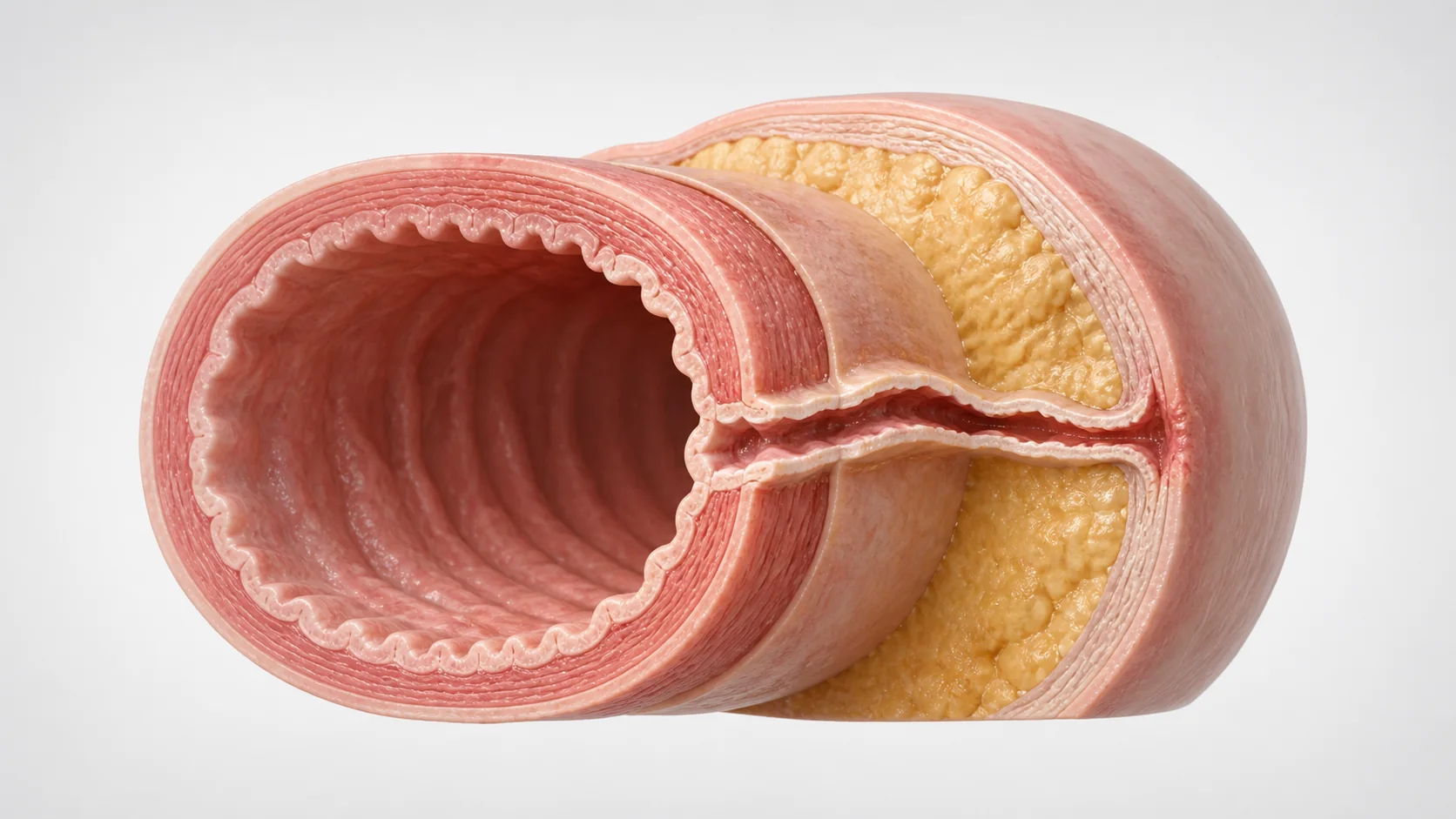
An anal fistula is an abnormal tunnel connecting the inside of the anal canal to the skin near the anus, usually following an abscess. It causes recurrent discharge, pain and swelling, and is cured with surgery using sphincter-preserving techniques wherever possible.
An abnormal tract between the anal canal and the skin
Often follows an anal abscess; more common in men
Recurrent discharge, a non-healing opening, or repeated abscesses
Spreading redness, fever or severe pain — possible active abscess
What is an anal fistula?
An anal fistula is a small tunnel that develops between the anal canal and the skin around the anus. It most often forms after an anal abscess (a collection of pus) fails to heal completely, leaving a track that repeatedly discharges.
Symptoms & causes
Typical symptoms are recurrent discharge of pus or blood, a persistent opening or lump near the anus, itching, and pain that eases when the fistula drains. Most fistulas follow an abscess; some are linked to conditions such as Crohn's disease.
Diagnosis
Diagnosis is clinical, supported where needed by an MRI to map the fistula track in relation to the sphincter muscles. Accurate mapping is essential to plan a cure while protecting continence.
Treatment options
Anal fistulas need surgery to heal. The approach depends on how the track relates to the sphincter — options range from fistulotomy for simple tracks to sphincter-preserving techniques (such as LIFT or laser) for complex ones, prioritising both cure and continence.
An anal fissure is a small tear in the lining of the anal canal that causes sha…
Piles (Haemorrhoids)Piles (haemorrhoids) are swollen blood vessels in and around the anal canal tha…
ColonoscopyColonoscopy is an endoscopic examination of the large intestine using a thin fl…
How we treat Fistula-in-Ano (Anal Fistula)
See every procedure Dr. Avinash Tank offers in Ahmedabad and how each one is performed.
View all services →Cashless insurance accepted at our network hospitals, with EMI options available. Every patient gets a written, transparent estimate before any procedure — no surprises.

Dr. Avinash Tank, MBBS · MS (General Surgery) · MCh (Surgical Gastroenterology, SGPGIMS)
SGPGIMS (India's premier GI centre) + advanced training in Japan & South Korea. Super-specialist gastrointestinal, bariatric & cancer surgeon treating Fistula-in-Ano (Anal Fistula) at Dwarika Hospital — Gastro, Bariatric & Laparoscopic Surgery Center.
Proof, not promises
 DWARIKA HOSPITALPatient Education

More on Fistula-in-Ano (Anal Fistula)
 Health TipsGujarat Bans Analogue Paneer, Cheese and Butter: What Consumers Need to Know About “Fake Paneer” and Its Health Risks
 LegalConsumer Protection Act & Healthcare in India
UncategorizedReal vs. Fake Paneer (Analogous Paneer): How to Identify and Health Risks
LegalConsumer Protection Act & Healthcare in India
UncategorizedReal vs. Fake Paneer (Analogous Paneer): How to Identify and Health Risks
Frequently asked questions
Fistulas rarely heal on their own because the track stays open and keeps discharging. Surgery is the reliable cure.
Modern sphincter-preserving techniques are chosen specifically to cure the fistula while protecting continence, especially for complex tracks.
A fistula is a persistent tunnel; until the track is treated, it will continue to fill and discharge, sometimes flaring into an abscess.
For complex or recurrent fistulas, an MRI maps the track precisely so surgery can be both curative and continence-preserving.
Super-specialist GI, bariatric & cancer surgeon. SGPGIMS (India's premier GI centre) + advanced training in Japan & South Korea. Read full profile →
Last reviewed: July 2026