

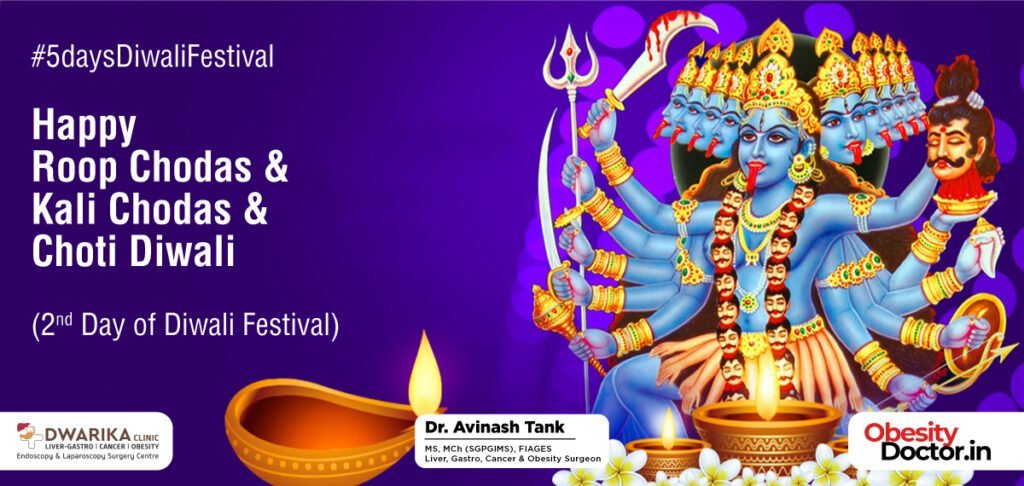
Roop Chaudas and Kali Chaudas: Second Day of Festival of Diwali 2023: History & Significance.
Roop Chaudas and Kali Chaudas: History & Significance. India, known for its cultural diversity, takes pride in the grandeur of its festivals. Among the vibrant tapestry of celebrations, “Roop Chodash” and “Kali Chodash” hold a special place, each with its own unique significance and it’s the second day of Diwali festival celebration.
In this article, we will delve into the historical roots, date of celebration, regional variations, and the elaborate rituals that make these festivals so enchanting.
Roop Chaudas (also known as Choti Diwali or Narak Chaturdashi) is a Hindu festival celebrated on the fourteenth day of the dark fortnight (Krishna Paksha) in the month of Kartika (October-November). It falls a day before Diwali, the festival of lights.
Kali Chaudas is another name for Roop Chaudas, and it is celebrated primarily in eastern India. Kali is a Hindu goddess who is often associated with destruction and death. However, she is also seen as a protector of the good and a destroyer of evil.
Ancient History of Roop Chaudas
Roop Chaudas is a day to celebrate beauty and to prepare for the Diwali celebrations the next day.
According to Hindu mythology, on Roop Chaudas, Lord Krishna and his wife Satyabhama killed the demon Narakasura. Narakasura was a powerful demon who had terrorized the world for many years. He had also kidnapped 16,000 women and kept them captive in his palace. After killing Narakasura, Krishna and Satyabhama rescued the women and freed them from captivity.
Ancient History of Kali Chaudas
Kali Chaudas is a day to worship the goddess Kali and to seek her protection from evil. On this day, people offer puja (worship) to Kali and sing hymns in her praise. They also light diyas and decorate their homes.
According to Hindu mythology, on Kali Chaudas, the goddess Kali killed the demon Raktabija. Raktabija was a powerful demon who could create clones of himself every time a drop of his blood fell on the ground. Kali defeated Raktabija by drinking all of his blood before it could fall to the ground.
How Roop Chaudas and Kali Chaudas are Celebrated
Roop Chaudas and Kali Chaudas are celebrated in different ways in different parts of India. However, some common celebrations include:
- Oil baths: On this day, people take oil baths to cleanse their bodies and minds. The oil is said to have medicinal properties and to make the skin glow.
- New clothes: People also wear new clothes on Roop Chaudas and Kali Chaudas. This symbolizes a new beginning and a new start.
- Diyas and decorations: People light diyas (oil lamps) and decorate their homes on Roop Chaudas and Kali Chaudas. This symbolizes the victory of light over darkness and good over evil.
- Puja: On Roop Chaudas and Kali Chaudas, people offer puja (worship) to the gods and goddesses. They sing hymns and offer prayers.
The Date of Celebration When do these festivals take place?
Roop Chodash:
The Roop Chodash festival aligns with the lunar calendar and usually falls in October or November. While it may not be a national holiday, it is an essential occasion celebrated by those who seek blessings for inner and outer beauty.
Kali Chodash:
Kali Chodash typically coincides with Roop Chodash and is celebrated around the same time. The date varies each year based on the lunar calendar. This festival is observed with great fervor in regions where Goddess Kali is revered.
Diverse Names and Regional Variations
What are these festivals called in different parts of India?
Roop Chodash: Roop Chodash, known as the “Festival of Beauty,” celebrates beauty and spirituality. While the essence of the festival remains the same, it may be referred to by different names in various regions.
Kali Chodash: Kali Chodash is dedicated to Goddess Kali and holds immense significance, particularly in West Bengal, where it is celebrated as “Kali Puja.” In other parts of the country, the festival may be known as “Kali Chodash” or as an integral part of the broader Diwali celebrations.
Celebrating Roop Chodash and Kali Chodash
How are these festivals celebrated?
Roop Chodash: Roop Chodash is marked by rituals that celebrate inner and outer beauty. Devotees offer prayers for personal and spiritual beauty. It is a time for self-reflection and self-love. The rituals may include special prayers, lighting oil lamps, and creating artistic rangoli designs.
Kali Chodash: Kali Chodash is a day of devotion and celebration of the fierce yet protective nature of Goddess Kali. Temples dedicated to Goddess Kali become the focal point of celebrations. Elaborate rituals, dance performances, and cultural programs are organized in honor of the deity.
Conclusion
Roop Chodash and Kali Chodash are symbolic of India’s rich spiritual heritage and cultural diversity. While the festivals may go by different names and customs, they are united by the shared values of devotion, beauty, and spirituality.
As we commemorate these festivals, let us embrace the diversity that makes India’s cultural landscape so enchanting. Share your experiences and traditions related to these festivals in the comments below, and let’s celebrate the essence of beauty and devotion together.

Super-specialist GI, bariatric & cancer surgeon. SGPGIMS (India's premier GI centre) + advanced training in Japan & South Korea. Read full profile →
Last reviewed: July 2026




Comments
Be the first to share your thoughts on this article.