

Digestive Cancer Knowledge Centre
Your complete guide to digestive-tract cancers — causes, symptoms, diagnosis, staging, treatment options and recovery. Trusted, evidence-based information by Dr. Avinash Tank.
Cancer Types
 Liver Cancer
Liver cancer is a malignant tumour arising in the liver, often on a background of cirrhosis or hepatitis. When caught early it can be treated with surgical resection or transplantation, offering the best chance of cure.
Learn more 02 Pancreatic Cancer
Pancreatic cancer is an aggressive tumour of the pancreas that often causes few early symptoms. Early-stage disease may be cured with major surgery such as the Whipple operation, combined with chemotherapy — making prompt, specialist assessment vital.
Learn more 03 Gallbladder Cancer
Gallbladder cancer is an uncommon but serious tumour, sometimes discovered unexpectedly after routine gallstone surgery. Early-stage disease is treated with an extended (radical) surgical removal, which offers the best chance of cure.
Learn more 04 Stomach (Gastric) Cancer
Stomach cancer arises in the lining of the stomach and often causes vague early symptoms such as indigestion and reduced appetite. Curative treatment is surgical removal (gastrectomy) with lymph-node clearance, frequently combined with chemotherapy.
Learn more 05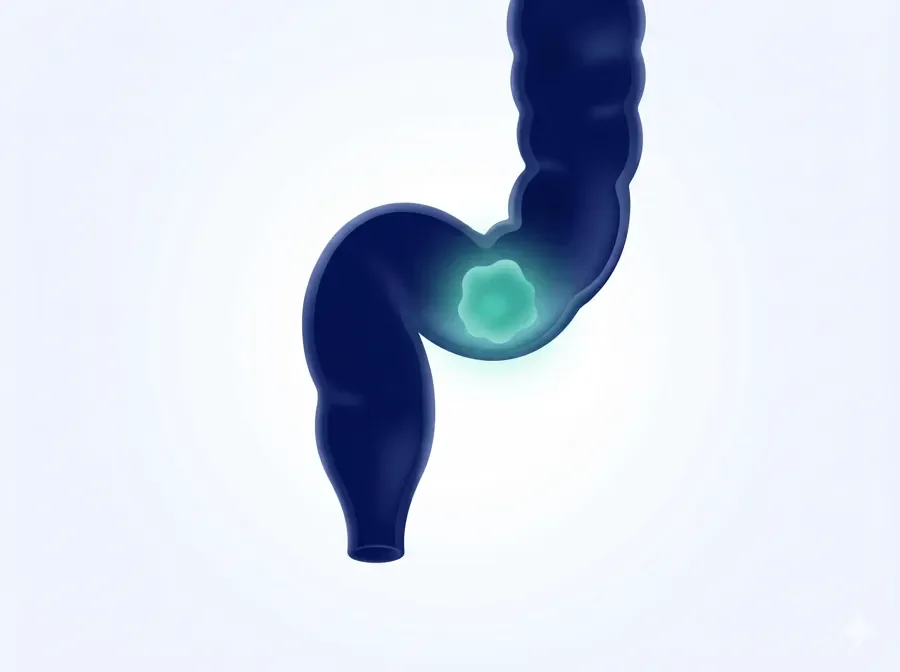 Colon Cancer
Colon cancer develops in the large intestine, most often from polyps that grow slowly over years and can be removed during colonoscopy before they turn cancerous. Caught early, surgery offers a high chance of cure — which is why screening saves lives.
Learn more 06 Rectal Cancer
Rectal cancer affects the last part of the large bowel. Thanks to modern sphincter-preserving surgery, often combined with chemo-radiotherapy, most patients can be cured while keeping normal bowel function and avoiding a permanent stoma.
Learn more 07 Neuro-Endocrine Tumour (NET)
Neuro-endocrine tumours (NETs) are usually slow-growing tumours arising from hormone-producing cells in the digestive tract and pancreas. Many are curable with specialised surgery, and even advanced NETs can often be controlled for years.
Learn more 08 GIST (Gastrointestinal Stromal Tumour)
GISTs are rare tumours that grow in the wall of the digestive tract, most often the stomach. They are treated by precise surgical removal — frequently by laparoscopic surgery — and, when needed, highly effective targeted (oral) therapy.
Learn moreWhat this centre covers
Digestive (gastrointestinal) cancers can affect any part of the tract — the food pipe, stomach, liver, pancreas, gallbladder, bile duct, small intestine, colon and rectum. Caught early and treated by an experienced super-specialist team, many of these cancers are curable. This centre explains each one in plain language and links you to the right care.
Common symptoms to watch for
Most GI cancers are silent in their early, most curable stage. By the time obvious symptoms appear, the disease can be advanced. Knowing the warning signs — and acting on them quickly with the right tests — is the single biggest factor in a good outcome.
Unexplained weight loss
Persistent abdominal pain
Blood in stool or black stools
Difficulty swallowing
Change in bowel habits
Jaundice (yellowing of skin/eyes)
Persistent bloating or fullness
Loss of appetite
Diagnosis & Our Approach
Endoscopy, EUS, ERCP, CT, MRI and biopsy — accurate diagnosis and staging before any treatment decision.
Surgeon, oncologist, radiologist and pathologist review every case together.
A tailored plan based on cancer type, stage and your overall health.
From diagnosis through surgery, recovery and long-term follow-up.
Treatment Options
Minimally invasive (laparoscopic) and open curative surgery, tailored to the tumour.
Systemic therapy before or after surgery to improve cure rates.
Drugs that target specific cancer features for better results.
Harnessing the body's immune system in selected cancers.
Precision radiotherapy where it adds benefit.
Relief from symptoms and dignity at every stage.
Treatments & surgery we offer
Dedicated pages for what each procedure involves, recovery and what to expect with Dr. Avinash Tank.
Liver CancerSurgical and multi-modality treatment of liver tumours — including resection of primary and secondary cancers in a dedicated GI cancer unit.
View treatment Pancreas CancerComplex pancreatic cancer surgery (including Whipple's) with expert peri-operative care for the best chance of cure.
View treatment Gallbladder CancerRadical surgery for gallbladder cancer, often found with gallstones — staged and treated by a GI cancer super-specialist.
View treatment Robotic Colorectal SurgeryRobotic surgery for colon and rectal cancer — superb access for total mesorectal excision in the narrow pelvis, with better nerve preservation (continence and sexual function) and sphincter-saving outcomes.
View treatment Robotic GI Cancer SurgeryRobot-assisted curative surgery for stomach, oesophagus, pancreas and liver cancers — precise dissection around major vessels with less blood loss, fewer complications and faster recovery than open surgery.
View treatment Stomach CancerCurative gastrectomy and lymph-node clearance for gastric cancer, with laparoscopic options in suitable cases.
View treatment
Dr. Avinash Tank, MBBS · MS (General Surgery) · MCh (Surgical Gastroenterology, SGPGIMS)
Super-specialist MCh surgical gastroenterologist with 25+ years of experience
Support & guidance
Explore the library
 Blog article · Aug 2026
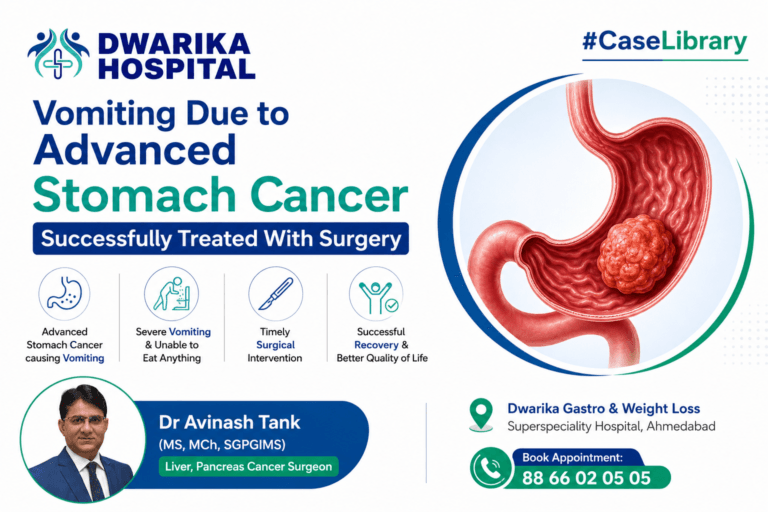
Vomiting due to Stomach Cancer Successfully Treated With Surgery
Vomiting due to Stomach Cancer Successfully Treated With Surgery Clinical Summary A 72-year-old gentleman with no major medical illnesses presented w… Read more
Blog article · Aug 2026
Vomiting due to Stomach Cancer Successfully Treated With Surgery
Vomiting due to Stomach Cancer Successfully Treated With Surgery Clinical Summary A 72-year-old gentleman with no major medical illnesses presented w… Read more
Visiting consultations near you
Dr. Avinash Tank holds visiting consultations across Gujarat & Rajasthan, with advanced surgery at the main centre, Dwarika Hospital, Ahmedabad.
No matching city — browse all locations.
Frequently asked questions
Warning signs include unexplained weight loss, persistent abdominal pain, blood in the stool, difficulty swallowing, jaundice and a lasting change in bowel habits. Any of these lasting more than 2 weeks deserves a check-up.
Yes — when detected early and treated by an experienced team, many GI cancers are curable, often with laparoscopic surgery.
Through endoscopy, imaging (CT/MRI), endoscopic ultrasound and biopsy, which together confirm the diagnosis and stage.
Not always — treatment is personalised. Surgery, chemotherapy, targeted therapy, immunotherapy and radiation are used alone or in combination based on your case.
Still unsure what this means for you?
A short, honest self-check can point you in the right direction — or book straight in for a clear opinion from Dr. Avinash Tank.