

Gallbladder Knowledge Centre
Everything about the gallbladder in one place — gallstones and gallbladder cancer explained, with honest guidance on when laparoscopic surgery is the right answer.

Understanding your Gallbladder
Gallstones are one of the most common digestive problems, and most are easily and safely treated by laparoscopic removal of the gallbladder. Less commonly, long-standing gallstones are linked to gallbladder cancer — this hub explains both, so you know what your symptoms mean and what to expect from treatment.
Gallstone pain is often dismissed as "just gas" for months. Recurrent attacks, jaundice or fever are signs that need prompt attention — and rarely, gallstones found late are linked to a more serious diagnosis.
Common symptoms to watch for
Right-upper-abdomen pain, often after fatty food
Jaundice (yellowing of skin/eyes)
Recurrent attacks of pain
Fever with abdominal pain
Persistent vomiting
Unexplained weight loss
Gallbladder conditions explained
Gallbladder cancer — what to know
Diagnosis & our approach
Ultrasound
The first, most accurate test to confirm gallstones and assess the gallbladder wall.
Targeted Blood Tests
Checking for infection, jaundice or pancreatitis linked to gallstones.
Further Imaging
CT/MRI when a polyp, mass or cancer needs to be ruled out.
Honest Advice
A clear opinion on whether surgery is needed now, or can be planned electively.
How we treat Gallbladder conditions
Featured treatment
Gallbladder Stone
Minimally invasive removal of the gallbladder (laparoscopic cholecystectomy) — the definitive, day-care treatment for painful gallstones.
View treatment details →Real gallbladder patient stories
 DWARIKA HOSPITALVerified Patient Story
Verified
DWARIKA HOSPITALVerified Patient Story
Verified  DWARIKA HOSPITALVerified Patient Story
Verified
DWARIKA HOSPITALVerified Patient Story
Verified  DWARIKA HOSPITALPatient Education
 DWARIKA HOSPITALPatient Education

A "difficult gallbladder" with dense scarring — removed safely by laparoscopic surgery without conversion to open.
Read the full case →"Dr. Tank explained everything clearly and never rushed. My gallbladder surgery was smooth and I was home the next day. Truly patient-first care."
Latest medical evidence on Gallbladder
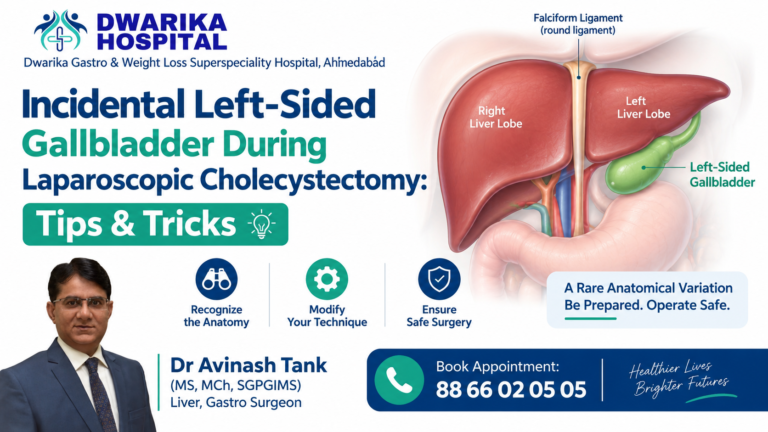 GallbladderIncidental Left-Sided Gallbladder During Laparoscopic Cholecystectomy: Tips & Tricks
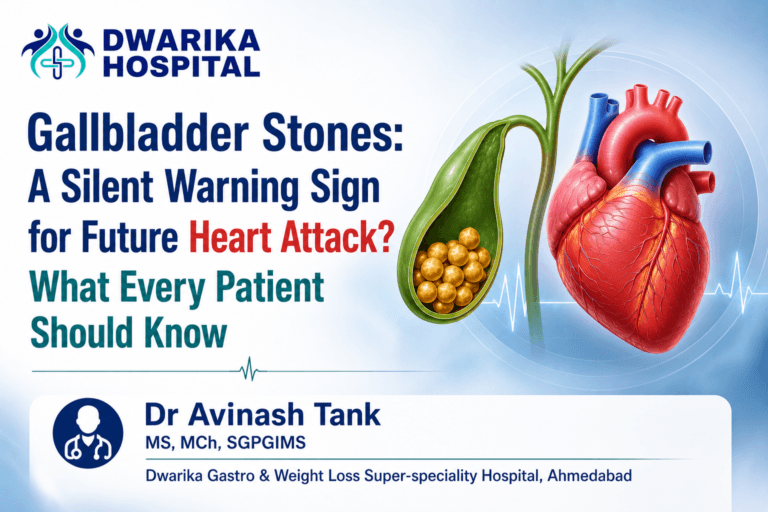 GallbladderGallbladder Stones: A Silent Warning Sign for Future Heart Attack?
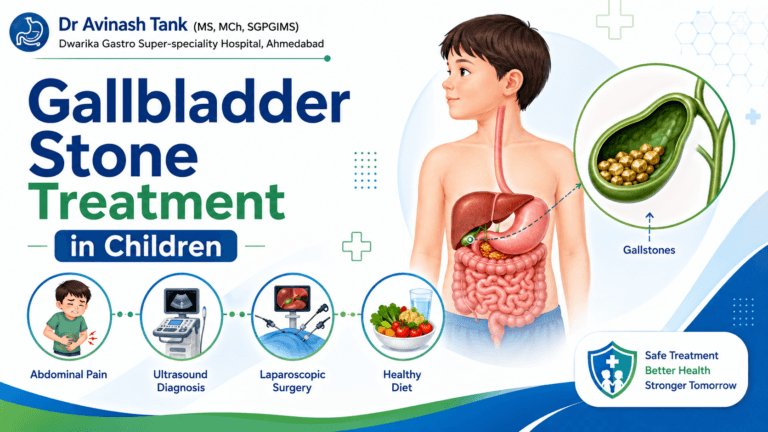 GallbladderGallbladder Stone Treatment in Children: Complete Guide
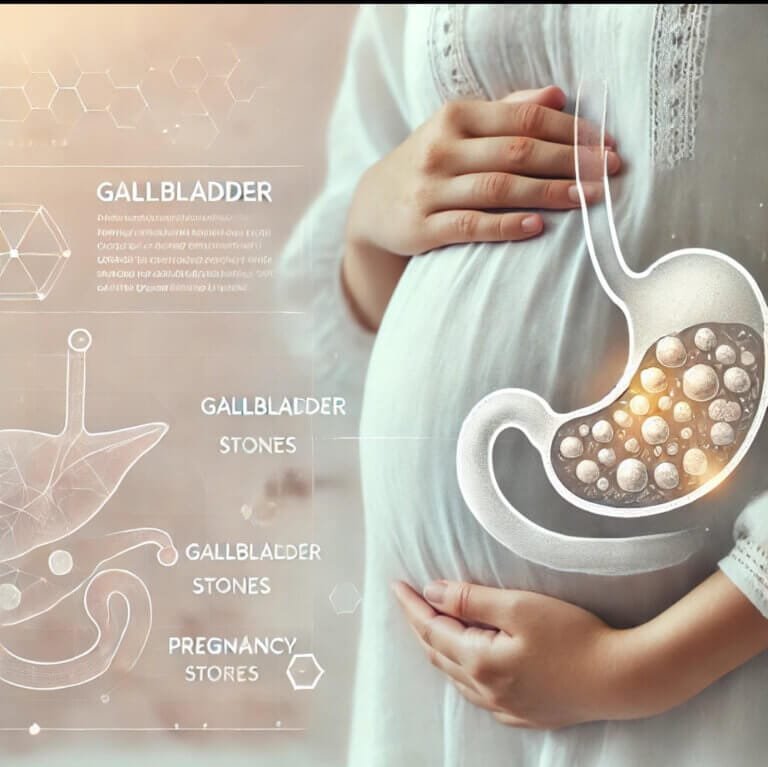 GallbladderGallbladder Stone treatment in Pregnancy
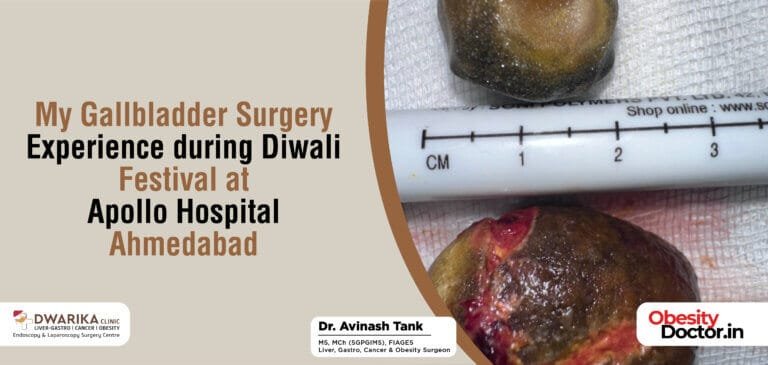 GallbladderMy Gallbladder Surgery Experience during Diwali Festival at Apollo Hospital Ahmedabad.
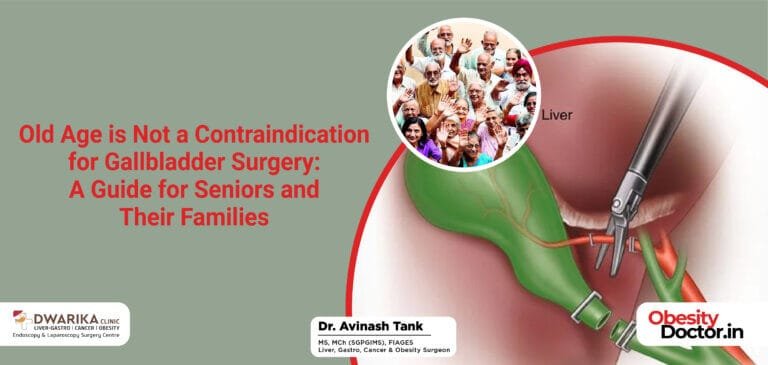 GallbladderOld Age is Not a Contraindication for Gallbladder Surgery: A Guide for Seniors and Their Families
Frequently asked questions
Medicines rarely dissolve stones reliably and they often recur. For symptomatic stones, laparoscopic gallbladder removal is the definitive, lasting solution.
Yes. The liver continues to make bile, and the vast majority of people digest food normally after gallbladder removal.
It is usually a safe day-care laparoscopic procedure with small cuts, minimal pain and a return to routine within about a week.
Untreated stones can cause infection, jaundice, pancreatitis, or — over years — raise gallbladder cancer risk, so symptomatic stones should be treated.
Long-standing gallstones and chronic inflammation raise the risk, which is one reason symptomatic gallstones and large gallbladder polyps are treated rather than ignored.
This is called incidental gallbladder cancer. It should be reviewed promptly by a GI cancer surgeon, as further (radical) surgery is often needed for a cure.
Most small polyps are harmless, but polyps larger than about 1 cm carry a higher risk and are usually removed by taking out the gallbladder.
Early-stage gallbladder cancer can be cured with radical surgery, underlining the importance of prompt specialist assessment.
A focused check-in on gallbladder symptoms — not a diagnosis. Answers are compared against Dr. Avinash Tank's published Gallbladder Stones guide.
About 2 minutes · Free Start assessment →
Dr. Avinash Tank, MBBS · MS (General Surgery) · MCh (Surgical Gastroenterology, SGPGIMS)
SGPGIMS (India's premier GI centre) + advanced training in Japan & South Korea. Super-specialist gastrointestinal, bariatric & cancer surgeon treating gallbladder conditions at Dwarika Hospital — Gastro, Bariatric & Laparoscopic Surgery Center.
Dr. Tank wrote about this in the press
All press coverage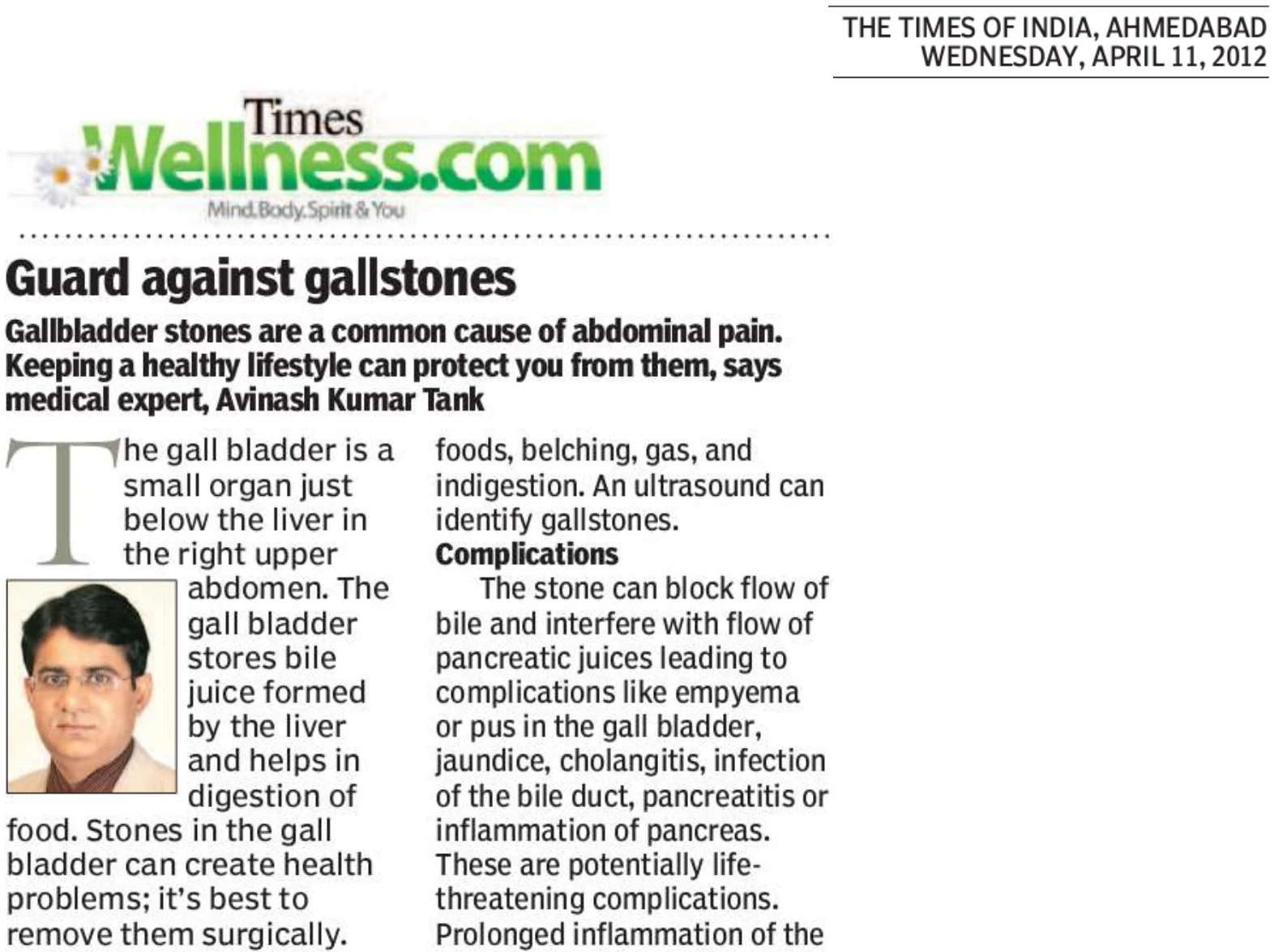
Other Knowledge Centres
Have questions about your gallbladder?
Book a confidential consultation with Dr. Avinash Tank — honest advice, same-week slots.