
Endoscopy Knowledge Centre
Diagnostic and therapeutic endoscopy explained — looking inside the digestive tract and treating problems without open surgery. Doctor-written by Dr. Avinash Tank.
Procedures
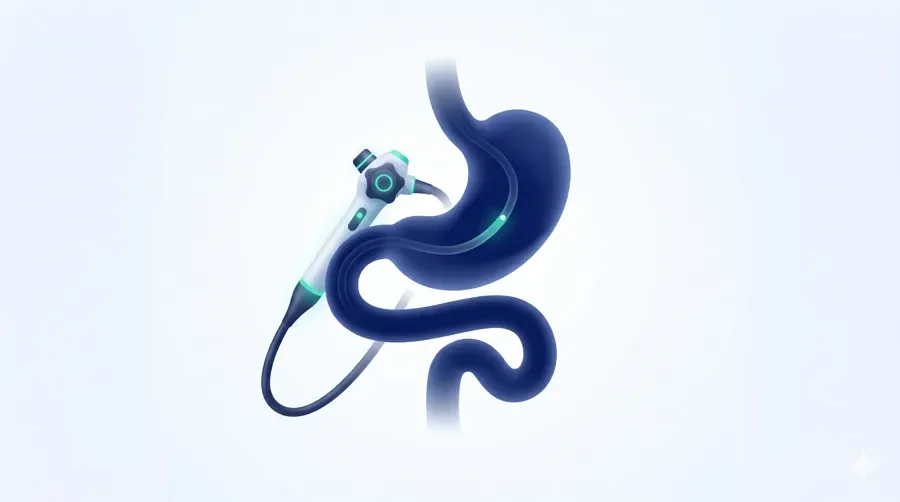 Colonoscopy
Colonoscopy is an endoscopic examination of the large intestine using a thin flexible camera. It diagnoses bleeding, polyps and cancer, and can remove polyps in the same sitting — preventing colon cancer before it starts.
Learn more 02 Gastroscopy (Upper GI Endoscopy)
Gastroscopy is a quick, sedated examination of the food pipe, stomach and duodenum with a thin flexible camera. It investigates acidity, ulcers, swallowing problems, bleeding and early cancer — and allows a biopsy to be taken in the same sitting.
Learn more 03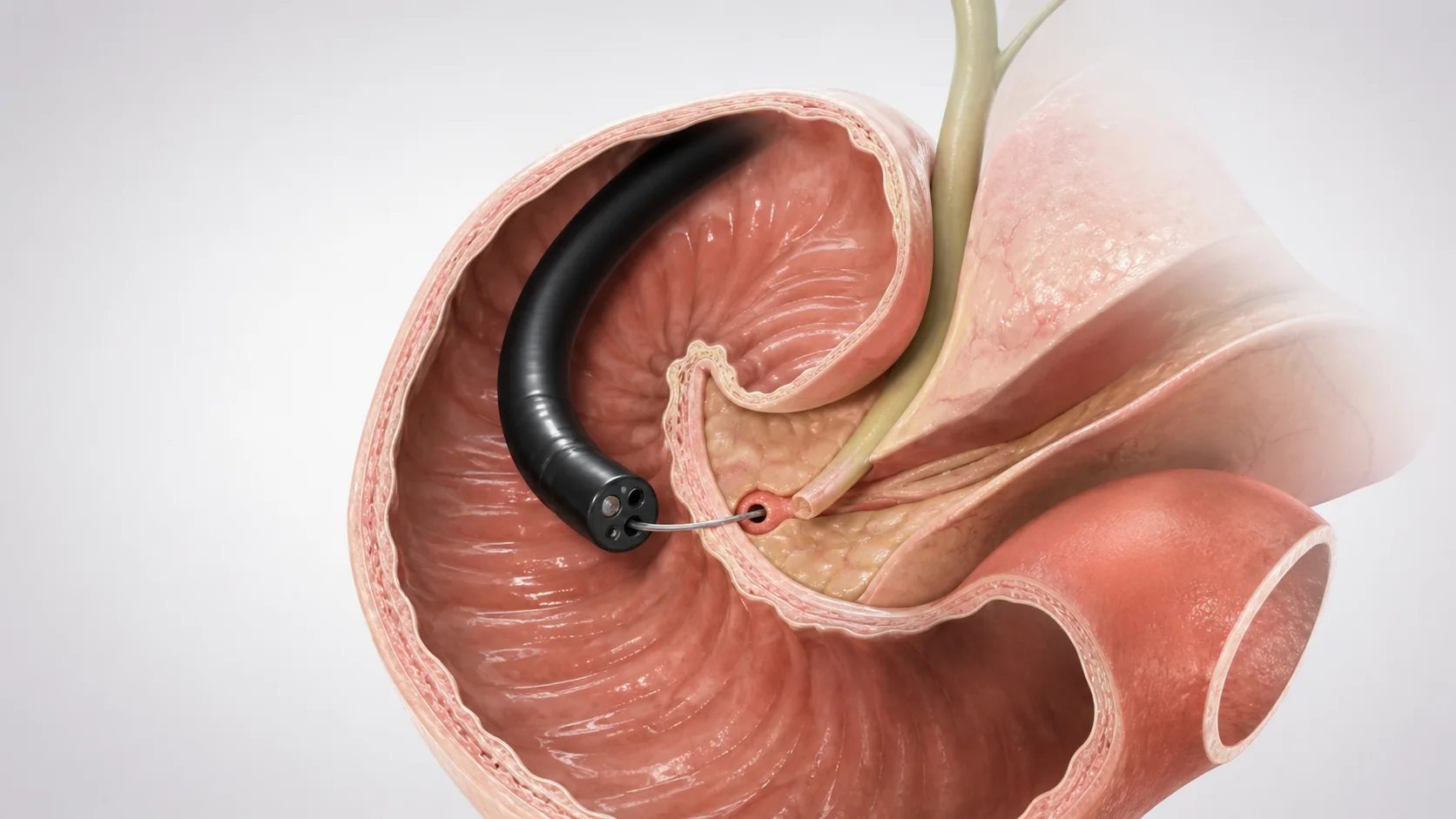 ERCP (Bile Duct Endoscopy)
ERCP is an advanced endoscopic procedure that treats problems of the bile and pancreatic ducts — clearing bile-duct stones, relieving blockages and placing stents — without the need for open surgery.
Learn more 04 EUS (Endoscopic Ultrasound)
EUS combines endoscopy with high-resolution ultrasound to image the pancreas, bile duct and gut wall in fine detail — and to take precise, minimally invasive needle biopsies of deep lesions that are hard to reach any other way.
Learn more 05 Stenting (Endoscopic)
Endoscopic stenting places a small expandable tube to relieve a narrowed or blocked food pipe, bile duct, stomach outlet or bowel — restoring passage, relieving jaundice or allowing eating, often without open surgery.
Learn more 06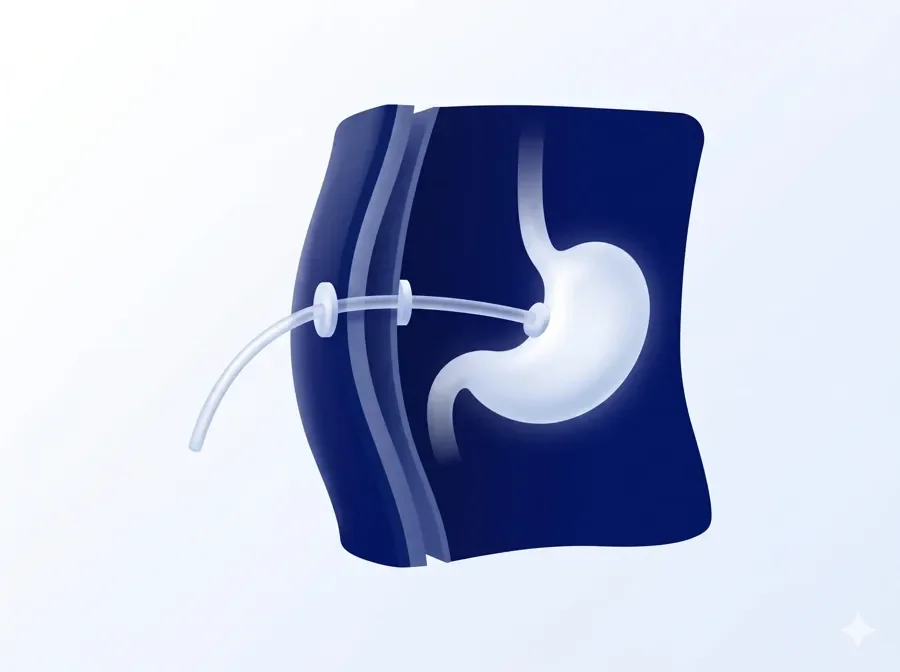 PEG (Feeding Tube Placement)
PEG (percutaneous endoscopic gastrostomy) is an endoscopic technique to place a feeding tube directly into the stomach, providing safe, comfortable nutrition for people who cannot eat normally for a prolonged period.
Learn more 07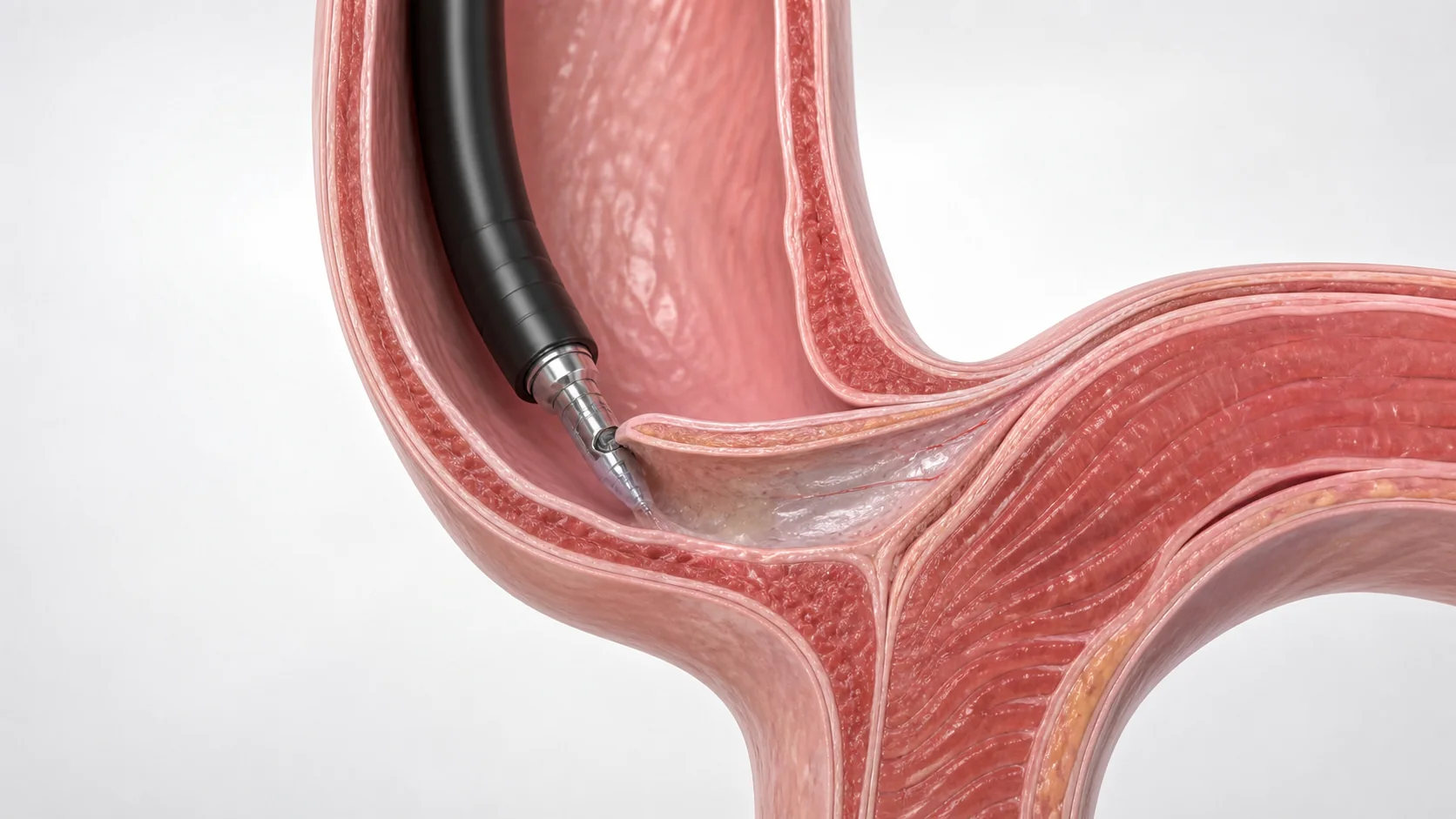 POEM (Per-Oral Endoscopic Myotomy)
POEM is an advanced, incision-less endoscopic procedure that treats achalasia and related swallowing disorders by releasing the tight muscle at the lower end of the food pipe — restoring normal swallowing with no external cuts.
Learn moreWhat this centre covers
Endoscopy uses a thin flexible camera to see — and treat — problems inside the digestive tract, usually as a day-care procedure with no cuts. From gastroscopy and colonoscopy to ERCP, EUS and stenting, this centre explains what each test involves and what to expect.
Common symptoms to watch for
Endoscopy finds problems early — ulcers, polyps and early cancers — and often treats them in the same sitting, avoiding bigger surgery. Knowing what to expect makes the experience easy and stress-free.
Long-standing acidity or reflux
Difficulty or pain swallowing
Blood in vomit or stool
Unexplained weight loss
Change in bowel habits
Jaundice needing bile-duct work
Screening for polyps / cancer
Persistent indigestion
Diagnosis & Our Approach
Simple preparation and clear instructions before your test.
Light sedation so the procedure is painless and easy.
Many problems are diagnosed and treated in the same sitting.
Most patients go home a few hours later.
Treatment Options
Gastroscopy & colonoscopy to find the cause.
Polyp removal, dilation and bleeding control.
Clearing bile-duct stones and relieving blockages.
Endoscopic ultrasound for precise diagnosis.
Treatments & surgery we offer
Dedicated pages for what each procedure involves, recovery and what to expect with Dr. Avinash Tank.
GastroscopyA thin camera examines the food pipe, stomach and duodenum to find the cause of acidity, pain, bleeding or difficulty swallowing — and to take biopsies.
View treatment ColonoscopyA camera examines the entire large intestine to investigate bleeding, change in bowel habit or pain, screen for cancer and remove polyps in the same sitting.
View treatment ERCPAn endoscopic procedure that clears bile-duct stones, relieves blocked bile ducts and places stents — avoiding open surgery for many biliary problems.
View treatment EUS (Endoscopic Ultrasound)Combines endoscopy with ultrasound to image the pancreas, bile duct and gut wall in fine detail and to take precise needle biopsies.
View treatment StentingA self-expanding stent relieves a blocked food pipe, stomach outlet, bile duct or bowel — restoring passage and comfort, often without surgery.
View treatment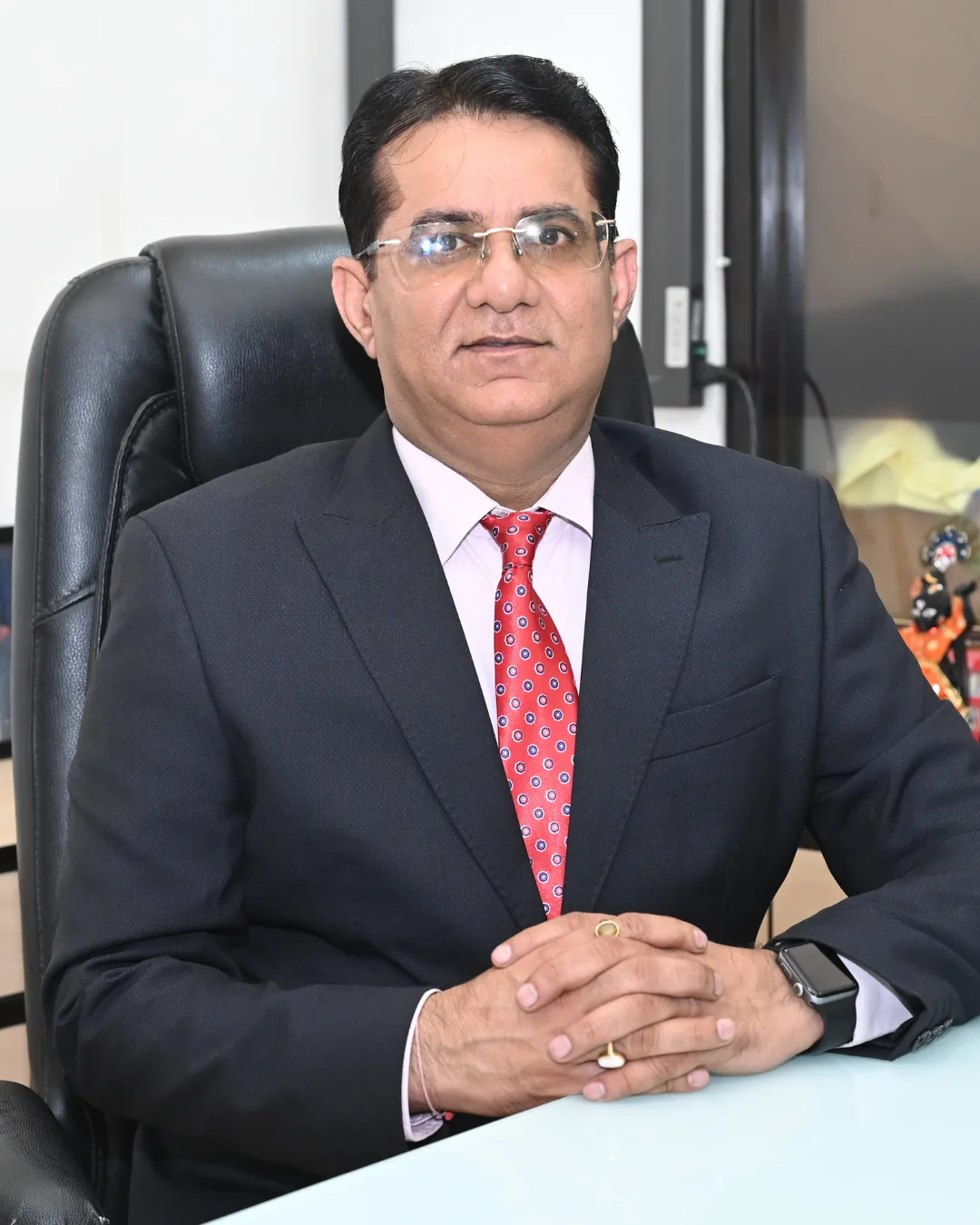
Dr. Avinash Tank, MBBS · MS (General Surgery) · MCh (Surgical Gastroenterology, SGPGIMS)
Performed by an MCh surgical gastroenterologist
Support & guidance
Explore the library
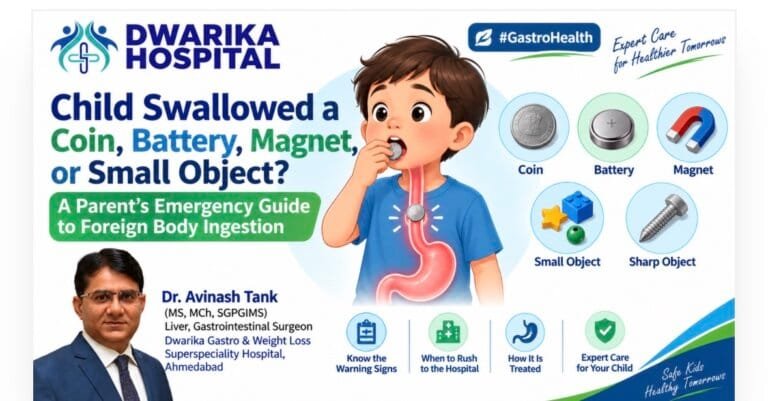 Blog article · Sep 2026
Child Swallowed a Coin, Battery, Magnet, or Small Object? A Parent’s Emergency Guide to Foreign Body Ingestion
Child Swallowed a Coin, Battery, Magnet, or Small Object? A Parent’s Emergency Guide to Foreign Body Ingestion. Child Swallowed a Coin, Battery, Magn… Read more
Blog article · Sep 2026
Child Swallowed a Coin, Battery, Magnet, or Small Object? A Parent’s Emergency Guide to Foreign Body Ingestion
Child Swallowed a Coin, Battery, Magnet, or Small Object? A Parent’s Emergency Guide to Foreign Body Ingestion. Child Swallowed a Coin, Battery, Magn… Read more
Visiting consultations near you
Dr. Avinash Tank holds visiting consultations across Gujarat & Rajasthan, with advanced surgery at the main centre, Dwarika Hospital, Ahmedabad.
No matching city — browse all locations.
Frequently asked questions
No. It is done under light sedation and most patients feel little or nothing, going home the same day.
Most diagnostic endoscopies take 15–30 minutes; therapeutic procedures a little longer.
Yes — usually 6 hours for an upper endoscopy. You will get clear instructions beforehand.
Yes — polyps, bleeding, narrowings and bile-duct stones can often be treated during the same procedure.
Still unsure what this means for you?
A short, honest self-check can point you in the right direction — or book straight in for a clear opinion from Dr. Avinash Tank.