

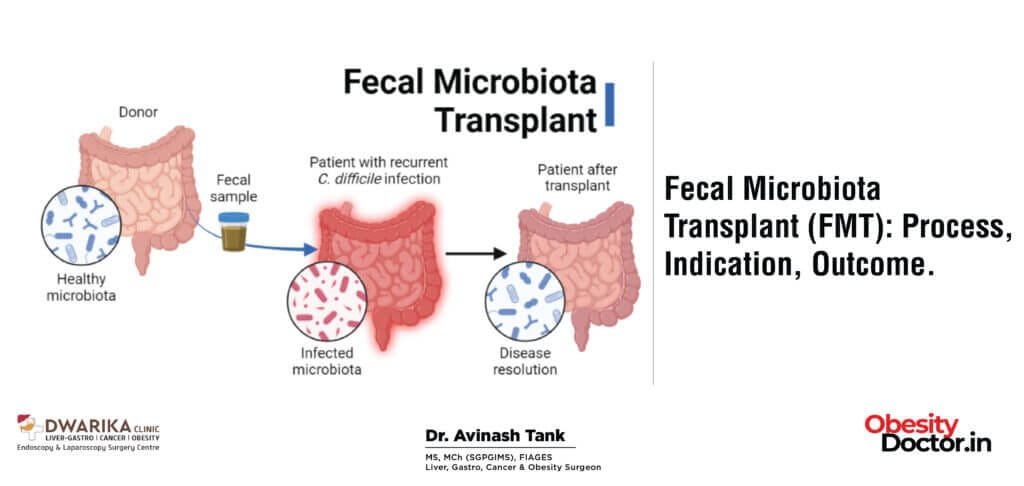
Fecal Microbiota Transplant (FMT): Process, Indication, Outcome. The human gut is a complex ecosystem teeming with trillions of microorganisms, mainly bacteria. This gut microbiome plays a crucial role in digestion, immune function, and overall health. When this delicate balance gets disrupted by illness or medication use, it can lead to various health problems.
This is where Fecal Microbiota Transplant (FMT) emerges as a potential therapeutic approach.
What is Fecal Microbiota Transplant (FMT)?
FMT is a medical procedure that involves transplanting healthy, donor-derived stool into the recipient’s intestines. The goal is to repopulate the recipient’s gut with a diverse and beneficial microbial community, restoring the balance and potentially treating certain gut-related conditions.
The FMT Process
The FMT procedure typically involves several steps:
- Donor Screening: A rigorous screening process ensures the donor is healthy and free of potential infections.
- Stool Collection: The donor provides a stool sample in a controlled setting.
- Preparation: The stool sample undergoes a meticulous processing to remove bacteria and other components that could be harmful.
- Delivery: The processed stool can be delivered through various methods like colonoscopy, enema, or a nasogastric tube.
Who Needs Fecal Transplant?
FMT is currently used to treat recurrent Clostridioides difficile (C. Diff) infection, a severe antibiotic-resistant bacterial infection causing diarrhea and inflammation in the colon.
Research is ongoing to explore the potential benefits of FMT in treating other conditions like:
- Inflammatory bowel disease (IBD)
- Irritable bowel syndrome (IBS)
- Autoimmune diseases
Who Should Not Undergo FMT?
While generally safe, FMT is not suitable for everyone. Some contraindications include:
- Severe underlying medical conditions
- Active inflammatory bowel disease (IBD) flare-up
- Recent history of certain cancers
- Weakened immune system
It’s crucial to discuss your medical history and any concerns with your doctor to determine if FMT is a safe and appropriate option for you.
Potential Complications and Outcomes
FMT is generally well-tolerated, but there is a small risk of side effects such as bloating, cramping, and temporary nausea. More serious complications like infections can occur, although rare.
The long-term success rate of FMT varies depending on the underlying condition. Studies show that FMT can be highly effective in treating recurrent C. Diff infections, with cure rates exceeding 80%. However, further research is needed to determine the long-term efficacy of FMT for other conditions.
Conclusion
FMT represents a promising therapeutic approach for restoring gut health and treating certain gut-related conditions. With ongoing research and development, FMT may play a more significant role in the future of gut health management. However, it is crucial to consult with a healthcare professional to determine the suitability and potential risks and benefits of FMT for your specific situation.
[elementor-template id=”8944″]

Super-specialist GI, bariatric & cancer surgeon. SGPGIMS (India's premier GI centre) + advanced training in Japan & South Korea. Read full profile →
Last reviewed: July 2026




Comments
Be the first to share your thoughts on this article.