

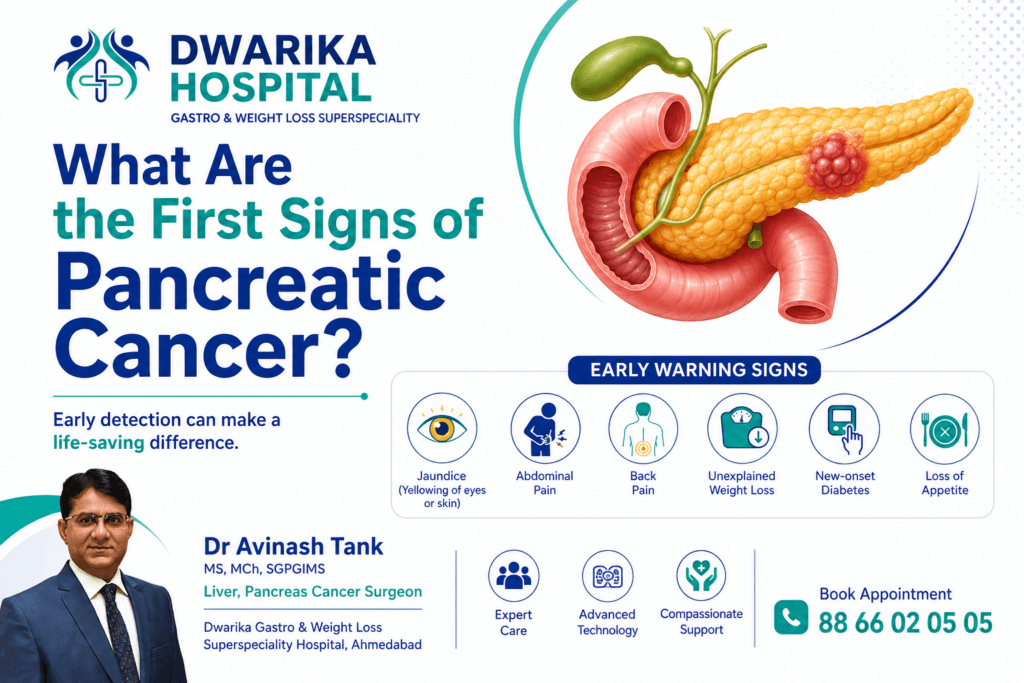
What Are the First Signs of Pancreatic Cancer?
FEATURED SNIPPET ANSWER
The first signs of pancreatic cancer are often subtle and easily mistaken for common digestive problems. Early symptoms may include yellowing of the skin or eyes (jaundice), persistent upper abdominal pain that may spread to the back, unexplained weight loss, loss of appetite, dark urine, pale stools, itching, and newly diagnosed diabetes in older adults. Some people have no symptoms until the disease has progressed.
Because these symptoms can also occur with less serious conditions such as gallstones, gastritis, or hepatitis, they should not be ignored—especially if they persist or occur together. Although these signs do not always indicate pancreatic cancer, prompt medical evaluation can help identify the cause and, if cancer is present, increase the possibility of curative treatment through early diagnosis.
Why Patients Ask This Question
Pancreatic cancer is often called a “silent disease” because it may not cause obvious symptoms in its early stages. By the time symptoms become severe, the cancer may already have spread beyond the pancreas. This understandably makes many people worry:
- Am I missing the early warning signs?
- Could my indigestion or back pain be something serious?
- Would recognizing symptoms earlier improve my chances of treatment?
- How can I distinguish common digestive complaints from symptoms that require medical attention?
These concerns are especially common among people with a family history of pancreatic cancer, those with chronic pancreatitis, smokers, individuals with obesity, or people who develop diabetes later in life without an obvious reason.
The good news is that although pancreatic cancer is difficult to detect early, being aware of its warning signs can lead to earlier medical evaluation. Not every person with these symptoms has pancreatic cancer, but persistent or unexplained symptoms deserve proper investigation rather than being ignored or repeatedly treated as simple acidity or indigestion.
Understanding the earliest symptoms also helps family members recognize when a loved one should seek specialist advice instead of waiting for symptoms to worsen.
The Short Answer
The earliest signs of pancreatic cancer are often vague, but they should never be ignored if they persist.
Common early warning signs include:
- Yellowing of the skin and eyes (jaundice)
- Persistent upper abdominal pain
- Pain that radiates to the back
- Unexplained weight loss
- Poor appetite
- Dark-coloured urine
- Pale or greasy stools
- General tiredness
- Newly diagnosed diabetes, especially after the age of 50
- Digestive problems that do not improve
Many of these symptoms can also occur with benign conditions such as gallstones, stomach ulcers, or liver disease. However, when several symptoms occur together or continue for more than a few weeks, medical assessment is important to identify the underlying cause.
Understanding the Background
What Is Pancreatic Cancer?
The pancreas is a gland located deep within the upper abdomen, behind the stomach. It performs two essential functions:
- Digestive function: It produces enzymes that help digest fats, proteins, and carbohydrates.
- Hormonal function: It produces hormones such as insulin and glucagon that regulate blood sugar levels.
Approximately 90–95% of pancreatic cancers are pancreatic ductal adenocarcinomas, which arise from the cells lining the pancreatic ducts.
Unlike many other cancers, pancreatic cancer often grows quietly. The pancreas has enough reserve function that a small tumour usually does not interfere with digestion or blood sugar regulation. In addition, because the organ lies deep inside the abdomen, small tumours cannot be felt during a routine physical examination.
Symptoms usually develop only when the tumour:
- Blocks the bile duct, causing jaundice
- Compresses nearby nerves, leading to pain
- Interferes with digestion
- Affects insulin production
- Invades nearby organs or blood vessels
This explains why many patients have few or no symptoms in the earliest stages.
However, recognising subtle warning signs and seeking timely evaluation may allow diagnosis while the tumour is still localised and potentially treatable with surgery.
Why Early Detection Matters
Early detection is one of the most important factors influencing treatment options for pancreatic cancer.
When the tumour is still confined to the pancreas:
- Surgery may be possible.
- Cure becomes a realistic goal in selected patients.
- Chemotherapy works more effectively as part of planned treatment.
- Long-term survival improves significantly.
Unfortunately, once pancreatic cancer spreads to distant organs such as the liver or lungs, surgery is usually no longer possible, and treatment focuses on controlling the disease rather than curing it.
For this reason, persistent symptoms should never be dismissed simply because they seem mild or resemble common digestive problems.
The 10 Early Signs of Pancreatic Cancer You Should Never Ignore
The symptoms of pancreatic cancer vary depending on where the tumour develops within the pancreas and whether it has begun to block nearby structures such as the bile duct or affect digestion.
Some patients notice only one symptom, while others develop several symptoms gradually over weeks or months. The symptoms are often vague, making them easy to mistake for acidity, gastritis, gallstones, or age-related digestive problems.
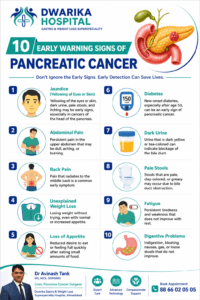
Below are the most important early warning signs.
⸻
1. Yellowing of the Eyes and Skin (Jaundice)
Jaundice is often the earliest and most noticeable symptom of pancreatic cancer, particularly when the tumour is located in the head of the pancreas.
As the tumour enlarges, it may compress the common bile duct, preventing bile from draining normally into the intestine. Instead, bile pigments accumulate in the bloodstream, causing:
- Yellow eyes
- Yellow skin
- Dark urine
- Pale stools
- Generalized itching
Many patients notice yellow eyes before they experience pain.
Why this symptom matters
Painless jaundice in an adult should always be investigated promptly because it may indicate:
- Pancreatic cancer
- Bile duct cancer
- Gallstones
- Benign bile duct narrowing
Early evaluation is essential because patients with jaundice are sometimes diagnosed while the tumour is still removable.
⸻
2. Persistent Upper Abdominal Pain
Pain is another common symptom but is often mild in the beginning.
Patients typically describe:
- Dull aching pain
- Pressure-like discomfort
- Persistent upper abdominal pain
- Pain that gradually worsens
Unlike gastritis, pancreatic pain often does not improve with antacids.
Where is the pain located?
Usually:
- Upper middle abdomen
- Slightly left of the centre
- Occasionally right upper abdomen
The discomfort often becomes more noticeable after meals.
⸻
3. Pain Radiating to the Back
One of the most characteristic symptoms of pancreatic cancer is pain that travels from the upper abdomen into the middle back.
This occurs because:
- The pancreas lies close to nerves behind the abdomen.
- Growing tumours may irritate these nerves.
Patients often report:
- Deep boring pain
- Pain between the shoulder blades
- Night-time worsening
- Difficulty lying flat
Pain that persists for several weeks deserves medical attention, particularly when accompanied by weight loss or jaundice.
⸻
4. Unexplained Weight Loss
Unexpected weight loss is among the earliest systemic signs of pancreatic cancer.
Many patients lose weight before receiving a diagnosis because the cancer affects:
- Appetite
- Digestion
- Nutrient absorption
- Overall metabolism
Weight loss may occur even if food intake appears normal.
Warning signs include:
- Clothes becoming loose
- Loss of muscle mass
- Reduced strength
- Weight loss without dieting
Any unexplained weight loss of more than 5% of body weight over six months should be evaluated by a healthcare professional.
⸻
5. Loss of Appetite
Many patients notice they no longer enjoy eating.
They may experience:
- Feeling full quickly
- Food aversion
- Reduced interest in meals
- Early satiety
Some patients particularly dislike:
- Fatty foods
- Fried foods
- Meat
Loss of appetite often contributes to weight loss and poor nutrition.
⸻
6. Newly Diagnosed Diabetes
One of the most important—and often overlooked—early warning signs is new-onset diabetes in adults over the age of 50, especially in those without obesity or a strong family history of diabetes.
The pancreas produces insulin. A growing tumour can interfere with insulin production before causing other symptoms.
Doctors become more suspicious when diabetes develops together with:
- Weight loss
- Loss of appetite
- Abdominal pain
- Jaundice
Most people with newly diagnosed diabetes do not have pancreatic cancer. However, when diabetes appears suddenly without an obvious explanation, further evaluation may be appropriate, particularly if accompanied by other warning signs.
⸻
7. Digestive Problems
The pancreas produces enzymes that digest fats, proteins, and carbohydrates.
When cancer interferes with enzyme production, patients may develop:
- Indigestion
- Bloating
- Excessive gas
- Nausea
- Feeling uncomfortable after meals
These symptoms often resemble common digestive disorders and are frequently treated as gastritis or acidity before the correct diagnosis is made.
Persistent digestive symptoms that fail to improve with standard treatment should be assessed further.
⸻
8. Pale, Greasy, or Floating Stools
When digestive enzymes or bile do not reach the intestine properly, fat digestion becomes impaired.
Patients may notice stools that are:
- Pale or clay-coloured
- Greasy
- Difficult to flush
- Floating
- Foul smelling
This condition is known as steatorrhoea.
Steatorrhoea suggests poor fat absorption and may indicate pancreatic disease, although it can occur in several other digestive conditions as well.
⸻
9. Dark-Coloured Urine
Dark urine often appears before obvious jaundice develops.
This happens because excess bilirubin is removed through the kidneys.
Patients frequently describe urine as:
- Tea coloured
- Cola coloured
- Deep yellow despite drinking adequate water
Dark urine accompanied by yellow eyes should prompt immediate medical evaluation.
⸻
10. Persistent Fatigue
Many people with pancreatic cancer feel unusually tired.
This fatigue differs from ordinary tiredness because it:
- Persists despite rest
- Limits daily activities
- Is accompanied by weakness
- May occur with weight loss
Fatigue alone rarely indicates pancreatic cancer, but when combined with other symptoms it becomes more significant.
⸻
Do Symptoms Differ Depending on Where the Tumour Is Located?
Yes. The location of the tumour within the pancreas often influences the symptoms that develop first.
| Tumour Location | Common Early Symptoms |
| Head of pancreas | Jaundice, itching, dark urine, pale stools, loss of appetite |
| Body of pancreas | Abdominal pain, back pain, weight loss |
| Tail of pancreas | Weight loss, vague abdominal discomfort, new-onset diabetes, later diagnosis |
Tumours in the head of the pancreas are more likely to produce symptoms earlier because they obstruct the bile duct. Tumours in the body or tail may remain silent for longer, delaying diagnosis.
⸻
Which Symptoms Require Urgent Medical Attention?
Seek prompt medical evaluation if you develop any of the following:
- Yellow eyes or yellow skin
- Persistent upper abdominal pain lasting more than two to three weeks
- Back pain associated with weight loss
- Unexplained weight loss
- Dark urine and pale stools
- Newly diagnosed diabetes after age 50 with unexplained weight loss
- Persistent loss of appetite
- Severe itching without a skin rash
- Recurrent vomiting or inability to eat
- Symptoms that continue despite treatment for acidity or gastritis
These symptoms do not necessarily mean pancreatic cancer, but they warrant timely investigation.
⸻
Conditions That Can Mimic Pancreatic Cancer
Many early symptoms overlap with more common conditions.
These include:
| Condition | Symptoms Similar to Pancreatic Cancer |
| Gallstones | Jaundice, abdominal pain |
| Chronic pancreatitis | Pain, weight loss, diabetes |
| Gastritis | Upper abdominal discomfort |
| Peptic ulcer disease | Pain after meals |
| Hepatitis | Jaundice, fatigue |
| Fatty liver disease | Abdominal discomfort |
| Irritable bowel syndrome | Bloating and altered bowel habits |
| Acid reflux | Indigestion and upper abdominal discomfort |
Because these conditions are much more common than pancreatic cancer, doctors use blood tests and imaging studies such as ultrasound, CT scan, MRI, and endoscopic ultrasound (EUS) to determine the underlying cause.
⸻
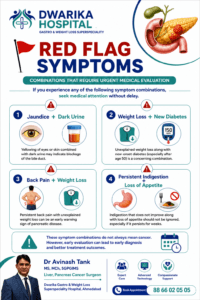
Red-Flag Symptom Combinations
Certain combinations of symptoms are more concerning than a single symptom alone.
These include:
🚩 Jaundice + Dark Urine + Pale Stools
May indicate blockage of the bile duct by a pancreatic tumour or another serious biliary condition.
🚩 Weight Loss + New-Onset Diabetes
Especially significant in adults over 50 years of age.
🚩 Persistent Upper Abdominal Pain + Back Pain
Should prompt evaluation if symptoms last for several weeks or progressively worsen.
🚩 Loss of Appetite + Weight Loss + Fatigue
May indicate an underlying serious illness requiring further investigation.
🚩 Digestive Symptoms That Do Not Improve
Persistent indigestion, bloating, or nausea despite treatment should not be repeatedly dismissed as simple acidity.
⸻
When Should You See a Specialist?
Consult a gastroenterologist or hepatopancreatobiliary (HPB) surgeon if:
- Symptoms persist for more than two to three weeks.
- You have unexplained jaundice.
- You develop new diabetes after age 50 along with weight loss.
- You have a strong family history of pancreatic cancer.
- Your symptoms continue despite treatment for common digestive disorders.
- Imaging or blood tests raise suspicion of pancreatic disease.
Early specialist evaluation does not always lead to a diagnosis of pancreatic cancer—but it can help identify serious conditions sooner, when more treatment options may be available.

What Current Evidence Shows
Over the past two decades, significant advances have improved the diagnosis and treatment of pancreatic cancer. While it remains one of the most challenging cancers to treat, earlier diagnosis and modern multidisciplinary care have increased the number of patients who can undergo potentially curative surgery.
International guidelines from the National Comprehensive Cancer Network (NCCN), American Society of Clinical Oncology (ASCO), and European Society for Medical Oncology (ESMO) consistently emphasize one key message:
Early recognition of symptoms and prompt evaluation provide the best opportunity for successful treatment.
Research has shown that:
- Jaundice is often the first symptom of cancers arising in the head of the pancreas because the tumour blocks the bile duct.
- Tumours in the body and tail of the pancreas frequently present later, as they do not usually cause jaundice in the early stages.
- New-onset diabetes after the age of 50 may be an early warning sign in a small proportion of patients and should be interpreted alongside other clinical findings.
- Persistent weight loss, loss of appetite, and back pain are common features of pancreatic cancer but are not specific to the disease.
- Modern imaging techniques—including contrast-enhanced CT scans, MRI, and Endoscopic Ultrasound (EUS)—have greatly improved the ability to detect pancreatic tumours at an earlier stage.
Why Early Diagnosis Matters
Pancreatic cancer is classified into different stages based on whether the tumour remains confined to the pancreas or has spread to nearby blood vessels or distant organs.
When diagnosed early:
- More patients are eligible for surgery.
- Chemotherapy can be used more effectively.
- Long-term survival improves.
- Quality of life after treatment is generally better.
Unfortunately, many patients delay seeking medical advice because their symptoms resemble common digestive disorders such as acidity, gastritis, gallstones, or indigestion. Recognizing persistent or unexplained symptoms is therefore an important step toward earlier diagnosis.
Common Myths and Facts
Myth 1
Pancreatic cancer always causes severe pain from the beginning.
Fact
Many patients experience no pain at all during the early stages. Symptoms often begin gradually and may include mild indigestion, loss of appetite, weight loss, or jaundice before significant pain develops.
Myth 2
If I don’t have jaundice, I cannot have pancreatic cancer.
Fact
Not all pancreatic cancers cause jaundice.
Tumours arising in the body or tail of the pancreas may grow considerably before causing noticeable symptoms. These patients are more likely to present with abdominal pain, back pain, weight loss, or diabetes rather than jaundice.
Myth 3
Persistent indigestion is always caused by acidity or gastritis.
Fact
Most cases of indigestion are not caused by pancreatic cancer.
However, indigestion that:
- Persists despite medication,
- Is associated with weight loss,
- Occurs with back pain,
- Causes loss of appetite,
should be investigated rather than repeatedly treated with antacids.
Myth 4
Only smokers develop pancreatic cancer.
Fact
Smoking increases the risk, but pancreatic cancer can occur in people who have never smoked.
Other risk factors include:
- Increasing age
- Family history
- Chronic pancreatitis
- Obesity
- Diabetes
- Certain inherited genetic syndromes
Many patients have no identifiable risk factor at all.
Myth 5
New diabetes is unrelated to pancreatic cancer.
Fact
The vast majority of people with diabetes do not have pancreatic cancer.
However, in adults over 50 years of age, new-onset diabetes accompanied by unexplained weight loss or abdominal symptoms may occasionally be an early clue and should be assessed by a healthcare professional.
Myth 6
If my ultrasound is normal, I definitely do not have pancreatic cancer.
Fact
A routine abdominal ultrasound may not detect small pancreatic tumours because the pancreas lies deep inside the abdomen and may be obscured by bowel gas.
When pancreatic cancer is suspected, doctors often recommend:
- Contrast-enhanced CT scan
- MRI
- Endoscopic Ultrasound (EUS)
These tests provide much more detailed information.
Myth 7
Pancreatic cancer is always incurable.
Fact
Although pancreatic cancer is a serious disease, early-stage pancreatic cancer can sometimes be treated successfully with surgery followed by chemotherapy.
The earlier the diagnosis, the greater the possibility of curative treatment.
Dr. Avinash Tank’s Perspective
“One of the biggest challenges in pancreatic cancer is that the earliest symptoms are often mild and easily attributed to common digestive problems. Many patients tell us they had indigestion, mild abdominal discomfort, weight loss, or fatigue for several weeks before seeking medical attention because the symptoms did not seem serious.
Fortunately, not every patient with these symptoms has pancreatic cancer. In fact, most are ultimately diagnosed with much more common and treatable conditions. However, persistent symptoms should never be ignored, especially when they occur together or continue despite treatment.
As specialists, our goal is not to alarm patients but to encourage timely evaluation. High-quality imaging, endoscopic ultrasound, and multidisciplinary assessment can accurately identify the cause of symptoms and determine the most appropriate treatment. Early diagnosis provides the greatest opportunity for curative surgery and improved long-term outcomes.”
Key Takeaways
- ✅ The early signs of pancreatic cancer are often subtle and can resemble common digestive problems.
- ✅ Jaundice, persistent upper abdominal pain, back pain, unexplained weight loss, and loss of appetite are important warning signs.
- ✅ New-onset diabetes after the age of 50, especially when accompanied by weight loss, deserves medical evaluation.
- ✅ Tumours in the head of the pancreas often cause jaundice earlier, while tumours in the body or tail may remain silent for longer.
- ✅ Most people with indigestion, back pain, or diabetes do not have pancreatic cancer, but persistent or unexplained symptoms should be assessed.
- ✅ Modern imaging tests such as contrast-enhanced CT, MRI, and Endoscopic Ultrasound (EUS) help diagnose pancreatic cancer more accurately.
- ✅ Early diagnosis increases the possibility of curative surgery and improves treatment options.
- ✅ Do not ignore symptoms that persist for more than two to three weeks or continue despite appropriate treatment.
- ✅ Evaluation by an experienced multidisciplinary team is important when pancreatic cancer is suspected.
Related Resources
Disease Hub
- Pancreatic Cancer: Complete Patient Guide
Service Page
- Pancreatic Cancer Surgery
- Whipple Procedure (Pancreaticoduodenectomy)
Related Educational Articles
- Can Pancreatic Cancer Be Cured by Surgery?
- Can Pancreatic Cancer Be Detected in Blood Tests?
- Is Pancreatic Cancer Hereditary?
- What Is the Survival Rate for Pancreatic Cancer?
- What Is the Whipple Procedure?
Frequently Asked Questions (FAQs)
1. What is usually the first symptom of pancreatic cancer?
The first symptom depends on where the tumour develops. Tumours in the head of the pancreas commonly cause painless jaundice, resulting in yellow eyes, yellow skin, dark urine, and pale stools. Tumours in the body or tail of the pancreas are more likely to cause persistent abdominal pain, back pain, unexplained weight loss, or newly diagnosed diabetes. Because these symptoms are often subtle, they should not be ignored if they persist.
2. Can pancreatic cancer cause symptoms in its early stages?
Yes, but the symptoms are often mild and nonspecific. Early pancreatic cancer may present with indigestion, bloating, loss of appetite, mild abdominal discomfort, fatigue, or gradual weight loss. Many patients mistakenly attribute these symptoms to acidity, gastritis, or ageing. While these symptoms are usually caused by more common conditions, persistent or unexplained symptoms warrant medical evaluation.
3. Does every patient with pancreatic cancer develop jaundice?
No. Jaundice is common when the tumour is located in the head of the pancreas, where it can block the bile duct. However, cancers arising in the body or tail of the pancreas often do not cause jaundice until much later. These patients may instead experience abdominal pain, back pain, weight loss, or diabetes.
4. Can back pain be an early sign of pancreatic cancer?
Yes. A dull, persistent pain in the upper abdomen that radiates to the middle back can be an early symptom of pancreatic cancer. However, back pain is much more commonly caused by muscle strain, spinal disorders, or arthritis. Back pain associated with unexplained weight loss, loss of appetite, or abdominal discomfort should be evaluated by a healthcare professional.
5. Why can pancreatic cancer cause diabetes?
The pancreas produces insulin, the hormone responsible for controlling blood sugar levels. A pancreatic tumour can interfere with insulin production, leading to new-onset diabetes, particularly in adults over the age of 50. Although most people with diabetes do not have pancreatic cancer, diabetes accompanied by unexplained weight loss or digestive symptoms deserves further assessment.
6. Which tests are used to diagnose pancreatic cancer?
Doctors usually begin with a detailed medical history, physical examination, and blood tests. If pancreatic cancer is suspected, the most useful investigations include:
- Contrast-enhanced CT scan
- MRI scan
- Endoscopic Ultrasound (EUS)
- Endoscopic Retrograde Cholangiopancreatography (ERCP) in selected cases
- Tissue biopsy when required
These tests help determine whether a tumour is present, whether it has spread, and whether surgery is possible.
7. Can pancreatic cancer be found during a routine health check-up?
Unfortunately, pancreatic cancer is not routinely detected during standard health check-ups, and there is currently no recommended screening test for the general population. However, people with a strong family history of pancreatic cancer or certain inherited genetic syndromes may benefit from specialised surveillance programmes using MRI or Endoscopic Ultrasound (EUS). These programmes are offered only to carefully selected high-risk individuals.
8. When should I see a doctor about possible pancreatic cancer symptoms?
You should seek medical advice promptly if you develop:
- Yellowing of the eyes or skin
- Persistent upper abdominal pain
- Pain radiating to the back
- Unexplained weight loss
- Loss of appetite
- Dark urine or pale stools
- Newly diagnosed diabetes after the age of 50 with weight loss
- Persistent digestive symptoms lasting more than two to three weeks
Early evaluation does not necessarily mean you have pancreatic cancer, but it helps identify the underlying cause and allows timely treatment if needed.
9. Can pancreatic cancer be cured if it is detected early?
Yes. Early-stage pancreatic cancer may be curable in selected patients through complete surgical removal of the tumour, usually followed by chemotherapy. The chance of cure depends on the stage of the disease, whether the tumour can be completely removed, and the patient’s overall health. Early diagnosis significantly increases the likelihood of successful treatment.
10. Are the symptoms of pancreatic cancer always caused by cancer?
No. Symptoms such as indigestion, abdominal pain, back pain, weight loss, or jaundice are much more commonly caused by non-cancerous conditions including gallstones, chronic pancreatitis, gastritis, hepatitis, peptic ulcers, and fatty liver disease. However, because pancreatic cancer can present with similar symptoms, persistent or unexplained symptoms should always be properly evaluated.
References
The information in this article is based on current international guidelines and peer-reviewed medical literature.
- National Comprehensive Cancer Network (NCCN). NCCN Clinical Practice Guidelines in Oncology: Pancreatic Adenocarcinoma (latest version).
- American Society of Clinical Oncology (ASCO). Potentially Curable Pancreatic Adenocarcinoma: ASCO Clinical Practice Guideline Update.
- European Society for Medical Oncology (ESMO). Pancreatic Cancer: ESMO Clinical Practice Guidelines for Diagnosis, Treatment and Follow-up.
- World Health Organization (WHO). Cancer Fact Sheets – Pancreatic Cancer.
- National Cancer Institute (NCI). Pancreatic Cancer (PDQ®): Patient and Health Professional Versions.
- Tempero MA, et al. Pancreatic Adenocarcinoma Guidelines. Journal of the National Comprehensive Cancer Network.
- Conroy T, et al. FOLFIRINOX versus Gemcitabine for Metastatic Pancreatic Cancer. New England Journal of Medicine.
- Neoptolemos JP, et al. Adjuvant Chemotherapy Following Pancreatic Cancer Resection. New England Journal of Medicine.
- PubMed-indexed systematic reviews on:
- Early symptoms of pancreatic cancer
- Diagnostic imaging
- Endoscopic Ultrasound (EUS)
- Pancreatic cancer screening in high-risk individuals
Internal Linking Suggestions
To strengthen topical authority and improve navigation, include contextual links to the following pages:
Disease Hub
- Pancreatic Cancer – Complete Disease Hub
Service Pages
- Pancreatic Cancer Surgery
- Whipple Procedure (Pancreaticoduodenectomy)
- Endoscopic Ultrasound (EUS)
- ERCP for Bile Duct Obstruction
Related Educational Articles
- Can Pancreatic Cancer Be Cured by Surgery?
- Can Pancreatic Cancer Be Detected in Blood Tests?
- Is Pancreatic Cancer Hereditary?
- What Is the Survival Rate for Pancreatic Cancer?
- What Causes Pancreatic Cancer?
- Pancreatic Cancer Staging Explained
- How Is Pancreatic Cancer Diagnosed?
Recommended internal links: 7–10 per article, using natural anchor text.
Image Suggestions
1. Feature Image
Title: What Are the First Signs of Pancreatic Cancer?
- Anatomical illustration of the pancreas
- Highlight common early symptoms
- Blue and green colour palette
- White background
2. Symptom Infographic
“10 Early Warning Signs of Pancreatic Cancer”
Include icons for:
- Jaundice
- Abdominal pain
- Back pain
- Weight loss
- Loss of appetite
- Diabetes
- Dark urine
- Pale stools
- Fatigue
- Digestive problems
3. Comparison Table Graphic
Symptoms of Head vs Body vs Tail Pancreatic Cancer
Columns:
- Tumour location
- Most common symptoms
- Reason symptoms occur
4. Medical Timeline
When Should You See a Doctor?
Flowchart:
Mild symptom → Persistent symptoms (>2–3 weeks) → Medical consultation → Blood tests → CT/MRI → EUS → Diagnosis → Treatment planning
5. Myth vs Fact Infographic
Five myths:
- No pain means no cancer.
- Only smokers get pancreatic cancer.
- Diabetes never indicates pancreatic cancer.
- Indigestion is always acidity.
- Pancreatic cancer cannot be treated.
6. Red Flag Symptoms Infographic
Highlight combinations requiring urgent medical evaluation:
- Jaundice + Dark urine
- Weight loss + New diabetes
- Back pain + Weight loss
- Persistent indigestion + Loss of appetite
FAQ Schema Suggestions
Implement FAQPage Schema using the 10 FAQs above.
Also include:
- MedicalWebPage Schema
- MedicalCondition Schema (Pancreatic Cancer)
- Physician Schema (Dr. Avinash Tank)
- BreadcrumbList Schema
- Article Schema
- Organization Schema
- Speakable Schema (for voice assistants)
This structured data can improve eligibility for rich search results and AI-assisted search experiences.
Learn More About Pancreatic Cancer
If you would like to understand pancreatic cancer in greater detail, explore our Pancreatic Cancer Disease Hub, where you’ll find comprehensive information about risk factors, symptoms, diagnosis, staging, treatment options, recovery, nutrition, and long-term follow-up. These resources are designed to help patients and families make informed decisions throughout their care journey.
Request a Specialist Evaluation
Persistent jaundice, unexplained weight loss, upper abdominal pain, back pain, or newly diagnosed diabetes after the age of 50 should not be ignored. A timely assessment by a multidisciplinary team with expertise in pancreatic diseases can help establish an accurate diagnosis and determine the most appropriate treatment plan.
Contact
Dr. Avinash Tank (MS, MCh, SGPGIMS)
Liver, Pancreas & Gastrointestinal Cancer Surgeon
Dwarika Gastro & Weight Loss Superspeciality Hospital, Ahmedabad
Book an Appointment / WhatsApp: 88 66 02 05 05

Super-specialist GI, bariatric & cancer surgeon. SGPGIMS (India's premier GI centre) + advanced training in Japan & South Korea. Read full profile →
Last reviewed: July 2026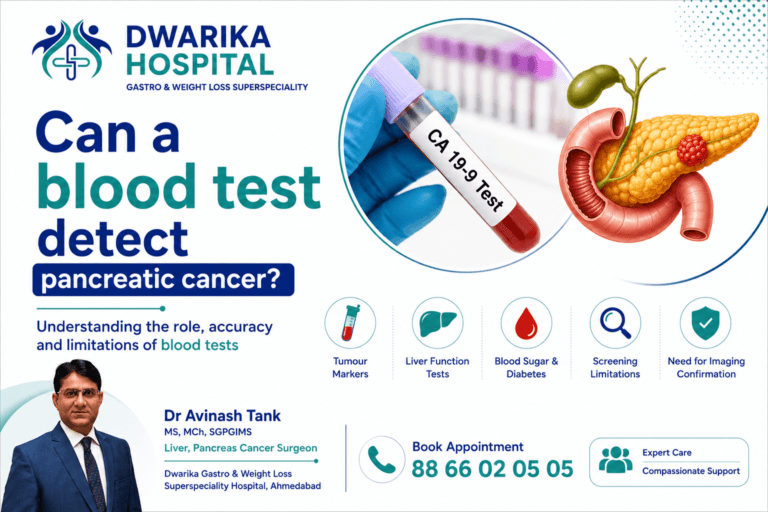



Comments
Be the first to share your thoughts on this article.