

What Causes Pancreatic Cancer?
Featured Snippet Answer
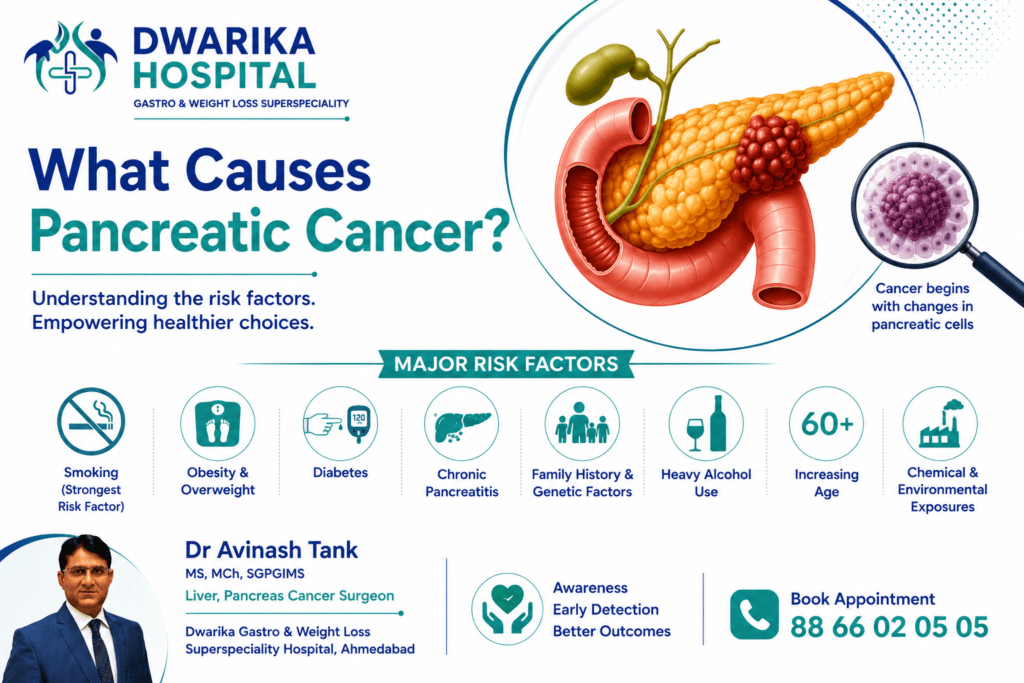
The exact cause of pancreatic cancer is not fully understood, but it develops when genetic changes (mutations) occur in the cells of the pancreas, causing them to grow uncontrollably. While doctors cannot explain why these mutations occur in every individual, several well-established risk factors increase the likelihood of developing pancreatic cancer. These include smoking, increasing age, obesity, long-standing diabetes, chronic pancreatitis, family history, and certain inherited genetic conditions. Importantly, having one or more risk factors does not mean a person will definitely develop pancreatic cancer, and many people diagnosed with pancreatic cancer have no obvious risk factors. Understanding these risks can help individuals make healthier lifestyle choices and recognise when specialist evaluation may be appropriate.
Why Patients Ask This Question
After a diagnosis of pancreatic cancer, one of the first questions patients and families ask is, “Why did this happen?”
Many people worry that they caused the disease through their diet or lifestyle, while others fear they may pass it on to their children. In reality, pancreatic cancer usually develops due to a combination of genetic, environmental, and lifestyle factors, many of which are beyond an individual’s control.
Understanding the known causes and risk factors helps patients focus on what can be changed, identify family members who may benefit from genetic counselling, and reduce future health risks.
The Short Answer
There is no single cause of pancreatic cancer. It develops when DNA mutations accumulate in pancreatic cells, allowing them to grow and divide uncontrollably.
The strongest known risk factors include:
- Smoking
- Increasing age
- Obesity
- Chronic pancreatitis
- Long-standing diabetes
- Family history
- Inherited genetic mutations
- Heavy alcohol use (mainly through chronic pancreatitis)
Many patients, however, develop pancreatic cancer without any identifiable cause.
Understanding the Background
The pancreas is an organ located behind the stomach that produces digestive enzymes and hormones such as insulin.
Normally, pancreatic cells grow in an orderly manner. Occasionally, genetic mutations occur within these cells. Most abnormal cells are repaired or destroyed by the body’s natural mechanisms. However, when multiple mutations accumulate over many years, some cells escape these protective mechanisms and begin to grow uncontrollably, eventually forming cancer.
Pancreatic cancer is therefore not caused by a single event, but usually develops over many years through a complex interaction between inherited genes, ageing, environmental exposures, and lifestyle factors.
Detailed Answer
1. Smoking – The Most Important Preventable Risk Factor
Smoking is one of the strongest risk factors for pancreatic cancer.
Chemicals in tobacco damage DNA within pancreatic cells, increasing the likelihood of cancer-causing mutations.
People who smoke have a significantly higher risk of pancreatic cancer than non-smokers. The risk gradually decreases after quitting and continues to fall over time.
The good news: Stopping smoking reduces future risk, regardless of age.
2. Increasing Age
Pancreatic cancer becomes more common with advancing age.
Most patients are diagnosed after the age of 60, although younger adults can occasionally develop the disease, particularly if they have inherited genetic conditions or a strong family history.
Age itself cannot be changed, but awareness of symptoms becomes increasingly important as people grow older.
3. Obesity and Excess Body Weight
Being overweight or obese increases the risk of pancreatic cancer.
Obesity contributes to:
- Chronic inflammation
- Insulin resistance
- Elevated insulin levels
- Hormonal changes that may promote tumour growth
Maintaining a healthy body weight through regular exercise and balanced nutrition may help reduce risk.
4. Diabetes
There is a complex relationship between diabetes and pancreatic cancer.
Long-standing type 2 diabetes modestly increases risk.
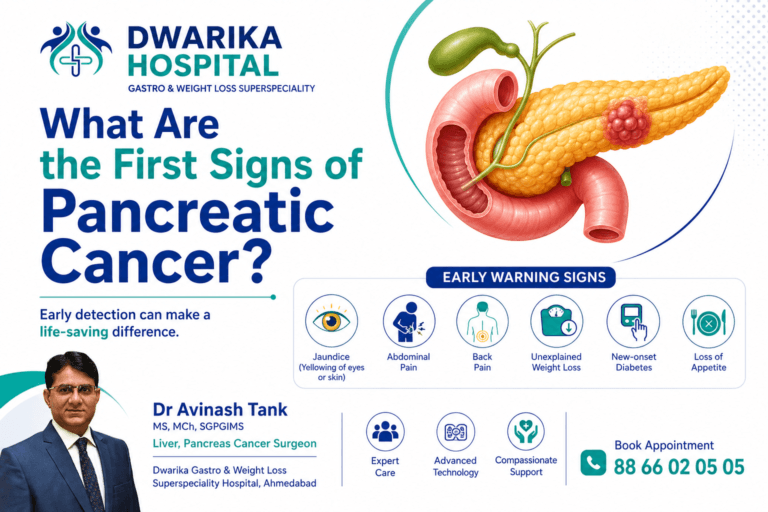
In addition, pancreatic cancer itself can sometimes cause new-onset diabetes, particularly in adults over 50 years of age.
Doctors pay particular attention when diabetes develops unexpectedly alongside:
- Weight loss
- Abdominal pain
- Loss of appetite
- Jaundice
5. Chronic Pancreatitis
Repeated inflammation of the pancreas can increase the likelihood of developing pancreatic cancer.
Causes of chronic pancreatitis include:
- Heavy alcohol consumption
- Hereditary pancreatitis
- Certain genetic disorders
- Rare metabolic diseases
The longer inflammation persists, the greater the risk of cellular damage.
6. Family History and Genetics
Most pancreatic cancers are not inherited, but approximately 5–10% occur as part of hereditary cancer syndromes.
Inherited gene mutations associated with pancreatic cancer include:
- BRCA2
- BRCA1
- PALB2
- CDKN2A
- STK11 (Peutz-Jeghers syndrome)
- ATM
- Lynch syndrome genes (MLH1, MSH2, MSH6, PMS2)
Genetic counselling may be recommended for patients with:
- Multiple relatives affected by pancreatic cancer
- Early-onset pancreatic cancer
- Multiple cancers within the family
- Known inherited cancer syndromes
7. Alcohol Consumption
Alcohol itself has not been proven to directly cause pancreatic cancer.
However, heavy long-term alcohol consumption increases the risk of chronic pancreatitis, which in turn raises pancreatic cancer risk.
Moderation in alcohol intake is recommended for overall health.
8. Diet and Nutrition
No single food causes pancreatic cancer.
However, long-term dietary patterns may influence risk.
A healthy diet rich in:
- Fruits
- Vegetables
- Whole grains
- Lean proteins
- Healthy fats
may support overall health and help maintain a healthy weight.
Limiting highly processed foods and excessive red or processed meat may also contribute to reducing cancer risk.
9. Occupational and Environmental Exposures
Some studies suggest that prolonged exposure to certain industrial chemicals, pesticides, and petroleum products may slightly increase pancreatic cancer risk.
These occupational risks are uncommon and account for only a small proportion of cases.
Summary of Risk Factors
| Risk Factor | Can It Be Modified? |
|---|---|
| Smoking | ✓ Yes |
| Obesity | ✓ Yes |
| Diabetes | Partly |
| Chronic Pancreatitis | Sometimes |
| Age | ✗ No |
| Family History | ✗ No |
| Genetic Mutations | ✗ No |
| Heavy Alcohol Use | ✓ Yes |
Can Pancreatic Cancer Be Prevented?
Unfortunately, pancreatic cancer cannot always be prevented.
However, individuals can lower their risk by:
- Avoiding tobacco
- Maintaining a healthy weight
- Exercising regularly
- Eating a balanced diet
- Limiting alcohol intake
- Managing diabetes effectively
- Seeking genetic counselling when appropriate
Although these measures cannot eliminate risk, they contribute to better overall health and may reduce the likelihood of developing pancreatic cancer.
What Current Evidence Shows
Current guidelines from NCCN, ASCO, ESMO, and the World Health Organization confirm that pancreatic cancer develops through the accumulation of genetic mutations influenced by both inherited and environmental factors. Smoking remains the strongest preventable risk factor. Obesity, chronic pancreatitis, long-standing diabetes, and certain hereditary genetic syndromes are also well-established contributors. Ongoing research is exploring how genetics, inflammation, the immune system, and lifestyle interact to influence pancreatic cancer development, with the goal of improving prevention and earlier detection.
Common Myths and Facts
Myth 1
Pancreatic cancer is caused by eating sugar.
Fact: Sugar does not directly cause pancreatic cancer, although obesity and diabetes are associated with increased risk.
Myth 2
Everyone with pancreatic cancer inherited it.
Fact: Most pancreatic cancers occur sporadically and are not inherited.
Myth 3
Only smokers develop pancreatic cancer.
Fact: Smoking increases risk, but non-smokers can also develop pancreatic cancer.
Myth 4
A healthy lifestyle completely prevents pancreatic cancer.
Fact: Healthy habits reduce risk but cannot eliminate it entirely.
Myth 5
There is always one definite cause.
Fact: Pancreatic cancer usually results from a combination of genetic and environmental factors rather than a single cause.
Dr. Avinash Tank’s Perspective
Patients often ask what caused their pancreatic cancer, hoping to identify one specific reason. In most cases, there is no single answer. The disease usually develops after many years of accumulated genetic changes influenced by age, lifestyle, environmental exposures, and sometimes inherited factors.
Rather than focusing on blame, I encourage patients and families to focus on what can be controlled. Quitting smoking, maintaining a healthy weight, managing diabetes, and discussing family history with a specialist are practical steps that can improve overall health and, in some cases, help identify individuals who may benefit from genetic counselling or surveillance.
Key Takeaways
- ✓ Pancreatic cancer has no single identifiable cause.
- ✓ Smoking is the strongest preventable risk factor.
- ✓ Obesity, diabetes, and chronic pancreatitis increase risk.
- ✓ Most pancreatic cancers are not inherited.
- ✓ Certain genetic mutations significantly increase lifetime risk.
- ✓ Healthy lifestyle choices may reduce risk but cannot guarantee prevention.
- ✓ Individuals with a strong family history should discuss genetic counselling with their healthcare provider.
Related Resources
Disease Hub
- Pancreatic Cancer
Service Page
- Pancreatic Cancer Surgery
Related Articles
- What Are the First Signs of Pancreatic Cancer?
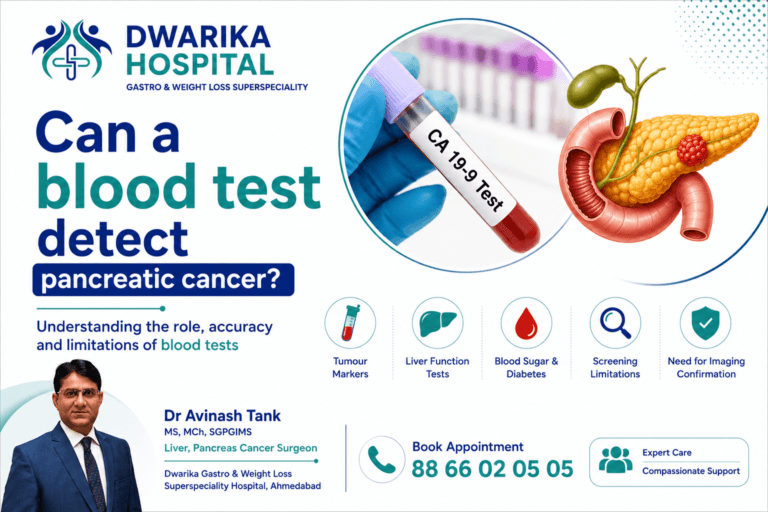
- Can Pancreatic Cancer Be Detected in Blood Tests?
- What Is the Survival Rate for Pancreatic Cancer?
Frequently Asked Questions
1. What is the biggest risk factor for pancreatic cancer?
Smoking is considered the strongest preventable risk factor, while increasing age remains the most significant non-modifiable risk factor.
2. Can pancreatic cancer run in families?
Yes. About 5–10% of pancreatic cancers are linked to inherited genetic mutations or familial cancer syndromes.
3. Does diabetes cause pancreatic cancer?
Long-standing type 2 diabetes modestly increases risk, and pancreatic cancer itself can also cause new-onset diabetes.
4. Can alcohol cause pancreatic cancer?
Heavy alcohol use increases the risk of chronic pancreatitis, which can raise the risk of pancreatic cancer over time.
5. Can pancreatic cancer be prevented?
Not always. However, avoiding smoking, maintaining a healthy weight, exercising regularly, and managing diabetes may reduce risk.
6. Should I have genetic testing?
Genetic counselling and testing may be recommended if you have pancreatic cancer with a strong family history or features suggestive of an inherited cancer syndrome.
References
- NCCN Clinical Practice Guidelines: Pancreatic Adenocarcinoma
- ASCO Guidelines for Pancreatic Cancer
- ESMO Clinical Practice Guidelines
- World Health Organization (WHO): Cancer Fact Sheets
- National Cancer Institute (NCI): Pancreatic Cancer (PDQ®)
- Recent PubMed reviews on pancreatic cancer risk factors, hereditary syndromes, and prevention
Internal Linking Suggestions
- Pancreatic Cancer Disease Hub
- Pancreatic Cancer Surgery
- What Are the First Signs of Pancreatic Cancer?
- Can Pancreatic Cancer Be Detected in Blood Tests?
- What Is the Survival Rate for Pancreatic Cancer?
Final CTA
Learn More: Explore our Pancreatic Cancer Disease Hub for trusted information on symptoms, diagnosis, treatment options, and recovery.
Request a Specialist Evaluation: If you have persistent digestive symptoms, unexplained weight loss, new-onset diabetes after age 50, or a strong family history of pancreatic cancer, consult an experienced hepatopancreatobiliary (HPB) specialist for personalised assessment.
Dr. Avinash Tank (MS, MCh, SGPGIMS)
Liver, Pancreas & Gastrointestinal Cancer Surgeon
Dwarika Gastro & Weight Loss Superspeciality Hospital, Ahmedabad
Book an Appointment / WhatsApp: 88 66 02 05 05

Super-specialist GI, bariatric & cancer surgeon. SGPGIMS (India's premier GI centre) + advanced training in Japan & South Korea. Read full profile →
Last reviewed: July 2026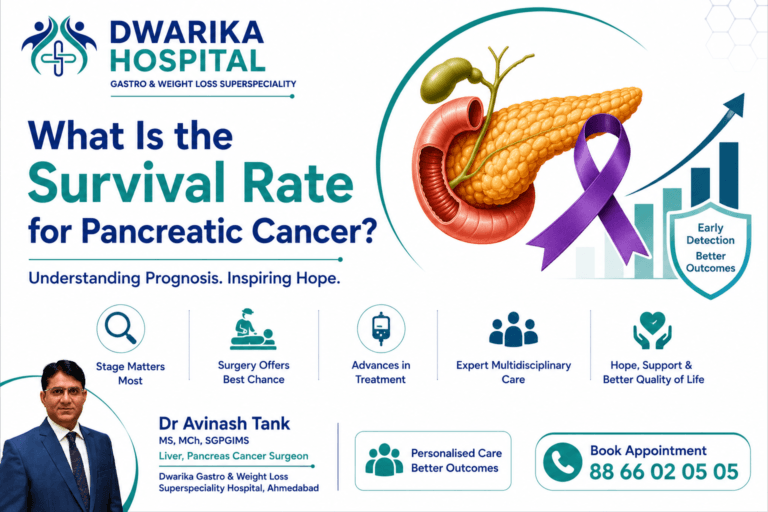


Comments
Be the first to share your thoughts on this article.