Reading Time: 10 minutes
What Are the First Signs and Symptoms of Colon Cancer?
Featured Snippet Answer
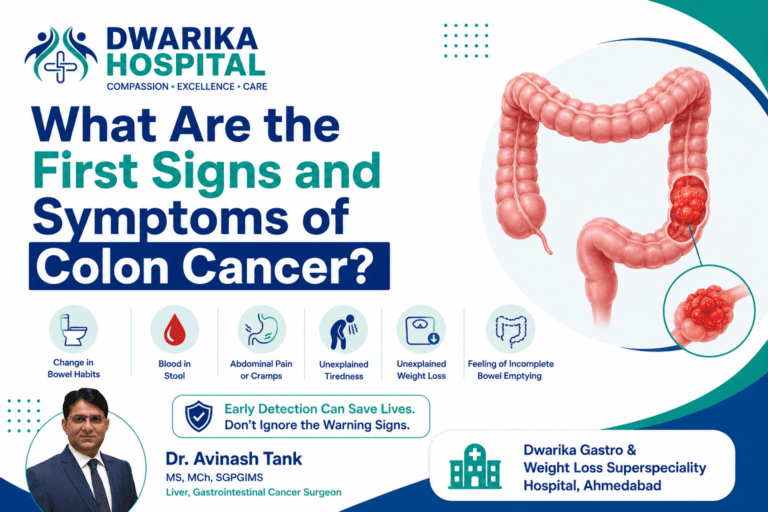
The first signs and symptoms of colon cancer are often subtle and may be mistaken for common digestive problems. Early warning signs can include a persistent change in bowel habits, blood in the stool, abdominal pain or cramps, unexplained weight loss, tiredness due to anemia, and a feeling that the bowel does not empty completely. Some people have no symptoms at all, especially in the early stages, which is why screening with colonoscopy is so important. While these symptoms do not always mean cancer, they should never be ignored if they last for more than two to three weeks or keep recurring. Early diagnosis greatly increases the chances of successful treatment and, in many cases, cure.
Why Patients Ask This Question
When someone experiences a change in bowel habits or notices blood in the stool, it is natural to worry about colon cancer.
Many patients wonder whether their symptoms are caused by something harmless, such as piles (hemorrhoids), irritable bowel syndrome (IBS), constipation, or an infection—or whether they could be signs of something more serious.
Another common concern is that colon cancer develops silently. Many people have heard stories of friends or relatives who were diagnosed unexpectedly because they ignored early symptoms or had no symptoms at all.
Recognizing the warning signs is important because colon cancer is often highly treatable when detected early. Knowing which symptoms require medical attention can help patients seek timely evaluation rather than delaying care.
It is equally important to remember that most digestive symptoms are not caused by colon cancer. However, persistent or unexplained symptoms should always be assessed by a healthcare professional.
The Short Answer
The earliest signs of colon cancer usually involve changes in bowel function or bleeding from the bowel, although some patients may not notice any symptoms in the early stages.
Common early symptoms include:
- Persistent constipation or diarrhea
- A change in stool shape or caliber
- Blood in the stool or rectal bleeding
- Abdominal discomfort or cramps
- Feeling that the bowel is not completely empty
- Unexplained tiredness due to anemia
- Unintentional weight loss
These symptoms can also occur with non-cancerous conditions such as hemorrhoids, infections, inflammatory bowel disease, or diverticular disease. However, symptoms that persist, worsen, or recur should never be ignored.
Understanding the Background
What Is Colon Cancer?
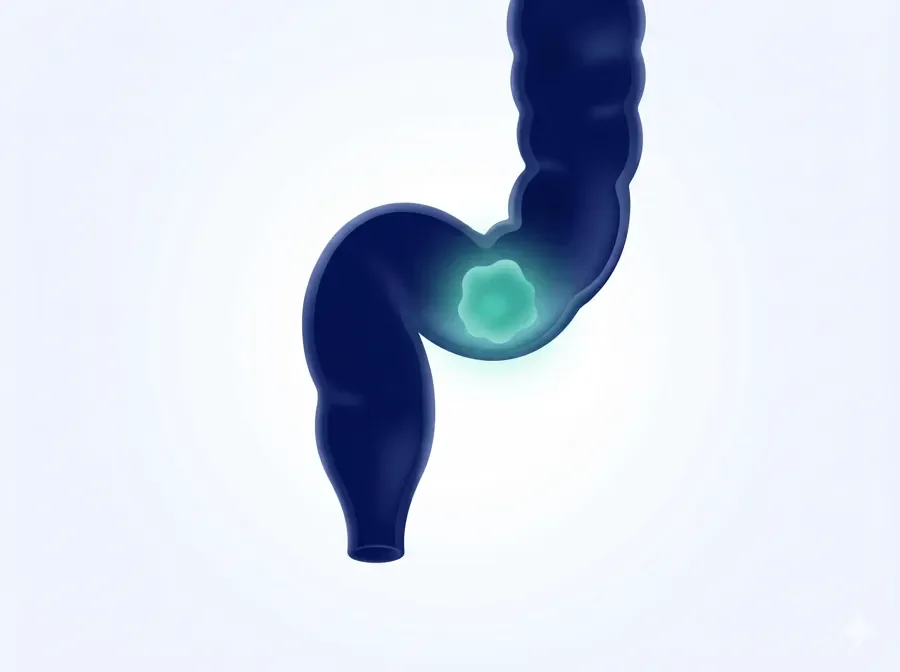
Colon cancer begins when cells lining the large intestine (colon) grow abnormally and form a tumour. Most colon cancers develop slowly over several years, usually starting as small growths called polyps. Some polyps remain harmless, while others gradually become cancerous.
Because this process is often slow, colon cancer can frequently be detected before symptoms appear through routine screening.
Why Early Symptoms Can Be Difficult to Recognize
One reason colon cancer is sometimes diagnosed late is that its early symptoms are often mild and resemble common digestive disorders.
For example:
- Constipation is common.
- Occasional diarrhea is common.
- Hemorrhoids frequently cause rectal bleeding.
- Abdominal discomfort may occur with indigestion or IBS.
As a result, many people delay seeking medical advice, assuming the symptoms will resolve on their own.
Why Tumour Location Matters
Symptoms can vary depending on where the tumour develops.
Right-sided Colon Cancer
These cancers often grow larger before causing symptoms because the stool is still relatively liquid.
Patients may experience:
- Tiredness
- Weakness
- Iron-deficiency anemia
- Gradual weight loss
Visible bleeding may not occur.
Left-sided Colon Cancer
Because the stool is more solid in the left side of the colon, tumours are more likely to cause blockage.
Symptoms commonly include:
- Constipation
- Narrow stools
- Blood mixed with stool
- Cramping abdominal pain
- Difficulty passing stool
Rectal Cancer
Tumours close to the rectum frequently present with:
- Bright red rectal bleeding
- Feeling of incomplete bowel emptying
- Frequent urge to pass stool
- Pain during bowel movements in some cases
Recognizing these differences helps doctors decide which investigations are most appropriate.
Detailed Answer
What Are the First Signs and Symptoms of Colon Cancer?

The earliest warning signs are often subtle. They usually develop gradually over weeks or months rather than appearing suddenly.
1. Persistent Change in Bowel Habits
One of the most common early symptoms is a change in normal bowel habits.
This may include:
- Constipation lasting several weeks
- Persistent diarrhea
- Alternating constipation and diarrhea
- Increased urgency
- More frequent bowel movements
- Reduced stool frequency
Everyone’s bowel habits are different. What matters most is a persistent change from your usual pattern.
2. Blood in the Stool
Blood in the stool should never be ignored.
It may appear as:
- Bright red blood
- Dark maroon blood
- Black, tarry stools
- Blood mixed with stool
- Occult (hidden) blood detected only by stool tests
Although hemorrhoids are a common cause of rectal bleeding, bleeding should never automatically be assumed to be due to piles, especially in adults over 45 years or anyone with additional symptoms.
3. Narrow or Pencil-Thin Stools
Some patients notice that their stools become thinner than usual.
This may occur because a tumour narrows the bowel lumen, making it more difficult for stool to pass.
Occasional narrow stools are usually not concerning. However, persistent pencil-thin stools associated with bleeding or constipation warrant medical evaluation.
4. Feeling That the Bowel Does Not Empty Completely
Some patients describe a constant sensation that they still need to pass stool, even after using the toilet.
This symptom is known as tenesmus and is more common when tumours are located in the lower colon or rectum.
Persistent tenesmus should always be investigated.
5. Abdominal Pain, Cramping, or Bloating
As the tumour grows, it may partially obstruct the bowel, leading to:
- Cramping abdominal pain
- Bloating
- Excessive gas
- Intermittent abdominal discomfort
- Feeling unusually full after eating
Early abdominal pain is often mild and intermittent, making it easy to dismiss.
6. Unexplained Tiredness and Weakness
Many right-sided colon cancers bleed slowly over time without obvious blood in the stool.
This can cause iron-deficiency anemia, resulting in:
- Fatigue
- Weakness
- Shortness of breath during activity
- Dizziness
- Pale skin
Sometimes, anemia is the first clue that leads to the diagnosis of colon cancer.
7. Unintentional Weight Loss
Losing weight without trying should always be evaluated.
Weight loss may occur because cancer changes the body’s metabolism or reduces appetite.
Although many conditions can cause weight loss, persistent unexplained weight loss should never be ignored, especially when accompanied by bowel symptoms.
Which Symptoms Need Urgent Medical Attention?
Seek prompt medical evaluation if you experience:
- Blood in the stool
- Persistent rectal bleeding
- New bowel habit changes lasting more than 2–3 weeks
- Severe abdominal pain
- Unexplained anemia
- Persistent fatigue
- Unexplained weight loss
- A family history of colon cancer with new bowel symptoms
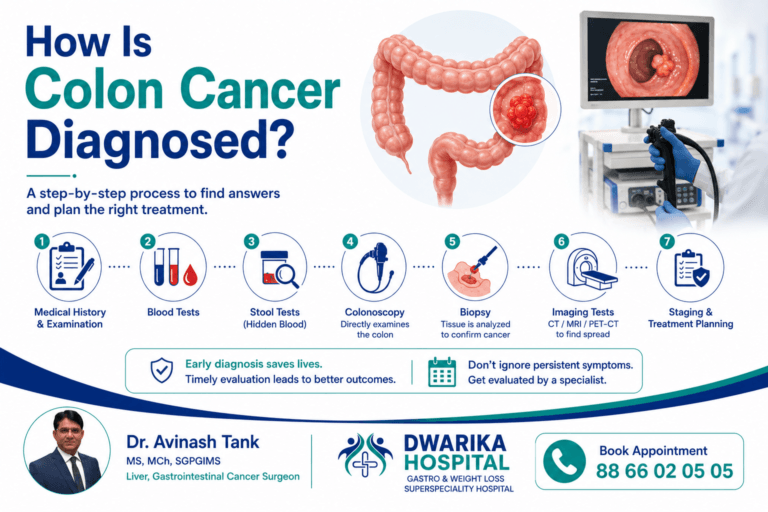
Early evaluation often includes a detailed history, physical examination, blood tests, and colonoscopy, which remains the most accurate test for diagnosing colon cancer.
Symptom Comparison Table
| Symptom | Possible Cause | Needs Medical Evaluation? |
| Blood in stool | Hemorrhoids, colon cancer, inflammatory bowel disease | Yes |
| Persistent constipation | Diet, IBS, colon cancer | Yes, if persistent |
| Persistent diarrhea | Infection, IBS, colon cancer | Yes, if >2–3 weeks |
| Pencil-thin stool | Benign narrowing, colon tumour | Yes |
| Fatigue due to anemia | Iron deficiency, chronic bleeding, colon cancer | Yes |
| Unexplained weight loss | Many conditions including cancer | Yes |
| Abdominal pain | Gas, IBS, diverticular disease, cancer | If persistent or worsening |
What Current Evidence Shows

Scientific research consistently shows that colon cancer is one of the most preventable and treatable cancers when detected early. Because most colon cancers develop slowly from precancerous polyps, screening programmes have significantly reduced deaths from the disease in many countries.
Current international guidelines from the NCCN, ASCO, ESMO, and the World Health Organization recommend prompt evaluation of persistent bowel symptoms, particularly in adults over 45 years of age or those with a family history of colorectal cancer.
Current evidence highlights several important facts:
- Many patients with early-stage colon cancer have few or no symptoms, making screening colonoscopy especially valuable.
- Rectal bleeding should never be automatically attributed to piles (hemorrhoids) without appropriate evaluation.
- Iron-deficiency anemia in adults, particularly men and postmenopausal women, should prompt investigation for possible gastrointestinal bleeding, including colon cancer.
- Persistent changes in bowel habits lasting more than two to three weeks require medical assessment.
- Screening colonoscopy can prevent colon cancer by identifying and removing precancerous polyps before they become cancerous.
- Early diagnosis not only improves survival but also increases the likelihood of minimally invasive surgery and reduces the need for extensive treatment.
The medical consensus is clear: Do not ignore persistent bowel symptoms. Early evaluation saves lives.
Common Myths and Facts
Myth 1: Colon cancer always causes severe pain.
Fact: Early colon cancer often causes little or no pain. Many patients experience only subtle symptoms such as mild bowel changes or hidden blood loss.
Myth 2: If there is no blood in my stool, I cannot have colon cancer.
Fact: Many colon cancers, especially right-sided tumours, bleed very slowly or not at all. Some patients first present with anemia rather than visible bleeding.
Myth 3: Rectal bleeding is always caused by piles.
Fact: Although hemorrhoids are a common cause of bleeding, colon cancer, polyps, inflammatory bowel disease, and diverticular disease can also cause rectal bleeding. Persistent or recurrent bleeding should always be evaluated.
Myth 4: Colon cancer only affects older people.
Fact: While the risk increases with age, colon cancer is increasingly being diagnosed in younger adults. Persistent symptoms should never be ignored simply because someone is under 50.
Myth 5: If my symptoms come and go, they are not serious.
Fact: Colon cancer symptoms may be intermittent in the early stages. Recurring constipation, bleeding, abdominal discomfort, or changes in bowel habits still require medical assessment.
Myth 6: A normal blood test rules out colon cancer.
Fact: Routine blood tests may be completely normal in early colon cancer. Colonoscopy remains the most accurate test for diagnosing or excluding the disease.
Dr. Avinash Tank’s Perspective
One of the most common situations I encounter is a patient who says, “I thought it was just piles,” or “I assumed it was because of constipation.” Unfortunately, these assumptions sometimes delay diagnosis.
Most bowel symptoms are not caused by colon cancer, but the challenge is that early colon cancer often mimics common digestive conditions. That is why persistent symptoms deserve proper evaluation rather than repeated self-medication.
I encourage patients to pay attention to changes in their normal bowel pattern. If bleeding, constipation, diarrhea, abdominal discomfort, or unexplained anemia continues for more than a few weeks, seek medical advice. A colonoscopy is a safe and effective investigation that not only detects cancer but can also remove precancerous polyps before they become cancerous.
Early diagnosis provides more treatment options, simpler surgery in many cases, and the best opportunity for long-term cure.
Key Takeaways
- ✓ Early colon cancer may cause no symptoms.
- ✓ Persistent changes in bowel habits are one of the earliest warning signs.
- ✓ Blood in the stool should always be medically evaluated.
- ✓ Iron-deficiency anemia may be the first sign of right-sided colon cancer.
- ✓ Unexplained weight loss and persistent fatigue require medical assessment.
- ✓ Symptoms lasting more than 2–3 weeks should not be ignored.
- ✓ Colonoscopy is the most accurate investigation for suspected colon cancer.
- ✓ Screening can detect precancerous polyps before cancer develops.
- ✓ Early diagnosis greatly improves treatment success and survival.
Related Resources
Disease Hub
- Colon Cancer Knowledge Hub
Service Pages
- Colonoscopy
- Colon Cancer Surgery
- Laparoscopic Colon Surgery
- Robotic Colon Surgery
Related Patient Education Articles
- Can Colon Cancer Be Cured by Surgery?
- How Is Colon Cancer Diagnosed?
- Can Colon Cancer Be Detected in a Blood Test?
- Can Colon Cancer Spread to the Liver?
- Can Colon Cancer Come Back After Surgery?
Frequently Asked Questions
1. What is usually the first symptom of colon cancer?
The earliest symptom is often a persistent change in bowel habits, such as constipation, diarrhea, or a change in stool consistency. Some patients first notice blood in the stool, while others have no symptoms until the disease progresses.
2. Can colon cancer cause constipation?
Yes. A tumour can narrow the bowel, making it more difficult for stool to pass. Persistent constipation, particularly when accompanied by bleeding, abdominal pain, or weight loss, should be investigated.
3. Does colon cancer always cause blood in the stool?
No. Some cancers bleed only microscopically, so blood is not visible. Others may not bleed at all, especially in the early stages. This is why normal-looking stool does not completely exclude colon cancer.
4. Can hemorrhoids and colon cancer occur together?
Yes. A person may have hemorrhoids and colon cancer at the same time. Therefore, rectal bleeding should never be assumed to be caused only by piles without appropriate medical evaluation.
5. How long should bowel symptoms last before seeing a doctor?
If symptoms such as constipation, diarrhea, bleeding, abdominal pain, or changes in stool persist for more than two to three weeks, medical evaluation is recommended.
6. Does every patient with colon cancer lose weight?
No. Weight loss is more common in advanced disease. Many patients with early-stage colon cancer maintain a normal weight and feel otherwise healthy.
7. When should I have a colonoscopy?
A colonoscopy is recommended if you have persistent bowel symptoms, rectal bleeding, unexplained anemia, positive stool screening tests, or a family history of colorectal cancer. It is also recommended for routine screening beginning at the appropriate age or earlier for high-risk individuals.
8. Can young adults develop colon cancer?
Yes. Although less common, the number of younger adults diagnosed with colon cancer has increased in recent years. Persistent bowel symptoms should always be evaluated regardless of age.
References
- National Comprehensive Cancer Network (NCCN). Clinical Practice Guidelines in Oncology: Colon Cancer.
- American Society of Clinical Oncology (ASCO). Colorectal Cancer Guidelines.
- European Society for Medical Oncology (ESMO). Clinical Practice Guidelines for Localised Colon Cancer.
- World Health Organization (WHO). Colorectal Cancer Fact Sheet.
- U.S. Preventive Services Task Force (USPSTF). Screening for Colorectal Cancer Recommendation Statement.
- Siegel RL, Miller KD, et al. Cancer Statistics. CA: A Cancer Journal for Clinicians.
- National Cancer Institute (NCI). Colon Cancer Treatment (PDQ®).
- Winawer SJ, et al. Colorectal cancer screening and surveillance. Gastroenterology.
Image Suggestions
- Hero Banner: Early warning signs of colon cancer with highlighted colon anatomy.
- Infographic: Top 10 early symptoms of colon cancer.
- Symptom Timeline: How symptoms progress from early to advanced disease.
- Right-sided vs Left-sided Colon Cancer Symptoms comparison.
- Blood in Stool: When should you worry?
- When to See a Doctor decision flowchart.
- Myth vs Fact infographic.
- Screening Saves Lives infographic.
Internal Linking Suggestions
Include contextual links to:
- Disease Hub: Colon Cancer
- Service Page: Colonoscopy
- Service Page: Colon Cancer Surgery
- Article: Can Colon Cancer Be Cured by Surgery?
- Article: How Is Colon Cancer Diagnosed?
- Article: Can Colon Cancer Be Detected in a Blood Test?
- Article: Can Colon Cancer Spread to the Liver?
- Article: Can Colon Cancer Come Back After Surgery?
FAQ Schema Suggestions
Use FAQPage Schema for the following questions:
- What is usually the first symptom of colon cancer?
- Can colon cancer cause constipation?
- Does colon cancer always cause blood in the stool?
- Can hemorrhoids and colon cancer occur together?
- How long should bowel symptoms last before seeing a doctor?
- Does every patient with colon cancer lose weight?
- When should I have a colonoscopy?
- Can young adults develop colon cancer?
This structured data can improve eligibility for Google’s rich results and AI-assisted search retrieval.
Learn More About Colon Cancer
Understanding the early signs of colon cancer can help you seek timely medical care and make informed decisions. Explore our Colon Cancer Knowledge Hub to learn about risk factors, screening, diagnosis, staging, treatment options, surgery, recovery, and long-term follow-up through evidence-based patient education.
Request a Specialist Evaluation
If you notice persistent changes in bowel habits, blood in the stool, unexplained anemia, or other warning signs, do not ignore them. Early assessment by a gastrointestinal specialist and timely investigations—such as a colonoscopy—can identify the cause and, if necessary, allow treatment at the earliest possible stage, when outcomes are often most favorable.