

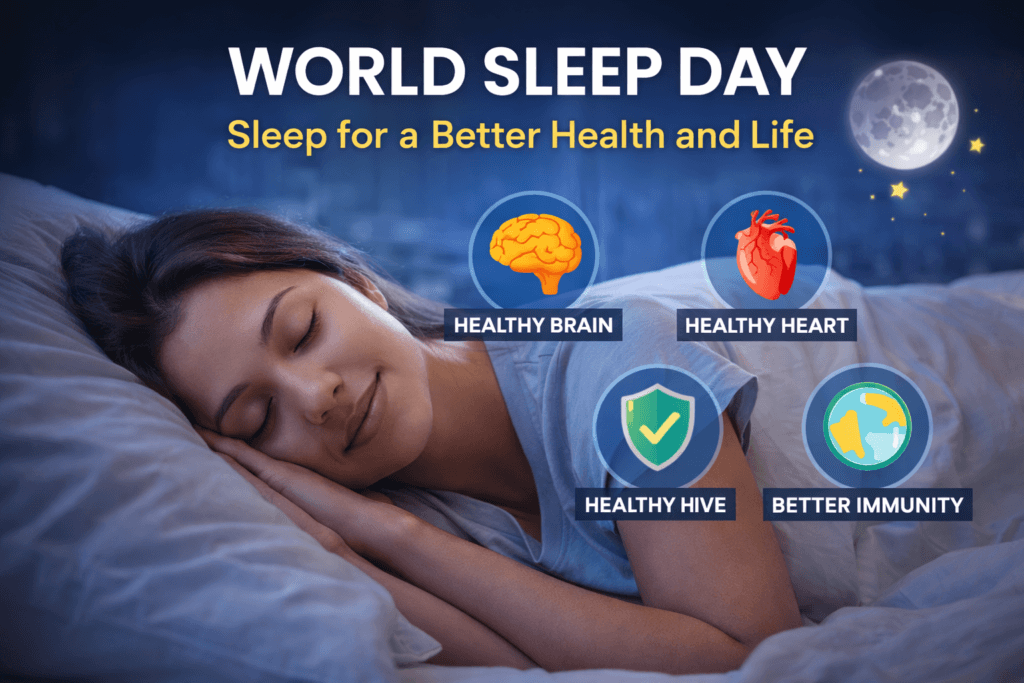
World Sleep Day: Importance of Good Sleep, Health Benefits, Sleep Disorders, and Tips for Better Sleep
Introduction –
Why World Sleep Day is Important for Everyone
World Sleep Day is observed every year to spread awareness about the importance of healthy sleep and to educate people about sleep disorders that affect millions of people worldwide.
Modern lifestyle, stress, mobile phones, night-shift work, obesity, and irregular routine have made sleep problems very common. Many people think sleep is not important, but medical science proves that poor sleep increases the risk of obesity, diabetes, heart disease, high blood pressure, depression, and low immunity.
This article explains everything common people should know about sleep, including how much sleep is needed, what happens if sleep is poor, common sleep disorders, and practical tips for better sleep.
What is World Sleep Day?
World Sleep Day is organized by the
World Sleep Society
to promote awareness about sleep health.
It is celebrated every year on the Friday before the spring equinox in March.
Objectives of World Sleep Day
- Increase awareness about sleep health
- Educate people about sleep disorders
- Encourage healthy sleep habits
- Reduce diseases caused by sleep deprivation
Good sleep is as important as food, water, and exercise.
Why Sleep is Essential for Human Health
Sleep is not just rest. During sleep, the body performs important repair and recovery functions.
Functions of Sleep
- Brain detoxification
- Hormone regulation
- Muscle repair
- Memory improvement
- Heart protection
- Weight control
- Immune strengthening
People who do not sleep properly slowly develop many health problems.
How Many Hours of Sleep Do We Need?
Sleep requirement depends on age.
| Age Group | Recommended Sleep |
| Children | 10–12 hours |
| Teenagers | 8–10 hours |
| Adults | 7–8 hours |
| Elderly | 6–7 hours |
Sleeping less than 6 hours regularly increases risk of disease.
What Happens If You Do Not Sleep Properly?
Lack of sleep affects every organ in the body.
Effects on Brain
- Poor memory
- Anxiety
- Irritability
- Depression
Effects on Heart
- High blood pressure
- Heart attack risk
- Stroke risk
Effects on Metabolism
- Weight gain
- Diabetes
- Fatty liver
Effects on Hormones
- Increased hunger
- Sugar craving
- Low energy
Effects on Immunity
- Frequent infections
- Slow healing
Chronic sleep deprivation is a major hidden cause of lifestyle diseases.
Understanding Sleep Cycle
Sleep occurs in cycles.
Stages of sleep:
- Light sleep
- Deep sleep
- REM sleep (dream sleep)
Each cycle lasts about 90 minutes.
Deep sleep repairs body
REM sleep repairs brain
If sleep is disturbed, body does not recover properly.
Common Sleep Disorders in Modern Society
1. Insomnia
Difficulty falling asleep or staying asleep.
Causes:
- Stress
- Mobile phone use
- Anxiety
- Depression
- Caffeine
2. Sleep Apnea
A serious disorder where breathing stops during sleep.
Symptoms:
- Loud snoring
- Daytime sleepiness
- Morning headache
- Obesity
- High BP
Sleep apnea is very common in overweight people.
3. Restless Leg Syndrome
Uncomfortable sensation in legs during sleep.
4. Shift Work Sleep Disorder
Seen in doctors, IT workers, factory workers, drivers.
5. Jet Lag Sleep Problem
Common in international travellers.
Relationship Between Sleep and Obesity
Poor sleep increases hunger hormone (ghrelin)
Decreases fullness hormone (leptin)
Result:
- More eating
- More sugar craving
- Weight gain
People sleeping less than 6 hours have more belly fat.
Good sleep is necessary for weight loss.
Sleep and Diabetes
Poor sleep causes insulin resistance.
Increases risk of:
- Type 2 diabetes
- Prediabetes
- Metabolic syndrome
Night shift workers have higher diabetes risk.
Sleep and Heart Disease
Sleep deprivation causes:
- High BP
- High cholesterol
- Stress hormones
- Inflammation
All increase risk of heart attack and stroke.
Sleeping 7–8 hours protects heart.
Sleep and Mental Health
Sleep affects brain function.
Poor sleep causes:
- Anxiety
- Depression
- Anger
- Poor concentration
Good sleep improves:
- Mood
- Memory
- Decision making
- Productivity
Sleep and Immunity
During sleep, body produces protective cells.
People who sleep less:
- Get infections more often
- Recover slowly
- Feel tired frequently
Good sleep improves immunity.
Causes of Poor Sleep in Modern Life
Common causes:
- Mobile phone at night
- Late dinner
- Stress
- Social media
- Alcohol
- Smoking
- Coffee at night
- Obesity
- Irregular routine
Blue light from screen reduces melatonin hormone.
Melatonin controls sleep.
Signs That You Are Not Sleeping Well
- Morning tiredness
- Daytime sleepiness
- Snoring
- Headache
- Poor concentration
- Weight gain
- High BP
If symptoms present, sleep evaluation needed.
Tips for Good Sleep (Sleep Hygiene)
Follow these simple rules.
Fix sleep time
Sleep and wake at same time daily.
Avoid mobile before sleep
Stop screen 1 hour before bed.
Eat early dinner
At least 2–3 hours before sleep.
Avoid caffeine at night
No tea or coffee after evening.
Exercise daily
Improves deep sleep.
Keep room dark
Darkness increases melatonin.
Keep room cool
Cool temperature gives better sleep.
Avoid alcohol
Alcohol disturbs sleep cycle.
Relax before sleep
Meditation, prayer, reading.
Maintain healthy weight
Obesity causes snoring and sleep apnea.
When Should You Consult a Doctor?
Consult doctor if:
- Loud snoring
- Daytime sleepiness
- Insomnia for >2 weeks
- Stop breathing during sleep
- Morning headache
- Obesity with snoring
Sleep test may be needed.
Sleep Study Test (Polysomnography)
Sleep study records:
- Brain waves
- Oxygen level
- Heart rate
- Breathing pattern
- Snoring
Used to diagnose sleep apnea and other disorders.
Treatment of Sleep Disorders
Treatment depends on cause.
Insomnia → lifestyle change, medicines
Sleep apnea → weight loss, CPAP machine
Anxiety → counseling, relaxation
Snoring → weight control, sleep therapy
Early treatment prevents complications.
Diet and Sleep
Good for sleep:
- Milk
- Banana
- Nuts
- Light dinner
Avoid at night:
- Heavy food
- Spicy food
- Coffee
- Alcohol
Magnesium helps improve sleep.
Exercise and Sleep
Regular exercise improves sleep quality.
Best time:
Morning or evening.
Avoid heavy exercise before sleep.
Message on World Sleep Day
Sleep is not waste of time.
Sleep is natural medicine.
Good sleep gives:
- Healthy heart
- Strong brain
- Better immunity
- Good mood
- Long life
Conclusion
On World Sleep Day, promise yourself:
Sleep on time
Wake on time
Stay healthy
Conclusion
World Sleep Day reminds us that sleep is one of the most important pillars of health. In modern lifestyle, many people sacrifice sleep for work, mobile, or stress, but this leads to serious diseases in the long run. By maintaining proper sleep habits, healthy diet, regular exercise, and stress control, we can improve sleep naturally and live a healthier life.
Good sleep today means good health tomorrow.
Was this article helpful?

Super-specialist GI, bariatric & cancer surgeon. SGPGIMS (India's premier GI centre) + advanced training in Japan & South Korea. Read full profile →
Last reviewed: July 2026




Comments
Be the first to share your thoughts on this article.