

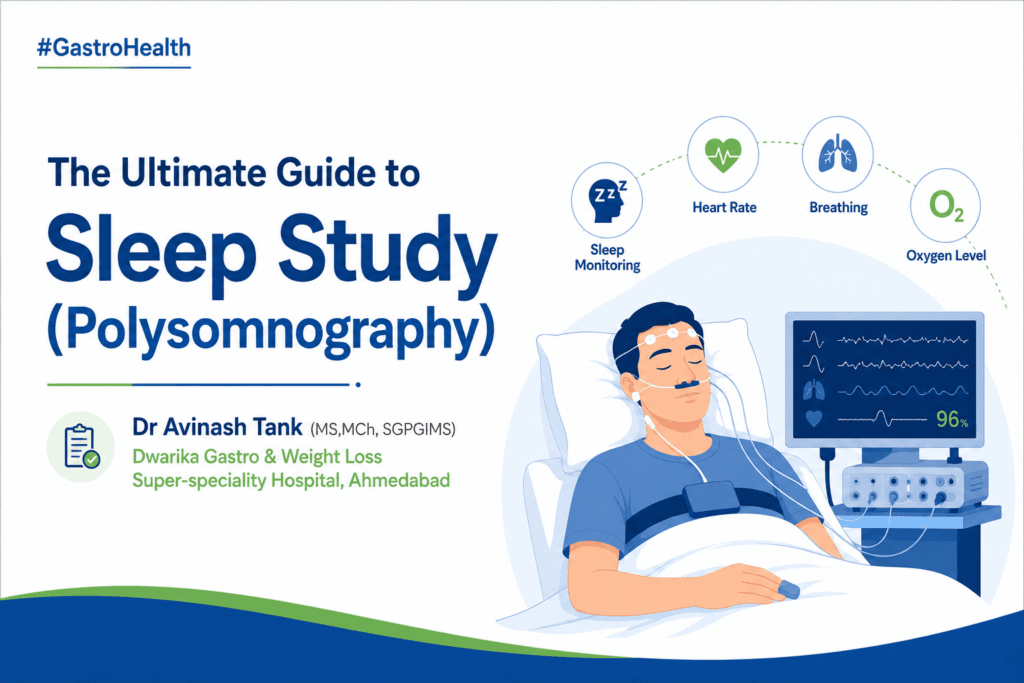
The Ultimate Guide to Sleep Study (Polysomnography): Why It’s Done, How It Works & How to Prepare
Sleep is one of the most important pillars of health, yet millions of people silently suffer from poor-quality sleep without realizing the underlying cause.
Loud snoring, excessive daytime sleepiness, fatigue, poor concentration, morning headaches, obesity, and high blood pressure may all point toward a hidden sleep disorder.
A Sleep Study, medically known as Polysomnography (PSG), is a specialized overnight test used to diagnose various sleep disorders — especially Obstructive Sleep Apnea (OSA).
At Dwarika Gastro & Weight Loss Super-speciality Hospital, advanced sleep study evaluation helps identify the root cause of disturbed sleep and guides effective treatment for healthier living.
What Is a Sleep Study (Polysomnography)?
Polysomnography is a painless, non-invasive overnight test that records multiple body functions while you sleep.
The word “polysomnography” means:
- Poly = many
- Somno = sleep
- Graphy = recording
It simultaneously monitors:
- Brain activity
- Breathing pattern
- Oxygen levels
- Heart rate
- Eye movements
- Muscle activity
- Snoring
- Body movements
This test helps doctors understand what happens inside the body during sleep and identify any abnormalities.
Why Is a Sleep Study Done?
A sleep study is recommended when a person shows symptoms suggestive of sleep disorders.
Common Reasons for Sleep Study
1. Loud Snoring
Persistent loud snoring may indicate airway blockage during sleep.
2. Suspected Sleep Apnea
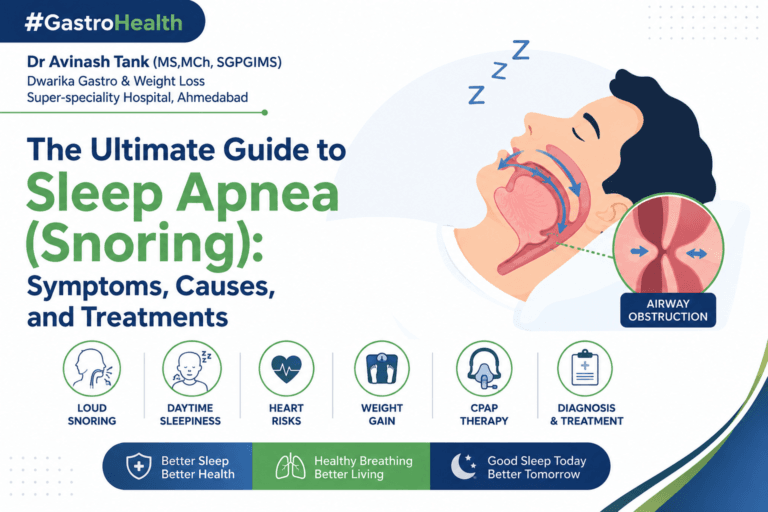
Sleep apnea is a condition in which breathing repeatedly stops and starts during sleep.
Symptoms include:
- Choking during sleep
- Gasping for air
- Witnessed pauses in breathing
- Restless sleep
3. Excessive Daytime Sleepiness
Feeling sleepy during meetings, driving, reading, or watching TV may indicate poor sleep quality.
4. Morning Headaches
Repeated oxygen deprivation during sleep can lead to headaches.
5. Obesity and Weight Gain
Obesity is strongly associated with obstructive sleep apnea.
6. Resistant High Blood Pressure
Poor sleep and sleep apnea may worsen hypertension.
7. Diabetes and Metabolic Syndrome
Untreated sleep disorders can affect sugar control and metabolism.
8. Difficulty Concentrating
Poor sleep quality can impair memory, productivity, and mood.
9. Suspected Restless Leg Syndrome or Periodic Limb Movements
Uncontrolled leg movements during sleep can disrupt restful sleep.
10. Sleep-related Behavioral Disorders
Conditions like sleepwalking or abnormal nighttime behaviors may require evaluation.
What Conditions Can Be Diagnosed by Sleep Study?
A sleep study helps diagnose:
- Obstructive Sleep Apnea (OSA)
- Central Sleep Apnea
- Snoring disorders
- Narcolepsy
- Insomnia-related conditions
- Restless Leg Syndrome
- Parasomnias (sleepwalking, night terrors)
- Nocturnal seizures
- Periodic limb movement disorders
How Is a Sleep Study Done?
Many people worry that a sleep study may be painful or uncomfortable. In reality, it is a safe and painless procedure.
Step-by-Step Procedure
Step 1: Arrival at Sleep Lab
The patient usually arrives at the sleep center in the evening.
A comfortable private room similar to a hotel room is provided.
Step 2: Sensor Placement
A trained sleep technician attaches small sensors to different parts of the body using adhesive patches.
These sensors monitor:
- Brain waves (EEG)
- Eye movement
- Heart rhythm (ECG)
- Oxygen saturation
- Breathing effort
- Airflow through nose and mouth
- Muscle movements
- Snoring sounds
Step 3: Overnight Monitoring
The patient sleeps normally while the equipment records body activities throughout the night.
A technician monitors the data remotely.
Step 4: Data Analysis
The recorded information is analyzed by sleep specialists to identify abnormalities in breathing and sleep patterns.
Step 5: Report Generation
A detailed sleep report is prepared, including:
- Apnea-Hypopnea Index (AHI)
- Oxygen drops during sleep
- Sleep stages
- Snoring severity
- Heart rhythm abnormalities
Is Sleep Study Painful?
No.
Sleep study is:
- Non-surgical
- Needle-free
- Painless
- Safe for all age groups
The sensors only record body signals externally.
Types of Sleep Studies
1. In-Lab Polysomnography
Conducted in a specialized sleep laboratory under supervision.
Best for:
- Moderate to severe symptoms
- Complex sleep disorders
- Detailed evaluation
2. Home Sleep Study
Portable monitoring device used at home.
Suitable for selected patients with suspected obstructive sleep apnea.
How to Prepare Yourself for a Sleep Study
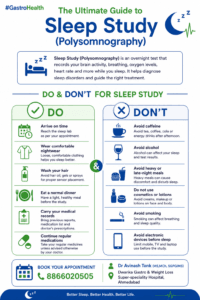
Proper preparation improves the accuracy of results.
Before the Test
Avoid Caffeine
Avoid tea, coffee, cola, or energy drinks after afternoon hours.
Avoid Alcohol
Alcohol can alter sleep patterns and interfere with results.
Continue Regular Medicines
Unless advised otherwise by your doctor.
Wash Hair Properly
Avoid hair oil, sprays, or gels because sensors need proper contact.
Eat Normal Dinner
Avoid heavy late-night meals.
Carry Comfortable Nightwear
Loose and comfortable clothing is preferred.
Bring Previous Medical Records
Carry:
- Previous reports
- Medication list
- Doctor’s prescriptions
What Happens After the Sleep Study?
After the study:
- The doctor reviews the report.
- Sleep disorder severity is assessed.
- Treatment options are discussed.
Treatment may include:
- Weight loss
- Lifestyle changes
- CPAP therapy
- Oral appliances
- Surgery in selected cases
Why Early Diagnosis Matters
Untreated sleep apnea and sleep disorders can increase the risk of:
- High blood pressure
- Heart disease
- Stroke
- Diabetes
- Obesity
- Depression
- Accidents due to daytime sleepiness
Early diagnosis can dramatically improve quality of life and long-term health.
Benefits of Sleep Study
A sleep study can help:
- Improve sleep quality
- Reduce daytime fatigue
- Improve concentration
- Control blood pressure
- Improve diabetes management
- Reduce snoring
- Improve heart health
- Enhance overall wellbeing
Who Should Consider a Sleep Study?
You should consult a doctor if you have:
- Loud snoring
- Daytime sleepiness
- Obesity
- Morning headaches
- Witnessed breathing pauses
- Poor concentration
- Poor-quality sleep
- Uncontrolled blood pressure
Book Your Sleep Study Appointment
If you or your family member experiences loud snoring, disturbed sleep, obesity-related sleep problems, or daytime fatigue, a professional sleep evaluation can help detect hidden sleep disorders early.
Consult:
Dr. Avinash Tank (MS, MCh, SGPGIMS)
Gastro & Obesity Specialist
At:
Dwarika Gastro & Weight Loss Super-speciality Hospital
Services Available:
- Sleep Apnea Evaluation
- Sleep Study (Polysomnography)
- Obesity Assessment
- Weight Loss Guidance
- CPAP Counseling
Early diagnosis can improve sleep, energy, heart health, and overall quality of life.
Was this article helpful?

Super-specialist GI, bariatric & cancer surgeon. SGPGIMS (India's premier GI centre) + advanced training in Japan & South Korea. Read full profile →
Last reviewed: July 2026




Comments
Be the first to share your thoughts on this article.