

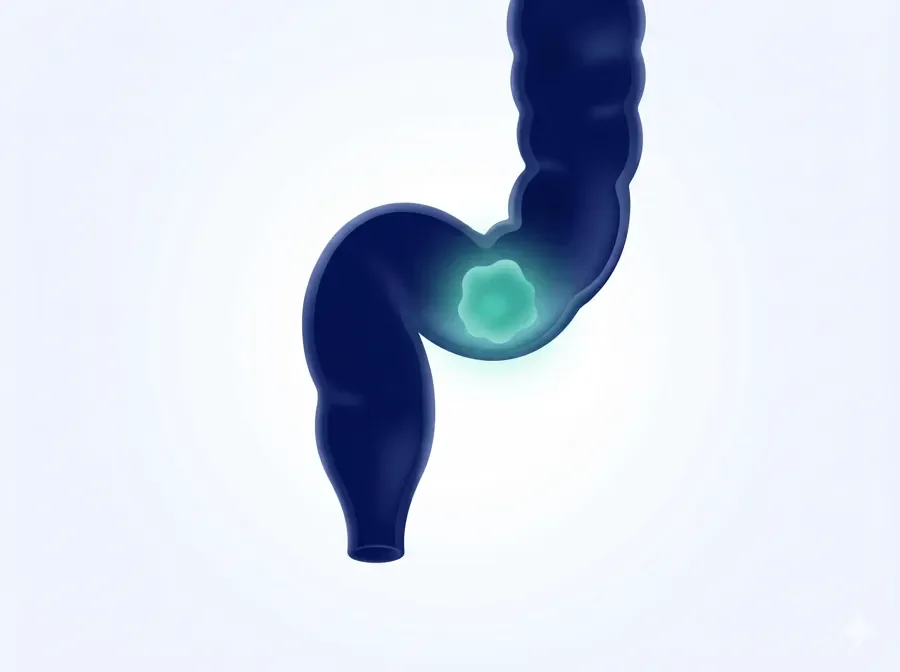
Colon cancer develops in the large intestine, most often from polyps that grow slowly over years and can be removed during colonoscopy before they turn cancerous. Caught early, surgery offers a high chance of cure — which is why screening saves lives.
Malignant tumour of the colon (large intestine)
Age 45+, polyps, family history, diet, inflammatory bowel disease
Change in bowel habit, bleeding, anaemia, or a positive screen
Surgical resection (often laparoscopic) ± chemotherapy
What is colon cancer?
Colon cancer arises in the large intestine and usually begins as a small growth called a polyp. Over years, some polyps slowly turn cancerous. This slow sequence is exactly why screening is so powerful: removing polyps prevents cancer from ever developing.
Symptoms & diagnosis
Common symptoms include a persistent change in bowel habit, blood in the stool, abdominal discomfort, unexplained anaemia or weight loss — though early cancer may cause no symptoms. Colonoscopy is the key test: it both diagnoses cancer (with biopsy) and removes pre-cancerous polyps, with CT used to stage the disease.
Treatment options
The mainstay of cure is surgical removal of the affected segment of colon along with its lymph nodes, increasingly performed by laparoscopic surgery for faster recovery. Chemotherapy is added for more advanced disease. Outcomes are excellent when the cancer is caught early.
Screening prevents cancer
Because colon cancer develops from removable polyps, a screening colonoscopy from around age 45 — or earlier with a family history — can prevent the disease, not just detect it. This is one of the most effective cancer-prevention strategies in medicine.
How we treat Colon Cancer
 Recommended treatment
Robotic Colorectal Surgery
Recommended treatment
Robotic Colorectal Surgery
Robotic surgery for colon and rectal cancer — superb access for total mesorectal excision in the narrow pelvis, with better nerve preservation (continence and sexual function) and sphincter-saving outcomes.
View treatment details →Cashless insurance accepted at our network hospitals, with EMI options available. Every patient gets a written, transparent estimate before any procedure — no surprises.

Dr. Avinash Tank, MBBS · MS (General Surgery) · MCh (Surgical Gastroenterology, SGPGIMS)
SGPGIMS (India's premier GI centre) + advanced training in Japan & South Korea. Super-specialist gastrointestinal, bariatric & cancer surgeon treating Colon Cancer at Dwarika Hospital — Gastro, Bariatric & Laparoscopic Surgery Center.
Proof, not promises
A pre-cancerous polyp found and removed during screening — a colon cancer prevented before it could form.
Read the full case → DWARIKA HOSPITALPatient Education

"A colonoscopy caught a polyp early. Calm, reassuring and thorough — I am grateful for the careful approach."
More on Colon Cancer
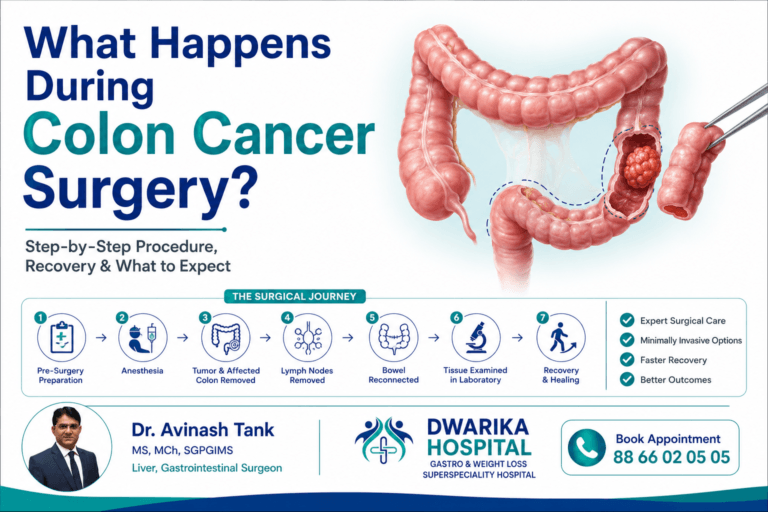 Colon CancerWhat Happens During Colon Cancer Surgery?
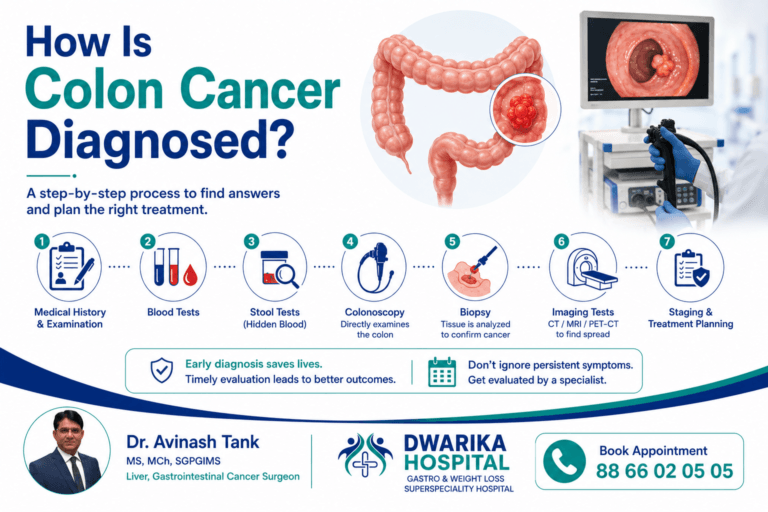 Colon CancerHow Is Colon Cancer Diagnosed?
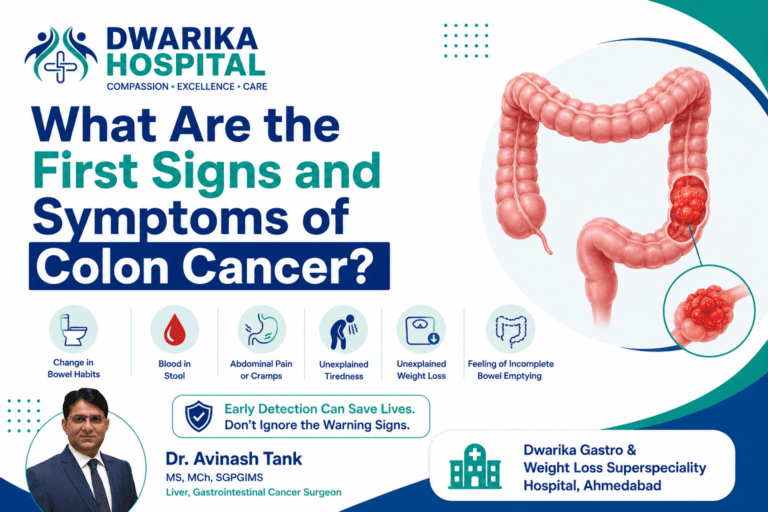 Colon CancerWhat Are the First Signs and Symptoms of Colon Cancer?
Frequently asked questions
Removing pre-cancerous polyps during a screening colonoscopy prevents most colon cancers, making screening from age 45 highly effective.
A lasting change in bowel habit, blood in the stool, unexplained anaemia, abdominal pain or weight loss should always be assessed.
Yes. Laparoscopic colon surgery is now standard in many cases, offering smaller scars, less pain and a quicker recovery with equal cancer outcomes.
Screening generally begins around age 45–50, or earlier if you have symptoms or a family history of colon cancer or polyps.
Super-specialist GI, bariatric & cancer surgeon. SGPGIMS (India's premier GI centre) + advanced training in Japan & South Korea. Read full profile →
Last reviewed: July 2026