

- IAGES
- ASI — Association of Surgeons of India
- SAGES
- International surgical societies
Quick answer
AI & snippet readyOrgan donation is a powerful act of compassion that has the potential to save countless lives. Every year, two significant events shed light on the importance of organ donation: World Organ Donation Day and National Organ Donation Day. These occasions serve as reminders of the life-changing impact that a single act of kindness can have […]
Key takeaways
Overview
Highlights of the New Guidelines
Overview
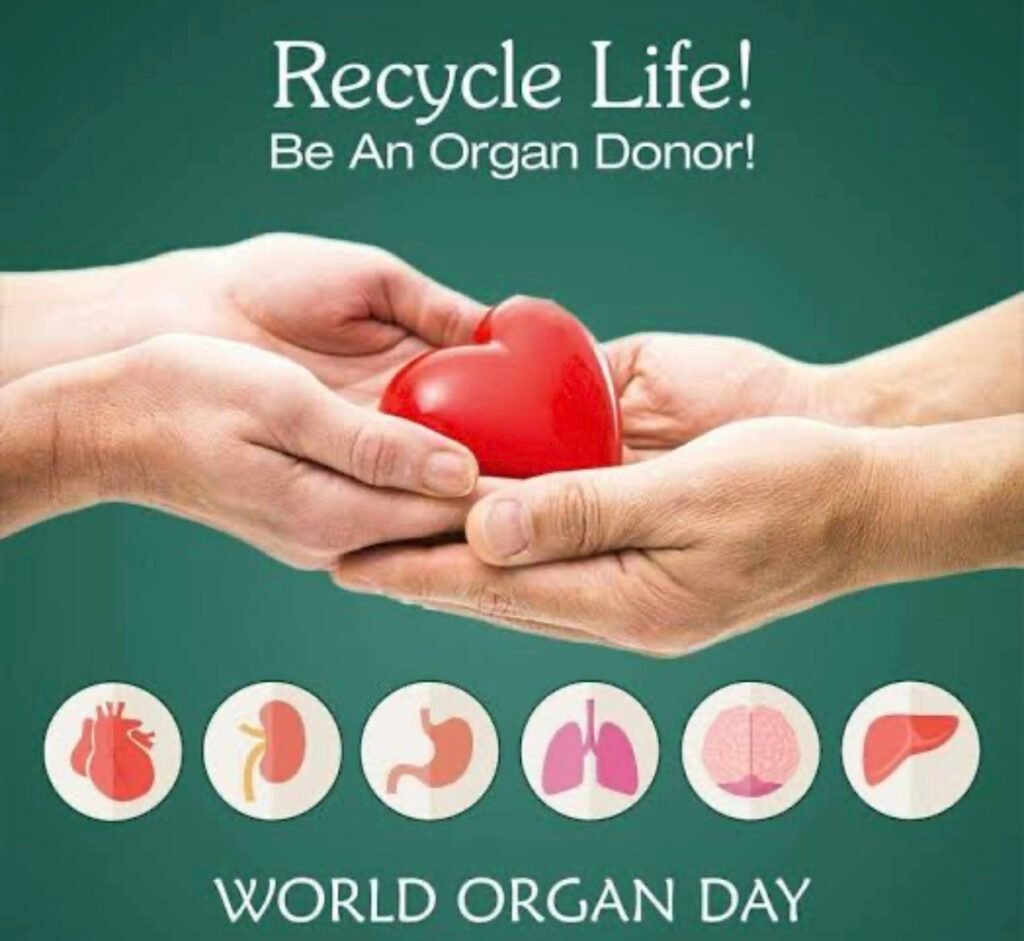
Organ donation is a powerful act of compassion that has the potential to save countless lives. Every year, two significant events shed light on the importance of organ donation: World Organ Donation Day and National Organ Donation Day. These occasions serve as reminders of the life-changing impact that a single act of kindness can have on those in need.
World Organ Donation Day: History and Significance
World Organ Donation Day, observed on August 13th annually, stands as a global initiative to raise awareness about the significance of organ donation.
One of these milestones was Ronald Lee Herrick's selfless donation of a kidney to his twin brother in 1954, a feat that eventually led to Nobel Prize-winning advancements in organ transplantation.
August 13th was chosen as the day to honor this achievement and to emphasize the importance of organ donation in the global community.
This day underscores the misconceptions surrounding organ donation, aiming to dispel myths and encourage more people to consider the life-saving impact of donating their organs.
By donating organs such as hearts, kidneys, lungs, and more, individuals can provide hope to those suffering from chronic illnesses and organ failure.
National Organ Donation Day: Focusing on Local Impact
In India, the need for organ donation is critical due to the prevalence of organ failure and a shortage of available organs.
To address this issue, National Organ Donation Day was established. Initially celebrated on November 27th, this event aimed to raise awareness about organ donation and emphasize its importance within the country.
This day was established under the Ministry of Health & Family Welfare and the National Organ and Tissue Transplant Organization (NOTTO). The date was chosen strategically to commemorate significant achievements in organ transplantation within the country.
However, in 2023, India shifted its National Organ Donation Day to August 3rd to commemorate its first successful deceased-donor heart transplant on that date in 1994. This change was made to further align the celebration with a landmark achievement in the field.
Amazing Facts about Organ Donation
Certainly, here are some interesting facts about organ donation:
- One Organ Donor Can Save Multiple Lives: A single organ donor has the potential to save and improve the lives of many people. Organs such as the heart, liver, lungs, kidneys, and pancreas can be transplanted to recipients in need.
- Age is Not a Barrier: While age can impact the suitability of organs for donation, there is no strict age limit for becoming an organ donor. Organs from donors of all ages can be viable for transplantation.
- Living Donation of Kidneys: Living individuals can donate one of their kidneys, as the body can function well with just one healthy kidney. This type of donation can help save a loved one's life or contribute to a paired exchange program.
- Transplants Have a High Success Rate: Organ transplantation has come a long way in terms of medical advancements and technology. Many transplant procedures have a high success rate, leading to improved quality of life for recipients.
- Donor Compatibility Matters: Organ compatibility is essential for a successful transplant. Factors such as blood type, tissue type, and antigen matching play a crucial role in determining donor-recipient compatibility.
- Short Window for Organ Retrieval: Organs must be transplanted relatively soon after retrieval to ensure their viability. Hearts and lungs, for instance, have a very limited time frame for transportation and transplantation.
- Ethical and Legal Regulations: Most countries have strict ethical and legal regulations in place to ensure that organ donation and transplantation processes are transparent, safe, and ethical.
- Culturally Diverse Perspectives: Different cultures and religions have varying views on organ donation. Understanding and respecting these perspectives is important for promoting organ donation within diverse communities.
- Global Organ Shortage: Organ shortages are a global challenge, not limited to any specific country or region. The demand for organs for transplantation exceeds the available supply, leading to waiting lists and urgent needs.
- Living Donors Experience Positive Outcomes: Living organ donors often report a sense of satisfaction and well-being after donating. Kidney donors, for example, tend to have normal kidney function after donation.
- Donation After Cardiac Death: In some cases, organs can be retrieved from individuals who have experienced cardiac death rather than brain death. This expands the pool of potential donors.
- Donation Can Extend Beyond Organs: In addition to organs, tissues such as corneas, skin, bone, and heart valves can also be donated, benefiting patients in need of various types of tissue transplants.
Who Can Donate the Organ?
Eligibility Criteria for Organ Donation
- Age: While age is not a barrier to organ donation, the suitability of organs for transplantation depends on their condition. Organs from younger donors generally have a higher chance of success, but donors of all ages can potentially save lives. Even minors can become donors with parental or guardian consent.
- Health Condition: The health of the potential donor is a critical factor. Donors should be in good general health to ensure the success of the organ transplant. However, having a medical condition doesn't necessarily disqualify someone from donating. Each case is assessed individually, and some organs may still be viable for transplantation.
- Medical History: Certain medical conditions may prevent organ donation. Conditions like HIV, active cancer, severe infections, and systemic diseases could render organs unsuitable for transplantation. However, each situation is evaluated on a case-by-case basis.
- Cause of Death: Deceased donors typically result from brain death due to conditions like accidents, trauma, or other catastrophic brain injuries. Organs can be harvested within a specific time frame after brain death is confirmed and with the family's consent.
- Living Donation: In living donation cases, individuals can donate organs like kidneys or parts of the liver while alive. Living donors undergo rigorous medical and psychological evaluations to ensure their health and well-being after donation.
How Can I Make a Body Donation?
To donate your body after your passing, the first step is to connect with Medical Colleges or Body Donation NGOs in your vicinity. Registering your intent with these institutions in your city is crucial.
Accessing this vital information is made easy by using the green button provided above, the Pan-India Body Donation Directory. By utilizing this resource, you can locate Healthcare Institutions or organizations in India that are situated conveniently near you.
A key point to remember is that, once you have passed away, it will be your family or closest relatives who will oversee the body donation process. This underscores the importance of involving them in your decision, ensuring they are informed about your wishes, and comfortable with the entire procedure. Their unwavering support is of the utmost significance during this process.
Online Resource to find out nearby Medical college:
Finding Nearby Medical Colleges on this website:
- Utilise the dropdown menu below to select your desired state for information on body donation or "deh dan" in India.
- Next, choose the city you are interested in from the second dropdown menu to access specific details.
- Finally, the third dropdown menu will display the names of Medical Colleges or NGOs operating in that region where you can contribute to body donation.
NGO for Organ Donation in India
Here is a compilation of NGOs that offer assistance for organ donation:
- Gift Your Organ Foundation: Established in February 2011, this registered Charitable Trust educates and advocates for deceased organ donations. It acts as a bridge between the government, hospitals, and organ donors. It also maintains a national registry linked to The Zonal Co-ordination Committee for Transplantation in Karnataka (ZCCK).
- Narmada Kidney Foundation (NKF): Founded in 1993, NKF is a registered NGO. Dr. Bharat Shah, a prominent Nephrologist, established it due to the rising incidence of chronic kidney disease. The foundation aims to address the medical, economic, and social challenges associated with kidney diseases. As of today , website of organisation is not active.
- Amit Gupta Foundation: Established in November 2009, this Delhi based charitable trust commemorates Late Mr. Amit Gupta by engaging in various charitable and social initiatives.
- OneIndiaOneLaw: Ahmedabad based NGO, aims to assist individuals across the nation who encounter legal challenges stemming from existing regulations in the field of organ donation and transplantation.
- Shatayu: This non-profit organization, supported by the Govindbhai C. Patel Foundation and Ganesh Housing Corporation Limited, operates from Ahmedabad. Its mission is to raise awareness about organ donation and change people's perceptions about the gift of life.
- Apex Kidney Foundation: Founded in 2008 by Mumbai based philanthropists and nephrologists, the foundation focuses on preventing kidney diseases through education and early detection. It supports individuals with kidney disease by improving care quality, promoting kidney transplantation, and providing financial assistance.
- MOHAN Foundation: The Multi Organ Harvesting Aid Network operates in Chennai, Delhi/NCR, Nagpur, Coimbatore, and Hyderabad.
- TANKER (Tamilnad Kidney Research Foundation): Based in Tamil Nadu, this foundation supports kidney research and initiatives.
- GANADARPAN (Kolkata): This organization in Kolkata contributes to organ donation efforts.
- ZCCK (Zonal Coordination Committee of Karnataka for Transplantation): Email: zcckbangalore@gmail.com
- ZTCC (Zonal Transplant Coordination Center): Located in Mumbai, Maharashtra. Email: organtransplant@ztccmumbai.org
- NDTNINDIA (NATIONAL DECEASED DONOR TRANSPLANTATION NETWORK): Email: info@ndtnindia.org
- NNOS (National Network for Organ Sharing): Email: info@nnos.org
What is Organ Donation?
Organ donation involves the practice of taking a human organ from either a living or deceased person, known as a Donor, and placing it into a recipient. This recipient is typically a patient facing organ failure, whose survival hinges on receiving a replacement organ. The act of collecting organs is termed Retrieval.
Which Organ can be donated by Living Donor & Deceased Donor
Living Donors can donate the following organs:
- Kidney: The most common living donor organ transplant is a kidney. A healthy individual can donate one of their kidneys, as the remaining kidney can adequately perform its functions.
- Partial Liver: In some cases, a living donor can donate a portion of their liver to a recipient. Both the donor's and recipient's livers can regenerate and grow to full size.
Deceased Donors can donate the following organs:
- Heart: The heart can be transplanted to a recipient with end-stage heart failure.
- Lungs: Lungs can be transplanted to patients with severe lung diseases, such as chronic obstructive pulmonary disease (COPD) or cystic fibrosis.
- Liver: The liver can be divided and transplanted into recipients with liver failure.
- Kidneys: Deceased donors can provide kidneys for transplantation, helping patients with kidney failure.
- Pancreas: The pancreas can be transplanted to individuals with type 1 diabetes or severe pancreatic diseases.
- Intestines: In some cases, deceased donor intestines can be transplanted to individuals with intestinal failure.
In addition to these organs, both living and deceased donors can also donate various types of tissues, such as corneas, skin, bone, heart valves, and blood vessels, which can be used for tissue transplantation to improve the quality of life for recipients.
Commit to Organ Donation: Take the Pledge
Becoming an organ donor through pledging is a straightforward process.
Complete the online pledge form and in return, authorities will dispatch a donor card containing a distinctive government registration number to you.
These pledges are formally recorded by the National Organ & Tissue Transplant Organisation (NOTTO).
It's essential to understand that enlisting as an organ donor signifies your intention to contribute, but the card itself doesn't hold legal authority. Despite this, it serves as a symbolic representation of your commitment.
Keep the card close and let your friends and family know about your decision.
In compliance with Indian regulations, the ultimate decision about organ donation upon your passing rests with your next of kin.
Your pledged intentions do not result in organ donation unless your next of kin grants approval.
This underscores the importance of having an open conversation with your family about your desire to be an organ donor. This ensures that your family is well-informed and capable of fulfilling your wishes should the situation arise.
How government is enhancing organ donation?
Recently, the Ministry of Health and Family Welfare has modified National Organ Transplantation Guidelines, allowing those above 65 years of age to receive an organ for transplantation from deceased donors.
- In India, Transplantation of Human Organs Act, 1994provides various regulations for the removal of human organs and its storage. It also regulates the transplantation of human organs for therapeutic purposes and for the prevention of commercial dealings in human organs.
Highlights of the New Guidelines
Why Organ donation is required in India?
- Removed Age Cap: The upper age limit has been removed as people are now living longer. Earlier, according to the NOTTO (National Organ and Tissue Transplant Organization)guidelines, an end-stage organ failure patient above 65 years of age was prohibited from registering to receive the organ.
- The upper age limit has been removed as people are now living longer. Earlier, according to the NOTTO (National Organ and Tissue Transplant Organization)guidelines, an end-stage organ failure patient above 65 years of age was prohibited from registering to receive the organ.
- Earlier, according to the NOTTO (National Organ and Tissue Transplant Organization)guidelines, an end-stage organ failure patient above 65 years of age was prohibited from registering to receive the organ.
- No Domicile Requirement: The ministry has removed the domicile requirement to register as an organ recipient in a particular state under a ‘One Nation, One Policy’move. Now a needy patient can register to receive an organ in any state of his or her choice and will also be able to get the surgery done there.
- The ministry has removed the domicile requirement to register as an organ recipient in a particular state under a ‘One Nation, One Policy’move.
- Now a needy patient can register to receive an organ in any state of his or her choice and will also be able to get the surgery done there.
- No Fees for Registration: There will be no registration fee that states used to charge for this purpose, the Centre has asked states that used to charge for such registration to not do so. Among the states that sought money for registration were Gujarat, Telangana, Maharashtra, and Kerala. Certain states asked for anything between Rs 5,000 and Rs 10,000 to register a patient on the organ recipient waitlist.
- There will be no registration fee that states used to charge for this purpose, the Centre has asked states that used to charge for such registration to not do so.
- Among the states that sought money for registration were Gujarat, Telangana, Maharashtra, and Kerala. Certain states asked for anything between Rs 5,000 and Rs 10,000 to register a patient on the organ recipient waitlist.
- Certain states asked for anything between Rs 5,000 and Rs 10,000 to register a patient on the organ recipient waitlist.
Organ donation is crucial in India for several reasons:
- Shortage of Organs: There is a significant shortage of organs available for transplantation in India. The demand for organs far exceeds the supply, leading to long waiting lists and a high mortality rate among patients awaiting transplants.
- Medical Advancements: Medical advancements have made organ transplantation a life-saving option for many individuals suffering from organ failure or diseases. Organ donation provides a chance for these patients to regain their health and quality of life.
- Improved Survival Rates: Organ transplantation can significantly improve the survival rates and overall well-being of patients with end-stage organ failure. It offers them a chance to lead longer, healthier lives.
- Social Responsibility: Organ donation is an act of compassion and social responsibility. By donating organs, individuals can contribute to saving lives and making a positive impact on society.
- Cultural and Religious Perspectives: Many religions and cultures in India emphasize the importance of altruism and helping others. Organ donation aligns with these values and beliefs, making it a meaningful and ethical choice.
- Awareness and Education: Increasing awareness and education about organ donation can help dispel myths and misconceptions, encouraging more people to consider and discuss the option of donation.
- Legal Framework: India has a legal framework that supports organ donation and transplantation, making the process safe and regulated. The Transplantation of Human Organs and Tissues Act, 1994, and subsequent amendments provide guidelines for ethical and lawful organ transplantation.
- Healthcare Infrastructure: India has a well-developed healthcare infrastructure that can support organ transplantation. With the growth of specialized transplant centers, the potential for successful transplant procedures is significant.
How we get you better — step by step
From the blog
 Weight Loss
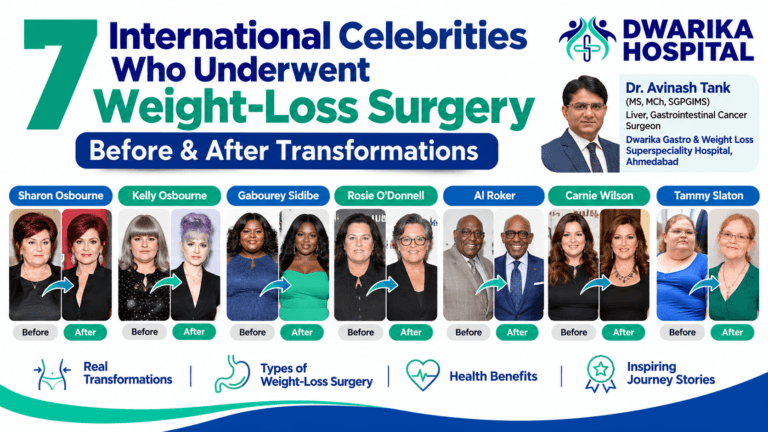
7 International Celebrities Who Underwent Weight-Loss Surgery: Before & After Transformations
Weight Loss
7 International Celebrities Who Underwent Weight-Loss Surgery: Before & After Transformations
7 International Celebrities Who Underwent Weight-Loss Surgery: Before & After Transformat…
Read article →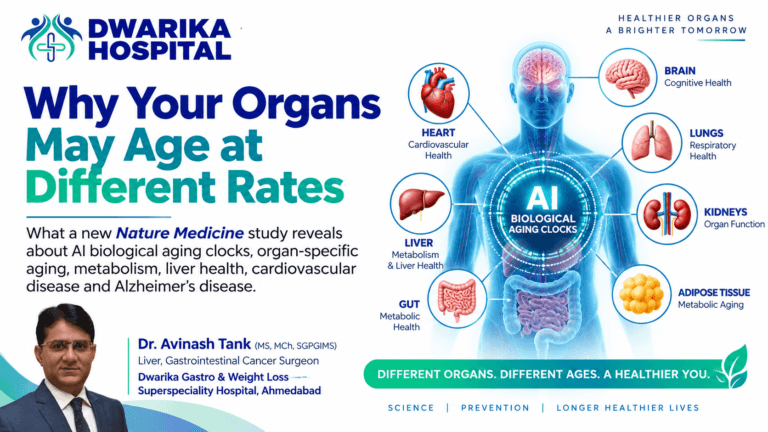 Uncategorized
Why Your Organs May Age at Different Rates
Uncategorized
Why Your Organs May Age at Different Rates
Why Your Organs May Age at Different Rates What a new Nature Medicine study reveals about…
Read article → Obesity
216 UK Death Reports Linked to Weight-Loss Injections: What Mounjaro, Wegovy and Other GLP-1 Drugs Users Need to Know
Obesity
216 UK Death Reports Linked to Weight-Loss Injections: What Mounjaro, Wegovy and Other GLP-1 Drugs Users Need to Know
216 UK Death Reports Linked to Weight-Loss Injections: What Mounjaro, Wegovy and Other GL…
Read article →Related patient videos
 DWARIKA HOSPITALVerified Patient Story
Verified
DWARIKA HOSPITALVerified Patient Story
Verified  DWARIKA HOSPITALVerified Patient Story
Verified
DWARIKA HOSPITALVerified Patient Story
Verified  DWARIKA HOSPITALVerified Patient Story
Verified
DWARIKA HOSPITALVerified Patient Story
Verified 
Super-specialist GI, bariatric & cancer surgeon. SGPGIMS (India's premier GI centre) + advanced training in Japan & South Korea. Read full profile →
Last reviewed: July 2026
Comments 13
We’re a group of volunteers and opening anew scheme in our community Your web siteoffered us with valuable info to work on You’ve donean impressive activity and our entire group can be grateful to you
naturally like your web site but you need to test the spelling on several of your posts. Many of them are rife with spelling problems and I find it very troublesome to tell the reality then again I will surely come again again.
Woah! I’m really loving the template/theme of this website. It’s simple, yet effective. A lot of times it’s very hard to get that “perfect balance” between user friendliness and visual appearance. I must say you’ve done a superb job with this. Also, the blog loads very quick for me on Safari. Excellent Blog!
Thanks a bunch for sharing this with all of us you really know what you’re talking about! Bookmarked. Please also visit my website =). We could have a link exchange arrangement between us!
Magnificent site. Lots of useful info here. I¦m sending it to several friends ans additionally sharing in delicious. And naturally, thanks on your effort!
I’ve been absent for some time, but now I remember why I used to love this website. Thank you, I will try and check back more frequently. How frequently you update your web site?
What i do not realize is actually how you’re not actually much more well-liked than you might be now. You’re very intelligent. You realize therefore considerably relating to this subject, made me personally consider it from a lot of varied angles. Its like women and men aren’t fascinated unless it is one thing to accomplish with Lady gaga! Your own stuffs excellent. Always maintain it up!
I adore your wp web template, wherever would you get a hold of it from?
Hi there! Would you mind if I share your blog with my twitter group? There’s a lot of folks that I think would really appreciate your content. Please let me know. Thank you
Hey very nice website!! Man .. Excellent .. Amazing .. I’ll bookmark your web site and take the feeds also?I’m happy to find a lot of useful information here in the post, we need develop more techniques in this regard, thanks for sharing. . . . . .
Important topic that deserves more open conversation and awareness. Organ donation can save lives, but many people still need clear guidance about eligibility and the process. What is the most common concern people have before registering as donors?
yes, you can share.
thanks for feedback