

Cancer Fighting Vaccines Parents Must Know. A Complete Guide to Vaccines That Help Prevent Cancer
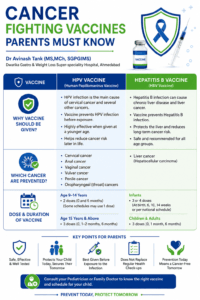
Cancer is one of the most feared diseases worldwide. However, many people are unaware that certain cancers can actually be prevented through vaccination. Modern medical science has identified specific viral infections that can trigger cancer development years later. By preventing these infections early, vaccines can dramatically reduce future cancer risk.
Today, the World Health Organization (WHO) and the U.S. Food and Drug Administration (FDA) recommend and approve vaccines that protect against major cancer-causing infections. These vaccines are considered among the greatest achievements in preventive medicine.
This article explains:
- Which vaccines help prevent cancer
- FDA and WHO approved cancer-preventing vaccines
- How they work
- Who should receive them
- Their safety and effectiveness
- Global recommendations
What Are Cancer-Preventing Vaccines?
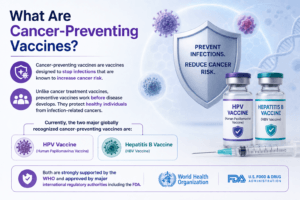
Cancer-preventing vaccines are vaccines designed to stop infections that are known to increase cancer risk.
Unlike cancer treatment vaccines, preventive vaccines work before disease develops. They protect healthy individuals from infection-related cancers.
Currently, the two major globally recognized cancer-preventing vaccines are:
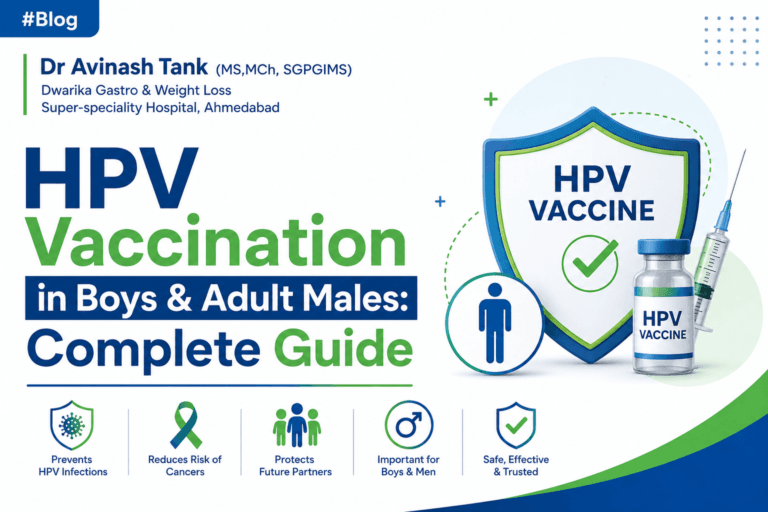
- HPV Vaccine (Human Papillomavirus Vaccine)
- Hepatitis B Vaccine (HBV Vaccine)
Both are strongly supported by the WHO and approved by major international regulatory authorities including the FDA.
Why Are Some Infections Linked to Cancer?
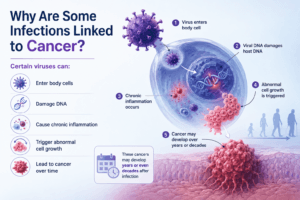
Certain viruses can:
- Enter body cells
- Damage DNA
- Cause chronic inflammation
- Trigger abnormal cell growth
- Lead to cancer over time
These cancers may develop years or even decades after infection.
Preventing the infection early can therefore reduce cancer risk significantly.
1. HPV Vaccine — The Most Important Cancer Prevention Vaccine
What Is HPV?
Human Papillomavirus (HPV) is one of the most common viral infections worldwide.
More than 100 HPV types exist, but certain “high-risk” strains are strongly associated with cancer.
Persistent HPV infection can lead to:
- Cervical cancer
- Anal cancer
- Penile cancer
- Vulvar cancer
- Vaginal cancer
- Oropharyngeal (throat) cancers
HPV Vaccine: WHO & FDA Approval
The HPV vaccine has been:
- Approved by the FDA
- Recommended globally by WHO
- Included in immunization strategies in many countries
WHO strongly supports HPV vaccination as a major tool to eliminate cervical cancer worldwide.
Which HPV Vaccines Are FDA Approved?
FDA-approved HPV vaccines include:
Gardasil 9
Protects against multiple HPV strains responsible for most HPV-related cancers.
It protects against:
- High-risk cancer-causing HPV types
- Certain wart-causing HPV strains
Gardasil 9 is currently one of the most widely used HPV vaccines globally.
Types of Cancers Prevented by HPV Vaccine
The HPV vaccine helps reduce the risk of:
- Cervical cancer
- Anal cancer
- Penile cancer
- Vaginal cancer
- Vulvar cancer
- Some throat cancers
Cervical cancer prevention is the primary public health goal.
Why Cervical Cancer Prevention Matters
Cervical cancer remains one of the leading cancers in women globally, especially in developing countries.
Many women are diagnosed late because early stages may not produce symptoms.
Vaccination combined with regular screening can dramatically reduce disease burden.
WHO has launched a global initiative aiming to eliminate cervical cancer as a public health problem.
Who Should Receive HPV Vaccine?
WHO Recommended Age Group
WHO recommends routine HPV vaccination primarily for:
- Girls aged 9–14 years
Many countries also recommend vaccination for:
- Boys aged 9–14 years
Vaccination before exposure to HPV provides the strongest protection.
Why Vaccinate Boys?
HPV also affects males.
Boys can develop:
- Penile cancer
- Anal cancer
- HPV-related throat cancers
Vaccinating boys also reduces transmission within the population.
HPV Vaccine Schedule
Age 9–14 Years
Usually:
- 1 or 2 doses depending on national guidelines
Age 15 Years & Older
Usually:
- 3-dose schedule
Schedules may vary slightly depending on:
- Country
- Vaccine type
- Immune status
Is HPV Vaccine Safe?
Yes.
Extensive global research confirms HPV vaccines are highly safe.
Common mild side effects:
- Injection site pain
- Mild fever
- Temporary fatigue
- Headache
Serious complications are extremely rare.
Millions of doses have been administered worldwide with excellent safety records.
Can HPV Vaccine Treat Existing HPV Infection?
No.
HPV vaccines:
- Prevent future infections
- Do not cure existing HPV infection
- Do not treat cancer
This is why vaccination at younger ages is strongly recommended.
2. Hepatitis B Vaccine — A Liver Cancer Prevention Vaccine
What Is Hepatitis B?
Hepatitis B is a viral infection affecting the liver.
It can cause:
- Chronic hepatitis
- Liver cirrhosis
- Liver failure
- Liver cancer (Hepatocellular carcinoma)
Chronic Hepatitis B infection is one of the leading causes of liver cancer globally.
FDA & WHO Approval of Hepatitis B Vaccine
The Hepatitis B vaccine:
- Is FDA approved
- Is strongly recommended by WHO
- Is included in national immunization programs worldwide
WHO considers universal Hepatitis B vaccination one of the most effective liver cancer prevention strategies.
How Does Hepatitis B Vaccine Prevent Cancer?
The vaccine prevents Hepatitis B infection.
Without chronic infection:
- Long-term liver inflammation decreases
- Liver scarring reduces
- Liver cancer risk falls dramatically
Thus, Hepatitis B vaccination indirectly prevents liver cancer.
Who Should Receive Hepatitis B Vaccine?
WHO Recommendations
WHO recommends:
- Universal newborn vaccination
- Childhood vaccination
- Vaccination for unvaccinated adults at risk
High-risk groups include:
- Healthcare workers
- Family members of infected individuals
- Dialysis patients
- Diabetic patients
- Individuals with liver disease
Hepatitis B Vaccine Schedule
Infants
Usually:
- Birth dose
- Followed by additional doses during infancy
Adults
Typically:
- 3-dose schedule over several months
Is Hepatitis B Vaccine Safe?
Yes.
The vaccine has been used safely for decades worldwide.
Common mild side effects:
- Pain at injection site
- Mild fever
- Fatigue
Serious adverse reactions are extremely rare.
Why These Vaccines Are a Major Public Health Achievement
These vaccines help:
- Reduce cancer burden
- Prevent premature deaths
- Lower healthcare costs
- Improve quality of life
- Protect future generations
They are among the few medical interventions capable of preventing cancer before it develops.
Common Myths About Cancer-Preventing Vaccines
Myth 1: Vaccines Cause Infertility
False.
No scientific evidence supports this claim.
Myth 2: Only Women Need HPV Vaccine
False.
Boys and men also benefit.
Myth 3: Healthy Lifestyle Alone Prevents Cancer
Partly false.
Healthy habits help greatly, but vaccines provide additional protection against infection-related cancers.
Myth 4: Vaccines Can Cause Cancer
False.
These vaccines are designed to reduce cancer risk, not increase it.
Future Cancer Vaccines Under Research
Scientists are researching vaccines against:
- Epstein-Barr Virus (EBV)
- Hepatitis C
- Certain stomach cancer-related infections
Researchers are also developing therapeutic cancer vaccines that may help the immune system fight existing cancers.
Additional Ways to Reduce Cancer Risk
Vaccination should be combined with:
- Avoiding tobacco
- Limiting alcohol
- Maintaining healthy weight
- Exercising regularly
- Eating healthy food
- Controlling obesity and diabetes
- Regular cancer screening
- Treating chronic infections early
Final Message
Cancer prevention is one of the greatest opportunities in modern medicine.
Currently, WHO and FDA strongly support two major cancer-preventing vaccines:
- HPV Vaccine
- Hepatitis B Vaccine
These vaccines are safe, effective, and capable of preventing thousands of cancer cases worldwide every year.
Early vaccination, combined with healthy lifestyle and regular screening, can significantly reduce future cancer burden.
Dr Avinash Tank (MS, MCh, SGPGIMS)
Dwarika Gastro & Weight Loss Super-speciality Hospital, Ahmedabad
Was this article helpful?

Super-specialist GI, bariatric & cancer surgeon. SGPGIMS (India's premier GI centre) + advanced training in Japan & South Korea. Read full profile →
Last reviewed: July 2026



Comments
Be the first to share your thoughts on this article.