

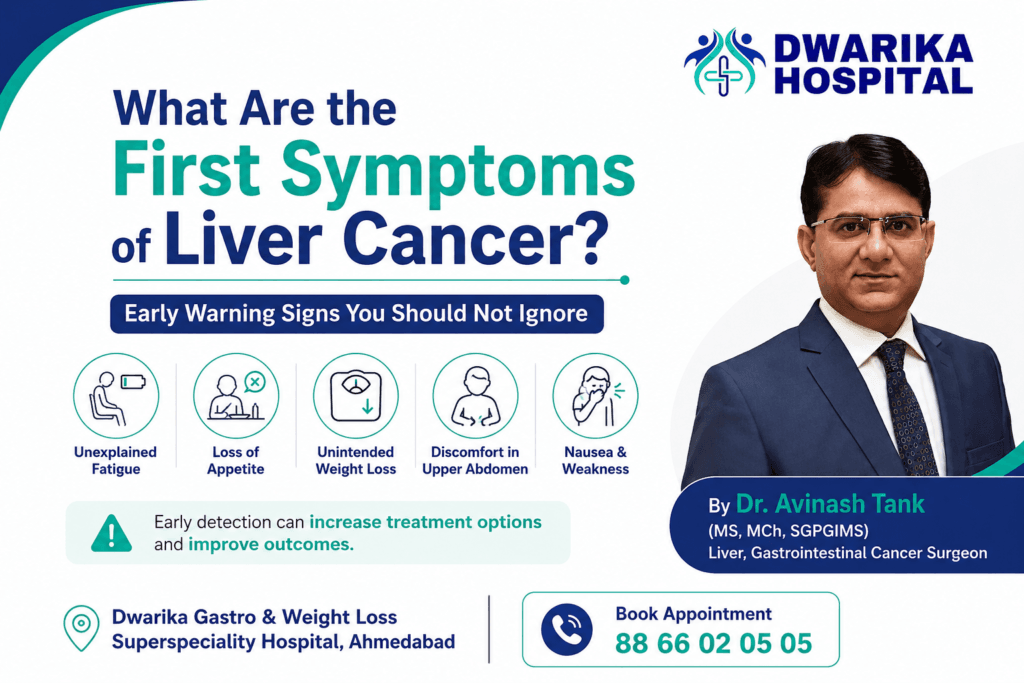
What Are the First Symptoms of Liver Cancer?
Featured Snippet Answer
The first symptoms of liver cancer are often subtle and may be mistaken for common digestive problems. Early signs can include unexplained fatigue, loss of appetite, unintended weight loss, mild discomfort or pain in the upper right side of the abdomen, a feeling of fullness after eating small amounts, and general weakness. Some patients may have no symptoms at all during the early stages.
As liver cancer grows, symptoms may become more noticeable and can include abdominal swelling, jaundice (yellowing of the skin and eyes), nausea, and worsening abdominal pain. Because early liver cancer frequently causes few or nonspecific symptoms, individuals with cirrhosis, hepatitis B, hepatitis C, or chronic liver disease should undergo regular surveillance. Early detection may increase treatment options and improve outcomes.
Why Patients Ask This Question
Many people worry about liver cancer because they know it can be serious, yet they are unsure how it begins.
Patients commonly ask:
- Will liver cancer cause pain early?
- Can symptoms be mistaken for gastritis or indigestion?
- Does liver cancer always cause jaundice?
- Can I have liver cancer without symptoms?
These concerns are understandable.
One challenge with liver cancer is that early-stage disease often causes few symptoms. Some patients discover liver cancer during routine screening, while others only seek medical attention when symptoms become more noticeable.
Recognizing potential warning signs does not mean a person has cancer, but understanding them may help patients seek timely medical evaluation when appropriate.
The Short Answer
What Are the First Symptoms of Liver Cancer?
The earliest symptoms of liver cancer may include:
- Unexplained fatigue
- Loss of appetite
- Unintended weight loss
- Mild upper abdominal discomfort
- Feeling full quickly while eating
- General weakness
- Nausea
- A vague feeling of illness
However, many patients have no symptoms during the earliest stages.
Because these symptoms can occur in many non-cancerous conditions, liver cancer often goes unrecognized until imaging or screening tests identify a tumour.
Understanding the Background
What Is Liver Cancer?
Liver cancer develops when abnormal liver cells grow uncontrollably and form a tumour.
The most common type is:
Hepatocellular Carcinoma (HCC)
This accounts for the majority of primary liver cancers.
Why Symptoms Often Appear Late
The liver is a large organ with significant reserve capacity.
A small tumour may grow for months or even years without affecting liver function.
As a result:
- Early cancers may produce no symptoms.
- Symptoms often appear only when the tumour enlarges.
- Some patients are diagnosed through surveillance before symptoms develop.
Why Risk Factors Matter
People at increased risk include those with:
- Hepatitis B
- Hepatitis C
- Cirrhosis
- Fatty liver disease (MASLD)
- Diabetes
- Obesity
- Family history of liver cancer
For these individuals, regular monitoring is important because symptoms alone may not reliably detect early disease.
Detailed Answer
The Earliest Symptoms of Liver Cancer
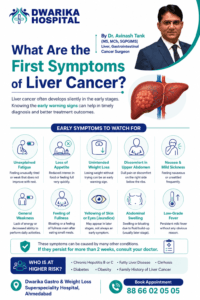
1. Unexplained Fatigue
Persistent tiredness is one of the most common early symptoms.
Patients may notice:
- Reduced energy levels
- Difficulty performing routine activities
- Increased need for rest
Because fatigue has many causes, it is rarely recognized as a warning sign of liver cancer on its own.
2. Loss of Appetite
Many patients report a gradual decrease in appetite.
They may notice:
- Less interest in food
- Feeling satisfied with smaller meals
- Difficulty finishing meals
When appetite loss persists without explanation, medical evaluation may be warranted.
3. Unintended Weight Loss
Weight loss without dieting or increased exercise can be an important warning sign.
Particularly concerning is:
- Progressive weight loss
- Loss of muscle mass
- Associated fatigue
Unexplained weight loss should never be ignored.
4. Mild Pain or Discomfort in the Right Upper Abdomen
The liver is located in the upper right side of the abdomen.
Early discomfort may be:
- Mild
- Intermittent
- Difficult to localize
Patients often describe:
- A dull ache
- Pressure sensation
- Fullness beneath the ribs
5. Feeling Full Quickly
This symptom is known as:
Early Satiety
Patients may:
- Feel full after eating small amounts
- Experience abdominal pressure
- Lose interest in food
As liver tumours enlarge, they may contribute to this sensation.
6. General Weakness
Some patients describe:
- Reduced stamina
- Less physical activity tolerance
- Feeling physically weaker
This symptom often occurs together with fatigue and weight loss.
7. Nausea
Persistent nausea may occur in some individuals.
Although nausea is common in many conditions, ongoing symptoms should be assessed if they remain unexplained.
Symptoms That Usually Appear Later
As liver cancer progresses, symptoms may include:
- Jaundice
- Abdominal swelling
- Significant abdominal pain
- Enlarged liver
- Fluid accumulation (ascites)
- Severe weight loss
These symptoms often indicate more advanced disease.
Symptom Comparison Table
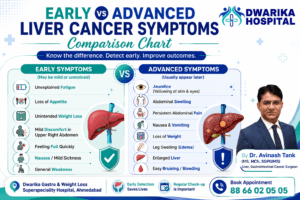
| Early Symptoms | Advanced Symptoms |
| Fatigue | Jaundice |
| Appetite Loss | Ascites |
| Mild Abdominal Discomfort | Severe Pain |
| Weight Loss | Significant Weakness |
| Early Satiety | Enlarged Abdomen |
| Nausea | Liver Failure Symptoms |
What Current Evidence Shows
Current clinical evidence suggests that many patients with liver cancer experience few or no symptoms during the earliest stages.
This is why international guidelines emphasize:
- Surveillance in high-risk patients
- Regular ultrasound examinations
- Monitoring of chronic liver disease
- Early specialist evaluation of suspicious findings
Experts agree that relying on symptoms alone may delay diagnosis.
Patients with cirrhosis, chronic hepatitis B, or chronic hepatitis C often benefit from structured surveillance programs because early-stage tumours are more likely to be detected before symptoms become severe.
Common Myths and Facts
Understanding liver cancer symptoms can be confusing because many misconceptions exist. Separating myths from facts helps patients make informed decisions.
Myth 1
Liver cancer always causes pain early.
Fact
Many patients with early-stage liver cancer have no pain at all. Small tumours may remain silent for months or years.
Myth 2
If I don’t have jaundice, I cannot have liver cancer.
Fact
Jaundice is often a later symptom. Many patients are diagnosed before jaundice develops.
Myth 3
Fatigue means I have liver cancer.
Fact
Fatigue is common and has many causes. However, persistent fatigue combined with weight loss, appetite loss, or liver disease should be evaluated.
Myth 4
Liver cancer symptoms are always obvious.
Fact
One of the biggest challenges with liver cancer is that symptoms are often vague and nonspecific.
Myth 5
Only people who drink alcohol develop liver cancer.
Fact
Liver cancer can also occur in people with hepatitis B, hepatitis C, cirrhosis, fatty liver disease, diabetes, obesity, and certain genetic conditions.
Myth 6
If I feel healthy, I don’t need screening.
Fact
Many early liver cancers are discovered during surveillance in patients who feel completely well.
Dr Avinash Tank’s Perspective
One of the most important lessons in liver cancer care is that symptoms often appear later than patients expect. Many individuals believe cancer will cause severe pain immediately, but liver cancer frequently develops silently.
Patients with cirrhosis, hepatitis B, hepatitis C, or fatty liver disease should not wait for symptoms before seeking evaluation. Regular surveillance may detect abnormalities long before they become noticeable.
In clinical practice, patients diagnosed earlier generally have more treatment options available. Therefore, unexplained weight loss, persistent fatigue, appetite loss, or ongoing upper abdominal discomfort should not be ignored, especially in individuals with known liver disease.
The goal is not to create fear but awareness. Understanding potential warning signs helps patients seek appropriate medical attention at the right time.
Key Takeaways
✓ Early liver cancer may cause no symptoms.
✓ Fatigue and appetite loss are among the most common early warning signs.
✓ Unexplained weight loss should never be ignored.
✓ Mild right upper abdominal discomfort may occur.
✓ Feeling full after eating small meals can be a symptom.
✓ Jaundice is often a later sign rather than an early symptom.
✓ High-risk individuals should undergo regular surveillance.
✓ Ultrasound screening can detect cancers before symptoms develop.
✓ Early diagnosis often expands treatment options.
✓ Persistent unexplained symptoms warrant medical evaluation.
Related Resources
Disease Hub
Liver Cancer Knowledge Hub
Learn about:
- Causes
- Risk factors
- Diagnosis
- Staging
- Treatment options
- Prevention
Related Service Page
Liver Cancer Surgery
Understand:
- When surgery is considered
- Surgical candidacy
- Treatment planning
- Recovery expectations
Related Educational Blog Articles
Can Liver Cancer Be Cured by Surgery?
Explore when surgery may offer the possibility of long-term disease control.
Can Liver Cancer Be Detected in a Blood Test?
Understand the role and limitations of blood tests in diagnosis.
What Is the Survival Rate for Liver Cancer?
Learn about factors influencing outcomes and prognosis.
Can Liver Cancer Occur Without Cirrhosis?
Understand why some patients develop liver cancer despite having no cirrhosis.
Frequently Asked Questions
1. What is usually the first symptom of liver cancer?
The earliest symptoms are often fatigue, loss of appetite, unexplained weight loss, or mild upper abdominal discomfort. However, many patients have no symptoms initially.
2. Does liver cancer always cause pain?
No. Many patients with early-stage liver cancer experience little or no pain. Pain often becomes more noticeable as tumours enlarge.
3. Can liver cancer be found before symptoms appear?
Yes. Regular surveillance in high-risk individuals may detect liver cancer before symptoms develop.
4. Is jaundice usually the first symptom?
Not usually. Jaundice is often associated with more advanced disease and may not occur in early-stage liver cancer.
5. Can fatigue be the only symptom?
Sometimes. Persistent unexplained fatigue may be an early sign, particularly when associated with weight loss or appetite changes.
6. Who is at highest risk of developing liver cancer?
People with cirrhosis, hepatitis B, hepatitis C, fatty liver disease, obesity, diabetes, and certain inherited conditions are at increased risk.
7. How quickly do liver cancer symptoms develop?
The speed varies. Some tumours grow slowly, while others progress more rapidly. Many patients experience symptoms gradually.
8. What should I do if I have several of these symptoms?
Consult a healthcare professional for evaluation. Many symptoms have non-cancerous causes, but persistent or unexplained symptoms should not be ignored.
9. Can liver cancer symptoms mimic digestive problems?
Yes. Indigestion, bloating, appetite loss, nausea, and abdominal discomfort may resemble common gastrointestinal conditions.
10. Should patients with fatty liver disease be concerned?
Most people with fatty liver disease do not develop liver cancer. However, advanced fatty liver disease and cirrhosis increase risk and may warrant surveillance.
References
International Guidelines
- National Comprehensive Cancer Network (NCCN) Guidelines for Hepatocellular Carcinoma
- European Society for Medical Oncology (ESMO) Clinical Practice Guidelines
- American Society of Clinical Oncology (ASCO) Guidance
- World Health Organization (WHO) Cancer Resources
- International Agency for Research on Cancer (IARC)
Key Evidence Sources
- PubMed literature on hepatocellular carcinoma
- Surveillance recommendations for cirrhosis
- Liver cancer screening studies
- Epidemiology of liver cancer
- Early detection and diagnosis research
Learn More About Liver Cancer
Understanding symptoms is only the first step.
Explore our complete Liver Cancer Knowledge Hub to learn about:
- Causes
- Risk factors
- Diagnosis
- Staging
- Treatment options
- Prevention
Request Specialist Evaluation
If you have persistent symptoms, chronic liver disease, abnormal imaging, or concerns about liver cancer, timely evaluation can help clarify the cause and determine whether further testing is needed.
Contact Us
For appointments, consultations, and further information regarding liver diseases and liver cancer evaluation, connect with our team through phone, WhatsApp, or online appointment scheduling.
Remember: Most people with fatigue, appetite loss, or abdominal discomfort do not have liver cancer. However, persistent unexplained symptoms deserve medical attention, especially in individuals with known liver disease or established risk factors.
Suggested Feature Images for This Article
- Early Symptoms of Liver Cancer Infographic
- Liver Anatomy with Tumour Location Diagram
- Early vs Advanced Liver Cancer Symptoms Comparison Chart
- High-Risk Patients Who Need Liver Cancer Screening
- When to See a Doctor for Liver Cancer Symptoms Flowchart
These images will improve both user engagement and AI retrieval visibility.
Was this article helpful?

Super-specialist GI, bariatric & cancer surgeon. SGPGIMS (India's premier GI centre) + advanced training in Japan & South Korea. Read full profile →
Last reviewed: July 2026


Comments
Be the first to share your thoughts on this article.