

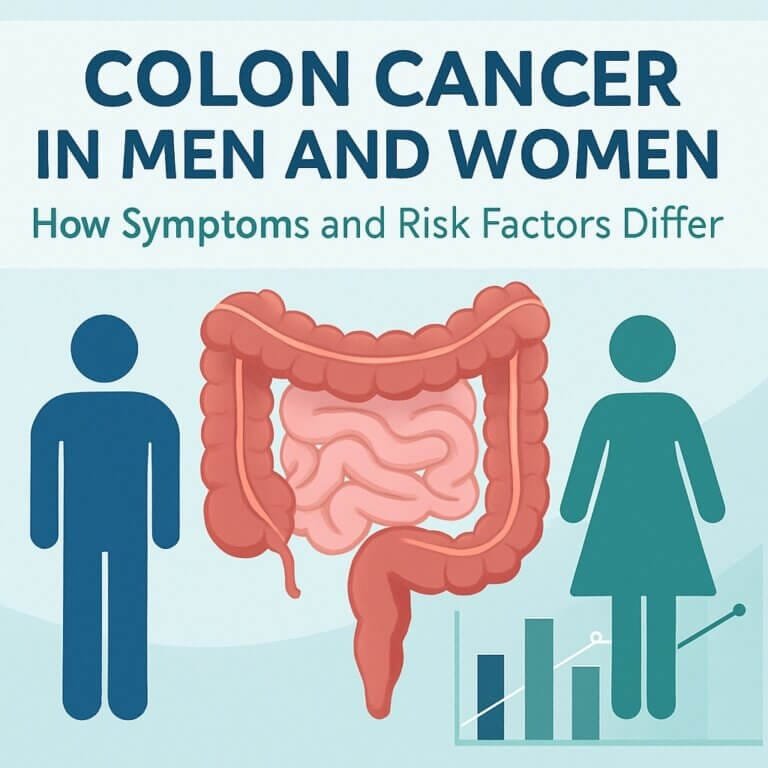
Colon Cancer in Men and Women: How Symptoms and Risk Factors Differ. Colon cancer—also known as colorectal cancer—remains one of the most common cancers worldwide, affecting both men and women.
While the fundamental symptoms appear similar in most cases, research shows that the risk factors, tumor locations, and outcomes can differ significantly between the sexes.
Understanding these differences is essential for improving diagnosis, encouraging early screening, and ultimately saving lives.
Common Symptoms of Colon Cancer: Men vs. Women
Both men and women generally present similar colon cancer symptoms, including:
– Blood in the stool or rectal bleeding
– Persistent diarrhea or constipation
– Unexplained weight loss
– Abdominal discomfort (cramps, pain, bloating)
– Iron-deficiency anemia
– Fatigue or weakness
However, there are nuances in how and when these symptoms emerge:
– Women tend to develop symptoms about 10 years later than men. This often coincides with other age-related health changes, making symptoms easier to overlook.
– Women may delay seeking evaluation compared to men, sometimes resulting in later diagnoses.
– Some symptoms in women—such as bloating or abdominal discomfort—may be mistaken for menstrual or menopausal changes, causing further delays in diagnosis.
Risk Factors: Gender-Specific Trends
While many risk factors overlap, certain lifestyle and biological factors play different roles:
– Men generally have a higher lifetime risk, with up to 50% greater chance of developing colon cancer and higher mortality rates compared to women.
– Obesity is a stronger risk factor for colon cancer in men, while early-life obesity is of special concern in women.
– Type 2 diabetes raises risk in both genders, though the direct impact by sex is less defined.
– Lifestyle choices—such as high red meat intake, low fiber diet, alcohol, and tobacco use—are traditionally more common in men, further elevating their risk.
Tumor Location: Why It Matters
Sex differences extend to where tumors typically develop.
Women are more prone to right-sided colon cancers, which are tougher to detect via routine colonoscopies and often more biologically aggressive.
These tumors frequently show features like MSI (microsatellite instability) or CIMP, marking a more severe disease.
Men, in contrast, are more likely to have detectable polyps on the left side of the colon, which may lead to an earlier diagnosis.
Hormones and Biology
- Estrogen has a protective effect in women before menopause, potentially reducing cancer risk and explaining better survival in younger women.
- Post-menopausal women lose this protection, shifting their risk toward more aggressive cancer forms.
- Genetic variations, such as those linked to the X chromosome, further influence risk, and emerging research into the ‘microgenderome’ suggests sex hormones and gut bacteria play a significant role[2].
Importance of Early Screening
- Colon cancer often starts silently without symptoms; thus, regular screening is essential, especially for those over 50, or younger if there’s a strong family history.
- Women should not ignore persistent gastrointestinal symptoms**, even if attributed to other female health issues.
- Men need to be proactive** about recognizing and acting on digestive health changes.
Conclusion
Colon Cancer in Men and Women: How Symptoms and Risk Factors Differ. Colon cancer affects both men and women, but key differences in risk factors, tumor biology, location, and symptom timing make a gender-aware approach to prevention and diagnosis vital.
By understanding these differences and acting promptly, everyone can reduce their risk and improve chances for successful treatment.
Was this article helpful?

Super-specialist GI, bariatric & cancer surgeon. SGPGIMS (India's premier GI centre) + advanced training in Japan & South Korea. Read full profile →
Last reviewed: July 2026






Comments
Be the first to share your thoughts on this article.