

Introduction
Appendicitis, a condition involving the inflammation of the appendix, is a medical concern that demands swift attention. However, not all cases of appendicitis are equal in terms of severity.
Perforated appendicitis, characterized by a rupture of the inflamed appendix, can lead to more complications and prolonged recovery times.
In this article, we delve into the risk factors that increase the likelihood of developing perforated appendicitis, shedding light on the individuals who might be more vulnerable to this serious condition.
1. Extremes of Age
The vulnerability to perforated appendicitis is often influenced by age. Both the very young and the elderly are at a higher risk. In children, especially those below the age of 5, symptoms can be more challenging to recognize, leading to delayed diagnosis and treatment. Similarly, elderly individuals might experience atypical symptoms, contributing to the higher incidence of perforation.
2. Male Sex
Statistically, males are more prone to developing perforated appendicitis than females. The reasons for this disparity are not yet fully understood, but hormonal and anatomical differences may play a role in the increased risk among males.
3. Pregnancy
Pregnancy introduces significant changes to a woman’s body, including shifts in hormone levels and the redistribution of abdominal organs due to the growing uterus. These factors can contribute to delayed diagnosis and an increased risk of perforated appendicitis among pregnant women.
4. Immunosuppression
Individuals with weakened immune systems, whether due to underlying medical conditions or medications that suppress the immune response, face a higher risk of complications from appendicitis. The compromised immune system can lead to a less robust inflammatory response, potentially allowing the inflammation to escalate to perforation.
5. Comorbid Medical Conditions
Having certain pre-existing medical conditions can increase the likelihood of perforated appendicitis. Conditions like diabetes and inflammatory bowel disease may alter the body’s response to inflammation, making the appendix more susceptible to rupture.
6. Previous Abdominal Surgery
Previous surgeries in the abdominal area can result in adhesions (scar tissue) that may obstruct the appendix, leading to an increased risk of inflammation and perforation. Additionally, scar tissue can make the diagnosis of appendicitis more challenging due to altered anatomy.
7. Appendiceal Fecalith
Studies have demonstrated that the presence of a fecalith within the appendix significantly raises the risk of the inflammation progressing to perforation. The obstruction caused by the fecalith can lead to an increased pressure inside the appendix, which, if left untreated, can eventually result in perforation.
Site of Appendix Perforation and Uncommon Differential Causes
Recent studies have challenged the traditional belief about the anatomical location of appendix perforation.
Reassessing Site of Appendix Perforation
Traditionally, it was believed that the anatomical location of the appendix (retrocaecal appendix) played a significant role in predicting the site of perforation. However, recent research has shed new light on this matter. Contrary to prior assumptions, studies now suggest that appendicitis perforations commonly occur at the tip of the appendix. Additionally, the presence of a faecolith on a CT scan has been identified as a key factor associated with such perforations. This newfound understanding emphasizes the importance of accurate diagnostic imaging in identifying risk factors for appendiceal perforation.
Uncommon Differential Causes of Base of Appendix Perforation
- Perforated Right Diverticulitis: While uncommon, perforated right diverticulitis is a differential diagnosis for acute appendicitis with perforation. The similarity in symptoms between the two conditions can complicate diagnosis and treatment decisions.
- Caecal Tumor: A caecal tumor, though rare, can lead to perforation at the base of the appendix. This highlights the need for thorough diagnostic evaluations to rule out underlying malignancies.
- Foreign Body Ingestion: The ingestion of foreign bodies can lead to caecal perforation, subsequently affecting the base of the appendix. This scenario emphasizes the importance of considering unusual causes in certain cases.
- Unique Contexts: Perforations can also arise from distinct circumstances, such as in burn patients or following caesarean sections. These instances underscore the diverse range of factors that can contribute to appendix perforation.
Conclusion
Perforated appendicitis is a serious medical condition that can result in more complications and a longer recovery period compared to non-perforated cases.
Understanding the risk factors that contribute to perforation, such as extremes of age, male sex, pregnancy, immunosuppression, comorbid medical conditions, and previous abdominal surgery, is essential for both healthcare professionals and individuals.
Early recognition of symptoms and prompt medical intervention are critical in mitigating the risks associated with perforated appendicitis and ensuring a better outcome for patients.
Was this article helpful?

Super-specialist GI, bariatric & cancer surgeon. SGPGIMS (India's premier GI centre) + advanced training in Japan & South Korea. Read full profile →
Last reviewed: July 2026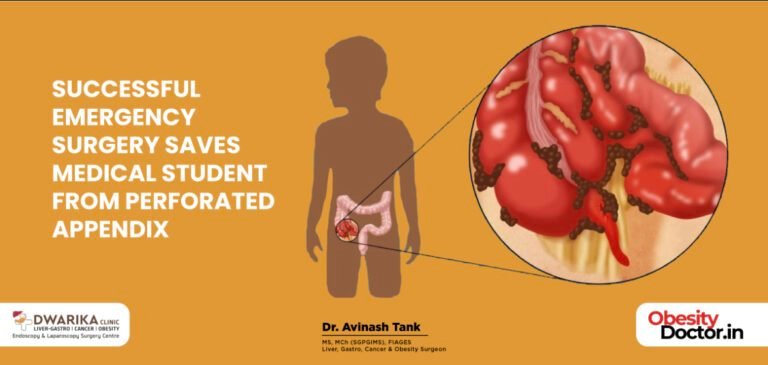






Comments
Be the first to share your thoughts on this article.