

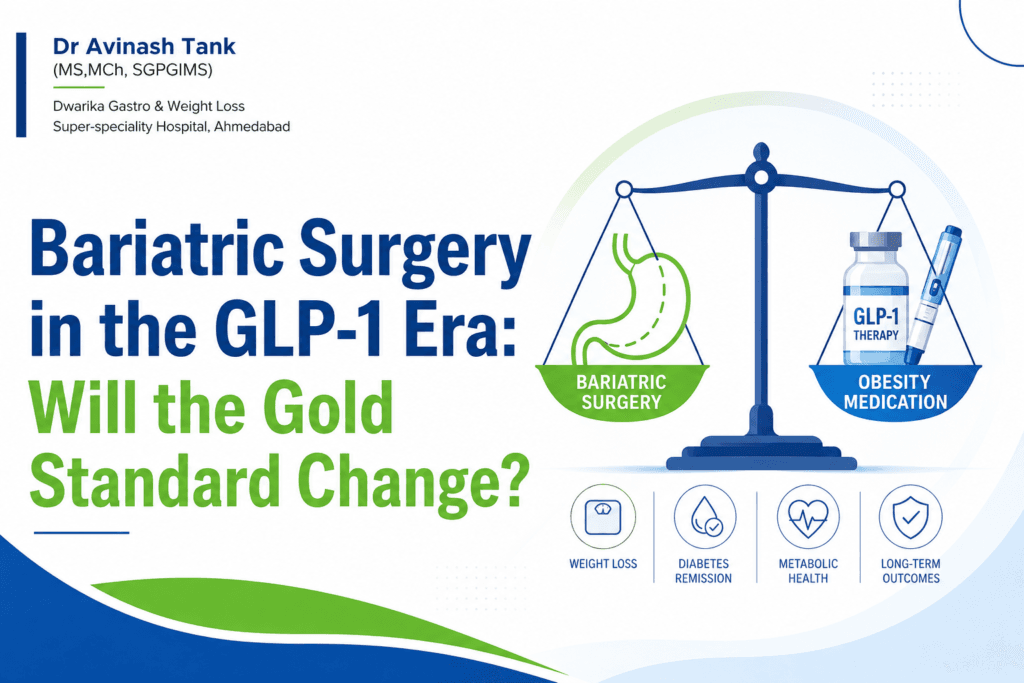
Bariatric Surgery in the GLP-1 Era: Will the Gold Standard Change?
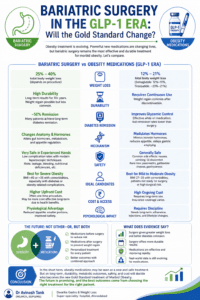
Introduction: A New Era in Obesity Treatment
Obesity is no longer viewed merely as a lifestyle issue; it is now recognized as a chronic metabolic disease associated with diabetes, hypertension, fatty liver disease, sleep apnea, cardiovascular disease, infertility, osteoarthritis, and several cancers.
For decades, bariatric surgery has remained the most effective and durable treatment for morbid obesity. Procedures such as sleeve gastrectomy and Roux-en-Y gastric bypass have consistently demonstrated substantial weight loss, diabetes remission, and improvement in overall survival.
However, the emergence of modern obesity management medicines (OMMs), especially GLP-1 receptor agonists and dual incretin therapies such as semaglutide and tirzepatide, has dramatically changed the obesity treatment landscape. These medications have generated tremendous enthusiasm among patients, physicians, and healthcare systems because they offer meaningful weight reduction without surgery.
This has triggered an important debate within obesity medicine: Will bariatric surgery continue as the “gold standard,” or will obesity medications replace it in the future?
The answer may not be simple. Both therapies possess unique strengths and limitations, and their long-term outcomes are still evolving.
Understanding the Historical Gold Standard: Bariatric Surgery
Why Bariatric Surgery Became the Gold Standard
Bariatric surgery achieved gold standard status because it consistently produced outcomes that lifestyle modification and medications could not match. Patients undergoing metabolic surgery often lose 25%–40% of their total body weight and maintain significant long-term weight reduction for many years.
More importantly, bariatric surgery does not merely reduce stomach size. It creates profound hormonal and metabolic changes involving ghrelin, GLP-1, peptide YY, insulin sensitivity, bile acid metabolism, gut microbiota, and appetite regulation.
These physiologic changes explain why bariatric surgery frequently leads to:
- Rapid diabetes remission
- Reduced cardiovascular risk
- Improvement in fatty liver disease
- Better fertility outcomes
- Reduction in obstructive sleep apnea
- Improved quality of life
- Lower long-term mortality
Several long-term studies have shown durable diabetes remission even beyond 10 years after surgery.
The Rise of Modern Obesity Medications
The GLP-1 Revolution
The introduction of semaglutide and tirzepatide transformed obesity medicine. Earlier anti-obesity medications often produced modest weight loss and had significant side effects. In contrast, GLP-1-based therapies demonstrated weight reduction approaching surgical levels in some patients.
Semaglutide studies showed average body weight reduction around 15%, while tirzepatide demonstrated nearly 20%–21% weight loss in clinical trials.
These medications work through multiple mechanisms:
- Delayed gastric emptying
- Reduced appetite
- Improved satiety
- Better insulin sensitivity
- Reduction in food cravings
- Improved glycemic control
For many patients, especially those fearful of surgery, these medications appeared revolutionary.
The widespread social media popularity of “weight loss injections” further accelerated acceptance among the general population.
Comparing Weight Loss Outcomes
Bariatric Surgery Still Produces Greater Average Weight Loss
Despite the excitement around obesity medications, bariatric surgery still demonstrates superior average weight loss in most long-term comparative studies.
Typical outcomes include:
Sleeve Gastrectomy
- Approximately 25%–35% total body weight loss
Gastric Bypass
- Approximately 30%–40% total body weight loss
Tirzepatide
- Approximately 20%–21% weight loss in ideal trial settings
Semaglutide
- Approximately 12%–15% weight loss
Real-world evidence is even more revealing. Outside clinical trials, medication effectiveness often declines because of cost, adherence issues, side effects, discontinuation, and inadequate follow-up.
A large observational analysis presented at the ASMBS meeting suggested that bariatric surgery produced approximately 26.5% weight loss at two years compared with much lower real-world outcomes using GLP-1 medications.
Thus, while medications have narrowed the gap, surgery still provides the most reliable and substantial weight reduction for severe obesity.
Durability of Results
Surgery Offers Long-Term Metabolic Stability
One of the biggest differences between surgery and medications is durability.
Bariatric surgery creates permanent anatomical and hormonal changes. Although some patients experience partial weight regain over time, many maintain substantial weight reduction for more than a decade.
In contrast, obesity medications usually require continuous administration. Once therapy stops, weight regain frequently occurs.
Studies have shown that discontinuation of semaglutide often results in regaining a significant portion of lost weight within months to years. This highlights an important reality:
Obesity medications manage obesity; bariatric surgery may partially reset metabolic physiology.
This distinction is central to the ongoing debate regarding the long-term gold standard.
Diabetes Remission: Surgery vs Medications
Metabolic Surgery Remains Superior for Type 2 Diabetes
Modern obesity medications significantly improve glycemic control, especially tirzepatide, which has shown remarkable reductions in HbA1c levels.
However, bariatric surgery still remains the most effective intervention for diabetes remission.
After gastric bypass or sleeve gastrectomy, many patients discontinue insulin and oral diabetes medications entirely. Some experience remission within days after surgery, even before major weight loss occurs.
Long-term remission rates remain impressive:
- Approximately 50% of patients may remain free from diabetes medications years after surgery.
The mechanism involves:
- Enhanced incretin release
- Improved insulin sensitivity
- Reduced hepatic glucose production
- Altered gut hormone signaling
Medications improve diabetes while being taken, but surgery may fundamentally alter disease progression.
Safety Comparison
Modern Surgery Has Become Safer Than Ever
Historically, fear of complications limited acceptance of bariatric surgery. Earlier generations associated surgery with high risk, prolonged hospitalization, and nutritional complications.
However, modern laparoscopic bariatric surgery has become significantly safer due to:
- Advanced minimally invasive techniques
- Better anesthesia
- Improved perioperative care
- Enhanced recovery protocols
- Better patient selection
Current complication rates for experienced centers are comparable to commonly performed surgeries such as gallbladder surgery or joint replacement.
Still, surgery is not risk-free. Potential complications include:
- Leakage
- Bleeding
- Nutritional deficiencies
- Gastroesophageal reflux
- Internal hernia
- Need for revision surgery
Meanwhile, obesity medications avoid surgical risks but introduce their own concerns.
Safety Concerns with Obesity Medications
Are GLP-1 Medications Truly Risk-Free?
Although marketed as safer alternatives, obesity medications are not free from adverse effects.
Common side effects include:
- Nausea
- Vomiting
- Diarrhea
- Constipation
- Abdominal discomfort
More serious concerns under investigation include:
- Pancreatitis
- Gallbladder disease
- Severe gastroparesis
- Bowel obstruction
- Thyroid tumor concerns in susceptible populations
Long-term safety beyond several years remains incompletely understood because these therapies are relatively new compared with decades of surgical outcome data.
Furthermore, some patients discontinue therapy because of:
- Expense
- Side effects
- Injection fatigue
- Medication shortages
Real-world discontinuation rates remain substantial.
Which Patients Benefit Most from Medications?
Ideal Candidates for OMMs
Obesity medications may be ideal for:
- BMI 27–35 kg/m² with comorbidities
- Patients unwilling for surgery
- Younger patients with early obesity
- Patients requiring moderate weight reduction
- Individuals with high surgical risk
- Bridge therapy before surgery
For these patients, medications can delay or potentially avoid surgery.
Additionally, OMMs may help:
- Prevent progression from overweight to morbid obesity
- Reduce cardiovascular risk
- Improve fatty liver disease
- Improve polycystic ovarian syndrome
- Enhance lifestyle adherence
This is a major achievement in obesity medicine.
Which Patients Still Need Bariatric Surgery?
Surgery Remains Essential in Severe Obesity
Patients with severe or morbid obesity continue to derive the greatest benefit from surgery.
Examples include:
- BMI >40 kg/m²
- BMI >35 kg/m² with diabetes
- Severe sleep apnea
- Advanced fatty liver disease
- Debilitating obesity-related complications
In such patients, medications often fail to normalize body weight completely.
For example:
- A patient with BMI 52 kg/m² losing 20% weight may still remain severely obese.
- Surgery may achieve larger and more durable metabolic correction.
Thus, bariatric surgery still occupies a critical role in advanced obesity management.
Economic and Accessibility Factors
Cost May Shape the Future Battle
An often overlooked issue is affordability.
In many countries, obesity medications remain expensive and require lifelong use. Insurance coverage is inconsistent, and long-term monthly expenses can become enormous.
Bariatric surgery involves higher upfront cost but may become economically favorable over time because:
- It is often a one-time intervention
- Diabetes medication costs decrease
- Hospitalization rates decline
- Productivity improves
Healthcare systems worldwide are still evaluating which strategy offers better long-term economic value.
The Psychological Dimension
Surgery Changes Biology; Medications Require Continued Discipline
Another important difference is patient psychology.
After bariatric surgery:
- Appetite often decreases naturally
- Food preferences may change
- Portion control becomes physiologically enforced
In contrast, medication success often depends upon:
- Long-term adherence
- Regular injections
- Continuous follow-up
- Lifestyle discipline
Some patients regain weight rapidly after discontinuation because the underlying biological drivers of obesity persist.
Therefore, obesity treatment cannot rely solely upon temporary pharmacologic suppression of appetite.
The Future May Not Be “Either-Or”
Combination Therapy Could Become the New Standard
The future of obesity management may involve combining both approaches.
Potential strategies include:
- Medications before surgery to reduce operative risk
- Medications after surgery to prevent weight regain
- Personalized obesity treatment pathways
- Earlier pharmacologic intervention
- Surgery reserved for advanced disease
Emerging evidence already suggests that GLP-1 medications can effectively manage weight regain after bariatric surgery.
Thus, surgery and medications may become complementary rather than competitive.
Scientific Perspective: What Does Current Evidence Suggest?
Current Data Still Favors Bariatric Surgery for Severe Obesity
Present evidence indicates:
- Bariatric surgery provides greater total weight loss
- Surgery offers superior diabetes remission
- Surgical outcomes remain more durable
- Obesity medications are highly effective but require continuation
- Real-world medication adherence remains challenging
However, obesity medications have unquestionably transformed obesity care by:
- Increasing awareness
- Reducing stigma
- Encouraging earlier treatment
- Expanding therapeutic options
This represents a historic advancement in metabolic medicine.
Conclusion: The Gold Standard Debate Continues
The arrival of GLP-1 receptor agonists and advanced obesity medications marks one of the most exciting developments in modern medicine. These therapies have given hope to millions struggling with obesity and have challenged the long-standing dominance of bariatric surgery.
Yet, current evidence still suggests that bariatric surgery remains the most powerful and durable treatment for morbid obesity, particularly in patients with severe metabolic disease and very high BMI.
At the same time, obesity medications are rapidly evolving. Their effectiveness continues to improve, newer agents are under development, and long-term cardiovascular benefits are becoming increasingly evident.
In the short term, obesity medications may appear to be the newer, safer, and more convenient treatment option. But in the long term, the true “gold standard” for morbid obesity will ultimately be determined by durability, metabolic outcomes, safety, affordability, and sustained patient success.
The future may not belong exclusively to surgery or medications alone — it may belong to an intelligent integration of both.
References
- Jastreboff AM et al. Tirzepatide Once Weekly for the Treatment of Obesity. New England Journal of Medicine. 2022.
- Barrett TS et al. Obesity Treatment With Bariatric Surgery vs GLP-1 Receptor Agonists. PMC Review. 2025.
- Chamarthi VS et al. Obesity Medications: Evidence-Based Management. NCBI Bookshelf. 2025.
- STEP Trials – Semaglutide Treatment Effect in People with Obesity. NCBI Bookshelf.
- Louis M et al. The Impact of New Weight-Loss Medications on Bariatric Surgery. PMC. 2025.
- Finer N et al. Pharmacotherapy and Metabolic/Bariatric Surgery: Either or Both? International Journal of Obesity. 2025.
- ASMBS Real-World Comparative Analysis of GLP-1 Therapy vs Bariatric Surgery. 2025.

Super-specialist GI, bariatric & cancer surgeon. SGPGIMS (India's premier GI centre) + advanced training in Japan & South Korea. Read full profile →
Last reviewed: July 2026


Comments
Be the first to share your thoughts on this article.