

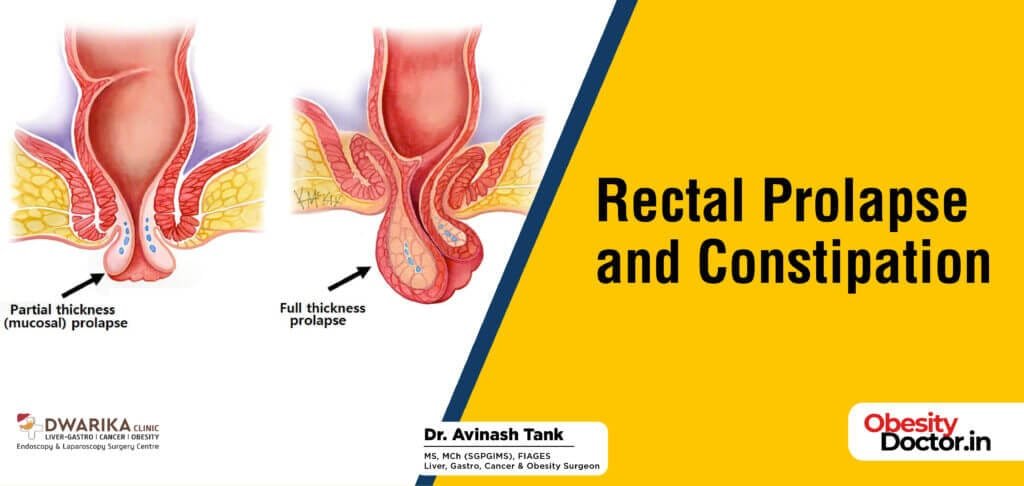
Rectal prolapse is a distressing condition where the rectum protrudes from the anus. While it can be caused by various factors, a significant link exists between rectal prolapse and chronic constipation.
Rectal prolapse occurs when the rectum, the lower part of the large intestine, protrudes through the anal opening. This condition can range from partial to complete prolapse and is often associated with weakened pelvic floor muscles.
Types of Rectal Prolapse
- Partial Prolapse: The rectum partially protrudes, usually during bowel movements, and retracts afterward.
- Complete Prolapse: The rectum fully protrudes, often requiring manual repositioning.
- Internal Prolapse (Intussusception): The rectum’s inner layers telescope into one another, causing obstruction and discomfort.
The Connection Between Rectal Prolapse and Constipation
Chronic Constipation as a Trigger
Chronic constipation can strain and weaken the pelvic floor muscles and the rectal wall. This weakening can lead to rectal prolapse over time. The prolonged straining during bowel movements in individuals with chronic constipation is a common contributing factor.
Vicious Cycle
Rectal prolapse, once developed, can exacerbate constipation. The protruding rectum may block the passage of stool, making it even more difficult to have a bowel movement. This creates a vicious cycle where constipation worsens the prolapse, and the prolapse worsens constipation.
Symptoms of Rectal Prolapse
- Protrusion: Visible protrusion of the rectum through the anus.
- Pain and Discomfort: Rectal pain, discomfort, and a feeling of fullness or pressure in the rectum.
- Bowel Issues: Difficulty having bowel movements, straining during bowel movements, or incomplete evacuation.
- Incontinence: Accidental leakage of stool or mucus.
Symptoms of Chronic Constipation
- Infrequent Bowel Movements: Having fewer than three bowel movements per week.
- Straining: Difficulty passing stool, often accompanied by pain and discomfort.
- Hard Stools: Stools that are dry, hard, and difficult to pass.
- Feeling of Incomplete Evacuation: The sensation that you haven’t fully emptied your bowels.
Treatment and Relief
Conservative Treatments
- Dietary Changes: Increase fiber intake, drink plenty of water, and consume foods that promote regular bowel movements.
- Lifestyle Modifications: Exercise regularly, establish a consistent toileting routine, and avoid straining during bowel movements.
- Medications: Your doctor may prescribe laxatives or stool softeners to relieve constipation.
Medical Interventions
- Biofeedback Therapy: A specialized therapy that helps retrain the pelvic floor muscles.
- Surgery: In severe cases, surgical procedures may be necessary to repair the rectal prolapse or correct underlying issues contributing to it.
Seeking Professional Help
If you suspect you have rectal prolapse or are experiencing chronic constipation, it’s essential to consult a healthcare professional. Early diagnosis and intervention can prevent the condition from worsening and improve your quality of life.
Conclusion: Rectal Prolapse and Constipation
Rectal prolapse and chronic constipation are challenging conditions, but they are not without solutions. Understanding the connection between the two, recognizing their symptoms, and seeking appropriate treatment can significantly improve your rectal health and overall well-being.
Remember, you don’t have to suffer in silence. Consult a healthcare provider for a proper evaluation and personalized treatment plan. With the right approach, you can regain comfort, confidence, and control over your rectal health.
Was this article helpful?

Super-specialist GI, bariatric & cancer surgeon. SGPGIMS (India's premier GI centre) + advanced training in Japan & South Korea. Read full profile →
Last reviewed: July 2026





Comments
Be the first to share your thoughts on this article.