

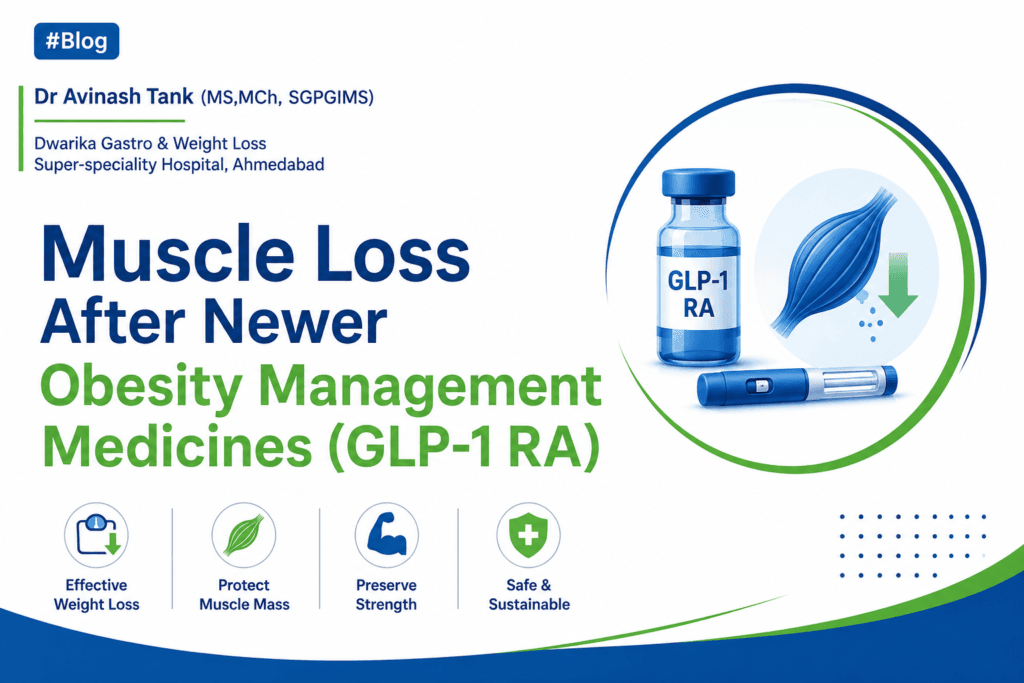
Muscle Loss After Newer Obesity Management Medicines (GLP-1 RA): Causes, Risks, Prevention, and Clinical Guidance
Introduction
The introduction of newer obesity management medicines, especially GLP-1 receptor agonists (GLP-1 RA) such as Semaglutide and dual agonists like Tirzepatide, has transformed obesity treatment worldwide.
These medicines can produce remarkable weight loss, improve diabetes, reduce fatty liver disease, improve sleep apnea, and lower cardiovascular risk.
However, one important concern has emerged in recent years: muscle loss after newer obesity management medicines GLP-1 RA.
Many patients notice weakness, fatigue, reduced strength, or “shrinking body size” during rapid weight loss. Researchers are now studying whether part of the lost weight includes skeletal muscle mass and lean body mass.
Understanding this issue is essential because muscle is not just for appearance. Muscle plays a major role in metabolism, mobility, balance, immunity, and long-term health.
This article explains:
- Causes of muscle loss
- Scientific evidence from PubMed studies
- When muscle loss starts
- Why it happens
- Risks associated with muscle loss
- Prevention strategies
- When medications may need reassessment
What Is Muscle Mass and Why Is It Important?
Muscle mass refers mainly to skeletal muscles present throughout the body. These muscles:
- Help movement and strength
- Maintain posture
- Support metabolism
- Improve insulin sensitivity
- Protect bones and joints
- Maintain balance and physical independence
Muscles also function as a “metabolic engine.” Higher muscle mass helps burn more calories even during rest.
Loss of muscle mass is medically called:
- Lean mass loss
- Sarcopenia (when severe or age-related)
During weight loss, some lean mass reduction is expected. The concern arises when muscle loss becomes excessive or rapid.
Understanding GLP-1 RA Medicines
GLP-1 receptor agonists mimic a natural gut hormone called glucagon-like peptide-1.
Popular medicines include:
- Semaglutide
- Liraglutide
- Dulaglutide
- Tirzepatide
These medicines work by:
- Reducing appetite
- Increasing satiety
- Slowing stomach emptying
- Reducing calorie intake
- Improving blood sugar control
Because calorie intake decreases substantially, rapid weight loss occurs.
Unfortunately, the body may lose both:
- Fat mass
- Lean body mass (including muscle)
Muscle Loss After Newer Obesity Management Medicines GLP-1 RA:
What Do Studies Show?
Several scientific studies have examined body composition changes during GLP-1 therapy.
STEP-1 Trial Findings
The famous STEP-1 trial evaluated semaglutide in obesity treatment.
Researchers observed:
- Major reduction in body weight
- About 30% of total weight loss came from lean tissue
This means:
- If a patient loses 15 kg,
- Around 4–5 kg may come from lean mass.
However, most lost weight was still fat mass.
Tirzepatide Studies
Studies of tirzepatide showed:
- Approximately 25% of total weight loss represented lean mass reduction.
This proportion is somewhat similar to weight loss achieved by dieting alone.
Variability Among Studies
A 2024 PubMed review found substantial variation:
- Some studies reported lean mass loss of only 15%
- Others reported 40–60% of total weight loss as lean mass reduction.
Why such differences?
Possible reasons include:
- Age differences
- Baseline obesity severity
- Diabetes status
- Protein intake
- Physical activity level
- Drug type and dose
- Duration of therapy
When Does Muscle Mass Loss Start?
Muscle Loss Usually Starts Early
Research suggests that muscle mass loss often begins during the early rapid weight-loss phase.
This generally occurs:
- Within the first few weeks
- More prominently during the first 3–6 months
This happens because:
- Appetite decreases suddenly
- Calorie intake drops sharply
- Protein intake becomes inadequate
- Physical activity may decline
Does Muscle Loss Continue Later?
Later during treatment:
- Weight loss rate often slows
- Muscle loss may stabilize
- Body composition may improve if exercise and nutrition are optimized
Some newer evidence suggests that not all “lean mass” loss represents true muscle destruction. Part of the reduction may come from:
- Water loss
- Liver fat reduction
- Reduced inflammation
- Reduction in connective tissue mass
Nevertheless, clinically significant muscle loss can still occur in vulnerable individuals.
Why Does Muscle Mass Loss Occur with GLP-1 RA Medicines?
1. Reduced Calorie Intake
The main mechanism is severe calorie restriction.
When calorie intake falls dramatically:
- The body uses stored fat for energy
- But it may also break down muscle proteins
This is especially common when:
- Protein intake is low
- Weight loss is rapid
2. Reduced Protein Consumption
Patients on GLP-1 medicines often eat much less food overall.
As a result:
- Daily protein intake becomes inadequate
- Muscle protein synthesis decreases
Without enough amino acids, muscles cannot maintain themselves.
3. Reduced Physical Activity
Some patients feel:
- Fatigue
- Weakness
- Nausea
This reduces exercise participation and daily movement.
Muscles require regular stimulation to remain healthy.
4. Rapid Weight Loss
Rapid weight reduction itself causes lean mass loss, even without medicines.
This phenomenon is also seen after:
- Bariatric surgery
- Crash dieting
- Very low calorie diets
The faster the weight loss, the higher the risk of muscle reduction.
5. Aging and Pre-Existing Sarcopenia
Older adults are particularly vulnerable.
Elderly individuals may already have:
- Reduced muscle reserve
- Poor nutrition
- Low physical activity
GLP-1 therapy can worsen existing sarcopenia if not carefully monitored.
Which Patients Are at Higher Risk?
High-risk groups include:
- Elderly patients
- Frail individuals
- Patients with chronic illness
- Low protein eaters
- Sedentary individuals
- Patients losing weight very rapidly
- People with pre-existing sarcopenia
- Cancer patients
- Liver disease patients
These individuals require careful nutritional and muscle assessment.
Symptoms of Muscle Loss During Weight Loss Journey
Patients may experience:
- Weakness
- Fatigue
- Reduced stamina
- Difficulty climbing stairs
- Loss of grip strength
- Muscle cramps
- Reduced exercise tolerance
- Thin arms or legs
- Loose skin appearance
Some patients lose weight successfully but feel physically weaker.
Dangers of Muscle Mass Loss in Weight Loss Journey
1. Slower Metabolism
Muscle burns calories continuously.
Loss of muscle lowers:
- Basal metabolic rate
- Energy expenditure
This may promote:
- Weight regain
- Weight plateau
2. Weakness and Reduced Mobility
Excessive muscle loss can impair:
- Walking
- Climbing stairs
- Daily activities
In older adults, this increases fall risk.
3. Sarcopenia
Severe muscle depletion can lead to sarcopenia.
Sarcopenia is associated with:
- Frailty
- Hospitalization
- Reduced quality of life
- Increased mortality
4. Poor Glucose Metabolism
Muscle is a major site of glucose utilization.
Loss of muscle can worsen:
- Insulin resistance
- Diabetes control over time
5. Reduced Long-Term Weight Maintenance
Patients with preserved muscle tend to maintain weight loss better.
Loss of muscle often predisposes to:
- Weight regain
- Fat regain
Is All Lean Mass Loss Harmful?
Not necessarily.
Some lean mass reduction during weight loss is expected.
Also, DEXA scans measuring “lean mass” may include:
- Water
- Organs
- Connective tissues
Therefore:
- Not all measured lean mass loss equals functional muscle loss
Recent studies suggest that physical function may remain preserved in many patients despite body composition changes.
However, monitoring remains essential.
How Can Muscle Loss Be Prevented?
1. Adequate Protein Intake
Protein is the most important preventive strategy.
Most obesity specialists recommend:
- Approximately 1.0–1.5 g protein/kg ideal body weight/day
Good protein sources:
- Eggs
- Paneer
- Greek yogurt
- Fish
- Chicken
- Dal
- Soy products
- Whey protein
Protein should be distributed throughout the day.
2. Resistance Training
Strength training is crucial.
Recommended activities:
- Weight lifting
- Resistance bands
- Squats
- Pushups
- Gym training
Resistance exercise stimulates:
- Muscle protein synthesis
- Muscle preservation
- Functional strength
This is one of the best methods to reduce muscle loss after newer obesity management medicines GLP-1 RA.
3. Regular Physical Activity
Walking alone is not enough.
Combination approach works best:
- Aerobic exercise
- Resistance exercise
- Flexibility training
Exercise improves:
- Muscle quality
- Strength
- Fat loss efficiency
4. Avoid Excessively Rapid Weight Loss
Very rapid weight reduction increases risk of muscle depletion.
Gradual, sustainable weight loss is safer.
Doctors may:
- Slow dose escalation
- Optimize nutrition
- Adjust calorie targets
5. Monitor Body Composition
Important monitoring tools include:
- DEXA scan
- Bioimpedance analysis
- Muscle strength assessment
- Waist circumference
- Functional tests
Monitoring helps identify problematic muscle loss early.
6. Correct Nutritional Deficiencies
Deficiencies that worsen muscle loss include:
- Vitamin D deficiency
- Low iron
- Low vitamin B12
- Poor calorie intake
Nutritional optimization is essential.
Does Exercise Really Help During GLP-1 Therapy?
Yes — strongly.
Studies suggest exercise can:
- Preserve lean mass
- Improve strength
- Improve physical function
- Enhance fat loss quality
Experts increasingly recommend:
- “GLP-1 + strength training” rather than medicine alone.
Can Muscle Mass Recover After Weight Loss?
In many patients, yes.
Muscle recovery is possible through:
- Resistance training
- Protein supplementation
- Adequate calories
- Physical rehabilitation
However, prolonged severe muscle depletion can be difficult to reverse in elderly individuals.
When Should One Stop Obesity Medications Due to Muscle Loss?
There is no universal rule.
Stopping medication depends on:
- Severity of muscle loss
- Functional weakness
- Nutritional status
- Patient age
- Frailty
- Overall health goals
Situations Where Reassessment Is Needed
Doctors may reconsider therapy when patients develop:
- Severe weakness
- Functional decline
- Sarcopenia
- Recurrent falls
- Malnutrition
- Very low protein intake
- Excessively rapid weight loss
In such situations:
- Dose reduction may help
- Temporary discontinuation may be considered
- Nutritional rehabilitation may be required
Should Patients Stop GLP-1 Medicines Automatically Due to Fear of Muscle Loss?
No.
For most patients:
- Benefits outweigh risks
- Fat loss greatly exceeds muscle loss
- Metabolic improvements are substantial
These medicines can reduce:
- Diabetes complications
- Heart disease risk
- Fatty liver disease
- Sleep apnea severity
The goal is not to avoid treatment, but to use treatment intelligently with:
- Nutrition
- Exercise
- Monitoring
Future Directions in Obesity Medicine
Researchers are now focusing on:
- Muscle-preserving obesity therapies
- Combination drugs
- Protein optimization strategies
- Exercise-supported treatment protocols
Future obesity treatment may prioritize:
- Fat loss with muscle preservation
rather than simply reducing body weight.
Conclusion
Muscle Loss After Newer Obesity Management Medicines (GLP-1 RA). Muscle loss after newer obesity management medicines GLP-1 RA is an important but manageable concern.
Current evidence shows that while significant fat loss occurs with medicines like semaglutide and tirzepatide, some degree of lean mass reduction also happens.
Studies suggest approximately 25–30% of total weight loss may come from lean tissue, although results vary widely.
Muscle loss usually begins during the early rapid weight-loss phase and is influenced by:
- Reduced calorie intake
- Low protein intake
- Lack of exercise
- Rapid weight reduction
The dangers of excessive muscle loss include weakness, sarcopenia, slower metabolism, and impaired physical function.
Fortunately, this problem can often be minimized through:
- Adequate protein intake
- Resistance exercise
- Regular monitoring
- Gradual weight loss
- Personalized medical supervision
Patients should not stop GLP-1 medicines out of fear alone. Instead, obesity treatment should focus on achieving healthier body composition — reducing fat while preserving muscle and strength for long-term health.
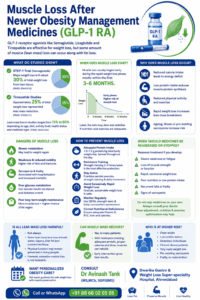
Book Your Obesity & Weight Loss Consultation Today
Are you concerned about muscle loss after GLP-1 medicines like Semaglutide or Tirzepatide?
Get expert guidance for safe, scientific, and sustainable weight loss from Dr. Avinash Tank (MS, MCh, SGPGIMS).
At Dwarika Gastro & Weight Loss Super-speciality Hospital, Ahmedabad, we provide:
- Personalized obesity management plans
- GLP-1 & Tirzepatide therapy guidance
- Muscle preservation strategies
- Diet and protein counselling
- Fatty liver & metabolic health assessment
- Bariatric surgery consultation
- Long-term weight maintenance support
Why Consult Dr. Avinash Tank?
✔ Expert in Obesity & Metabolic Health
✔ Evidence-based Weight Loss Treatment
✔ Focus on Fat Loss With Muscle Preservation
✔ Comprehensive Lifestyle & Nutrition Guidance
✔ Advanced Gastro & Weight Loss Care
Take the First Step Towards Healthy Weight Loss
📞 Book Your Appointment Today
👨⚕️ Dr. Avinash Tank:+ 91 88 66 02 05 05
🏥 Dwarika Gastro & Weight Loss Super-speciality Hospital, Ahmedabad
Your weight loss journey should not only reduce weight — it should improve strength, health, and quality of life.
Was this article helpful?

Super-specialist GI, bariatric & cancer surgeon. SGPGIMS (India's premier GI centre) + advanced training in Japan & South Korea. Read full profile →
Last reviewed: July 2026




Comments
Be the first to share your thoughts on this article.