

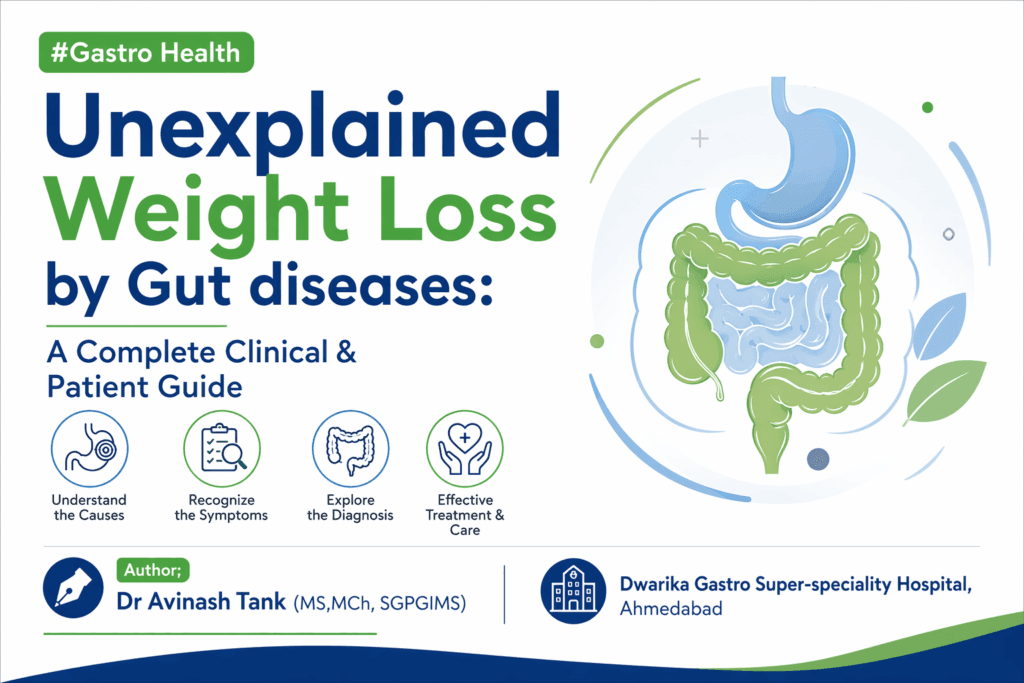
Unexplained Weight Loss by Gut diseases: A Complete Clinical & Patient Guide
Introduction
Unexplained weight loss is one of the most important warning signs in medicine. While intentional weight loss through diet and exercise is beneficial, losing weight without trying—especially more than 5% of body weight over 6–12 months—should never be ignored.
Among the various systems in the body, the gastrointestinal (GI) tract plays a central role in digestion, absorption, metabolism, and overall nutrition. When something goes wrong in the gut, the body may fail to absorb nutrients properly or may lose them, leading to weight loss.
This article explores the gastrointestinal causes of unexplained weight loss, their mechanisms, symptoms, diagnostic approach, and treatment strategies.
What is Unexplained Weight Loss?
Unexplained weight loss refers to a significant reduction in body weight without changes in diet, exercise, or lifestyle.
Red Flag Criteria:
- Loss of >5% body weight in 6–12 months
- Persistent loss despite normal eating
- Associated symptoms like:
- Fatigue
- Loss of appetite
- Diarrhea or constipation
- Blood in stool
- Abdominal pain
Why the Gastrointestinal System Matters
The GI tract includes:
- Esophagus
- Stomach
- Small intestine
- Large intestine
- Liver
- Pancreas
- Gallbladder
These organs are responsible for:
- Digestion of food
- Absorption of nutrients
- Storage and metabolism
Any disruption can result in:
- Poor nutrient absorption (malabsorption)
- Chronic inflammation
- Increased metabolic demand
- Loss of appetite
Major Gastrointestinal Causes of Unexplained Weight Loss
1. Malabsorption Syndromes
Overview
Malabsorption occurs when the intestine fails to absorb nutrients like fats, proteins, vitamins, and minerals.
Common Causes:
- Celiac disease
- Chronic pancreatitis
- Small intestinal bacterial overgrowth (SIBO)
Symptoms:
- Chronic diarrhea
- Bulky, foul-smelling stools
- Bloating
- Nutritional deficiencies
Mechanism of Weight Loss:
Even if the patient eats normally, nutrients are not absorbed, leading to calorie loss and malnutrition.
2. Chronic Inflammatory Bowel Diseases (IBD)
Includes:
Features:
- Chronic intestinal inflammation
- Ulceration of the gut lining
Symptoms:
- Diarrhea (sometimes bloody)
- Abdominal pain
- Fatigue
- Loss of appetite
Why Weight Loss Occurs:
- Reduced food intake due to pain
- Poor absorption
- Increased metabolic demand due to inflammation
3. Gastrointestinal Cancers
One of the most serious causes of unexplained weight loss.
Common Types:
Warning Signs:
- Progressive weight loss
- Loss of appetite
- Difficulty swallowing
- Blood in stool
- Anemia
Mechanism:
- Tumor consumes energy
- Causes obstruction or reduced intake
- Alters metabolism (cachexia)
4. Chronic Liver Disease
Includes:
- Fatty liver disease (advanced stages)
- Cirrhosis
- Chronic hepatitis
Symptoms:
- Loss of appetite
- Nausea
- Abdominal swelling (ascites)
- Muscle wasting
Why Weight Loss Happens:
- Impaired metabolism
- Reduced protein synthesis
- Poor digestion of fats
5. Pancreatic Disorders
Conditions:
- Chronic pancreatitis
- Pancreatic insufficiency
- Pancreatic cancer
Role of Pancreas:
Produces digestive enzymes essential for breaking down fats, proteins, and carbohydrates.
Symptoms:
- Fatty stools (steatorrhea)
- Abdominal pain radiating to back
- Diabetes
- Weight loss
Mechanism:
Lack of enzymes → food not digested → nutrients lost in stool.
6. Peptic Ulcer Disease
Causes:
- H. pylori infection
- Long-term painkiller (NSAIDs) use
Symptoms:
- Burning stomach pain
- Nausea
- Early satiety
Weight Loss Reason:
- Reduced food intake due to pain
- Fear of eating
7. Chronic Infections of the Gut
Examples:
- Intestinal tuberculosis
- Parasitic infections
- Chronic bacterial infections
Symptoms:
- Fever
- Diarrhea
- Abdominal pain
- Weakness
Mechanism:
- Chronic inflammation
- Nutrient loss
- Increased metabolic demand
8. Irritable Bowel Syndrome (IBS) – When Severe
Although IBS typically does not cause weight loss, severe cases with food avoidance may lead to mild weight loss.
⚠️ Important: Significant weight loss is NOT typical of IBS and should prompt evaluation for other causes.
9. Gastric Motility Disorders
Conditions:
Symptoms:
- Early fullness
- Nausea
- Vomiting
- Reduced appetite
Mechanism:
Food stays longer in stomach → reduced intake → weight loss.
10. Short Bowel Syndrome
Occurs after surgical removal of a large part of the intestine.
Effects:
- Severe malabsorption
- Chronic diarrhea
Result:
Significant weight loss and nutritional deficiencies.
Associated Symptoms That Suggest GI Cause
Watch for these accompanying signs:
- Persistent diarrhea or constipation
- Blood in stool (red or black)
- Abdominal pain or bloating
- Vomiting
- Difficulty swallowing
- Jaundice
- Anemia
Diagnostic Approach
A systematic evaluation is essential.
1. Detailed History
- Duration of weight loss
- Appetite changes
- Bowel habits
- Medication history
2. Physical Examination
- Nutritional status
- Abdominal exam
- Signs of liver disease
3. Laboratory Tests
- Complete blood count (CBC)
- Liver function tests
- Thyroid profile
- Vitamin levels
4. Stool Tests
- Occult blood
- Fat content
- Infection markers
5. Imaging
- Ultrasound abdomen
- CT scan
6. Endoscopy Procedures
- Upper GI endoscopy
- Colonoscopy
These help visualize tumors, ulcers, inflammation, and bleeding sources.
When to Seek Immediate Medical Attention
Consult a doctor urgently if weight loss is associated with:
- Blood in stool
- Persistent vomiting
- Severe abdominal pain
- Difficulty swallowing
- Rapid weight loss
Treatment Approach
Treatment depends on the underlying cause:
Medical Management:
- Antibiotics (for infections)
- Anti-inflammatory drugs (IBD)
- Enzyme supplements (pancreatic insufficiency)
- Acid suppression therapy
Nutritional Support:
- High-calorie diet
- Protein supplementation
- Vitamin replacement
Surgical Treatment:
- Tumor removal
- Resection of diseased bowel
Lifestyle Measures:
- Small frequent meals
- Avoid trigger foods
- Hydration
Prevention Strategies
- Maintain balanced diet
- Avoid excessive alcohol
- Practice food hygiene
- Regular health check-ups after age 40
- Early screening for colorectal cancer
Conclusion
Unexplained Weight Loss by Gut diseases: A Complete Clinical & Patient Guide. Unexplained weight loss is not just a cosmetic concern—it is often a warning signal of underlying gastrointestinal disease. Conditions ranging from simple malabsorption to serious cancers can present with weight loss as an early symptom.
Early diagnosis and timely intervention can significantly improve outcomes. If you or your patient experiences unexplained weight loss, especially with digestive symptoms, it is crucial to seek medical evaluation without delay.
Call to Action
If you are experiencing unexplained weight loss or digestive symptoms, consult a gastroenterologist for proper evaluation.
Call and book appointment with us on + 91 88 66 02 05 05
Early detection saves lives.
Was this article helpful?

Super-specialist GI, bariatric & cancer surgeon. SGPGIMS (India's premier GI centre) + advanced training in Japan & South Korea. Read full profile →
Last reviewed: July 2026




Comments
Be the first to share your thoughts on this article.