

Reading Time: 4 minutes
Jamun (Indian Blackberry): Complete Guide for Health Benefits
Amazing Facts about Jamun:
- Botanical Name and History: Botanically known as Syzygium cumini, Jamun belongs to the Myrtaceae family. It has a rich history in traditional medicine and has been used for various therapeutic purposes for centuries.
- Common Name: Jamun is commonly known as Java Plum, Black Plum, Indian Blackberry, and Jambul.
- Synonyms in Hindi, Sanskrit, and Regional Languages: In Hindi, it is known as Jamun or Jamboo. In Sanskrit, it is called Jambu or Mahaphala. In various regional languages of India, it is referred to as Njaval Pazham (Malayalam), Neredu Pandu (Telugu), Naval Pazham (Tamil), and Jambu or Jambul (Bengali).
- Parts Used: Different parts of the Jamun tree are used for various purposes. The fruit pulp, seeds, and bark are commonly utilized for their medicinal properties.
- Source: Jamun is a plant-based fruit, harvested from the Syzygium cumini tree.
- Native Region and Geographical Distribution: Jamun is native to the Indian subcontinent and is widely distributed across Southeast Asia, including India, Bangladesh, Sri Lanka, and Indonesia.
- Natural Season of Availability: Jamun is available during the summer season, typically from June to August.
Chemical Composition
Jamun is packed with a variety of beneficial compounds, including:
- Polyphenols: Such as anthocyanins, flavonoids, and tannins, which contribute to its antioxidant properties.
- Essential Minerals: Like calcium, potassium, magnesium, and iron.
- Vitamins: Particularly vitamin C and vitamin A.
- Dietary Fiber: Important for digestive health.
- Carbohydrates: Providing a natural energy source.
Nutritional Value
The nutritional value of Jamun per 100 grams is as follows:
- Calories: 60 kcal
- Carbohydrates: 14 grams
- Protein: 0.9 grams
- Fat: 0.23 grams
- Fiber: 0.6 grams
- Vitamin C: 18 mg
- Vitamin A: 55 IU
- Calcium: 19 mg
- Iron: 0.19 mg
- Potassium: 79 mg
- Magnesium: 15 mg
Benefits on Health
Jamun offers a plethora of health benefits, including:
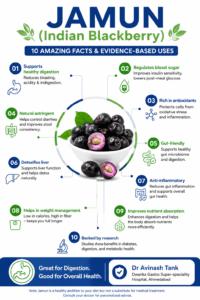
- Antioxidant Properties: Due to its rich polyphenol content, Jamun acts as a powerful antioxidant, neutralizing free radicals and reducing oxidative stress.
- Blood Sugar Management: Jamun has anti-diabetic properties and may help regulate blood sugar levels, making it beneficial for individuals with diabetes.
- Digestive Health: The dietary fiber in Jamun aids in improving digestion and relieving constipation.
- Heart Health: Potassium in Jamun supports heart health by maintaining blood pressure levels.
- Immune Booster: Vitamin C in Jamun strengthens the immune system, helping the body fight infections.
Frequently Asked Questions (FAQ’s)
Q1: Is Jamun safe during pregnancy?
Ans: Yes, Jamun is generally safe to consume during pregnancy. However, it’s best to consult a healthcare professional for personalized advice.
Q2: Can Jamun help in weight loss?
Ans: Yes, Jamun can aid in weight loss as it is low in calories and high in dietary fiber, promoting a feeling of fullness.
Q3: Does Jamun have any impact on blood pressure?
Ans: Yes, Jamun may help regulate blood pressure due to its potassium content, which supports heart health.
Q4: How to incorporate Jamun in the diet?
Ans: Jamun can be consumed fresh, dried, or as juices, smoothies, or jams. It can also be used in salads and desserts.
Q5: Are there any contraindications for using Jamun?
Ans:Individuals with hypoglycemia or on diabetic medications should be cautious with Jamun as it may lower blood sugar levels.
Precautions when Using Jamun
- Individuals with hypoglycemia or on diabetic medications should consult a healthcare professional before consuming Jamun, as it may lower blood sugar levels.
- Excessive consumption of Jamun seeds should be avoided, as it may lead to digestive issues.
Recommended Dose
There is no specific recommended dose of Jamun. However, moderate consumption as part of a balanced diet is generally safe for most individuals.
How to Use Jamun
Jamun can be consumed fresh, dried, or in the form of jams, jellies, and juices. It can also be used to prepare various desserts and salads.
Parts Used
The ripe fruit pulp and seeds are the commonly used parts of Jamun for medicinal and culinary purposes.
Healthy Recipe Made from Jamun
Jamun Smoothie
Ingredients:
- 1 cup ripe Jamun berries
- 1 cup yogurt
- 1 tablespoon honey
- A pinch of black salt
- A few mint leaves (optional)
Instructions:
- Wash the Jamun berries and remove the seeds.
- Blend the Jamun berries, yogurt, honey, and black salt in a blender until smooth.
- Pour the smoothie into a glass and garnish with mint leaves if desired.
- Enjoy a refreshing and nutritious Jamun smoothie.
Side Effects of Jamun
While Jamun is generally safe for most people, excessive consumption may lead to stomach upset, diarrhea, or allergic reactions in some individuals. Individuals with diabetes or hypoglycemia should monitor their blood sugar levels closely when consuming Jamun to avoid any adverse effects.
Conclusion
Jamun, also known as Java Plum, is a nutritious and versatile fruit with numerous health benefits.
From its antioxidant properties to its role in blood sugar management, Jamun has been a part of traditional medicine for centuries.
Including Jamun in a balanced diet can contribute to overall well-being, but it is essential to consume it in moderation and consult a healthcare professional when in doubt.
Embrace this natural gift of nature and reap the rewards of Jamun for your health and vitality.