

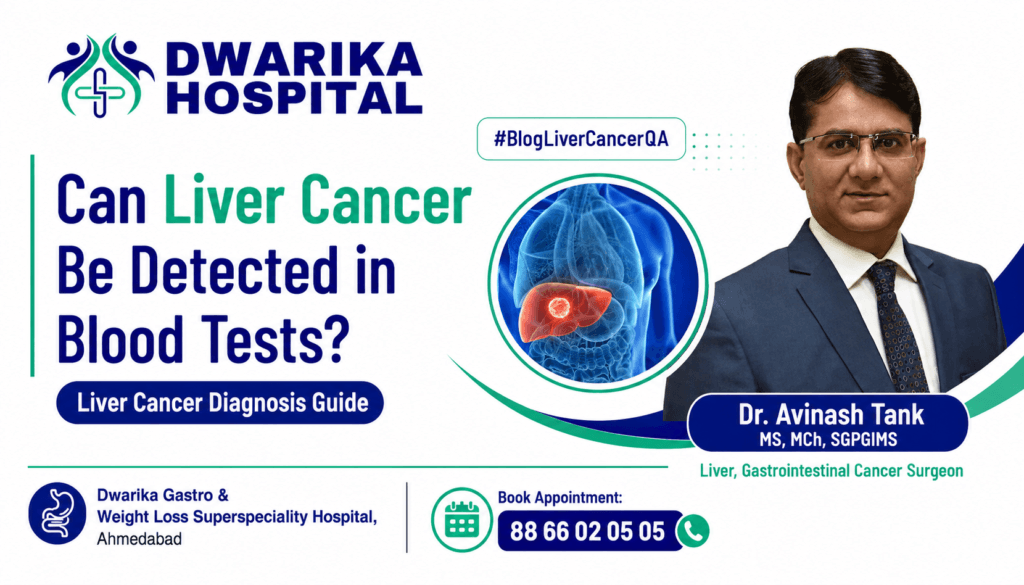
Can Liver Cancer Be Detected in Blood Tests?
FEATURED SNIPPET ANSWER
Blood tests can suggest the possibility of liver cancer, but they cannot diagnose it on their own. Markers like AFP and liver function tests may raise suspicion, but many patients can still have normal results.
A confirmed diagnosis requires combining blood tests with imaging studies such as ultrasound, CT, or MRI.
Why Patients Ask This Question
Many people ask, “can liver cancer be detected in blood tests?” especially when undergoing routine health checkups or monitoring liver conditions.
A diagnosis of liver cancer often comes unexpectedly, leading patients to wonder whether a simple blood test could have detected the disease earlier.
Common concerns include:
- Can routine health checkups identify jiliver cancer?
- If my blood tests are normal, does that mean I do not have liver cancer?
- Can liver cancer be found before symptoms appear? (See our guide on early signs of liver cancer)
- What blood markers indicate liver cancer?
- Should people with hepatitis or cirrhosis undergo regular blood testing? (Learn more about liver cancer risk factors)
These questions are important because liver cancer often develops silently. Understanding whether liver cancer can be detected in blood tests—and the limitations of these tests—can help patients seek timely evaluation and appropriate screening.
The Short Answer
So, can liver cancer be detected in blood tests alone? The answer is no.
Blood tests can help detect warning signs that may suggest liver cancer, but they cannot confirm the diagnosis on their own.
Doctors commonly use:
- Alpha-Fetoprotein (AFP)
- Liver Function Tests (LFTs)
- Hepatitis B and Hepatitis C testing
- Other specialized tumour markers in selected situations
If blood test abnormalities raise concern, imaging studies such as ultrasound, CT scan, or MRI are usually required to determine whether liver cancer is present (read more about liver cancer diagnosis methods).
Understanding the Background
What Is Liver Cancer?
Liver cancer occurs when abnormal cells grow uncontrollably within the liver. The most common type is Hepatocellular Carcinoma (HCC), which accounts for the majority of primary liver cancers (explore types of liver cancer).
The disease often develops in people with:
- Liver cirrhosis (understand cirrhosis and cancer risk)
- Chronic Hepatitis B infection
- Chronic Hepatitis C infection
- Fatty liver disease (learn about fatty liver progression)
- Alcohol-related liver damage
Why Early Detection Matters
Liver cancer is often easier to treat when discovered at an early stage. Early detection may allow treatments such as surgery, liver transplantation, or local tumour destruction techniques (see liver cancer treatment options).
Unfortunately, early liver cancer frequently causes no symptoms, making surveillance and screening particularly important for high-risk individuals.
Why Blood Tests Are Used
Blood tests provide information about:
- Liver health
- Inflammation
- Liver damage
- Viral hepatitis infection
- Tumour markers
However, even though patients often ask if liver cancer can be detected in blood tests, these tests cannot show the size, location, or exact characteristics of a tumour. Imaging studies remain essential (learn why imaging is critical in liver cancer diagnosis).
Detailed Answer
Which Blood Tests May Suggest Liver Cancer?
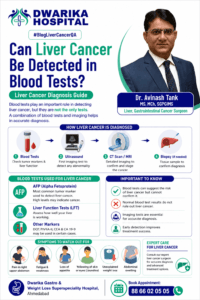
Several blood tests may provide clues.
Alpha-Fetoprotein (AFP)
AFP is the most commonly used blood marker associated with liver cancer (read more about AFP testing).
AFP levels may rise when:
- Hepatocellular carcinoma develops
- Certain liver diseases become active
- Some non-cancerous liver conditions are present
Important Limitation
Not all liver cancers produce AFP.
Some patients with confirmed liver cancer may have normal AFP levels.
Liver Function Tests (LFTs)
These tests assess how well the liver is functioning (understand liver function tests).
Common components include:
| Test | What It Measures |
| ALT | Liver cell injury |
| AST | Liver inflammation |
| Bilirubin | Liver processing function |
| Albumin | Protein production |
| Alkaline Phosphatase | Bile duct and liver abnormalities |
Abnormal results may suggest liver disease but do not specifically indicate cancer.
Hepatitis Testing
Since chronic hepatitis is a major risk factor for liver cancer, doctors may order:
- Hepatitis B testing
- Hepatitis C testing
These tests help identify patients who require regular surveillance (see hepatitis and liver cancer risk).
Blood Clotting Tests
The liver produces clotting proteins.
Advanced liver disease or liver cancer may affect:
- INR
- Prothrombin Time (PT)
These findings help assess liver reserve.
Can Routine Blood Tests Detect Liver Cancer Early?
Sometimes, but not reliably.
A routine blood test may reveal:
- Elevated liver enzymes
- Abnormal liver function
- Increased AFP
These findings may prompt further investigation (learn when abnormal liver tests need evaluation).
However:
- Many early liver cancers cause no blood test abnormalities.
- Some patients have completely normal laboratory results despite having liver cancer.
Therefore, relying solely on routine blood tests can miss early disease.
Why Imaging Is Usually Needed
Blood tests cannot visualize a tumour.
Imaging studies provide information about:
- Tumour size
- Tumour location
- Number of lesions
- Blood vessel involvement
- Spread beyond the liver
Common imaging methods include:
Ultrasound
Often used for screening high-risk individuals (see liver cancer screening protocols).
CT Scan
Provides detailed anatomical information.
MRI
Often offers superior characterization of liver lesions.
Many liver cancers are diagnosed through a combination of blood tests and imaging findings (read about liver cancer staging and diagnosis).
Who Should Have Regular Blood Testing for Liver Cancer Surveillance?
People at higher risk may benefit from regular monitoring.
High-risk groups include:
- Cirrhosis patients
- Chronic Hepatitis B infection
- Chronic Hepatitis C infection
- Advanced fatty liver disease
- Family history of liver cancer in selected situations
Surveillance programs often include:
- AFP testing
- Liver ultrasound every six months
This approach may improve early detection (learn more about liver cancer surveillance guidelines).
What Happens If AFP Is Elevated?
An elevated AFP does not automatically mean cancer.
Possible causes include:
- Active hepatitis
- Liver regeneration
- Cirrhosis
- Pregnancy
- Liver cancer
Doctors typically recommend additional evaluation rather than making a diagnosis based solely on AFP levels (see next steps after abnormal AFP).
Can Liver Cancer Exist with Normal Blood Tests?
Yes.
This is one of the most important facts patients should understand.
Some liver cancers:
- Do not produce AFP
- Cause minimal liver dysfunction
- Produce no symptoms
Because of this, normal blood tests cannot completely exclude liver cancer (read about silent liver cancer symptoms).
When Should Patients Seek Medical Evaluation?
Medical evaluation should be considered if there are:
- Persistent abdominal discomfort
- Unexplained weight loss
- Loss of appetite
- Abdominal swelling
- Yellowing of the eyes or skin
- Known cirrhosis
- Chronic hepatitis infection
Prompt assessment can lead to earlier diagnosis and treatment (learn when to consult a liver specialist).
What Current Evidence Shows
Current international guidelines agree that blood tests play an important role in liver cancer detection but are not sufficient as standalone diagnostic tools.
Key findings from modern research include:
- AFP can assist diagnosis and surveillance.
- AFP alone misses a significant number of liver cancers.
- Ultrasound remains an important surveillance tool.
- CT and MRI are often required for confirmation.
- High-risk patients benefit most from regular surveillance programs.
Modern liver cancer diagnosis relies on combining clinical history, blood tests, and imaging findings rather than any single test (explore comprehensive liver cancer evaluation).
Common Myths and Facts
Myth 1
A normal blood test means I do not have liver cancer.
Fact
Some liver cancers produce normal blood test results, especially in early stages (see early-stage liver cancer detection).
Myth 2
AFP is always elevated in liver cancer.
Fact
Many patients with liver cancer have normal AFP levels.
Myth 3
One blood test can diagnose liver cancer.
Fact
Diagnosis usually requires imaging studies and specialist evaluation (learn about diagnostic pathways).
Myth 4
Only people with symptoms need testing.
Fact
Many liver cancers develop silently before symptoms appear (read about asymptomatic liver cancer).
Myth 5
Abnormal liver tests always mean cancer.
Fact
Many non-cancerous liver conditions can cause abnormal liver tests (see causes of abnormal liver tests).
Myth 6
Liver cancer can only be found after it spreads.
Fact
Surveillance programs often detect liver cancer before symptoms develop (learn about early detection benefits).
Dr Avinash Tank’s Perspective
In clinical practice, many patients ask whether liver cancer can be detected in blood tests and assume that a normal report guarantees a healthy liver.
Unfortunately, this is not always true. While blood tests provide valuable information about liver health and can raise suspicion for liver cancer, they represent only one part of the diagnostic process.
Patients with cirrhosis, chronic hepatitis, or advanced fatty liver disease should not rely solely on laboratory reports.
Regular surveillance using both blood tests and imaging studies is often more effective for detecting liver cancer at an earlier stage (see recommended surveillance strategies).
When abnormalities are identified, timely specialist evaluation can help clarify the cause and guide appropriate next steps. Early assessment is particularly important because treatment options are often broader when liver cancer is diagnosed at an earlier stage (explore treatment options for early liver cancer).
Key Takeaways
✓ Blood tests can suggest liver cancer but cannot confirm it.
✓ AFP is the most commonly used liver cancer blood marker.
✓ Many patients with liver cancer have normal AFP levels.
✓ Liver function tests assess liver health but do not diagnose cancer.
✓ Imaging studies are usually required for diagnosis.
✓ Ultrasound is commonly used for surveillance.
✓ High-risk patients should undergo regular monitoring.
✓ Normal blood tests do not completely rule out liver cancer.
✓ Early detection improves treatment options.
✓ Specialist evaluation is important when abnormalities are identified.
Related Resources
Related Disease Hub
- Liver Cancer
Related Service Page
- Liver Cancer Surgery
Related Educational Articles
- Does Fatty Liver increase the risk of liver cancer
- Can liver cancer be cured by surgery
- Is Liver Cancer Hereditary?
- Can Liver Cancer Occur Without Cirrhosis?
- What Is the Survival Rate for Liver Cancer?
Frequently Asked Questions
Can a routine CBC detect liver cancer?
A Complete Blood Count (CBC) may show indirect abnormalities, but it cannot diagnose liver cancer. Additional blood tests and imaging studies are usually required.
Can liver cancer be detected through AFP testing alone?
No. AFP can support diagnosis but cannot independently confirm or exclude liver cancer.
What is the most important blood marker for liver cancer?
AFP is currently the most widely used blood marker for hepatocellular carcinoma.
Can liver cancer be present if liver function tests are normal?
Yes. Some patients with liver cancer have normal liver function tests, particularly in early disease.
How often should high-risk patients be screened?
Many guidelines recommend surveillance every six months using ultrasound, with or without AFP testing (see screening recommendations).
Is AFP elevated in every liver cancer patient?
No. A substantial proportion of liver cancer patients have normal AFP levels.
Why is ultrasound used along with blood tests?
Ultrasound can detect liver lesions that blood tests may miss (learn about imaging in liver cancer).
Can fatty liver disease increase liver cancer risk?
Yes. Advanced fatty liver disease and cirrhosis can increase the risk of developing liver cancer (read about fatty liver complications).
What happens if my AFP level is elevated?
Further evaluation is usually recommended, often including ultrasound, CT scan, or MRI (see next diagnostic steps).
Should people with hepatitis undergo regular screening?
Yes. Chronic Hepatitis B and Hepatitis C infections are major risk factors, and regular surveillance may be advised (learn about hepatitis-related cancer risk).
References
- National Comprehensive Cancer Network (NCCN) Guidelines: Hepatobiliary Cancers.
- European Society for Medical Oncology (ESMO) Clinical Practice Guidelines for Hepatocellular Carcinoma.
- American Society of Clinical Oncology (ASCO) Guidance on Liver Cancer Management.
- World Health Organization (WHO) Fact Sheet: Liver Cancer.
- Marrero JA, Kulik LM, Sirlin CB et al. Diagnosis, Staging and Management of Hepatocellular Carcinoma. Hepatology.
- Singal AG, Lampertico P, Nahon P. Epidemiology and Surveillance for Hepatocellular Carcinoma. Gastroenterology.
- European Association for the Study of the Liver (EASL) Clinical Practice Guidelines: Management of Hepatocellular Carcinoma.
Learn More About Liver Cancer
Explore our comprehensive Liver Cancer Disease Hub to understand symptoms, risk factors, diagnosis, staging, and treatment options.
Request Specialist Evaluation
If you have abnormal liver tests, elevated AFP levels, cirrhosis, hepatitis, or imaging findings that require further assessment, seek specialist evaluation to determine the appropriate next steps.
Contact
For appointments, second opinions, or specialist consultation:
Dr Avinash Tank (MS, MCh, SGPGIMS)
Liver, Gastrointestinal & HPB Surgeon
Dwarika Gastro & Weight Loss Superspeciality Hospital, Ahmedabad
Book Appointment / WhatsApp:
+91 88660 20505
Was this article helpful?

Super-specialist GI, bariatric & cancer surgeon. SGPGIMS (India's premier GI centre) + advanced training in Japan & South Korea. Read full profile →
Last reviewed: July 2026




Comments
Be the first to share your thoughts on this article.