

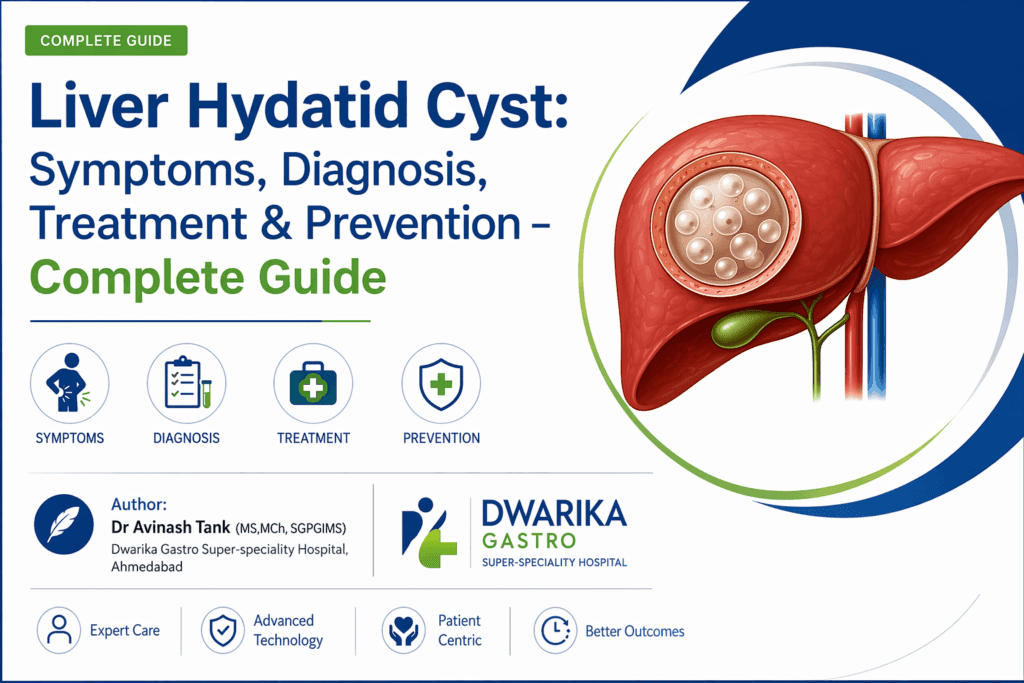
Liver Hydatid Cyst: Symptoms, Diagnosis, Treatment & Prevention – Complete Guide
Overview: Definition
A liver hydatid cyst is a parasitic infection of the liver caused by the larval stage of a tapeworm known as Echinococcus, most commonly Echinococcus granulosus. This condition is also called hepatic echinococcosis.
The disease occurs when humans accidentally ingest parasite eggs, usually through contaminated food, water, or contact with infected animals like dogs. Once inside the body, the larvae travel through the bloodstream and commonly lodge in the liver, forming fluid-filled cysts.
These cysts grow slowly over months to years and may remain asymptomatic for a long time. However, if untreated, they can lead to serious complications, including rupture and life-threatening allergic reactions.
Understanding the Disease
Hydatid disease is a zoonotic infection (transmitted from animals to humans). It is more common in rural areas, especially where livestock farming and close contact with dogs are prevalent.
Life Cycle of Infection
- Dogs (definitive host) carry adult tapeworms in their intestines.
- Eggs are passed in dog feces.
- Humans ingest eggs via contaminated food, water, or hands.
- Larvae hatch, penetrate the intestine, and travel to the liver.
- Cysts form and gradually enlarge.
Symptoms of Liver Hydatid Cyst
Many patients remain asymptomatic for years. Symptoms usually appear when the cyst becomes large or complications develop.
Common Symptoms
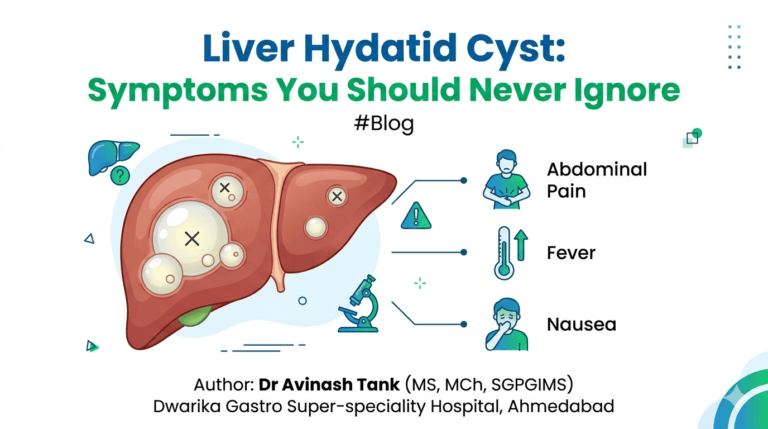
- Dull aching pain in the right upper abdomen
- Abdominal fullness or swelling
- Nausea and vomiting
- Loss of appetite
- Unexplained weight loss
- Fever (especially if infected)
Advanced Symptoms
- Jaundice (yellowing of eyes and skin)
- Palpable abdominal mass
- Allergic reactions (itching, rash)
- Sudden severe pain (if cyst ruptures)
Causes of Liver Hydatid Cyst
Gastrointestinal Route
- Ingestion of contaminated food (raw vegetables, unwashed fruits)
- Drinking contaminated water
- Poor hygiene practices
Other Causes
- Direct contact with infected dogs
- Handling livestock without proper hygiene
- Living in endemic areas (rural farming communities)
Complications if Untreated on Time
Untreated hydatid cysts can lead to serious and sometimes fatal complications:
1. Cyst Rupture
- Leakage of cyst contents into abdomen
- Can cause anaphylactic shock (life-threatening allergic reaction)
2. Infection of Cyst
- Leads to abscess formation
- High fever, severe pain
3. Obstructive Jaundice
- Compression of bile ducts
- Yellow discoloration of skin and eyes
4. Spread to Other Organs
- Lungs, brain, spleen
5. Portal Hypertension (Rare)
- Due to compression of liver vessels
Diagnosis of Liver Hydatid Cyst
Early and accurate diagnosis is crucial.
1. Imaging Studies
- Ultrasound (USG): First-line, detects cyst structure
- CT Scan: Detailed evaluation of size, number, and complications
- MRI: Useful in complex cases
2. Blood Tests
- Eosinophilia (increased eosinophils)
- Liver function tests (LFT)
3. Serological Tests
- ELISA for hydatid antibodies
4. Differential Diagnosis
Conditions that may mimic hydatid cyst:
- Simple liver cyst
- Liver abscess
- Hepatocellular carcinoma
- Polycystic liver disease
Treatment Approach
Treatment depends on:
- Size and number of cysts
- Location in liver
- Presence of complications
- Patient’s overall health
Treatment: Medical (Drug Therapy)
Albendazole Therapy
- First-line antiparasitic drug
- Dose: Usually given for weeks to months
- Helps:
- Kill parasite
- Reduce cyst size
- Prevent recurrence
Mebendazole
- Alternative in some cases
Indications for Medical Therapy
- Small cysts (<5 cm)
- Inoperable patients
- Adjunct before/after surgery
Treatment: Surgical Options
Surgery remains the definitive treatment for most cases.
1. Open Surgery
- Removal of cyst
- Prevents rupture and recurrence
2. Laparoscopic Surgery
- Minimally invasive
- Faster recovery
3. PAIR Technique (Puncture-Aspiration-Injection-Reaspiration)
- Image-guided procedure
- Injection of scolicidal agent into cyst
Goals of Surgery
- Complete removal of cyst
- Prevent spillage of contents
- Preserve liver tissue
Outcome: Results & Prognosis
- Excellent prognosis with timely treatment
- Recurrence rate is low if treated properly
- Delayed treatment increases complications
Taking Care at Home (During Treatment)
- Take medications regularly
- Maintain hygiene
- Avoid contact with stray dogs
- Follow dietary advice (light, balanced diet)
- Regular follow-up with doctor
Taking Care at Home After Recovery
- Continue follow-up scans
- Maintain strict hygiene
- Wash fruits and vegetables thoroughly
- Deworm pets regularly
- Avoid raw or contaminated food
When to Consult a Doctor
Seek medical advice if you have:
- Persistent right upper abdominal pain
- Unexplained fever
- Abdominal swelling
- Jaundice
- History of exposure to dogs/livestock
Book Consultation (CTA)
Early diagnosis can prevent serious complications.
If you or your family member has symptoms suggestive of liver disease, consult a specialist today.
👉 Book your consultation now for expert evaluation and personalized treatment plan.
When to Get Emergency Help
Go to the nearest hospital immediately if you experience:
- Sudden severe abdominal pain
- Difficulty breathing
- Allergic reactions (rash, swelling, collapse)
- High fever with chills
Book Consultation (Emergency CTA)
Don’t delay in emergencies. Immediate treatment can save life.
👉 Contact us on 88 66 02 05 05 services or visit your nearest hospital immediately.
Related Conditions (Differential Diagnosis)
- Liver abscess
- Simple hepatic cyst
- Amoebic liver disease
- Liver tumors
- Polycystic liver disease
Prevention of Liver Hydatid Cyst
Prevention is the most effective strategy.
Personal Hygiene
- Wash hands before eating
- Avoid contaminated food and water
Food Safety
- Wash vegetables thoroughly
- Avoid raw or undercooked meat
Animal Care
- Deworm dogs regularly
- Avoid feeding dogs raw meat
- Limit contact with stray dogs
Community Measures
- Proper disposal of animal waste
- Public awareness programs
Key Takeaways
- Liver hydatid cyst is a parasitic infection caused by Echinococcus
- It spreads through contaminated food, water, and contact with dogs
- Early diagnosis is essential to prevent complications
- Treatment includes medications and surgery
- Prevention through hygiene and awareness is crucial
Conclusion
Liver Hydatid Cyst Diagnosis Treatment & Prevention Complete Guide. Liver hydatid cyst is a preventable and treatable disease, but it can become dangerous if ignored. With proper awareness, timely diagnosis, and appropriate treatment, patients can achieve excellent outcomes.
If you are at risk or experiencing symptoms, do not delay seeking medical care. Early intervention not only simplifies treatment but also prevents life-threatening complications.
Was this article helpful?

Super-specialist GI, bariatric & cancer surgeon. SGPGIMS (India's premier GI centre) + advanced training in Japan & South Korea. Read full profile →
Last reviewed: July 2026


Comments
Be the first to share your thoughts on this article.