

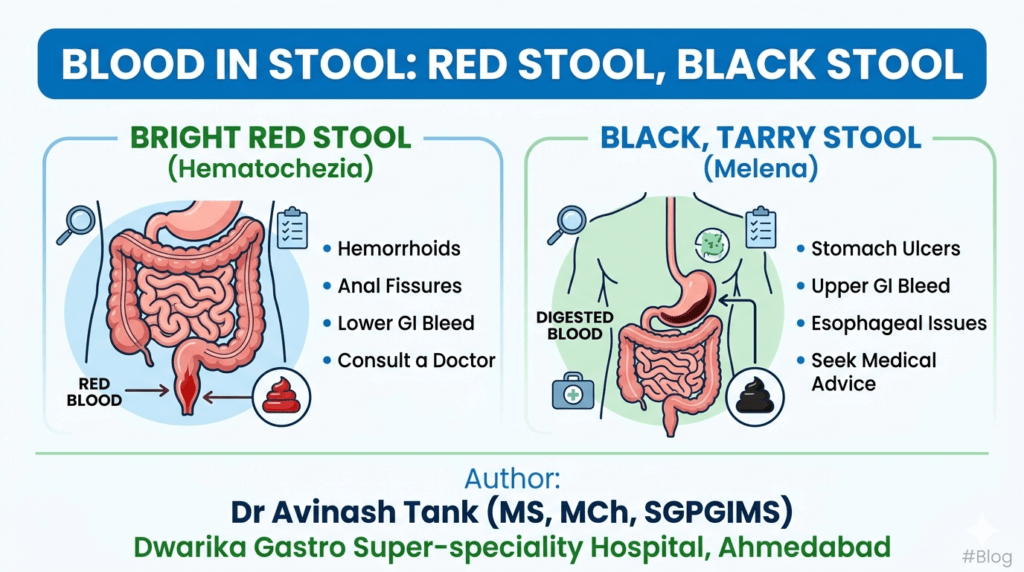
Blood in Stool: Red Stool, Black Stool.
Blood in stool is a symptom that can range from harmless to life-threatening. Seeing red or black stool often causes anxiety, but understanding the underlying cause helps in timely diagnosis and treatment.
In this comprehensive guide, we will explore types of blood in stool, causes of red and black stool, warning signs, diagnosis, and treatment options—helping you take the right action at the right time.
Overview: What Does Blood in Stool Mean?
Blood in stool indicates bleeding somewhere in the gastrointestinal (GI) tract. The color and appearance of the blood often provide clues about where the bleeding is occurring.
The digestive tract includes:
- Esophagus
- Stomach
- Small intestine
- Large intestine (colon)
- Rectum and anus
Bleeding can occur anywhere along this pathway.
Types of Blood in Stool
1. Bright Red Blood (Hematochezia)
- Fresh red blood seen in stool or toilet
- Usually indicates lower GI bleeding
- Commonly associated with:
- Piles (Hemorrhoids)
- Anal fissures
- Rectal conditions
2. Black, Tarry Stool (Melena)
- Sticky, foul-smelling, black stool
- Indicates upper GI bleeding
- Blood is digested as it passes through the gut
3. Occult Blood (Hidden Blood)
- Not visible to the naked eye
- Detected through lab tests (stool occult blood test)
- May indicate:
- Early colon cancer
- Chronic GI bleeding
Causes of Blood in Stool
A. Common Causes of Red Stool
1. Hemorrhoids (Piles)
- Swollen veins in the rectum or anus
- Symptoms:
- Bright red blood during or after passing stool
- Pain or itching
2. Anal Fissure
- Small tear in the anal lining
- Causes:
- Passing hard stool
- Symptoms:
- Severe pain while passing stool
- Fresh bleeding
3. Colorectal Polyps
- Non-cancerous growths in the colon
- Can bleed occasionally
- Some may progress to cancer over time
B. Serious Causes of Red Blood
1. Colorectal Cancer
- One of the most important causes
- Warning signs:
- Blood in stool
- Weight loss
- Change in bowel habits
2. Inflammatory Bowel Disease (IBD)
Includes:
- Ulcerative colitis
- Crohn’s disease
Symptoms:
- Bloody diarrhea
- Abdominal pain
- Fatigue
C. Causes of Black Stool (Melena)
1. Peptic Ulcer Disease
- Ulcers in stomach or duodenum
- Often due to:
- Infection (H. pylori)
- Painkillers
Symptoms:
- Burning stomach pain
- Black stool
2. Gastritis
- Inflammation of stomach lining
- Causes:
- Alcohol
- Stress
- Medications
3. Esophageal Varices
- Dilated veins in esophagus
- Common in liver disease
- Can cause massive bleeding
D. Other Causes
1. Diverticulosis
- Small pouches in colon
- May bleed suddenly
2. Infections
- Bacterial infections (e.g., dysentery)
- Symptoms:
- Bloody diarrhea
- Fever
3. Medications
Certain drugs can cause bleeding:
- Painkillers (NSAIDs)
- Blood thinners
Red Stool vs Black Stool: Key Differences
| Feature | Red Stool | Black Stool |
| Source of bleeding | Lower GI tract | Upper GI tract |
| Appearance | Fresh blood | Dark, tarry |
| Smell | Normal | Foul-smelling |
| Urgency | Moderate | Often urgent |
Symptoms Associated with Blood in Stool
Depending on the cause, symptoms may include:
- Abdominal pain
- Diarrhea or constipation
- Weakness or fatigue
- Dizziness
- Weight loss
- Vomiting blood (in severe cases)
When Should You Worry? (Red Flag Signs)
Seek immediate medical attention if you notice:
- Large amount of blood in stool
- Black, tarry stool
- Persistent bleeding
- Sudden weight loss
- Severe abdominal pain
- Weakness or fainting
These may indicate serious conditions like GI bleeding or cancer.
Diagnosis of Blood in Stool
A proper diagnosis requires a combination of history, examination, and investigations.
1. Medical History & Physical Examination
- Duration of symptoms
- Associated complaints
- Drug history
2. Laboratory Tests
- Complete blood count (CBC) → Detect anemia
- Stool test → Occult blood, infections
3. Endoscopic Procedures
Colonoscopy
- Examines colon and rectum
- Detects:
- Polyps
- Cancer
- Inflammation
Upper GI Endoscopy
- Evaluates esophagus, stomach, duodenum
- Used for black stool cases
4. Imaging Studies
- CT scan
- MRI
- Capsule endoscopy (in selected cases)
Treatment of Blood in Stool
Treatment depends entirely on the underlying cause.
1. Treatment for Common Causes
Piles (Hemorrhoids)
- High-fiber diet
- Sitz bath
- Medications
- Laser or surgical treatment (if severe)
Anal Fissure
- Stool softeners
- Pain relief creams
- Warm water baths
2. Treatment for GI Diseases
Ulcers
- Acid-reducing medications
- Antibiotics for H. pylori
Inflammatory Bowel Disease
- Anti-inflammatory drugs
- Immunosuppressants
Infections
- Antibiotics
- Hydration
3. Advanced Treatments
Endoscopic Therapy
- Stop bleeding using clips, injections, or cautery
Surgery
Required in:
- Cancer
- Severe bleeding
- Complications
Home Care & Lifestyle Tips
Simple lifestyle changes can reduce risk:
Dietary Changes
- Increase fiber intake (fruits, vegetables)
- Drink plenty of water
- Avoid spicy and processed foods
Healthy Habits
- Avoid straining during bowel movements
- Exercise regularly
- Maintain healthy weight
Medication Awareness
- Avoid excessive painkiller use
- Take medications under medical supervision
Prevention of Blood in Stool
- Regular health checkups
- Screening colonoscopy after age 45
- Early treatment of constipation
- Managing liver and stomach diseases
Blood in Stool in Special Situations
1. In Children
- Common causes:
- Constipation
- Anal fissures
- Usually not serious but needs evaluation
2. In Elderly
- Higher risk of:
- Colon cancer
- Diverticular disease
- Requires prompt investigation
Myths vs Facts
Myth: Blood in stool is always due to piles
Fact: It can be a sign of serious disease like cancer
Myth: Black stool is harmless
Fact: It often indicates internal bleeding
When to Consult a Doctor
Consult a specialist if:
- Blood appears more than once
- There is unexplained anemia
- You are above 40 years
- Family history of colon cancer
Conclusion
Blood in Stool: Red Stool, Black Stool. Blood in stool—whether red or black—should never be ignored. While some causes like piles are common and treatable, others like ulcers, inflammatory bowel disease, or cancer require urgent medical attention.
Early diagnosis through tests like colonoscopy and endoscopy can save lives.
Book Consultation (CTA)
If you or your family member is experiencing blood in stool, black stool, or unexplained anemia, seek expert care immediately.
Consult a Gastro Specialist today for accurate diagnosis and advanced treatment.
Call & Fix your appointment +91 88 66 02 05 05
Was this article helpful?

Super-specialist GI, bariatric & cancer surgeon. SGPGIMS (India's premier GI centre) + advanced training in Japan & South Korea. Read full profile →
Last reviewed: July 2026






Comments
Be the first to share your thoughts on this article.