

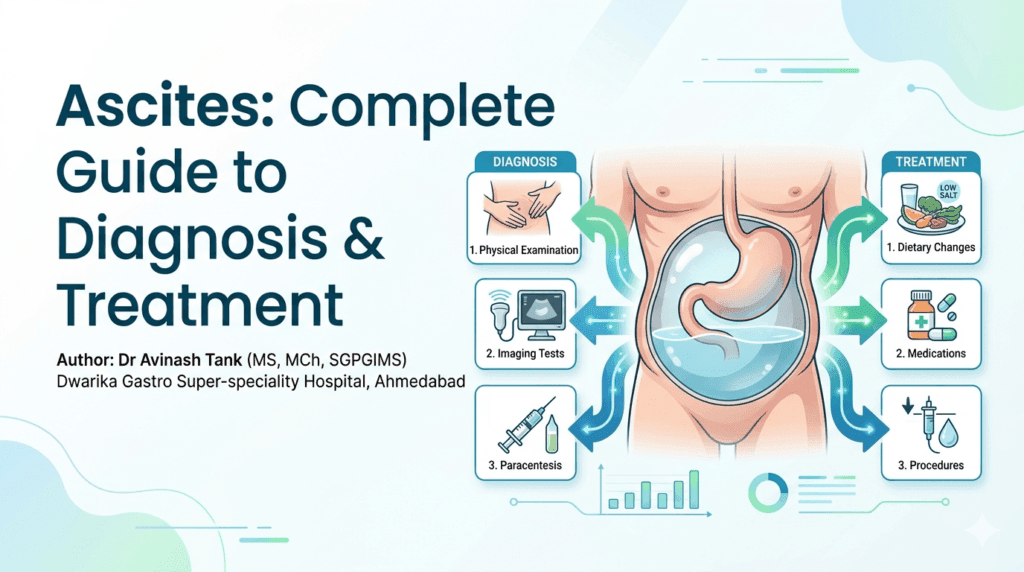
Ascites: Complete Guide to Diagnosis & Treatment
Introduction
Ascites is one of the most common and visible complications of chronic diseases, especially liver disease. It is characterized by the abnormal accumulation of fluid in the abdominal cavity, leading to progressive abdominal swelling.
For many patients, ascites is not just a symptom—it is a sign that an underlying disease has reached an advanced stage. However, with proper understanding, timely diagnosis, and appropriate treatment, ascites can be effectively managed, and complications can be prevented.
This comprehensive guide explains everything you need to know about ascites in simple, patient-friendly language, including causes, symptoms, investigations, treatment, diet, and long-term care.
What is Ascites? (Overview & Definition)
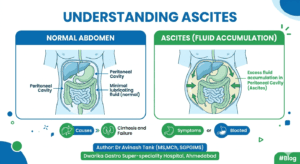
Ascites refers to the collection of excess fluid in the peritoneal cavity, the space between the organs in the abdomen.
Normally, a small amount of fluid is present to lubricate abdominal organs. However, when this balance is disturbed, fluid begins to accumulate, sometimes reaching several liters.
Why Does Ascites Occur? (Pathophysiology Simplified)
The most common cause of ascites is liver cirrhosis, a condition where the liver becomes scarred and loses its normal function.
Step-by-Step Mechanism
- Liver Damage
Chronic conditions like alcohol use, fatty liver, or hepatitis damage liver cells. - Fibrosis and Cirrhosis
Healthy liver tissue is replaced with scar tissue. - Portal Hypertension
Blood flow through the liver is obstructed, increasing pressure in the portal vein. - Fluid Leakage
High pressure forces fluid out of blood vessels into the abdominal cavity. - Salt and Water Retention
Hormonal changes in the body cause kidneys to retain sodium and water, worsening fluid accumulation.
Causes of Ascites
1. Liver-Related Causes (Most Common)
- Liver cirrhosis (alcoholic, non-alcoholic fatty liver disease)
- Chronic hepatitis B or C
- Liver failure
2. Cancer (Malignant Ascites)
- Liver cancer
- Ovarian cancer
- Gastrointestinal cancers
- Peritoneal metastasis
3. Cardiac Causes
- Congestive heart failure
- Constrictive pericarditis
4. Kidney Diseases
- Nephrotic syndrome
- Chronic kidney disease
5. Infections
- Tuberculosis (common in India)
- Bacterial infections
6. Other Causes
- Pancreatitis
- Hypoalbuminemia (low protein levels)
Symptoms of Ascites:
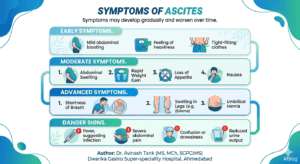
Symptoms may develop gradually and worsen over time.
Early Symptoms
- Mild abdominal bloating
- Feeling of heaviness
- Tight-fitting clothes
Moderate Symptoms
1. Abdominal Swelling
The most obvious sign—abdomen becomes enlarged and tense.
2. Rapid Weight Gain
Weight increases due to fluid, not fat.
3. Loss of Appetite
Pressure on the stomach leads to early fullness.
4. Nausea
Due to compression of digestive organs.
Advanced Symptoms
1. Shortness of Breath
Fluid pushes the diaphragm upward, affecting breathing.
2. Swelling in Legs (Edema)
Fluid accumulates in lower limbs.
Increased abdominal pressure causes hernia formation.
Danger Signs
- Fever (suggests infection)
- Severe abdominal pain
- Confusion or drowsiness
- Reduced urine output
Symptoms may develop gradually and worsen over time.
Early Symptoms
- Mild abdominal bloating
- Feeling of heaviness
- Tight-fitting clothes
Moderate Symptoms
1. Abdominal Swelling
The most obvious sign—abdomen becomes enlarged and tense.
2. Rapid Weight Gain
Weight increases due to fluid, not fat.
3. Loss of Appetite
Pressure on the stomach leads to early fullness.
4. Nausea
Due to compression of digestive organs.
Advanced Symptoms
1. Shortness of Breath
Fluid pushes the diaphragm upward, affecting breathing.
2. Swelling in Legs (Edema)
Fluid accumulates in lower limbs.
3. Umbilical Hernia
Increased abdominal pressure causes hernia formation.
Danger Signs
- Fever (suggests infection)
- Severe abdominal pain
- Confusion or drowsiness
- Reduced urine output
Diagnosis of Ascites
1. Clinical Examination
Doctors look for:
- Shifting dullness
- Fluid thrill
2. Imaging Studies
Ultrasound
- First-line investigation
- Detects even small amounts of fluid
CT Scan
- Identifies cause and complications
3. Blood Tests
- Liver function tests (LFT)
- Kidney function tests (KFT)
- Serum albumin
4. Ascitic Fluid Analysis (Paracentesis)
A needle is used to remove fluid for testing.
Parameters Tested
- Protein level
- Cell count
- Culture (infection)
- Cytology (cancer)
SAAG (Serum-Ascites Albumin Gradient)
Helps determine cause:
- High SAAG (>1.1) → Liver disease
- Low SAAG (<1.1) → Infection or cancer
Treatment of Ascites
Treatment depends on the cause, severity, and patient condition.
1. Dietary Management
Salt Restriction
- Limit sodium intake (<2 grams/day)
- Avoid processed and packaged foods
2. Medical Treatment
Diuretics (Water Tablets)
- Spironolactone (first-line)
- Furosemide (added if needed)
These drugs help remove excess fluid through urine.
3. Paracentesis (Fluid Removal)
- Done when ascites is severe
- Provides immediate relief
- May need to be repeated
4. Albumin Infusion
- Given after large-volume paracentesis
- Prevents complications
5. Advanced Procedures
TIPS (Transjugular Intrahepatic Portosystemic Shunt)
- Reduces portal pressure
- Used in resistant ascites
6. Liver Transplant
- Definitive treatment for advanced cirrhosis
Complications of Ascites
1. Spontaneous Bacterial Peritonitis (SBP)
- Infection of ascitic fluid
- Symptoms: fever, pain, confusion
- Requires urgent antibiotics
2. Hepatorenal Syndrome
- Kidney failure due to liver disease
3. Hernia
- Umbilical or inguinal
4. Respiratory Problems
- Due to pressure on lungs
Diet and Lifestyle in Ascites
Diet Recommendations
- Low-salt diet
- Adequate protein intake
- Avoid alcohol completely
Lifestyle Tips
- Daily weight monitoring
- Measure abdominal girth
- Take medicines regularly
- Regular follow-ups
Prevention of Ascites
- Avoid alcohol
- Maintain healthy weight
- Control diabetes
- Treat hepatitis early
- Regular liver checkups
When to Consult a Doctor
- Persistent abdominal swelling
- Sudden weight gain
- Loss of appetite
- Breathing difficulty
When to Seek Emergency Help
- Fever
- Severe abdominal pain
- Confusion
- Reduced urine
Long-Term Care and Monitoring
Ascites often requires continuous management.
What Patients Should Do
- Follow low-salt diet strictly
- Avoid missing medications
- Monitor symptoms regularly
- Attend scheduled checkups
Prognosis (Outcome)
- Depends on underlying cause
- Better outcomes with early treatment
- Advanced liver disease has poorer prognosis
Key Takeaways
- Ascites is a serious medical condition, not just swelling
- Liver disease is the most common cause
- Early diagnosis improves outcomes
- Treatment includes diet, medicines, and procedures
- Regular monitoring is essential
Conclusion
Ascites is a condition that signals underlying disease progression, especially related to the liver. While it can be alarming, modern medicine offers effective ways to manage and treat it.
The most important factor is early recognition and timely medical care. Ignoring symptoms can lead to complications, but proper treatment and lifestyle changes can significantly improve quality of life.
Call to Action (CTA)
Do not ignore abdominal swelling or sudden weight gain.
👉 Book your consultation today for expert evaluation and personalized treatment.
Early care can prevent complications and improve your health outcomes.
Was this article helpful?

Super-specialist GI, bariatric & cancer surgeon. SGPGIMS (India's premier GI centre) + advanced training in Japan & South Korea. Read full profile →
Last reviewed: July 2026





Comments
Be the first to share your thoughts on this article.