

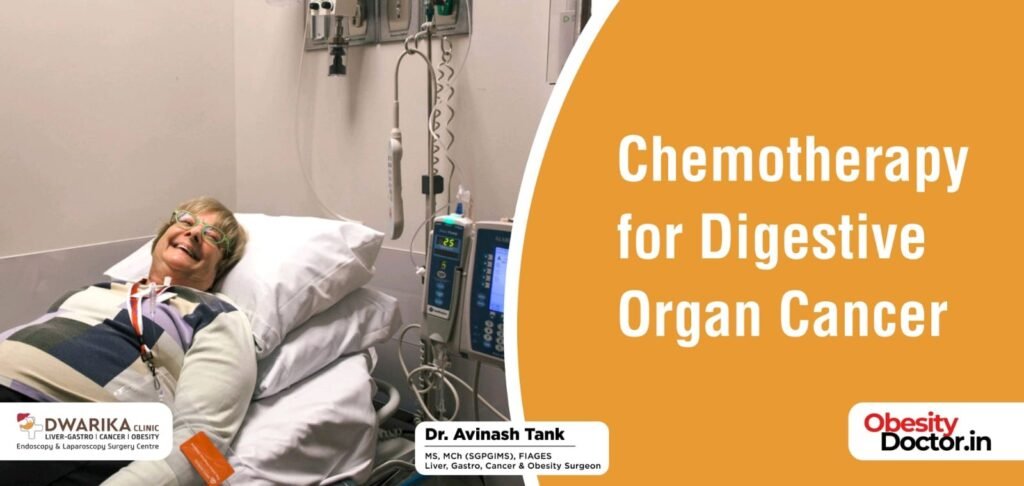
Chemotherapy for Digestive Organ Cancer: Understanding its Meaning, Mechanism, Types, Drug-Specific Side Effects, and Response Rates”
Introduction
Chemotherapy, often referred to as ‘chemo,’ is a critical component of cancer treatment.
When it comes to digestive organ cancer, understanding chemotherapy is essential, as it can significantly impact the patient’s journey.
There are many organs involved in digestive process. The names of digestive organs are: Liver, Pancreas, Gallbladder, Bileduct, Esophagus, Stomach, Duodenum, Small Intestine ( Jejunum & Ileum), Large Intestine (Caecum, Ascending Colon, Hepatic Flexure, Transverse colon, Spelnic Flexure, Descending Colon, Sigmoid Colon), Rectum & Anal Canal.
What’s the Meaning of Chemotherapy?
Chemotherapy is a medical treatment that uses drugs to target and destroy cancer cells.
It’s a systemic therapy, meaning it affects the entire body, unlike surgery or radiation therapy, which focus on specific areas.
For digestive organ cancer patients, chemotherapy can be a vital part of their treatment plan, either alone or in combination with other therapies.
How Does Chemotherapy Work?
Chemotherapy drugs work by disrupting the rapid growth and division of cancer cells.
They interfere with various phases of the cell cycle, preventing cancer cells from multiplying.
While these drugs primarily target cancer cells, they can also affect healthy cells in the process, leading to side effects.
Types (Classification) of Chemotherapy Drugs
There are several classes of chemotherapy drugs used to treat digestive organ cancer. These include:
- Cytotoxic Drugs: These drugs directly kill cancer cells.
- Targeted Therapy: Targeted drugs focus on specific molecules involved in cancer growth.
- Immunotherapy: This newer approach harnesses the body’s immune system to fight cancer.
- Hormone Therapy: Used for some specific types of digestive organ cancers that are hormone-dependent.
Drug-Specific Side Effects of Chemotherapy
The side effects of chemotherapy can vary depending on the drugs used, the dosage, and individual patient factors.
Common side effects may include nausea, vomiting, fatigue, hair loss, and low blood cell counts.
However, advancements in chemotherapy have led to more targeted therapies with fewer side effects.
Response Rates After Chemotherapy for Digestive Organs
Response rates to chemotherapy can vary widely depending on the type and stage of digestive organ cancer, overall health, and individual factors.
Some patients may experience a significant reduction in tumor size, while others may have stable disease or experience minimal benefits.
Response rates are usually assessed through imaging studies and clinical evaluations by oncologists.
It’s crucial to remember that every patient’s journey with chemotherapy is unique.
While some may achieve complete remission, others may use chemotherapy to manage symptoms and slow cancer progression.
The effectiveness of chemotherapy should be discussed in detail with the oncologist, taking into consideration the patient’s overall health and treatment goals.
In conclusion, chemotherapy is a multifaceted treatment option for digestive organ cancer.
It’s essential for patients and their healthcare teams to work together to make informed decisions about the most suitable treatment approach, considering its meaning, mechanism, types of drugs, potential side effects, and expected response rates.
Through this collaborative effort, patients can navigate their cancer journey with greater confidence and hope for improved outcomes.
Was this article helpful?

Super-specialist GI, bariatric & cancer surgeon. SGPGIMS (India's premier GI centre) + advanced training in Japan & South Korea. Read full profile →
Last reviewed: July 2026






Comments
Be the first to share your thoughts on this article.