
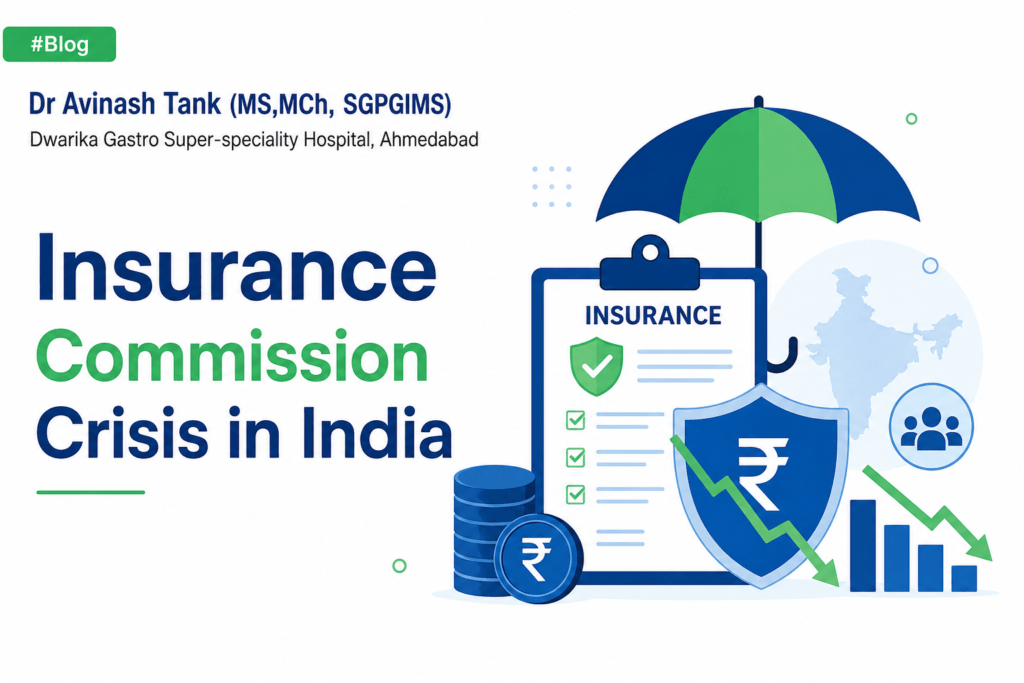
Insurance Commission Crisis in India: Why IRDAI’s Proposed Changes Could Reshape Healthcare and Life Insurance Distribution
India’s Insurance Industry Faces a Major Turning Point
India’s insurance sector is entering one of the most important reform phases in recent years. The country’s insurance regulator, Insurance Regulatory and Development Authority of India (IRDAI), is considering major changes in the way insurance agents, brokers, and distributors are paid commissions.
The discussion has started because insurance companies are spending very large amounts of money on commissions paid to agents and intermediaries. According to industry reports, commission payouts by life insurance companies increased sharply over the last few years. Regulators now believe these rising costs may affect the long-term financial stability of insurance companies and may also encourage aggressive selling practices.
However, insurance companies, brokers, and industry experts are warning that sudden cuts in commissions could create serious problems. They fear that many insurance agents may leave the profession, rural insurance penetration may slow down, and small distributors may disappear from the market.
This debate is not just about money. It is about how insurance reaches ordinary Indian families, especially in small cities and villages where people still depend heavily on human guidance for financial decisions.
What Is IRDAI?
Understanding India’s Insurance Regulator in Simple Words
Insurance Regulatory and Development Authority of India, commonly called IRDAI, is the government body responsible for regulating and supervising the insurance industry in India.
Its main responsibilities include:
- Protecting insurance customers
- Regulating insurance companies
- Approving insurance products
- Monitoring commission structures
- Ensuring financial stability of insurers
- Promoting insurance penetration across India
In simple language, IRDAI works like a referee for the insurance sector. It tries to balance the interests of insurance companies, agents, brokers, and customers.
The regulator also wants insurance products to remain affordable and transparent for ordinary people.
What Are Insurance Commissions?
The Meaning of Commission in Simple Terms
An insurance commission is the payment given to an insurance agent, broker, or intermediary for selling an insurance policy.
For example:
- If a customer buys a life insurance policy worth ₹50,000 yearly premium,
- The insurance company may pay a percentage of that amount to the agent as commission.
This commission acts as an incentive for agents to educate customers, complete paperwork, explain products, and help during claims.
Commissions are extremely important because India’s insurance industry still depends heavily on human relationships and trust.
Many people do not buy insurance online. Instead, they rely on:
- Local insurance advisors
- Financial consultants
- Bank relationship managers
- Insurance agents
These individuals spend time explaining policies to customers, especially first-time buyers.
Why Are Insurance Commissions Becoming Controversial?
Rising Costs Have Alarmed Regulators
The controversy started because commission expenses have increased rapidly.
Industry data shows:
- Life insurance commissions rose from around ₹42,322 crore in FY23
- To ₹51,524 crore in FY24
- And further to ₹60,799 crore in FY25
This sharp rise has worried regulators.
Private insurance companies alone reportedly paid over ₹35,000 crore in commissions during FY25.
IRDAI believes that such high acquisition costs may become unsustainable in the long term.
What Is Acquisition Cost?
Acquisition cost means the money spent by insurance companies to gain new customers.
This includes:
- Agent commissions
- Marketing expenses
- Advertising
- Distribution costs
- Incentives
If acquisition costs become too high, insurance companies may struggle to maintain profits and affordability.
What Changed in 2023?
The Shift From Commission Caps to EOM Framework
In 2023, IRDAI introduced a major policy reform.
Earlier, insurance companies had fixed limits on how much commission they could pay for each product category.
But in 2023, IRDAI removed many product-level commission caps and shifted insurers to a broader system called the Expenses of Management (EOM) framework.
What Is EOM?
EOM stands for Expenses of Management.
It refers to the total operational expenses of an insurance company, including:
- Salaries
- Commissions
- Administrative expenses
- Marketing costs
- Technology expenses
Instead of controlling individual commissions directly, IRDAI allowed insurers more flexibility as long as their total expenses remained within permitted limits.
The idea was to give companies freedom to design better distribution strategies.
However, after this flexibility was introduced, commission payouts increased sharply.
Now regulators are reconsidering whether additional controls are needed.
Why Is the Industry Worried?
Fear of Agent Exit and Market Disruption
Insurance companies and industry leaders believe aggressive commission cuts may damage the entire insurance distribution system.
Many insurance agents work mainly on commission income. If their earnings reduce suddenly, thousands of agents may quit.
This concern is especially serious in smaller cities and rural India.
Why Are Agents Important?
In many parts of India:
- Customers are not financially educated
- Insurance terms are difficult to understand
- People need face-to-face guidance
- Claim processes can feel complicated
Agents often act like long-term advisors for families.
They help customers:
- Select suitable plans
- Understand policy documents
- Pay premiums
- File claims
- Renew policies
Without agents, insurance penetration may decline.
What Is Insurance Penetration?
A Simple Explanation
Insurance penetration means the percentage of people in a country who have insurance coverage.
India’s insurance penetration is still lower than many developed countries.
This means:
- Millions of Indians still lack life insurance
- Many families have no health insurance
- Financial protection remains inadequate
The government and regulators want insurance coverage to expand, especially in:
- Rural India
- Tier-2 cities
- Tier-3 towns
Industry leaders fear that weakening the agent network could slow this expansion.
Understanding Tier-2 and Tier-3 Markets
Why Smaller Cities Matter
Tier-2 and Tier-3 cities refer to smaller urban areas outside major metropolitan cities like Mumbai, Delhi, Bengaluru, or Ahmedabad.
Examples include:
- Palanpur
- Rajkot
- Surat outskirts
- Small district towns
- Semi-urban regions
These markets are extremely important because:
- Population is large
- Insurance awareness is still developing
- Customers depend more on personal trust
Digital insurance platforms may work well in metro cities, but smaller towns still depend heavily on human interaction.
Can Digital Platforms Replace Insurance Agents?
Experts Say “Not Completely”
Many industry leaders believe digital technology will grow rapidly, but it cannot fully replace human advisors yet.
Why?
Insurance is different from online shopping.
When people buy:
- Life insurance
- Health insurance
- Retirement plans
they often need emotional reassurance and detailed explanations.
Customers ask questions like:
- What happens if I die?
- Will my family get money?
- What diseases are covered?
- How do claims work?
- Is this policy safe?
Digital apps can provide information, but trust is still built through human interaction.
Industry experts say India’s future is likely to involve a hybrid model.
What Is a Hybrid Insurance Model?
Combining Technology With Human Advisors
A hybrid model means combining:
- Digital platforms
- Online policy management
- Artificial intelligence
- Mobile apps
with:
- Human advisors
- Insurance agents
- Relationship managers
In this system:
- Technology improves efficiency
- Agents continue building trust
Experts believe this balanced approach is more suitable for India.
What Is Mis-selling in Insurance?
One of the Biggest Concerns in the Industry
Mis-selling means selling insurance products dishonestly or inappropriately.
Examples include:
- Hiding important policy conditions
- Promising false returns
- Selling unsuitable policies
- Pressuring elderly customers
- Misleading customers about benefits
Mis-selling damages trust in the insurance industry.
Regulators want to reduce such practices.
Are High Commissions Responsible for Mis-selling?
The Debate Is Complicated
Some regulators believe high upfront commissions encourage aggressive sales.
The logic is simple:
- Higher commission
- Greater incentive to push sales
- Increased risk of mis-selling
However, many industry experts disagree.
They argue that mis-selling is mainly a governance problem, not merely a commission problem.
What Is Governance?
Governance refers to rules, ethics, supervision, and accountability inside organizations.
Experts believe companies should improve:
- Training
- Transparency
- Customer education
- Compliance systems
- Product suitability checks
instead of only reducing commissions.
What Is Product Suitability?
Matching the Right Policy to the Right Customer
Product suitability means ensuring customers receive insurance products that actually fit their needs.
For example:
- A senior citizen may need health insurance
- A young parent may need term insurance
- A businessman may need risk protection
Selling the wrong product only for commission is considered unethical.
Regulators want insurers to strengthen suitability checks.
Understanding Trail-Based Commissions
A Big Proposed Change
One of the most discussed reforms is trail-based commissions.
What Is a Trail Commission?
Currently, many agents receive large upfront commissions when they sell a policy.
In a trail-based system:
- Payments are spread over several years
- Agents earn gradually as the policy continues
This model is already common in mutual funds.
Why Does IRDAI Like Trail Commissions?
Encouraging Long-Term Customer Care
Trail commissions may encourage agents to:
- Maintain long-term customer relationships
- Ensure policies stay active
- Reduce aggressive short-term selling
Because payments continue over time, agents remain connected with customers.
Regulators believe this could improve policy persistency.
What Is Policy Persistency?
A Very Important Insurance Term
Persistency means customers continue paying premiums regularly and keep their policies active for many years.
Low persistency occurs when:
- Customers stop paying premiums
- Policies lapse
- Insurance coverage ends early
High persistency is considered healthy because it shows:
- Customers understand products properly
- Policies are useful
- Agents are providing proper guidance
Trail commissions may motivate agents to improve persistency.
Why Are Smaller Agents Worried?
Delayed Income Could Create Financial Stress
Many small insurance agents depend on upfront commissions for survival.
If commissions are spread over several years:
- Initial income falls
- Cash flow becomes difficult
- New agents may struggle financially
Large corporations may adapt more easily, but independent agents could suffer.
This may force many smaller intermediaries to join bigger firms.
What Is Industry Consolidation?
Bigger Firms Becoming More Dominant
Consolidation means smaller businesses disappear or merge into larger organizations.
In insurance distribution, this could mean:
- Small brokers closing down
- Independent agents joining large networks
- Large corporations gaining market share
Experts worry excessive consolidation could reduce competition.
Why Is Competition Important?
Customers Benefit From Multiple Choices
Healthy competition helps customers because:
- Prices remain competitive
- Service quality improves
- Customers receive multiple policy options
- Innovation increases
If only large firms survive, customers may have fewer choices.
What Are Brokers and Intermediaries?
Understanding Different Insurance Roles
Insurance Agent
Represents one insurance company and sells its products.
Insurance Broker
Acts independently and may offer policies from multiple insurers.
Intermediary
A general term for people or companies involved in selling insurance.
PoSP
PoSP means Point of Sales Person.
These are simplified insurance sellers authorized to sell certain standard products.
Why Rural India Still Needs Human Insurance Advisors
Technology Alone Cannot Solve Everything
In many villages and small towns:
- Internet access may be inconsistent
- Digital literacy remains limited
- Financial awareness is still growing
Insurance agents often explain concepts personally in local languages.
They may visit homes repeatedly before customers finally purchase a policy.
Without these advisors, many families may remain uninsured.
Healthcare Insurance Is Especially Sensitive
Medical Costs Are Rising Rapidly
Health insurance is becoming increasingly important in India because:
- Hospital expenses are rising
- Serious diseases are expensive
- Medical inflation is increasing
Families without health insurance may face severe financial stress during illness.
Insurance agents play a major role in spreading awareness about:
- Mediclaim policies
- Family floaters
- Critical illness plans
- Cashless hospitalization
If distribution weakens, healthcare coverage growth may slow.
What Is Medical Inflation?
Healthcare Costs Are Rising Faster Than Normal Inflation
Medical inflation means the increase in healthcare expenses over time.
This includes:
- Hospital charges
- ICU costs
- Surgery expenses
- Medicine prices
- Diagnostic tests
Healthcare inflation in India is often higher than general inflation.
That is why insurance coverage is becoming essential for middle-class families.
Why Regulators Are Walking a Tightrope
Balancing Growth and Consumer Protection
IRDAI now faces a difficult challenge.
It wants to:
- Reduce excessive expenses
- Prevent mis-selling
- Improve customer value
But it also wants:
- Higher insurance penetration
- Strong agent networks
- Rural expansion
- Financial inclusion
If reforms are too strict:
- Distribution networks may weaken
If reforms are too loose:
- Costs may become unsustainable
Finding the right balance is extremely difficult.
What Is Financial Inclusion?
Bringing Financial Services to Everyone
Financial inclusion means ensuring all people have access to:
- Banking
- Insurance
- Loans
- Investments
Insurance is considered an important part of financial inclusion because it protects families from sudden financial disasters.
Why Experts Want Gradual Reform
Sudden Changes Could Create Chaos
Most industry leaders agree that reforms may be necessary, but they want gradual implementation.
They believe sudden changes may cause:
- Agent resignations
- Lower rural penetration
- Customer confusion
- Market instability
Gradual reforms would allow:
- Agents to adapt
- Companies to redesign models
- Customers to adjust
The Future of Insurance Distribution in India
A New Era Is Emerging
Experts believe India’s insurance sector will gradually move toward:
- Technology-driven distribution
- Hybrid advisory systems
- Better transparency
- Quality-linked incentives
- Long-term customer servicing
However, the transition must happen carefully.
India is still very different from highly digitalized Western insurance markets.
Human trust continues to play a central role.
Why This Debate Matters to Ordinary Families
Insurance Is Not Just a Financial Product
For many families, insurance represents:
- Security
- Stability
- Medical protection
- Future planning
Poor insurance distribution affects real people.
If insurance becomes harder to access:
- Families may remain financially vulnerable
- Medical emergencies may create debt
- Breadwinners may leave families unprotected
That is why the current debate has major social importance beyond industry economics.
Conclusion
India’s Insurance Industry Is Entering a Critical Transformation Phase
India’s insurance sector stands at a historic crossroads.
The regulator wants to improve sustainability, transparency, and customer protection. At the same time, insurers and distributors fear that aggressive commission reforms may weaken the very network responsible for expanding insurance access across the country.
The debate highlights several important realities:
- India still depends heavily on human insurance advisors
- Rural and semi-urban markets require trust-based selling
- Digital platforms are growing but cannot fully replace agents yet
- Mis-selling cannot be solved by commission cuts alone
- Sudden reforms may trigger consolidation and reduce competition
The future likely lies in a balanced system where:
- Technology improves efficiency
- Human advisors continue building trust
- Incentives reward long-term customer care
- Regulatory oversight protects consumers
The decisions taken over the next few years by Insurance Regulatory and Development Authority of India could reshape the future of health insurance, life insurance, and financial protection for millions of Indian families.
Was this article helpful?

Super-specialist GI, bariatric & cancer surgeon. SGPGIMS (India's premier GI centre) + advanced training in Japan & South Korea. Read full profile →
Last reviewed: July 2026



Comments
Be the first to share your thoughts on this article.