

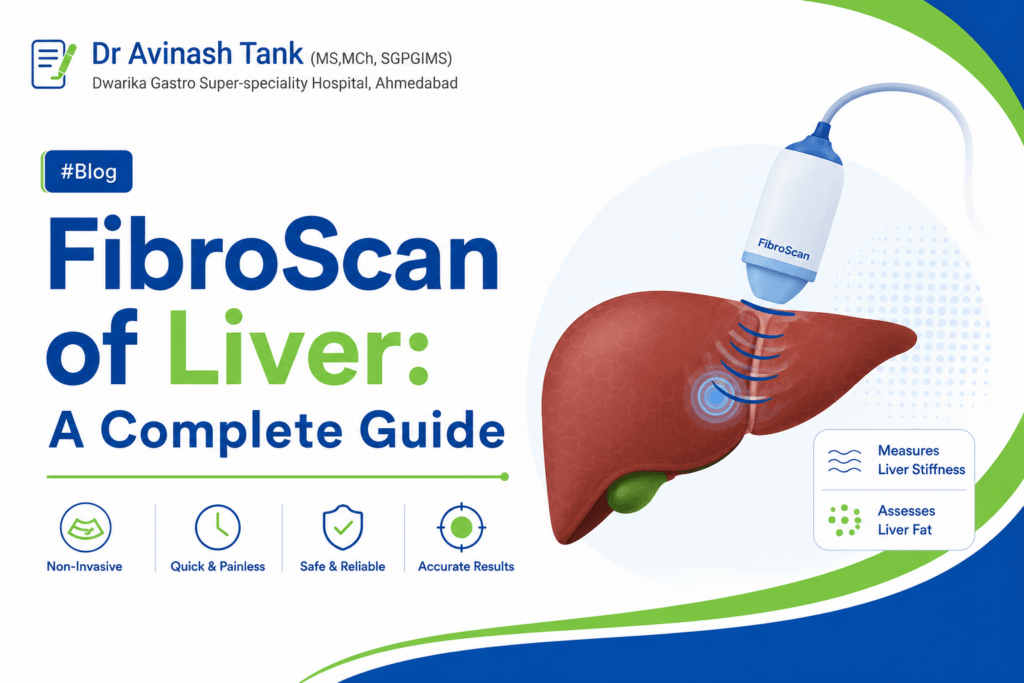
FibroScan of Liver: A Complete Guide to Liver Stiffness Testing, Fatty Liver Detection, and Early Liver Disease Diagnosis
FibroScan of Liver: A Complete Medical Guide
The liver is one of the most important organs of the human body. It performs hundreds of essential functions including digestion, detoxification, metabolism, immunity, and storage of nutrients.
Unfortunately, modern lifestyle changes, obesity, diabetes, alcohol consumption, unhealthy food habits, viral infections, and sedentary living have led to a dramatic rise in liver diseases across India and worldwide.
One of the biggest challenges in liver disease is that early liver damage often remains silent. Many people with fatty liver, liver fibrosis, or even cirrhosis may not experience symptoms until the disease becomes advanced.
This is where FibroScan has emerged as a revolutionary non-invasive test for liver evaluation.
FibroScan helps doctors assess:
- Fat accumulation in the liver (fatty liver)
- Liver stiffness
- Liver fibrosis
- Early cirrhosis
- Progression or reversal of liver disease
Unlike traditional liver biopsy, FibroScan is painless, quick, safe, and does not require hospitalization.
In this detailed guide, we will understand everything about FibroScan including:
- What FibroScan is
- How it works
- Who needs the test
- Fatty liver grading
- Fibrosis stages
- Normal FibroScan values
- Advantages and limitations
- Preparation and procedure
- Accuracy and interpretation
What Is FibroScan?
FibroScan is a specialized ultrasound-based technology used to measure:
- Liver stiffness
- Fat content inside the liver
The test is scientifically known as:
Transient Elastography
FibroScan was developed as a non-invasive alternative to liver biopsy.
It uses painless vibrations and ultrasound waves to assess the condition of the liver.
The machine provides two major measurements:
1. Liver Stiffness Measurement (LSM)
- Indicates fibrosis or scarring
- Measured in kPa (kilopascals)
2. Controlled Attenuation Parameter (CAP)
- Measures liver fat
- Helps diagnose fatty liver disease
- Measured in dB/m
Why Is FibroScan Important?
Liver diseases are increasing rapidly because of:
- Obesity
- Diabetes
- Junk food
- Alcohol intake
- Viral hepatitis
- Sedentary lifestyle
Many liver diseases progress silently for years.
FibroScan allows:
- Early detection
- Monitoring disease progression
- Preventing cirrhosis
- Avoiding liver biopsy in many patients
It has become one of the most important tools in modern hepatology and gastroenterology.
How Does FibroScan Work?
FibroScan works similarly to ultrasound.
A probe is placed over the skin on the right upper abdomen where the liver is located.
The probe sends:
- Mild vibration waves
- Ultrasound signals
These waves travel through the liver tissue.
Healthy Liver
Soft tissue allows waves to pass slowly.
Fibrotic or Scarred Liver
Stiff tissue allows waves to pass faster.
The machine calculates:
- Liver stiffness
- Amount of liver fat
The entire procedure is painless.
Diseases Diagnosed Using FibroScan
FibroScan is useful in many liver diseases.
1. Fatty Liver Disease (NAFLD/MASLD)
The most common indication today.
FibroScan helps assess:
- Fat accumulation
- Severity of fatty liver
- Presence of fibrosis
2. Alcoholic Liver Disease
Excess alcohol damages liver cells and causes fibrosis.
FibroScan helps determine:
- Severity of injury
- Risk of cirrhosis
3. Viral Hepatitis
Used in:
- Hepatitis B
- Hepatitis C
Helps monitor:
- Fibrosis progression
- Treatment response
4. Liver Cirrhosis
FibroScan helps detect:
- Early cirrhosis
- Advanced liver scarring
5. Autoimmune Liver Diseases
Useful in:
- Autoimmune hepatitis
- Primary biliary cholangitis
6. Drug-Induced Liver Injury
Certain medicines may damage the liver.
FibroScan helps assess chronic liver injury.
Who Should Undergo FibroScan?
FibroScan is recommended for people with risk factors for liver disease.
Common Indications
Obesity
Especially abdominal obesity.
Diabetes
Type 2 diabetes significantly increases fatty liver risk.
High Cholesterol
Associated with metabolic syndrome.
Elevated Liver Enzymes
Especially SGPT/ALT elevation.
Fatty Liver on Ultrasound
To assess severity.
Alcohol Consumption
Regular or heavy drinking.
Viral Hepatitis
Hepatitis B or C infection.
Family History of Liver Disease
Polycystic Ovary Syndrome (PCOS)
Sleep Apnea
Metabolic Syndrome
Symptoms Suggesting Liver Disease
Many patients are asymptomatic.
Some may develop:
- Fatigue
- Weakness
- Abdominal heaviness
- Indigestion
- Loss of appetite
- Weight gain
- Yellow eyes
- Swelling in legs
- Abdominal swelling
FibroScan can help detect liver disease before severe symptoms appear.
FibroScan Procedure: Step-by-Step
Before the Test
Patients are usually advised:
- Fasting for 2–4 hours
- Avoid heavy meals
- Wear comfortable clothes
During the Test
Step 1
Patient lies on the examination bed.
Step 2
Right arm is raised above the head.
Step 3
Gel is applied on the skin.
Step 4
Probe is placed over the liver area.
Step 5
Multiple readings are taken.
The test generally takes:
- 5–15 minutes
After the Test
- No recovery time required
- Patient can resume routine activities immediately
Is FibroScan Painful?
No.
FibroScan is:
- Non-invasive
- Painless
- Safe
- Quick
Most patients feel only mild tapping sensations.
No injections or anesthesia are required.
FibroScan Normal Values
Interpretation depends on:
- Liver disease type
- Body weight
- Inflammation
- Alcohol intake
General reference ranges:
Liver Stiffness Measurement (LSM)
| Fibrosis Stage | kPa Value |
| Normal | 2–7 kPa |
| Mild Fibrosis | 7–9 kPa |
| Moderate Fibrosis | 9–12 kPa |
| Severe Fibrosis | 12–14 kPa |
| Cirrhosis | >14 kPa |
Fatty Liver CAP Score Interpretation
| Fatty Liver Grade | CAP Score |
| Normal | <238 dB/m |
| Mild Fatty Liver (S1) | 238–260 dB/m |
| Moderate Fatty Liver (S2) | 260–290 dB/m |
| Severe Fatty Liver (S3) | >290 dB/m |
These values may vary slightly among laboratories.
Understanding Liver Fibrosis Stages
F0 – Normal Liver
No fibrosis.
F1 – Mild Fibrosis
Early liver damage.
F2 – Moderate Fibrosis
Significant fibrosis begins.
F3 – Severe Fibrosis
Advanced scarring.
F4 – Cirrhosis
Permanent severe liver damage.
Early detection can prevent progression to cirrhosis.
Difference Between Fatty Liver and Fibrosis
Many people confuse the two.
Fatty Liver
Accumulation of fat in liver cells.
Fibrosis
Scar formation due to chronic injury.
A person may have:
- Fatty liver without fibrosis
- Fibrosis without major fat accumulation
- Both together
FibroScan helps assess both conditions simultaneously.
Can FibroScan Replace Liver Biopsy?
In many cases, yes.
FibroScan has significantly reduced the need for liver biopsy.
Advantages Over Liver Biopsy
Non-invasive
No needle insertion.
No Hospital Admission
No Bleeding Risk
Quick Results
Repeatable
Can be repeated frequently for monitoring.
When Biopsy May Still Be Needed
Sometimes biopsy is required if:
- Results are unclear
- Multiple liver diseases coexist
- Rare liver conditions suspected
Accuracy of FibroScan
FibroScan is highly useful and reliable.
It performs best in:
- Detecting advanced fibrosis
- Detecting cirrhosis
- Monitoring fatty liver
However, some factors may affect accuracy.
Factors Affecting FibroScan Results
Obesity
Excess abdominal fat may reduce accuracy.
Acute Liver Inflammation
Temporary elevation of stiffness.
Food Intake
Heavy meals may alter results.
Congestion in Liver
Heart failure can affect readings.
Ascites
Fluid in abdomen may interfere.
Doctors interpret results along with:
- Blood tests
- Ultrasound
- Clinical history
FibroScan vs Ultrasound
| Feature | FibroScan | Ultrasound |
| Detects fatty liver | Yes | Yes |
| Measures fibrosis | Yes | Limited |
| Detects stiffness | Yes | No |
| Painless | Yes | Yes |
| Quantitative values | Yes | No |
FibroScan provides much more information than routine ultrasound.
FibroScan vs CT Scan
| Feature | FibroScan | CT Scan |
| Radiation exposure | No | Yes |
| Fat quantification | Good | Moderate |
| Fibrosis assessment | Excellent | Limited |
| Cost | Lower | Higher |
FibroScan vs MRI
MRI-based elastography is highly accurate but expensive.
FibroScan is:
- Faster
- Cheaper
- Easily available
- Convenient
Benefits of FibroScan
Early Detection
Detects disease before symptoms develop.
Monitoring Improvement
Useful after:
- Weight loss
- Alcohol cessation
- Fatty liver treatment
Preventing Cirrhosis
Early fibrosis treatment can reverse damage.
Motivation for Lifestyle Changes
Patients often become more serious after seeing reports.
Safe for Repeated Use
Can be repeated every 6–12 months.
Can Fatty Liver Be Reversed?
Yes, especially in early stages.
Lifestyle modification is the cornerstone.
How to Improve FibroScan Results Naturally
Weight Loss
Even 7–10% weight loss improves liver fat.
Exercise
At least 150 minutes weekly.
Reduce Sugar Intake
Avoid:
- Soft drinks
- Sweets
- Fructose-rich beverages
Avoid Alcohol
Control Diabetes
Improve Sleep
Eat Balanced Diet
Focus on:
- Fruits
- Vegetables
- Protein
- Whole grains
Foods Good for Fatty Liver
Coffee
May protect liver cells.
Green Vegetables
Nuts
Olive Oil
Fish
Foods Harmful for Liver
Sugary Drinks
Processed Foods
Fried Foods
Excess Alcohol
Refined Carbohydrates
Can Fibrosis Be Reversed?
Early fibrosis can improve significantly.
Advanced cirrhosis may not completely reverse but progression can slow.
Timely treatment is extremely important.
How Frequently Should FibroScan Be Done?
Depends on liver condition.
Fatty Liver
Usually every 1–2 years.
Advanced Fibrosis
Every 6–12 months.
Viral Hepatitis
As advised by liver specialist.
Is FibroScan Safe?
Yes.
FibroScan is extremely safe because:
- No radiation
- No injections
- No anesthesia
- No hospitalization
It is considered safe even for repeated monitoring.
Limitations of FibroScan
Despite many benefits, FibroScan has some limitations.
Difficulty in Severe Obesity
Less Accurate During Acute Hepatitis
Operator Dependence
Cannot Diagnose Liver Cancer
May Not Replace Biopsy Completely
Doctors use FibroScan as part of comprehensive liver evaluation.
FibroScan in India
FibroScan awareness is increasing rapidly in India due to:
- Rising fatty liver disease
- Increasing diabetes
- Obesity epidemic
Many gastroenterology and liver clinics now offer FibroScan services.
Cost of FibroScan in India
The cost varies depending on:
- City
- Hospital
- Technology used
Average cost:
₹2000 to ₹6000
Packages may include:
- Liver consultation
- Blood tests
- Ultrasound
Preparation Tips Before FibroScan
Fast for 3–4 Hours
Avoid Alcohol Before Test
Wear Loose Clothing
Carry Previous Reports
Common Myths About FibroScan
Myth 1: FibroScan Is Painful
False.
Myth 2: Fatty Liver Always Means Cirrhosis
False.
Many patients improve completely with lifestyle correction.
Myth 3: Only Alcoholics Get Liver Disease
False.
Non-alcoholic fatty liver disease is now extremely common.
Myth 4: Normal Liver Enzymes Mean Healthy Liver
False.
Some patients with fibrosis may have normal blood tests.
Warning Signs of Advanced Liver Disease
Seek medical attention if you develop:
- Jaundice
- Vomiting blood
- Swollen abdomen
- Confusion
- Black stools
- Severe weakness
These may indicate advanced liver disease or cirrhosis.
Future of Liver Disease Diagnosis
FibroScan represents the future of preventive liver care.
As awareness increases, more people can:
- Detect disease early
- Reverse fatty liver
- Prevent cirrhosis
- Improve long-term health
Preventive liver screening is becoming increasingly important in modern healthcare.
Conclusion
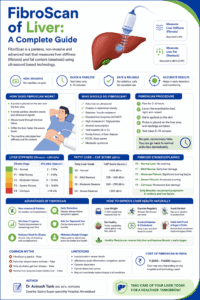
FibroScan has revolutionized liver disease diagnosis by providing a painless, quick, and non-invasive method to assess liver fat and fibrosis.
With rising rates of fatty liver disease, obesity, diabetes, and alcohol-related liver injury, FibroScan plays a major role in early detection and prevention of serious liver complications.
The biggest advantage of FibroScan is that it can identify liver damage before symptoms become severe. This allows patients to make lifestyle changes early and potentially reverse liver injury.
If you have:
- Fatty liver
- Jaundice
- Obesity
- Diabetes
- Elevated liver enzymes
- Alcohol use
- Viral hepatitis
then discussing FibroScan with your gastroenterologist or liver specialist may help protect your liver health.
Early diagnosis saves liver function, prevents cirrhosis, and improves quality of life.
Take Care of Your Liver Before It’s Too Late
Early detection of fatty liver and liver fibrosis can prevent serious complications like cirrhosis and liver failure. FibroScan is a quick, painless, and non-invasive test that helps assess your liver health accurately.
Book Your FibroScan & Liver Consultation Today
Dr Avinash Tank (MS, MCh, SGPGIMS)
Dwarika Gastro Super-speciality Hospital, Ahmedabad
📞 Book Your Appointment: +91 88 66 02 05 05
Was this article helpful?

Super-specialist GI, bariatric & cancer surgeon. SGPGIMS (India's premier GI centre) + advanced training in Japan & South Korea. Read full profile →
Last reviewed: July 2026



Comments
Be the first to share your thoughts on this article.