

Reading Time: 6 minutes
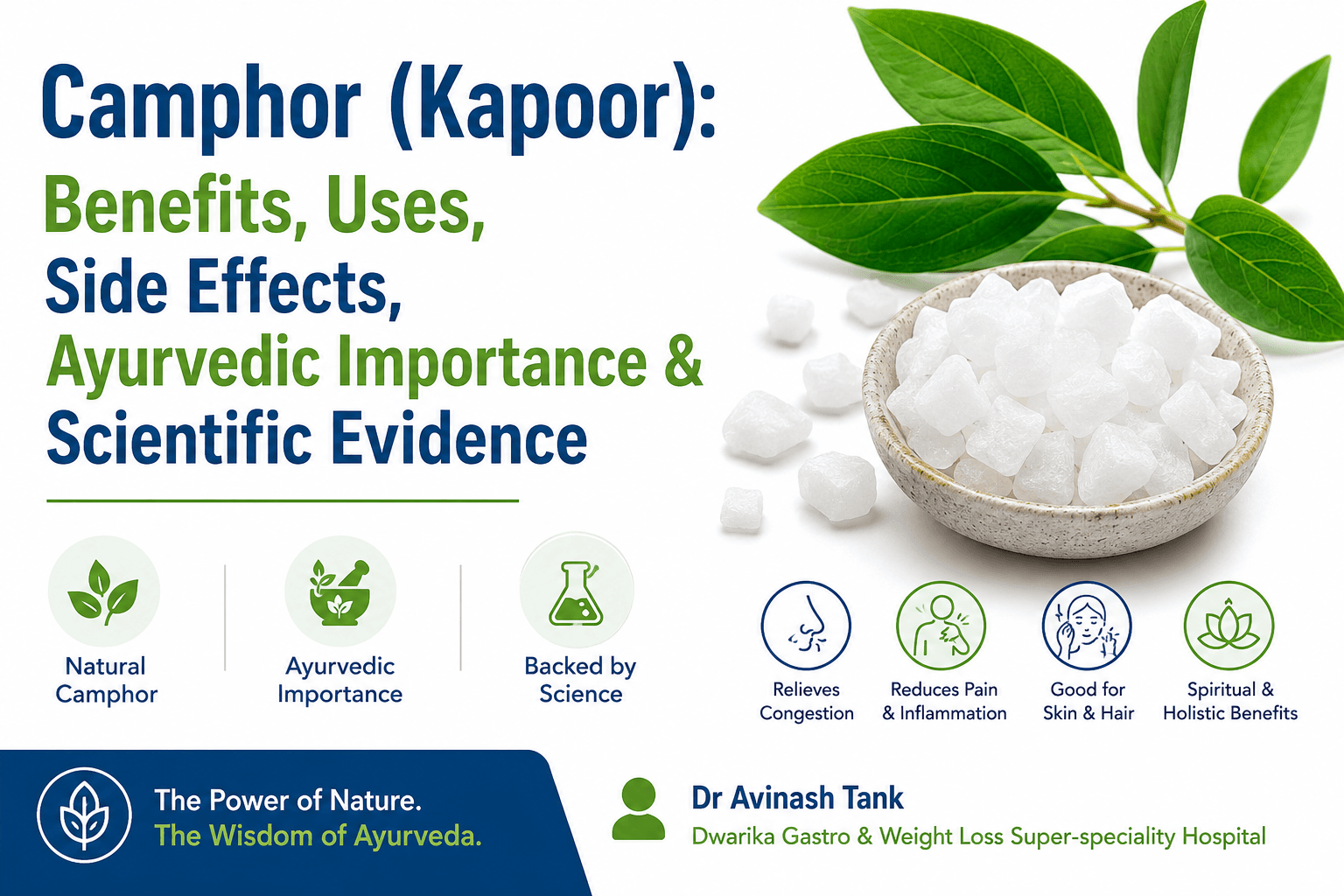
Camphor (Kapoor): Benefits, Uses, Side Effects, Ayurvedic Importance & Scientific Evidence
Camphor, commonly known as Kapoor in India, is a naturally occurring aromatic substance widely used in religious rituals, traditional medicine, skincare products, and household remedies. Derived from the camphor tree, camphor has been valued for centuries for its distinctive fragrance and medicinal properties. Today, it continues to be an important component of Ayurvedic medicine and several pharmaceutical preparations.
This article explores camphor benefits, uses, side effects, Ayurvedic importance, and the scientific evidence supporting its traditional applications.
What Is Camphor (Kapoor)?
Camphor is a waxy, white, crystalline substance known for its strong aroma and cooling sensation. It is obtained naturally from the wood of the camphor tree and can also be manufactured synthetically.
What Is the Scientific Name of Camphor?
The scientific name of the camphor tree is Cinnamomum camphora. It belongs to the Lauraceae family, which also includes cinnamon and bay laurel. The tree is native to parts of Asia, particularly China, Japan, and Taiwan.
How Is Natural Camphor Obtained from Cinnamomum camphora?
Natural camphor is extracted through steam distillation of the wood, bark, and leaves of mature camphor trees. The distilled product is purified to produce crystalline camphor used in medicinal and religious applications.
Difference Between Natural and Synthetic Camphor
Natural camphor is derived from plant sources and is generally preferred for medicinal and religious use. Synthetic camphor is manufactured from turpentine oil and is widely used in industrial and pharmaceutical products. While both have similar chemical structures, natural camphor is often considered more suitable for traditional remedies.
Nutritional and Chemical Composition of Camphor
Camphor is not a nutritional supplement and is not consumed as food. Its value lies in its bioactive compounds and aromatic properties.
Major Active Compounds Present in Camphor
The primary active compound is camphor itself, a terpenoid known for its cooling, analgesic, and aromatic properties. Other compounds present in camphor oil may include cineole, safrole, pinene, and limonene.
Why Does Camphor Have a Strong Aroma?
Camphor contains volatile organic compounds that evaporate readily at room temperature. These vapors stimulate sensory receptors in the nose, creating its characteristic strong fragrance.
Camphor in Ayurveda and Traditional Medicine
Camphor occupies a special place in Ayurveda due to its cooling and balancing effects.
Ayurvedic Properties of Kapoor (Rasa, Guna, Virya and Vipaka)
According to Ayurvedic texts:
- Rasa (Taste): Tikta (bitter), Katu (pungent)
- Guna (Quality): Laghu (light), Ruksha (dry)
- Virya (Potency): Sheeta (cooling)
- Vipaka (Post-digestive Effect): Katu (pungent)
Kapoor is traditionally used to balance Pitta and Kapha doshas.
Traditional Uses of Camphor in Indian Households
Camphor has traditionally been used for:
- Relief from cold and congestion
- Room purification
- Insect repellent
- Religious ceremonies
- Massage oils for pain relief
Religious and Spiritual Importance of Kapoor
Burning camphor during prayers symbolizes the dissolution of ego and purification of the environment. It remains an integral part of Hindu rituals and temple worship.
Health Benefits of Camphor (Kapoor)
Can Camphor Help Relieve Nasal Congestion and Cold Symptoms?
Camphor vapors may create a sensation of improved airflow and comfort during nasal congestion. It is commonly used in vapor rubs and inhalation products.
Benefits of Camphor for Cough and Respiratory Health
Camphor-containing ointments can provide symptomatic relief from cough and chest discomfort. The aromatic vapors may help individuals feel that breathing is easier, although camphor does not directly treat respiratory infections.
Does Camphor Help Reduce Muscle and Joint Pain?
Camphor is widely used in topical pain-relief creams. It produces a cooling effect that may temporarily reduce discomfort associated with muscle strain, arthritis, and minor injuries.
Camphor for Minor Skin Irritation and Itching Relief
Topical camphor preparations can help reduce itching caused by insect bites and minor skin irritations when used appropriately.
Can Camphor Improve Blood Circulation?
Traditional medicine suggests that camphor may stimulate local blood flow when applied externally. Increased circulation may contribute to temporary pain relief and a feeling of warmth.
Benefits of Camphor for Skin Care
Is Camphor Useful for Acne and Pimples?
Camphor possesses mild antimicrobial and anti-inflammatory properties that may help reduce acne-related redness. However, it should always be diluted before use.
Camphor for Fungal Skin Infections
Some traditional remedies use camphor-containing preparations for fungal infections due to their antimicrobial properties. Scientific evidence remains limited.
Can Camphor Help Reduce Skin Itching?
Camphor activates nerve endings that create a cooling sensation, helping reduce itching and discomfort.
Precautions When Applying Camphor on the Skin
- Never apply concentrated camphor directly.
- Avoid use on broken skin.
- Perform a patch test before application.
- Discontinue use if irritation occurs.
Benefits of Camphor for Hair Health
Can Camphor Help Reduce Dandruff?
Camphor oil is commonly added to hair oils to reduce scalp itching and dandruff. Its cooling properties may provide temporary relief.
Camphor Oil for Scalp Health
When mixed with carrier oils, camphor oil may help maintain scalp cleanliness and improve comfort in individuals with dry or itchy scalp conditions.
Does Camphor Promote Hair Growth?
There is limited scientific evidence that camphor directly stimulates hair growth. However, improved scalp health may indirectly support healthier hair.
Uses of Camphor in Daily Life
Why Is Camphor Used During Religious Rituals?
Its pleasant fragrance and symbolic significance make camphor a preferred material during worship and spiritual ceremonies.
Camphor as a Natural Room Freshener
Camphor’s strong aroma can help mask unpleasant odors and create a fresh indoor environment.
Traditional Use of Camphor as an Insect Repellent
Camphor has traditionally been used to repel mosquitoes, moths, and certain insects in homes and storage areas.
Camphor in Cosmetic and Pharmaceutical Products
Camphor is found in:
- Vapor rubs
- Pain-relief balms
- Anti-itch creams
- Massage oils
- Certain cosmetic formulations
Is Burning Camphor Good for Health?
Does Burning Camphor Purify Indoor Air?
Many people believe burning camphor purifies indoor air. While its aroma may create a sense of freshness, scientific evidence supporting significant air purification effects remains limited.
Potential Benefits of Camphor Aroma
The aroma of camphor may promote relaxation, reduce perceived congestion, and contribute to a calming atmosphere.
Risks of Excessive Exposure to Camphor Smoke
Excessive exposure may cause:
- Eye irritation
- Headache
- Dizziness
- Respiratory discomfort
Adequate ventilation is recommended when burning camphor indoors.
Scientific Evidence Behind Camphor Benefits
What Research Says About Camphor for Pain Relief
Research supports the use of camphor in topical analgesic formulations. It acts as a counterirritant, producing sensations that may temporarily distract from pain.
Studies on Camphor and Respiratory Symptoms
Studies indicate that camphor-containing vapor rubs may improve subjective perception of nasal airflow and nighttime comfort in individuals with upper respiratory symptoms.
Scientific Limitations and Need for Further Research
While some traditional uses have scientific support, many claims regarding camphor require larger, high-quality clinical studies before definitive conclusions can be drawn.
Side Effects and Safety Concerns of Camphor
Can Camphor Cause Skin Irritation?
Yes. Camphor may cause redness, burning, or allergic reactions in sensitive individuals.
Symptoms of Camphor Poisoning
Camphor toxicity can cause:
- Nausea
- Vomiting
- Confusion
- Agitation
- Seizures
Severe poisoning can be life-threatening.
Why Camphor Should Never Be Ingested
Camphor is toxic when swallowed. Even small quantities can cause serious neurological symptoms, particularly in children.
When to Seek Medical Help for Camphor Exposure
Immediate medical attention is necessary if someone accidentally ingests camphor or develops symptoms of poisoning.
Who Should Avoid Using Camphor?
Camphor Use During Pregnancy and Breastfeeding
Pregnant and breastfeeding women should consult healthcare professionals before using camphor-containing products.
Is Camphor Safe for Children and Infants?
Camphor should not be applied near the nose of infants or young children. Accidental ingestion poses significant risks.
People with Asthma and Respiratory Conditions
Strong camphor fumes may trigger respiratory symptoms in sensitive individuals and should be used cautiously.
Frequently Asked Questions About Camphor (Kapoor)
Can We Sleep in a Room Where Camphor Is Burning?
It is generally safer to extinguish burning camphor before sleeping and ensure adequate ventilation.
Is Camphor Safe for Daily Use?
Occasional external use according to product instructions is generally safe. Excessive or prolonged use should be avoided.
What Is the Difference Between Bhimseni Kapoor and Regular Kapoor?
Bhimseni Kapoor is traditionally considered a natural form of camphor obtained from plant sources and is often used in Ayurveda and religious rituals. Regular camphor may be synthetic or natural depending on its source.
Can Camphor Be Used for Weight Loss?
There is no reliable scientific evidence that camphor contributes directly to weight loss.
Does Camphor Kill Germs and Bacteria?
Camphor exhibits some antimicrobial activity in laboratory studies, but it should not replace standard hygiene or medical treatments.
Conclusion
Key Takeaways About Camphor Benefits, Uses and Safety
Camphor (Kapoor) is a versatile natural substance with a long history of use in Ayurveda, religious rituals, and household remedies. Potential camphor benefits include temporary relief from congestion, cough, muscle pain, itching, and minor skin discomfort. It is also valued for its aromatic and spiritual significance.
However, camphor should always be used responsibly. Direct ingestion is dangerous, and excessive exposure may cause adverse effects. While scientific evidence supports some traditional uses, more research is needed to fully understand the therapeutic potential of Cinnamomum camphora.
Used appropriately, natural camphor remains an important component of traditional wellness practices and modern topical healthcare products.
This article is optimized for the keywords: Camphor benefits, Kapoor benefits, Camphor uses, Cinnamomum camphora, Burning camphor benefits, Camphor side effects, Bhimseni Kapoor benefits, Ayurvedic uses of Kapoor, Natural camphor, Camphor oil benefits, and Camphor medicinal properties.