

Gallbladder cancer is an uncommon but serious tumour, sometimes discovered unexpectedly after routine gallstone surgery. Early-stage disease is treated with an extended (radical) surgical removal, which offers the best chance of cure.
Malignant tumour of the gallbladder
Long-standing gallstones, large polyps, chronic inflammation
A gallbladder polyp >1 cm, a mass, or cancer found after surgery
Radical (extended) cholecystectomy for early-stage disease
What is gallbladder cancer?
Gallbladder cancer develops in the lining of the gallbladder. It is strongly associated with long-standing gallstones and chronic inflammation. Because early symptoms overlap with ordinary gallstone disease, some cancers are only found when the gallbladder is examined after removal.
Symptoms & diagnosis
Early disease may mimic gallstones with right-upper-abdomen pain, or cause no symptoms at all. Later features include jaundice, weight loss and a palpable mass. Diagnosis uses ultrasound, CT/MRI and sometimes endoscopic ultrasound, with careful staging to plan treatment.
Treatment options
For early disease, a radical (extended) cholecystectomy — removing the gallbladder along with adjacent liver tissue and lymph nodes — gives the best chance of cure. When cancer is found incidentally after routine gallbladder surgery, prompt re-assessment by a GI cancer specialist is essential to decide on further surgery.
Why early action matters
Gallbladder cancer can progress quickly, so suspicious gallbladder polyps and incidental cancers should be evaluated without delay. Specialist surgery offers the best outcomes when the disease is caught early.
Gallbladder stones are hardened deposits in the gallbladder that can cause righ…
ERCP (Bile Duct Endoscopy)ERCP is an advanced endoscopic procedure that treats problems of the bile and p…
Stenting (Endoscopic)Endoscopic stenting places a small expandable tube to relieve a narrowed or blo…
How we treat Gallbladder Cancer
 Recommended treatment
Gallbladder Cancer
Recommended treatment
Gallbladder Cancer
Radical surgery for gallbladder cancer, often found with gallstones — staged and treated by a GI cancer super-specialist.
View treatment details →Cashless insurance accepted at our network hospitals, with EMI options available. Every patient gets a written, transparent estimate before any procedure — no surprises.

Dr. Avinash Tank, MBBS · MS (General Surgery) · MCh (Surgical Gastroenterology, SGPGIMS)
SGPGIMS (India's premier GI centre) + advanced training in Japan & South Korea. Super-specialist gastrointestinal, bariatric & cancer surgeon treating Gallbladder Cancer at Dwarika Hospital — Gastro, Bariatric & Laparoscopic Surgery Center.
Proof, not promises
 DWARIKA HOSPITALPatient Education

"Dr. Tank explained everything clearly and never rushed. My gallbladder surgery was smooth and I was home the next day. Truly patient-first care."
More on Gallbladder Cancer
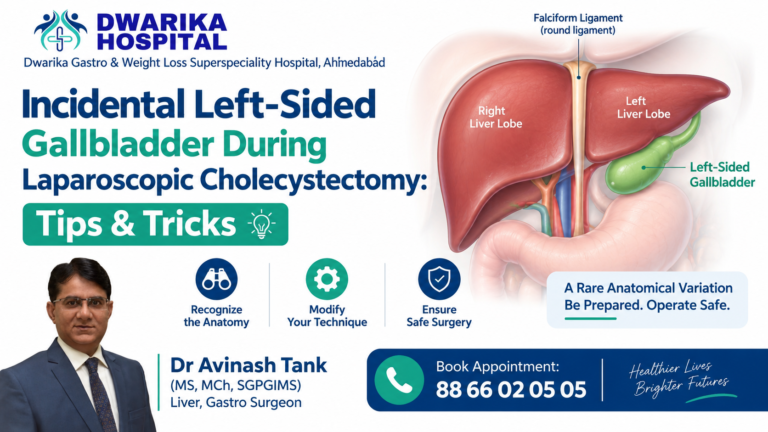 GallbladderIncidental Left-Sided Gallbladder During Laparoscopic Cholecystectomy: Tips & Tricks
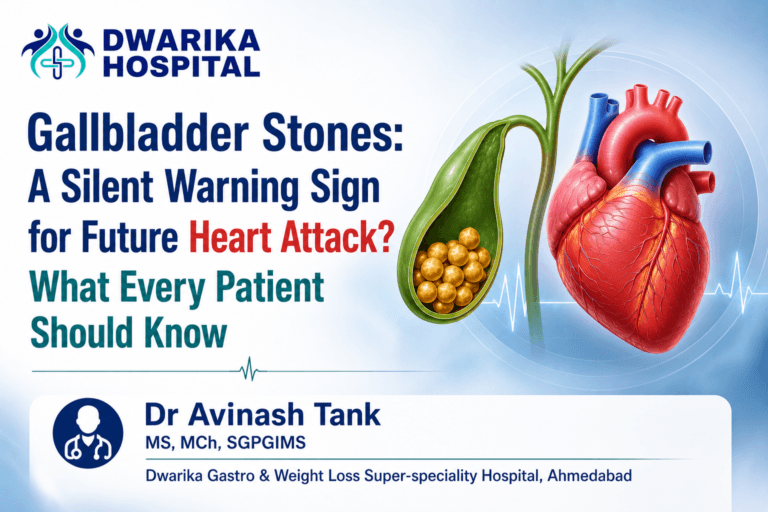 GallbladderGallbladder Stones: A Silent Warning Sign for Future Heart Attack?
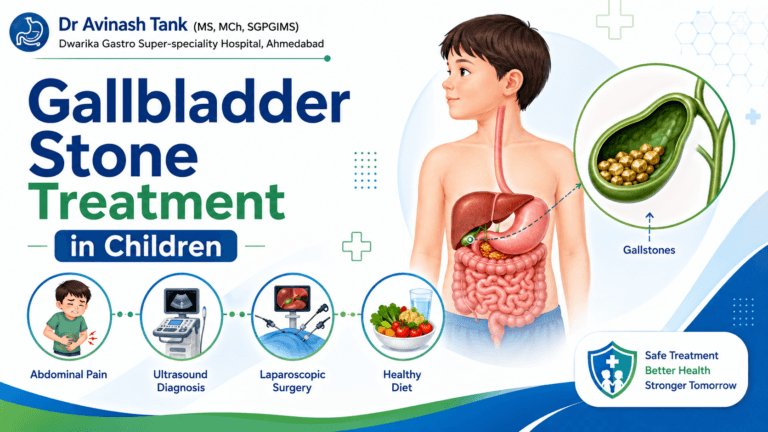 GallbladderGallbladder Stone Treatment in Children: Complete Guide
Frequently asked questions
Long-standing gallstones and chronic inflammation raise the risk, which is one reason symptomatic gallstones and large gallbladder polyps are treated rather than ignored.
This is called incidental gallbladder cancer. It should be reviewed promptly by a GI cancer surgeon, as further (radical) surgery is often needed for a cure.
Most small polyps are harmless, but polyps larger than about 1 cm carry a higher risk and are usually removed by taking out the gallbladder.
Early-stage gallbladder cancer can be cured with radical surgery, underlining the importance of prompt specialist assessment.
Super-specialist GI, bariatric & cancer surgeon. SGPGIMS (India's premier GI centre) + advanced training in Japan & South Korea. Read full profile →
Last reviewed: July 2026