

GISTs are rare tumours that grow in the wall of the digestive tract, most often the stomach. They are treated by precise surgical removal — frequently by laparoscopic surgery — and, when needed, highly effective targeted (oral) therapy.
Tumour arising in the wall of the GI tract
Most often the stomach, then the small intestine
A submucosal mass found on endoscopy, bleeding, or a known GIST
Surgical removal (often laparoscopic) ± targeted therapy
What is a GIST?
A gastrointestinal stromal tumour (GIST) arises from specialised pacemaker cells in the wall of the digestive tract. Unlike common cancers that start in the lining, GISTs grow within the wall itself. Most occur in the stomach, and they range from small, incidental lesions to larger tumours that need treatment.
Symptoms & diagnosis
Small GISTs are often found by chance during endoscopy for another reason. Larger ones can cause bleeding (sometimes seen as anaemia or black stools), vague abdominal discomfort or a feeling of fullness. Diagnosis uses gastroscopy, endoscopic ultrasound (EUS) with biopsy, and CT for staging.
Treatment options
The main treatment for a localised GIST is precise surgical removal with a clear margin, frequently achievable by laparoscopic surgery for tumours in suitable locations. For larger, higher-risk or advanced GISTs, targeted oral therapy (tyrosine-kinase inhibitors) is remarkably effective and may be used before or after surgery.
Why precise surgery matters
GISTs should be removed intact with a clear margin while avoiding rupture, as careful technique strongly influences outcome. Combining experienced surgery with modern targeted therapy gives excellent long-term results.
How we treat GIST (Gastrointestinal Stromal Tumour)
 Recommended treatment
GIST
Recommended treatment
GIST
Surgery and targeted therapy for gastrointestinal stromal tumours of the stomach and bowel.
View treatment details →Cashless insurance accepted at our network hospitals, with EMI options available. Every patient gets a written, transparent estimate before any procedure — no surprises.

Dr. Avinash Tank, MBBS · MS (General Surgery) · MCh (Surgical Gastroenterology, SGPGIMS)
SGPGIMS (India's premier GI centre) + advanced training in Japan & South Korea. Super-specialist gastrointestinal, bariatric & cancer surgeon treating GIST (Gastrointestinal Stromal Tumour) at Dwarika Hospital — Gastro, Bariatric & Laparoscopic Surgery Center.
Proof, not promises
 DWARIKA HOSPITALVerified Patient Story
Verified
DWARIKA HOSPITALVerified Patient Story
Verified 
More on GIST (Gastrointestinal Stromal Tumour)
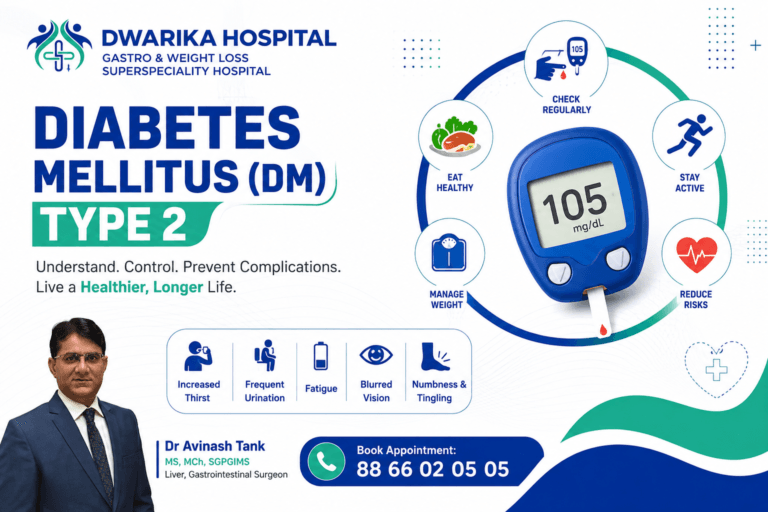 DiabeticType 2 Diabetes: What It Is, Why It Happens, and How to Control It
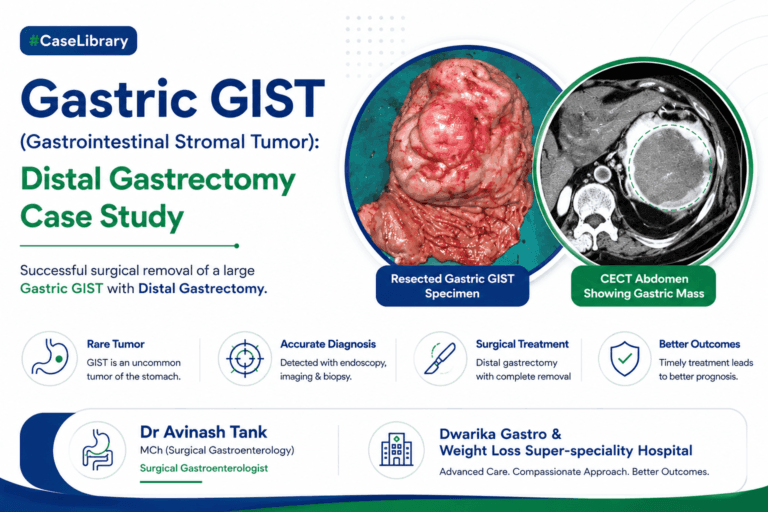 Case LibraryGastric GIST (Gastrointestinal Stromal Tumor): Distal Gastrectomy Case Study
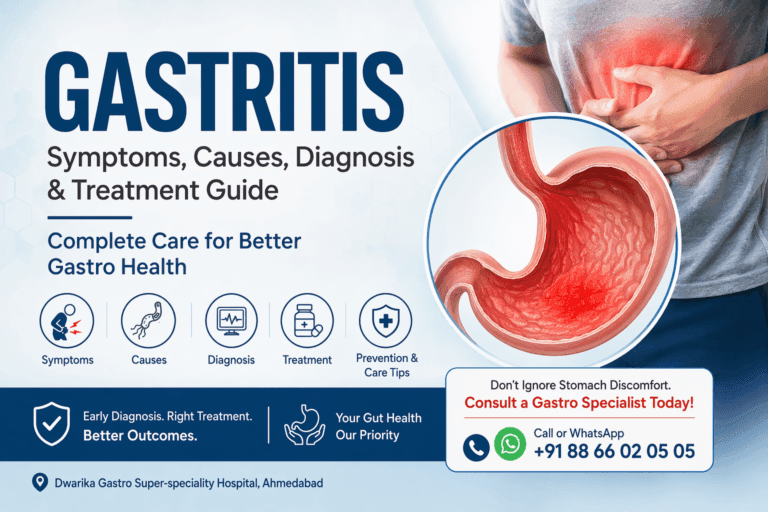 GastroGastritis: Complete Gastro Health Guide
Frequently asked questions
GISTs are tumours with a range of behaviours from low to high risk. Localised GISTs are usually cured by complete surgical removal.
Yes. Many GISTs, particularly in the stomach, can be removed laparoscopically with a clear margin, offering quicker recovery.
GISTs often respond to targeted oral medicines (tyrosine-kinase inhibitors), which can shrink tumours before surgery or reduce recurrence after it.
Endoscopic ultrasound (EUS) with biopsy characterises the tumour within the gut wall, and CT scans assess its size and spread.
Super-specialist GI, bariatric & cancer surgeon. SGPGIMS (India's premier GI centre) + advanced training in Japan & South Korea. Read full profile →
Last reviewed: July 2026