

Neuro-endocrine tumours (NETs) are usually slow-growing tumours arising from hormone-producing cells in the digestive tract and pancreas. Many are curable with specialised surgery, and even advanced NETs can often be controlled for years.
Tumour of hormone-producing (neuro-endocrine) cells
Often slow-growing; some release hormones causing symptoms
A NET found on a scan or biopsy, or unexplained flushing/diarrhoea
Surgical removal for localised disease
What is a neuro-endocrine tumour?
Neuro-endocrine tumours develop from specialised hormone-producing cells found throughout the gut and pancreas. They behave very differently from common cancers — many grow slowly over years. Some are "functional", releasing hormones that cause distinctive symptoms, while others are silent and found incidentally.
Symptoms & diagnosis
Functional NETs can cause flushing, diarrhoea, wheezing or low blood sugar, depending on the hormone produced; non-functional NETs are often found by chance on scans. Diagnosis uses specialised blood tests, CT/MRI, endoscopic ultrasound (EUS) with biopsy, and dedicated nuclear-medicine scans that target NET cells.
Treatment options
For localised disease, surgical removal of the tumour is often curative and is the cornerstone of treatment. For more advanced NETs, a range of effective options — including targeted medicines, hormone therapy and specialised nuclear treatments — can control the disease and symptoms for a long time.
Why specialist assessment matters
Because NETs are uncommon and behave uniquely, they are best managed by a team experienced in these tumours. Accurate diagnosis and staging guide whether surgery alone is curative or whether additional therapies are needed.
How we treat Neuro-Endocrine Tumour (NET)
 Recommended treatment
NET (Neuro-Endocrine Tumour)
Recommended treatment
NET (Neuro-Endocrine Tumour)
Diagnosis and surgery for neuro-endocrine tumours of the gut and pancreas — staged with EUS and specialised imaging.
View treatment details →Cashless insurance accepted at our network hospitals, with EMI options available. Every patient gets a written, transparent estimate before any procedure — no surprises.

Dr. Avinash Tank, MBBS · MS (General Surgery) · MCh (Surgical Gastroenterology, SGPGIMS)
SGPGIMS (India's premier GI centre) + advanced training in Japan & South Korea. Super-specialist gastrointestinal, bariatric & cancer surgeon treating Neuro-Endocrine Tumour (NET) at Dwarika Hospital — Gastro, Bariatric & Laparoscopic Surgery Center.
Proof, not promises
 DWARIKA HOSPITALPatient Education

More on Neuro-Endocrine Tumour (NET)
 GastroChild Swallowed a Coin, Battery, Magnet, or Small Object? A Parent’s Emergency Guide to Foreign Body Ingestion
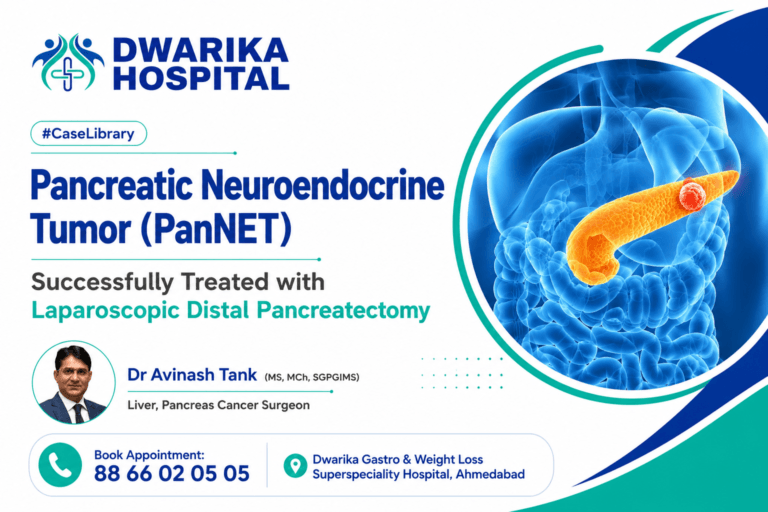 Case LibraryPancreatic Neuroendocrine Tumor (PanNET) Successfully Treated with Laparoscopic Distal Pancreatectomy
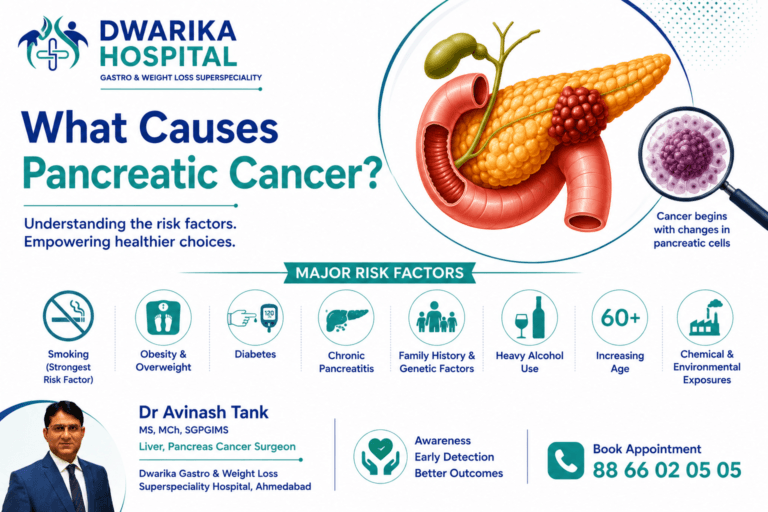 Pancreas CancerWhat Causes Pancreatic Cancer? Risk Factors, Genetics, Lifestyle and Prevention
Frequently asked questions
NETs range from benign-behaving to malignant, but many are slow-growing. Localised NETs are often cured by surgery, and even advanced cases can be controlled for years.
Functional NETs may cause flushing, diarrhoea or low blood sugar from hormone release, while many NETs cause no symptoms and are found incidentally on scans.
Diagnosis combines specialised blood tests, CT/MRI, endoscopic ultrasound with biopsy and dedicated nuclear-medicine scans that highlight NET cells.
Yes — localised NETs are frequently cured by surgical removal, which is why early, specialist assessment is valuable.
Super-specialist GI, bariatric & cancer surgeon. SGPGIMS (India's premier GI centre) + advanced training in Japan & South Korea. Read full profile →
Last reviewed: July 2026