Heavy bleeding, severe pain, or any change in bowel habit
Piles (haemorrhoids) are swollen blood vessels in and around the anal canal that cause bright-red bleeding, discomfort, swelling and itching. Most improve with diet and minor office procedures; advanced piles are treated with modern, low-pain day-care surgery.
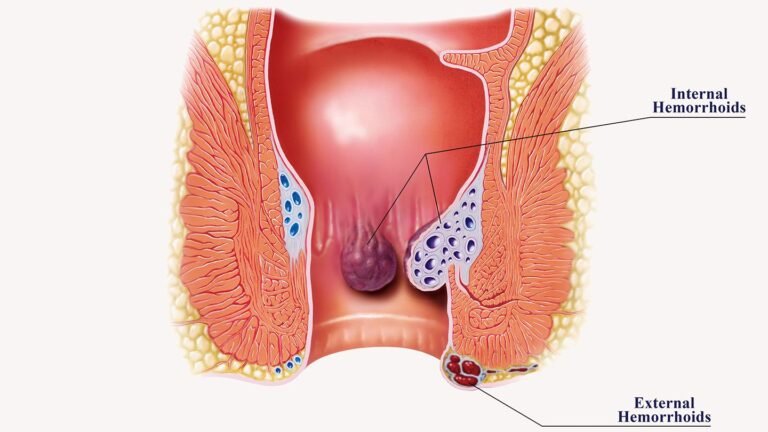
Swollen blood vessels in the anal canal
Very common; linked to constipation, straining, pregnancy, sitting
Recurrent bleeding, a prolapsing lump, pain or anaemia
Heavy bleeding, severe pain, or any change in bowel habit
What are piles?
Piles are cushions of swollen blood vessels in the lining of the anal canal. They are graded from one to four depending on whether they bleed only, prolapse and reduce on their own, or stay prolapsed. They are extremely common and usually treatable without major surgery.
Symptoms & causes
The most common symptom is painless, bright-red bleeding during a bowel movement, often with a lump, itching, mucus or discomfort. Chronic constipation and straining, prolonged sitting, pregnancy and a low-fibre diet are the usual contributors.
Diagnosis
Piles are diagnosed by examination and a proctoscopy. Importantly, because bleeding can also be a sign of colon or rectal cancer, a colonoscopy may be advised — especially after age 45 or with any change in bowel habit — to rule out serious causes.
Treatment options
Early piles improve with a high-fibre diet, fluids and simple measures. Persistent piles are treated with office procedures such as banding, or with modern surgery (laser or stapled haemorrhoidopexy) that is far less painful than traditional surgery and usually done as day care.
An anal fissure is a small tear in the lining of the anal canal that causes sha…
Fistula-in-Ano (Anal Fistula)An anal fistula is an abnormal tunnel connecting the inside of the anal canal t…
Rectal ProlapseRectal prolapse is the protrusion of the rectum through the anus, causing a vis…
How we treat Piles (Haemorrhoids)
 Recommended treatment
Piles
Recommended treatment
Piles
Modern, minimally-painful treatment of haemorrhoids — including stapler and laser options for a quick return to routine.
View treatment details →Cashless insurance accepted at our network hospitals, with EMI options available. Every patient gets a written, transparent estimate before any procedure — no surprises.

Dr. Avinash Tank, MBBS · MS (General Surgery) · MCh (Surgical Gastroenterology, SGPGIMS)
SGPGIMS (India's premier GI centre) + advanced training in Japan & South Korea. Super-specialist gastrointestinal, bariatric & cancer surgeon treating Piles (Haemorrhoids) at Dwarika Hospital — Gastro, Bariatric & Laparoscopic Surgery Center.
Proof, not promises
 DWARIKA HOSPITALPatient Education

More on Piles (Haemorrhoids)
Frequently asked questions
No. Most piles improve with diet, fluids and minor office procedures. Surgery is reserved for advanced or persistent cases.
Pile bleeding is usually minor, but because bleeding can also signal colon or rectal cancer, it should always be assessed rather than assumed.
Modern laser and stapled techniques are far less painful than traditional surgery, and most patients return to routine within a few days.
A high-fibre diet, plenty of fluids, regular exercise and avoiding prolonged straining greatly reduce recurrence.
Super-specialist GI, bariatric & cancer surgeon. SGPGIMS (India's premier GI centre) + advanced training in Japan & South Korea. Read full profile →
Last reviewed: July 2026