

A prolapse that cannot be pushed back, severe pain or discolouration
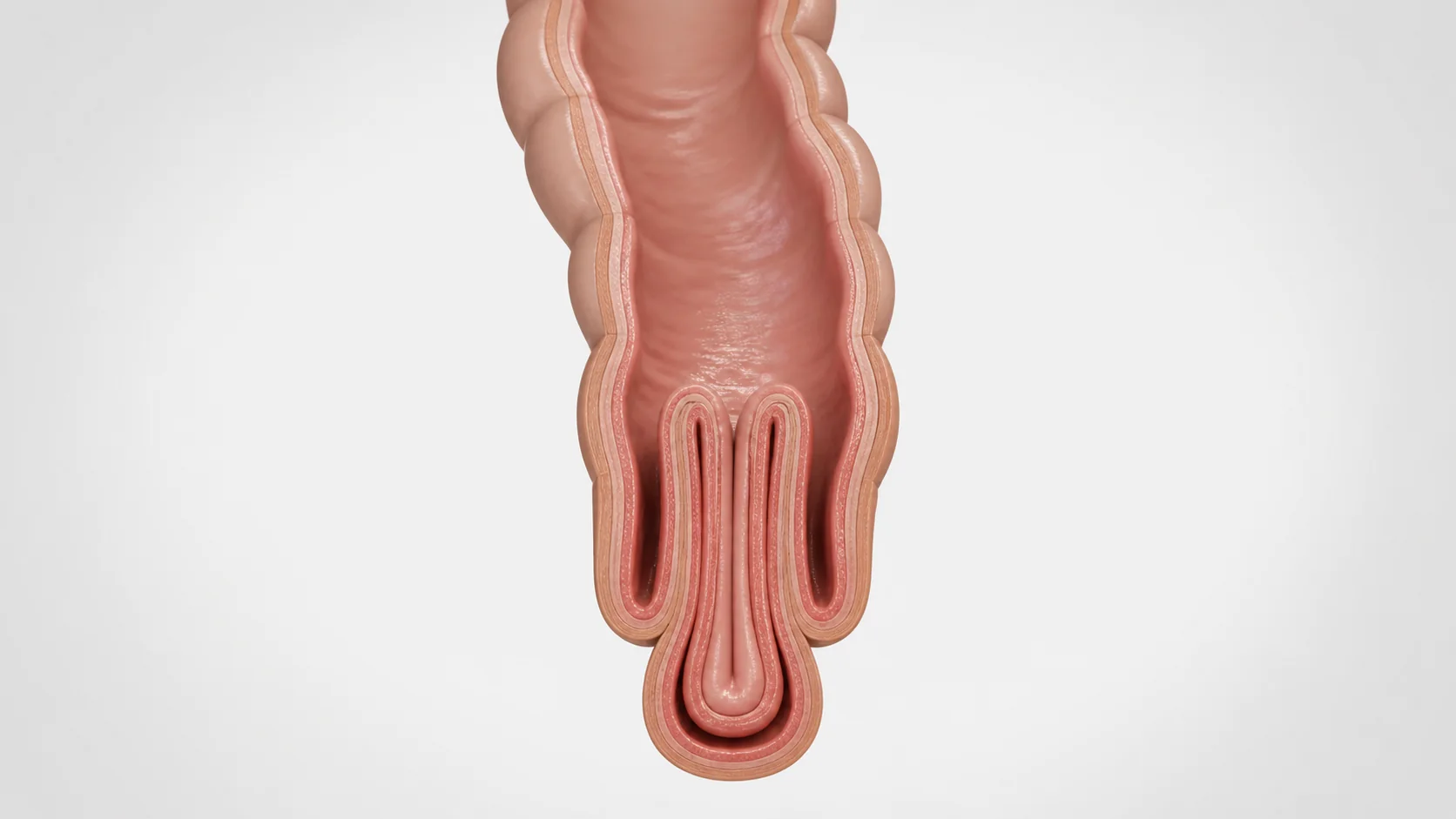
Rectal prolapse is the protrusion of the rectum through the anus, causing a visible lump, mucus, bleeding and difficulty controlling motions. It is corrected surgically — often by a laparoscopic operation that lifts and secures the rectum to restore normal function.
Protrusion of the rectum through the anus
More common in older adults and women; linked to chronic straining
A lump that protrudes on straining, leakage or recurrent bleeding
A prolapse that cannot be pushed back, severe pain or discolouration
What is rectal prolapse?
Rectal prolapse occurs when the rectum loses its normal attachments and telescopes down through the anus. It may start as something that only appears on straining and reduces on its own, and progress to a prolapse that stays out and needs to be pushed back.
Symptoms & causes
Common features are a protruding lump after passing stool, mucus discharge, bleeding, a feeling of incomplete emptying and, over time, leakage or poor bowel control. It is associated with long-term constipation and straining, weak pelvic-floor support and previous childbirth.
Diagnosis
Diagnosis is usually clear on examination, sometimes asking the patient to strain to demonstrate the prolapse. A colonoscopy may be advised to exclude other rectal conditions, and specialised tests assess pelvic-floor function before surgery.
Treatment options
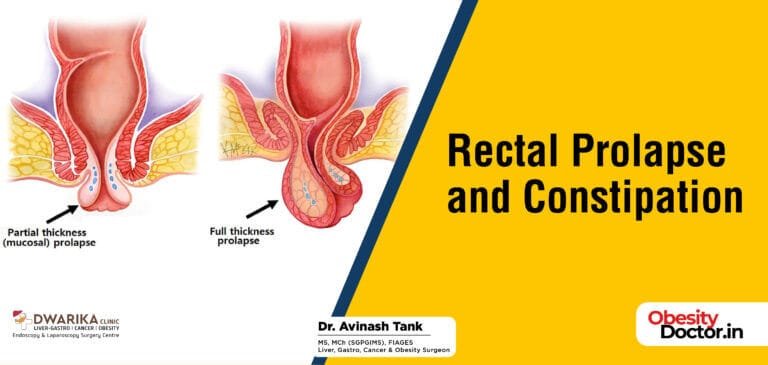
Rectal prolapse is corrected surgically. A laparoscopic rectopexy lifts the rectum and secures it in place, restoring normal anatomy and bowel control with a quicker recovery than open surgery. The exact operation is tailored to the patient's age and fitness.
Piles (haemorrhoids) are swollen blood vessels in and around the anal canal tha…
Fissure-in-Ano (Anal Fissure)An anal fissure is a small tear in the lining of the anal canal that causes sha…
Rectal CancerRectal cancer affects the last part of the large bowel. Thanks to modern sphinc…
How we treat Rectal Prolapse
 Recommended treatment
Rectum
Recommended treatment
Rectum
Laparoscopic surgery for rectal conditions including prolapse and rectal cancer — restoring function with minimally-invasive technique.
View treatment details →Cashless insurance accepted at our network hospitals, with EMI options available. Every patient gets a written, transparent estimate before any procedure — no surprises.

Dr. Avinash Tank, MBBS · MS (General Surgery) · MCh (Surgical Gastroenterology, SGPGIMS)
SGPGIMS (India's premier GI centre) + advanced training in Japan & South Korea. Super-specialist gastrointestinal, bariatric & cancer surgeon treating Rectal Prolapse at Dwarika Hospital — Gastro, Bariatric & Laparoscopic Surgery Center.
Proof, not promises
 DWARIKA HOSPITALPatient Education

More on Rectal Prolapse
 CancerColon Cancer in Men and Women: How Symptoms and Risk Factors Differ
 BlogRectal Prolapse and Constipation
Frequently asked questions
No. Piles are swollen blood vessels, whereas rectal prolapse is the full thickness of the rectum protruding — though they can look similar to patients and should be assessed by a specialist.
Laparoscopic repair is minimally invasive, restores normal anatomy and offers a faster recovery than traditional open surgery.
Many patients notice improved control once the rectum is secured, although recovery of full function can take time after long-standing prolapse.
Over time it tends to worsen, with increasing leakage and risk of the prolapse becoming trapped, so early assessment is advised.
Super-specialist GI, bariatric & cancer surgeon. SGPGIMS (India's premier GI centre) + advanced training in Japan & South Korea. Read full profile →
Last reviewed: July 2026