

Health & Wellness | Water Quality | Evidence-Based Health Information
Alkaline water has become increasingly popular, with manufacturers promoting it as a healthier alternative to ordinary drinking water. From claims of balancing body pH and improving digestion to preventing ageing, boosting metabolism and protecting against chronic diseases, alkaline water is often marketed as a premium health product.
But how much of this is supported by scientific evidence?
Are alkaline RO water purifiers genuinely beneficial for health, or are consumers paying extra for a clever marketing strategy?
To understand the answer, we need to distinguish between naturally alkaline water and artificially alkaline water produced by RO purification systems. We also need to understand how the human body regulates its pH and whether drinking alkaline water can meaningfully influence this process.
1. What Is Alkaline Water?
Water is classified according to its pH level, which measures how acidic or alkaline it is.
The pH scale ranges from 0 to 14:
-
pH below 7: Acidic water
-
pH 7: Neutral water
-
pH above 7: Alkaline water
Most drinking water has a pH around neutral, although the exact value depends on its source and mineral composition.
Alkaline water generally has a pH between 8 and 10. It can be obtained naturally from mineral-rich geological sources or manufactured using water purification technologies.
However, a higher pH does not automatically mean better-quality water or greater health benefits.
The mineral composition, microbiological safety and chemical quality of drinking water are much more important than pH alone.
2. Natural Alkaline Water vs Artificial Alkaline RO Water
One of the most important distinctions is how alkaline water is produced.
A. Natural alkaline water
Natural alkaline water originates from underground springs, mountains and geological formations.
As water moves through rocks, it dissolves naturally occurring minerals such as:
-
Calcium
-
Magnesium
-
Potassium
-
Sodium
-
Bicarbonates
These minerals influence the water’s taste, pH and buffering capacity.
Natural mineral water may therefore contain a combination of minerals that contribute to dietary mineral intake.
However, natural does not automatically mean safe. Spring and glacier water can contain microorganisms, environmental contaminants or excessive concentrations of certain minerals. It must be tested before being considered suitable for drinking.
B. Artificial alkaline RO water
Artificial alkaline water is produced using modern water purification systems.
A typical alkaline RO purifier works through several stages:
-
Pre-filtration: Removes suspended particles and sediments.
-
Carbon filtration: Reduces chlorine, odour and certain organic contaminants.
-
RO membrane: Removes many dissolved salts, metals and other contaminants.
-
Mineral cartridge: Adds selected minerals such as calcium and magnesium.
-
Alkaline adjustment: Raises the pH, depending on the technology used.
Some systems also use electrolysis or ionization to produce alkaline water.
The final product may have a higher pH than the original water. However, this does not necessarily mean that it has the same mineral composition or health properties as naturally occurring mineral water.
The important point: Adding minerals or increasing pH does not automatically transform ordinary RO water into therapeutically beneficial water.
3. Does Alkaline Water Change the pH of Your Body?
This is perhaps the biggest misconception surrounding alkaline water.
Many manufacturers suggest that drinking alkaline water can neutralize acidity throughout the body.
But human physiology works differently.
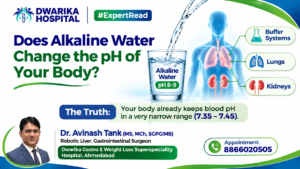
The human body maintains blood pH within a very narrow range, approximately 7.35–7.45.
This balance is controlled by three major mechanisms:
1. Buffer systems
Blood contains bicarbonate and other chemical buffers that help maintain acid-base balance.
2. Lungs
The lungs regulate carbon dioxide levels through breathing. Carbon dioxide influences the acidity of blood.
3. Kidneys
The kidneys regulate acid excretion and bicarbonate reabsorption, helping maintain the body’s normal pH.
These mechanisms operate continuously to maintain physiological balance.
Drinking water with a pH of 8 or 9 does not meaningfully change the pH of healthy blood.
The stomach’s hydrochloric acid also neutralizes much of the alkalinity of ingested water.
Therefore, the claim that alkaline water makes the entire body alkaline is not supported by established human physiology.
4. Can Alkaline Water Improve Digestion and Acidity?
This is an interesting area, particularly from a gastrointestinal perspective.
The stomach normally produces hydrochloric acid, which plays several important roles:
-
Helps digest proteins.
-
Activates digestive enzymes.
-
Supports absorption of certain nutrients.
-
Provides protection against ingested microorganisms.
The stomach’s acidic environment is essential for normal digestion.
Some alkaline water products claim to reduce acidity, heartburn and acid reflux.
There is a scientific basis for investigating one specific mechanism.
The role of pepsin
Pepsin is an enzyme involved in protein digestion. It functions in the acidic environment of the stomach.
Laboratory research has suggested that water with a pH of approximately 8.8 can inactivate pepsin under experimental conditions.
This has generated interest in alkaline water as a possible supportive approach for reflux-related symptoms.
However, there are important limitations:
-
Laboratory findings do not establish clinical effectiveness.
-
The stomach remains strongly acidic.
-
Alkaline water does not correct the underlying causes of GERD.
-
It should not replace prescribed treatment for acid reflux.
A 2012 laboratory study by Koufman and Johnston explored the potential effects of pH 8.8 water on pepsin activity. It was a laboratory investigation, not proof that drinking alkaline water cures GERD.
Thus, alkaline water should not be promoted as a treatment for gastritis, GERD or peptic ulcer disease.
5. What Does Scientific Research Say About Alkaline Water?
Let’s examine the evidence behind some of the most common health claims.
| Health claim | Scientific evidence |
|---|---|
| Balances blood pH |
Not supported
|
| Improves hydration |
Limited evidence
|
| Prevents cancer |
Not supported
|
| Boosts immunity |
Not established
|
| Promotes weight loss |
Not established
|
| Improves bone health |
Inconclusive
|
| Helps acid reflux |
Preliminary evidence
|
| Detoxifies the body |
Not supported
|
What do major medical sources say?
1. Mayo Clinic
Mayo Clinic’s February 2025 review concludes that alkaline water is not better than ordinary water for most people. Claims regarding disease prevention and meaningful health benefits require stronger research.
Mayo Clinic
2. Harvard Health Publishing
Harvard Health’s 2024 review similarly concludes that there is no convincing evidence to recommend alkaline water over safe regular drinking water.
Harvard Health
3. Systematic review of scientific studies
A systematic review published in 2022 evaluated studies comparing alkaline, oxygenated and demineralized water with mineral water.
The authors found no convincing evidence that alkaline water was superior for preventing disease, improving physical performance or treating medical conditions.
PubMed+1
4. Recent scientific review – 2026
A review published in Frontiers in Medicine in June 2026 examined alkaline water’s effects on gastrointestinal health, hydration, bone metabolism and other health outcomes.
Its conclusions were important:
-
Some limited, context-specific benefits may exist.
-
Gastrointestinal effects, including possible pepsin inactivation, deserve further investigation.
-
Evidence for metabolic, antioxidant and immune benefits remains inconsistent.
-
Claims of systemic alkalinization, anti-ageing and disease prevention are not supported by robust clinical evidence.
The authors concluded that alkaline water should not routinely be recommended as a health intervention.
frontiersin.org
6. Is Alkaline RO Water Better for Hydration?
One of the popular marketing claims is that alkaline water hydrates the body better than ordinary water.
Some manufacturers also suggest that alkaline water has smaller water clusters and therefore enters cells more efficiently.
However, these claims should be viewed critically.
Water absorption primarily occurs through the gastrointestinal tract, especially the small intestine.
The body has highly efficient mechanisms for regulating fluid absorption and maintaining hydration.
There is currently insufficient high-quality clinical evidence to establish that commercially available alkaline RO water provides superior hydration compared with safe regular drinking water.
For most people, the important factors are:
-
Drinking adequate amounts of water.
-
Maintaining electrolyte balance when needed.
-
Replacing fluid losses during exercise, fever or diarrhoea.
-
Consuming a balanced diet.
You do not need an expensive alkaline water purifier to maintain normal hydration.
7. Does Alkaline Water Improve Kidney Health?
The kidneys play a central role in maintaining acid-base balance.
They continuously regulate bicarbonate and hydrogen ions to maintain normal blood pH.
This has led to claims that alkaline water can reduce the workload on the kidneys or protect against kidney disease.
However, these claims are not established.
Some studies have investigated dietary acid load in people with chronic kidney disease. But the effects of an overall dietary pattern cannot be directly attributed to drinking alkaline water.
There is an important distinction between:
-
Reducing dietary acid load through appropriate food choices.
-
Drinking artificially alkalinized water.
These are not equivalent interventions.
People with chronic kidney disease should be particularly careful about choosing water products with added minerals.
Depending on the formulation, some products may contain additional sodium, potassium or other minerals that need to be considered in patients with impaired kidney function.
Clinical recommendation: Patients with kidney disease should discuss their drinking water and mineral intake with their treating physician or nephrologist rather than independently adopting high-pH water.
8. Can Alkaline Water Prevent Cancer or Other Diseases?
Some alkaline water advertisements make extraordinary claims about preventing cancer, diabetes, cardiovascular disease and ageing.
The proposed explanation is that cancer cells thrive in an acidic environment and that drinking alkaline water can reverse this acidity.
This is a misleading interpretation of cancer biology.
Cancer metabolism and the tumour microenvironment are complex. Some tumours have an acidic environment around them, but this does not mean that drinking alkaline water can change tumour acidity or prevent cancer development.
The body’s blood pH is tightly regulated and cannot be therapeutically altered through ordinary drinking water.
There is no convincing clinical evidence that alkaline RO water prevents or treats:
-
Cancer
-
Diabetes
-
Heart disease
-
Obesity
-
Chronic kidney disease
-
Autoimmune diseases
It is important not to substitute unproven alkaline water products for established medical treatments.
9. Are There Any Risks of Drinking Alkaline Water?
Alkaline water is not necessarily harmful when consumed in ordinary amounts, but several factors deserve attention.
1. Excessively high pH
Water with very high alkalinity is not necessarily better. Extremely alkaline water may cause gastrointestinal discomfort and may be unsuitable for regular consumption.
2. Mineral imbalance
Some products add minerals such as sodium, calcium and potassium. Their concentration varies between manufacturers.
This is particularly relevant for people with kidney disease or those following medically prescribed mineral restrictions.
3. Poor-quality purification systems
A purifier that is not properly maintained may become a source of microbial contamination.
Regular replacement of filters, membrane maintenance and periodic water testing are essential.
4. False sense of health protection
Perhaps the biggest risk is believing that alkaline water can compensate for an unhealthy diet, inadequate exercise, smoking or other lifestyle-related risk factors.
No water purifier can replace healthy lifestyle practices or appropriate medical care.
10. What Should You Check Before Buying an Alkaline RO Water Purifier?
If you are planning to purchase a water purifier, do not select a product simply because it advertises alkaline water, antioxidant technology or a higher pH.
Instead, evaluate the following:
| Parameter | What to look for |
|---|---|
| Water source | Municipal, borewell or tanker |
| TDS | Test the actual source water |
| Microbiological safety | Appropriate testing for bacteria and pathogens |
| Heavy metals | Check for arsenic, lead and other relevant contaminants |
| Mineral composition | Calcium, magnesium, sodium and potassium |
| pH | Within applicable drinking-water standards |
| RO membrane | Genuine, appropriate filtration performance |
| Maintenance | Regular servicing and filter replacement |
Is RO purification always necessary?
No.
RO purification is useful when the source water contains excessive dissolved salts or specific contaminants that require membrane treatment.
However, RO is not automatically the best solution for every household.
The appropriate technology depends on the quality of the original water.
For example:
-
If municipal water is microbiologically safe and chemically acceptable, a suitable non-RO filtration system may be sufficient.
-
If borewell water contains excessive dissolved salts or contaminants, RO may be appropriate.
-
If RO water has very low mineral content, a properly designed remineralization stage may be considered.
The goal should be safe, good-quality drinking water rather than achieving the highest possible pH.
What about Indian drinking water standards?
The Bureau of Indian Standards (BIS) specifies drinking-water quality requirements under IS 10500. The commonly cited acceptable pH range is 6.5–8.5.
A water purifier should be assessed against applicable drinking-water quality requirements, not just the manufacturer’s advertised pH figure.
A higher pH is not automatically evidence of better drinking water.
11. How to Choose Between Regular RO, Mineral RO and Alkaline RO?
Here is a practical comparison:
| Feature | Regular RO | Mineral RO | Alkaline RO |
|---|---|---|---|
| Removes dissolved contaminants | Yes, depending on system | Yes | Yes |
| Adds minerals | Usually no | Yes | Depends on model |
| Increases pH | Not necessarily | Sometimes | Yes, designed to |
| Improves water taste | Depends on source | Often | Depends on source |
| Proven superior health benefits | No | No general superiority established | No |
| Higher purchase cost | Generally lower | Variable | Often higher |
My recommendation: Prioritise purification efficiency, source-water quality, microbiological safety and reliable maintenance. Mineral enrichment can be useful depending on the original water composition. Paying a substantial premium solely for an alkaline-water feature is difficult to justify based on current clinical evidence.
12. Final Verdict: Is Alkaline RO Water Worth the Money?
Alkaline water is an interesting subject from a scientific perspective, but its commercial popularity has grown much faster than the evidence supporting its health benefits.
Natural mineral-rich water and artificially alkalinized RO water are not necessarily equivalent. Their mineral composition, bicarbonate content and other chemical properties can differ considerably.
The most important takeaways are:
-
Natural alkaline water may contain naturally occurring minerals, but its safety must still be tested.
-
Artificial alkaline RO water is produced by adding minerals or adjusting water pH.
-
Drinking alkaline water does not significantly change the pH of healthy human blood.
-
There is no convincing evidence that alkaline water prevents cancer, diabetes or ageing.
-
Some preliminary research suggests possible gastrointestinal benefits, but clinical effectiveness remains uncertain.
-
Safe, properly purified regular drinking water is sufficient for most healthy individuals.
-
Choose a water purifier based on actual water quality rather than marketing claims.
The bottom line: Good drinking water is essential for good health, but expensive alkaline water is not a shortcut to better health.
Rather than spending extra money on unproven health claims, invest in a reliable water purification system, regular maintenance, safe drinking-water practices and a healthy lifestyle.
Frequently Asked Questions (FAQs)
1. Is alkaline RO water safe for daily consumption?
For most healthy adults, properly produced drinking water with an appropriate mineral composition and acceptable chemical and microbiological quality can be consumed. However, extremely high pH or unsuitable mineral concentrations should be avoided.
2. Does alkaline water reduce stomach acidity?
It may temporarily interact with gastric acid. Laboratory studies have also demonstrated pepsin inactivation under specific conditions. However, it does not reliably treat GERD, gastritis or peptic ulcers.
3. Can alkaline water prevent cancer?
No convincing human clinical evidence demonstrates that alkaline water prevents or treats cancer.
4. Is natural spring water better than alkaline RO water?
Not necessarily. Natural spring water may contain a broader range of naturally occurring minerals, but its safety and composition depend on the source. Properly purified RO water may be safer than untreated natural water.
5. Should patients with kidney disease drink alkaline water?
They should consult their nephrologist, particularly if the water contains added potassium, sodium or other minerals.
6. Is a normal RO purifier sufficient for a family?
Yes, provided the purifier is appropriate for the source-water quality and produces water that meets applicable drinking-water standards. Not every household needs alkaline technology.
References and Further Reading
Medical disclaimer: This article is intended for general health education and should not replace individual medical advice. Scientific evidence and product quality should be considered before making health-related decisions.
Suggested SEO details
-
SEO Title: Alkaline RO Water Purifier: Health Benefits, Myths and Scientific Evidence
-
Focus Keyword: Alkaline RO Water Purifier
-
Secondary Keywords: Alkaline Water Benefits, Natural Alkaline Water, RO Water vs Alkaline Water, Is Alkaline Water Good for Health?
-
URL Slug:
alkaline-ro-water-purifier-health-benefits -
Meta Description: Are alkaline RO water purifiers really good for health? Discover the science behind alkaline water, natural vs artificial alkaline water, health claims, risks and expert recommendations.
Editorial note: The article is based on the topic and comparison described in your video request, supplemented with published scientific literature. The YouTube page did not provide a retrievable full transcript, so I have not attributed specific statements to the speaker.
Continue Reading — Free
Get the complete expert guide from Dr. Avinash Tank.
Free, always. No payment, no spam.
Continue Reading — Free
Get the complete expert guide from Dr. Avinash Tank.
Free, always. No payment, no spam — just the complete guide sent straight to your screen.
Related patient videos
 DWARIKA HOSPITALVerified Patient Story
Verified
 DWARIKA HOSPITALVerified Patient Story
Verified
 DWARIKA HOSPITALVerified Patient Story
Verified

Related treatments & services
A complete, personalised weight-loss programme — surgery where needed, plus nutrition, medical and lifestyle support for lasting results.
View service → 360 Diabetes ReversalA complete programme to reverse Type-2 diabetes — combining metabolic surgery where suitable with diet, medical and lifestyle care.
View service → Gallbladder Stone
Minimally invasive removal of the gallbladder (laparoscopic cholecystectomy) — the definitive, day-care treatment for painful gallstones.
View service →Was this guide helpful?

This article has not been individually medically reviewed. It is general education, not medical advice.