

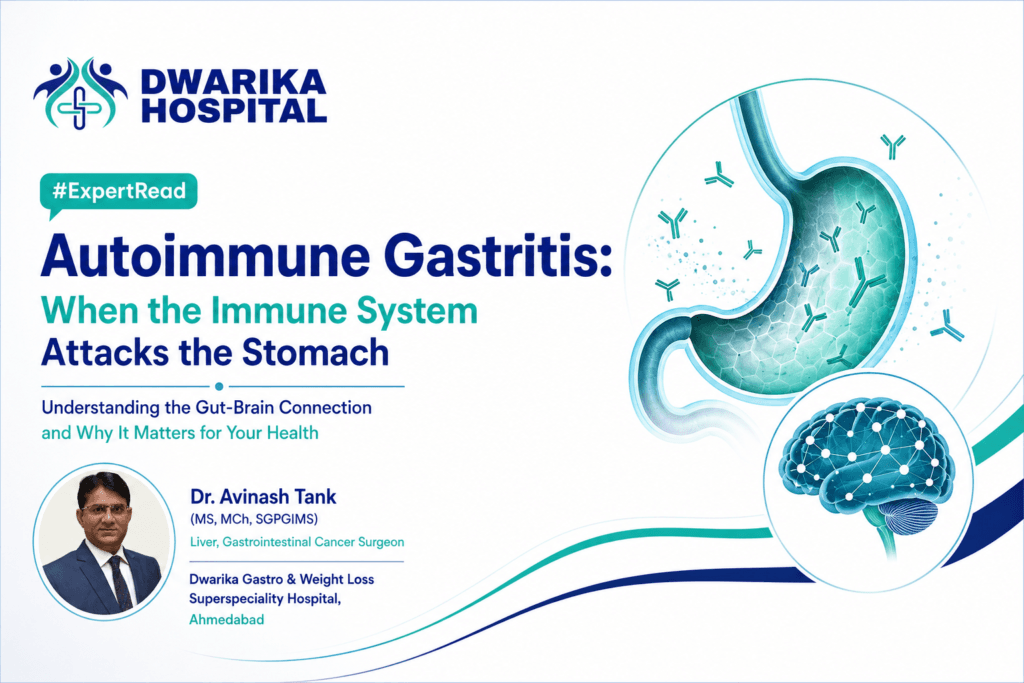

Bryan Johnson, the American technology entrepreneur and longevity-focused biohacker, recently revealed that he has been diagnosed with autoimmune gastritis (AIG). His experience highlights an important medical lesson: even people who undergo extensive health monitoring may have a chronic stomach disease that remains silent for years.
Autoimmune gastritis is not simply “gastritis” caused by spicy food, stress or an unhealthy diet. It is an immune-mediated disease in which the body’s immune system progressively damages the acid-producing parietal cells of the stomach.
The disease can remain unnoticed for years. By the time symptoms appear, patients may already have developed iron deficiency, vitamin B12 deficiency, anaemia, neurological problems or changes in the stomach lining.
The diagnosis of Bryan Johnson has therefore brought an otherwise relatively unfamiliar gastrointestinal condition into public attention.
Who is Bryan Johnson?
Bryan Johnson is an American technology entrepreneur, investor and longevity advocate, best known for his intensive “Blueprint” programme aimed at measuring and modifying ageing and health.
In 2026, Johnson publicly disclosed that he had been diagnosed with autoimmune gastritis after a prolonged history of low iron stores and extensive medical investigations. Reports state that his evaluation included blood testing, upper endoscopy and gastric biopsies.
The diagnosis was particularly notable because Johnson is known for extensive health monitoring.
His experience illustrates an important point:
Extensive health monitoring does not necessarily prevent disease; sometimes it helps uncover disease that has been developing silently.
Are other celebrities known to have autoimmune gastritis?
Bryan Johnson is the best-documented public example
As of August 2026, I could not identify another major celebrity or public figure with a sufficiently reliable, publicly documented diagnosis of autoimmune gastritis itself.
There are many public figures who have disclosed autoimmune diseases, vitamin B12 deficiency or pernicious anaemia, but these should not automatically be labelled as autoimmune gastritis.
This distinction matters.
Autoimmune gastritis can eventually cause intrinsic-factor deficiency and vitamin B12 malabsorption, resulting in pernicious anaemia. However, pernicious anaemia and autoimmune gastritis are not interchangeable diagnostic labels. Autoimmune gastritis can exist for years before pernicious anaemia develops.
Therefore, for medical accuracy, Bryan Johnson should currently be presented as the prominent publicly documented celebrity/public figure with autoimmune gastritis, rather than creating a longer celebrity list based on unverified associations.
What is autoimmune gastritis?
Autoimmune gastritis is a chronic autoimmune disease in which the immune system attacks the stomach’s parietal cells.
Parietal cells are located predominantly in the body and fundus of the stomach.
They perform two important functions:
- They produce gastric acid.
- They produce intrinsic factor, which is essential for absorption of vitamin B12 in the terminal ileum.
When autoimmune destruction progressively reduces these cells:
Parietal-cell destruction → reduced gastric acid → impaired iron absorption
and later:
Parietal-cell/intrinsic-factor dysfunction → impaired vitamin B12 absorption → vitamin B12 deficiency → pernicious anaemia
Autoimmune gastritis is therefore much more than inflammation of the stomach. It can gradually affect nutrition, blood formation, the nervous system and the long-term health of the stomach.
Why can autoimmune gastritis remain hidden for years?
One of the most important characteristics of autoimmune gastritis is that symptoms may be absent or nonspecific for a long time.
A person may not have classic stomach symptoms such as severe pain or vomiting.
Instead, the earliest clues may be:
- Low ferritin
- Iron deficiency
- Unexplained anaemia
- Fatigue
- Weakness
- Vitamin B12 deficiency
- Tingling or numbness
- Memory or concentration problems
- Glossitis or a sore tongue
- Unexplained neurological symptoms
Iron deficiency may appear before vitamin B12 deficiency because iron absorption is affected by reduced gastric acidity.
This is particularly important in patients with persistent or unexplained iron deficiency despite apparently adequate iron intake or supplementation. Atrophic gastritis is recognised as a contributor to iron-deficiency anaemia because reduced gastric acid can impair iron absorption.
What happens inside the stomach?
The stomach can be broadly divided into the:
- Cardia
- Fundus
- Body
- Antrum
Autoimmune gastritis characteristically affects the acid-producing mucosa of the body and fundus, rather than primarily the antrum.
The immune system produces antibodies against components of the parietal cells, particularly the gastric proton pump. Intrinsic-factor antibodies may also develop.
Progressive destruction of parietal cells causes:
Parietal-cell loss
↓
Reduced gastric acid
↓
Hypochlorhydria / achlorhydria
↓
Iron absorption becomes impaired
↓
Iron deficiency
At a later stage:
Intrinsic-factor deficiency
↓
Vitamin B12 malabsorption
↓
Vitamin B12 deficiency
↓
Pernicious anaemia and/or neurological complications
Autoimmune gastritis is also associated with other autoimmune diseases, particularly autoimmune thyroid disease and type 1 diabetes.
Is autoimmune gastritis caused by diet?
No—not in the usual sense.
Autoimmune gastritis is fundamentally an immune-mediated disease.
Continue Reading — Free
Get the complete expert guide from Dr. Avinash Tank.
Free, always. No payment, no spam.
Continue Reading — Free
Get the complete expert guide from Dr. Avinash Tank.
Free, always. No payment, no spam — just the complete guide sent straight to your screen.
Dietary habits may influence overall gastrointestinal health, but eating spicy food, acidic food or a particular type of diet does not explain the underlying autoimmune destruction of gastric parietal cells.
This distinction is especially important in the era of health optimisation and biohacking.
A highly controlled diet, extensive exercise programme and large number of supplements cannot guarantee protection against an autoimmune disorder.
Bryan Johnson’s experience is a striking example of this principle.
How is autoimmune gastritis diagnosed?
There is no single blood test that should be interpreted in isolation.
A proper evaluation may include:
1. Blood tests
Doctors may consider:
- Complete blood count
- Serum vitamin B12
- Iron studies
- Ferritin
- Anti-parietal cell antibodies
- Anti-intrinsic factor antibodies
- Serum gastrin
- Pepsinogen I and II
- Thyroid function and appropriate autoimmune thyroid testing
Anti-parietal-cell antibodies and intrinsic-factor antibodies can support the diagnosis, but antibody results alone are not sufficient to establish autoimmune gastritis.
2. Upper GI endoscopy
Endoscopy can identify changes in the stomach lining, particularly in the body and fundus.
However, early autoimmune gastritis may be difficult to recognise visually.
3. Gastric biopsies
Histopathological examination is extremely important.
The American Gastroenterological Association recommends that atrophic gastritis be confirmed histologically, with appropriate biopsies to determine the extent and severity of disease.
4. Putting the findings together
A diagnosis may therefore involve the combination of:
Clinical history + nutritional deficiencies + antibodies + gastrin/pepsinogen + endoscopic findings + gastric histology
This is one reason autoimmune gastritis can be missed.
Why does low iron matter?
One of the most useful lessons from Bryan Johnson’s story is the importance of persistent low iron stores.
A person can have:
- Normal haemoglobin
- No obvious bleeding
- No major gastrointestinal symptoms
and still have depleted iron stores.
Ferritin may therefore provide an important clue.
If iron deficiency repeatedly returns despite apparently adequate replacement, doctors should consider whether there is:
- Blood loss
- Malabsorption
- Coeliac disease
- Helicobacter pylori-associated disease
- Atrophic gastritis
- Autoimmune gastritis
- Dietary deficiency
- Other gastrointestinal disorders
The AGA specifically recommends evaluating iron and vitamin B12 deficiency in patients with atrophic gastritis and considering atrophic gastritis when unexplained iron or vitamin B12 deficiency is present.
Can autoimmune gastritis cause vitamin B12 deficiency?
Yes.
Vitamin B12 absorption normally depends on intrinsic factor, a protein produced by gastric parietal cells.
When autoimmune damage affects these cells, intrinsic-factor production can become inadequate.
The result can be:
Autoimmune gastritis → intrinsic-factor deficiency → impaired B12 absorption → vitamin B12 deficiency
Severe or prolonged B12 deficiency can produce:
- Megaloblastic anaemia
- Fatigue
- Weakness
- Numbness
- Tingling
- Balance problems
- Cognitive or neurological symptoms
Importantly, neurological complications can occur even before dramatic anaemia becomes apparent.
Does autoimmune gastritis increase cancer risk?
This is an important reason why autoimmune gastritis should not simply be dismissed as “gastritis.”
Chronic atrophic gastritis is considered a preneoplastic condition because progressive gastric atrophy and metaplastic changes can form part of the pathway toward gastric neoplasia.
Autoimmune gastritis is also associated with hypergastrinaemia and an increased risk of type 1 gastric neuroendocrine tumours.
The AGA advises that patients with autoimmune gastritis should undergo appropriate upper endoscopic evaluation for gastric neuroendocrine tumours. Small lesions may be treated endoscopically, followed by surveillance depending on the tumour burden.
The condition therefore deserves long-term medical follow-up, even when the patient feels well.
Can autoimmune gastritis be cured?
Currently, the autoimmune destruction of the gastric parietal cells cannot generally be reversed.
However, the consequences of the disease can often be effectively managed.
Treatment may include:
- Vitamin B12 replacement
- Iron replacement
- Treatment of associated deficiencies
- Monitoring of blood counts
- Monitoring vitamin B12 and iron status
- Evaluation for associated autoimmune diseases
- Endoscopic surveillance when indicated
- Detection and treatment of gastric neuroendocrine tumours when present
The goal is not simply to treat a laboratory abnormality.
The goal is to identify the disease early, correct nutritional deficiencies and monitor the stomach for complications.
Who should be evaluated for autoimmune gastritis?
Consider discussing evaluation with a gastroenterologist if you have:
Persistent unexplained iron deficiency
Especially when iron levels repeatedly fall despite replacement.
Vitamin B12 deficiency without an obvious explanation
Particularly when dietary intake does not adequately explain the deficiency.
Pernicious anaemia
Pernicious anaemia is strongly associated with autoimmune gastric disease.
Autoimmune thyroid disease
Autoimmune thyroid disease and autoimmune gastritis commonly coexist.
Type 1 diabetes
Autoimmune clustering can occur.
Unexplained neurological symptoms with B12 deficiency
Especially numbness, tingling, balance difficulties or cognitive changes.
Gastric atrophy on endoscopy or biopsy
This should prompt appropriate evaluation of the cause.
Bryan Johnson’s diagnosis: the bigger lesson
The most interesting aspect of Bryan Johnson’s diagnosis may not be that a famous biohacker developed autoimmune gastritis.
It is that a disease can remain hidden even in someone who is intensely focused on health monitoring.
Autoimmune diseases do not necessarily follow the rules of lifestyle optimisation.
A person can:
- exercise regularly,
- follow a carefully controlled diet,
- monitor hundreds of biomarkers,
- take nutritional supplements,
- undergo repeated medical tests,
and still develop an autoimmune disease.
The lesson is not that health optimisation is useless.
The lesson is that persistent abnormalities deserve a diagnosis rather than simply another supplement or lifestyle intervention.
If iron stores remain low, the question should be:
Why is the iron low?
If vitamin B12 remains low:
Why is B12 absorption impaired?
If gastric biopsies show atrophy:
What caused the atrophy?
These questions can uncover diseases that otherwise remain silent.
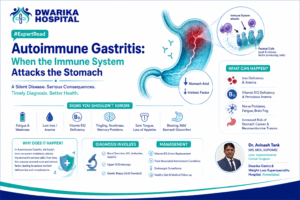
Frequently Asked Questions About Autoimmune Gastritis
What is autoimmune gastritis?
Autoimmune gastritis is a chronic autoimmune disease in which the immune system attacks the acid- and intrinsic-factor-producing parietal cells of the stomach.
Is autoimmune gastritis the same as ordinary gastritis?
No. Ordinary gastritis can have many causes, including H. pylori infection, medications and other inflammatory conditions. Autoimmune gastritis is specifically caused by an autoimmune attack on the gastric parietal-cell compartment.
Does autoimmune gastritis cause stomach pain?
It may, but many patients have few or no specific stomach symptoms. Nutritional deficiencies such as iron deficiency or vitamin B12 deficiency may be the first clue.
Can autoimmune gastritis cause iron deficiency?
Yes. Reduced gastric acid can impair iron absorption, and iron deficiency can occur before vitamin B12 deficiency.
Can autoimmune gastritis cause vitamin B12 deficiency?
Yes. Progressive loss of parietal cells can reduce intrinsic-factor production and impair vitamin B12 absorption.
Is autoimmune gastritis associated with thyroid disease?
Yes. Autoimmune thyroid disease is one of the important autoimmune conditions associated with autoimmune gastritis.
Is autoimmune gastritis a precancerous condition?
Atrophic gastritis is considered a preneoplastic condition. Autoimmune gastritis can also increase the risk of gastric neuroendocrine tumours and may be associated with gastric cancer risk, making appropriate surveillance important.
Which celebrity has autoimmune gastritis?
As of August 2026, Bryan Johnson, an American technology entrepreneur and longevity advocate, is the prominent publicly documented celebrity/public figure who has disclosed a confirmed diagnosis of autoimmune gastritis. I could not verify another major celebrity with a publicly documented diagnosis of autoimmune gastritis itself.
Should every person with low B12 be tested for autoimmune gastritis?
Not necessarily. Vitamin B12 deficiency has many causes. However, unexplained B12 deficiency—particularly when associated with iron deficiency, autoimmune thyroid disease, pernicious anaemia or other suggestive findings—may warrant evaluation for autoimmune gastritis.
Key Takeaway
Autoimmune gastritis is a silent autoimmune disease of the stomach that can progressively destroy parietal cells, reduce gastric acid and intrinsic factor, cause iron and vitamin B12 deficiency, and increase the risk of gastric neoplasia.
Bryan Johnson’s public diagnosis has brought attention to a condition that may remain undiagnosed for years.
The most important clinical message is simple:
Persistent unexplained iron deficiency, vitamin B12 deficiency, pernicious anaemia or gastric atrophy should not simply be treated repeatedly without investigating the underlying cause.
Autoimmune gastritis may be silent—but identifying it early can allow nutritional deficiencies to be corrected and appropriate gastric surveillance to be started.
If you have persistent iron deficiency, unexplained vitamin B12 deficiency, pernicious anaemia, autoimmune thyroid disease or abnormal gastric biopsy findings, discuss the possibility of autoimmune gastritis with a gastroenterologist.
Medical Disclaimer
This article is intended for patient education and general medical information. A diagnosis of autoimmune gastritis requires clinical assessment and, where appropriate, laboratory testing, upper gastrointestinal endoscopy and gastric biopsy. Individual patients require personalised evaluation by their treating physician.
Related patient videos
 DWARIKA HOSPITALVerified Patient Story
Verified
DWARIKA HOSPITALVerified Patient Story
Verified  DWARIKA HOSPITALVerified Patient Story
Verified
DWARIKA HOSPITALVerified Patient Story
Verified 
Related treatments & services
A complete, personalised weight-loss programme — surgery where needed, plus nutrition, medical and lifestyle support for lasting results.
View service → 360 Diabetes ReversalA complete programme to reverse Type-2 diabetes — combining metabolic surgery where suitable with diet, medical and lifestyle care.
View service → Gallbladder Stone
Minimally invasive removal of the gallbladder (laparoscopic cholecystectomy) — the definitive, day-care treatment for painful gallstones.
View service →Was this guide helpful?
Super-specialist GI, bariatric & cancer surgeon. SGPGIMS (India's premier GI centre) + advanced training in Japan & South Korea. Read full profile →
Last reviewed: July 2026