

Hepatitis B afflicts 3.4% Gujaratis
As printedThe disease, which causes liver inflammation, can be prevented by vaccination; every year 10 lakh die from it
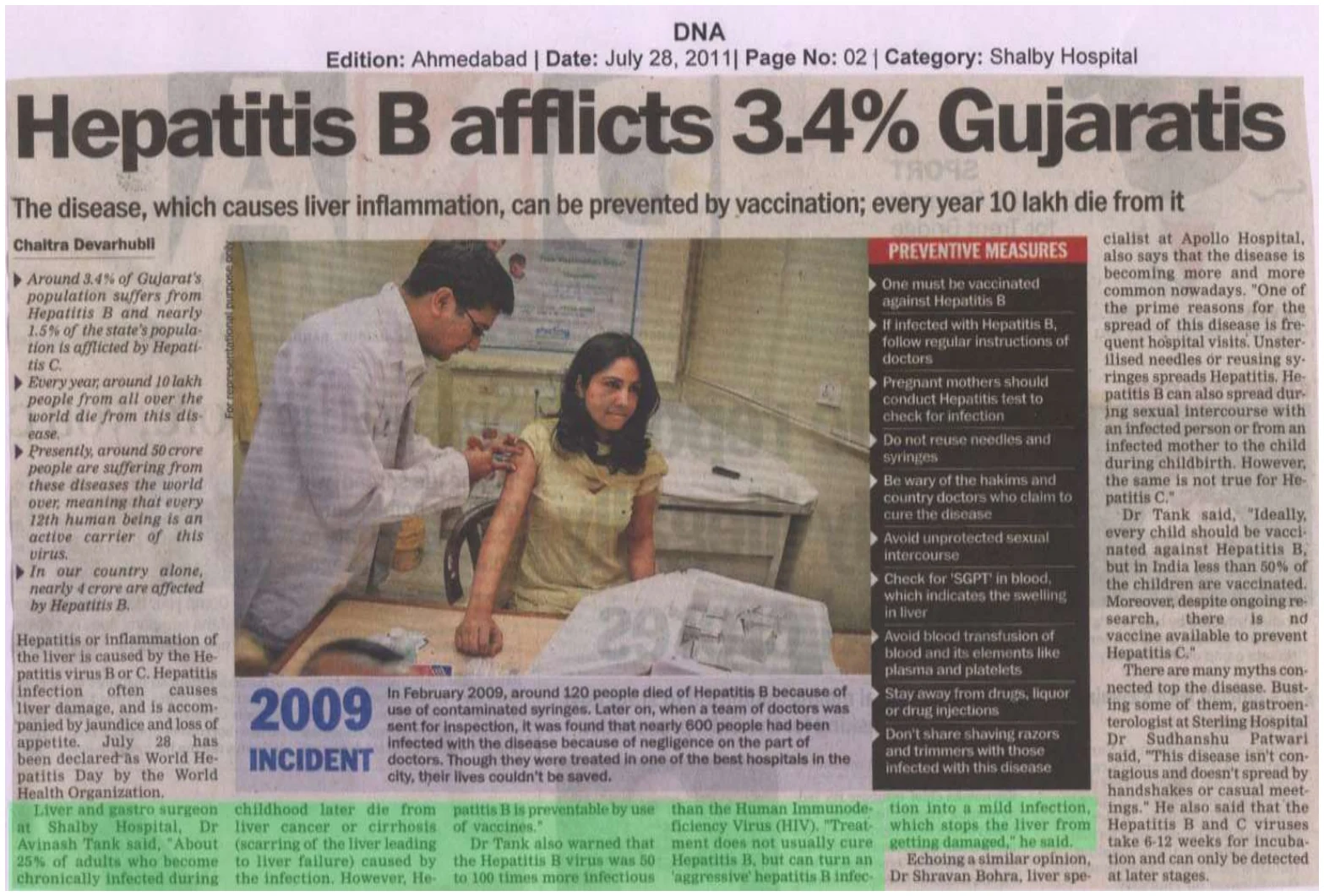
Historical publication record, shown exactly as printed. Select the clipping to read it full size.
What this article covers
A DNA report for World Hepatitis Day stating that around 3.4% of Gujarat’s population has hepatitis B and nearly 1.5% hepatitis C. Dr. Tank, then a liver and gastro surgeon at Shalby Hospital, is quoted saying that about 25% of adults who become chronically infected during childhood later die from liver cancer or cirrhosis, that the hepatitis B virus is 50 to 100 times more infectious than HIV, that hepatitis B is preventable by vaccine, and that ideally every child should be vaccinated.
A factual summary of the printed article above. Below: the article as printed, then an up-to-date patient guide on the same topic.
The article, as printed
Report highlights (as printed)
Around 3.4% of Gujarat's population suffers from Hepatitis B and nearly 1.5% of the state's population is afflicted by Hepatitis C. Every year, around 10 lakh people from all over the world die from this disease. Presently, around 50 crore people are suffering from these diseases the world over, meaning that every 12th human being is an active carrier of this virus. In our country alone, nearly 4 crore are affected by Hepatitis B.
Hepatitis or inflammation of the liver is caused by the Hepatitis virus B or C. Hepatitis infection often causes liver damage, and is accompanied by jaundice and loss of appetite. July 28 has been declared as World Hepatitis Day by the World Health Organization.
Dr. Avinash Tank, quoted
Liver and gastro surgeon at Shalby Hospital, Dr Avinash Tank said, "About 25% of adults who become chronically infected during childhood later die from liver cancer or cirrhosis (scarring of the liver leading to liver failure) caused by the infection. However, Hepatitis B is preventable by use of vaccines."
Dr Tank also warned that the Hepatitis B virus was 50 to 100 times more infectious than the Human Immunodeficiency Virus (HIV). "Treatment does not usually cure Hepatitis B, but can turn an 'aggressive' hepatitis B infection into a mild infection, which stops the liver from getting damaged," he said.
Dr Tank said, "Ideally, every child should be vaccinated against Hepatitis B, but in India less than 50% of the children are vaccinated. Moreover, despite ongoing research, there is no vaccine available to prevent Hepatitis C."
Preventive measures (panel in the report)
- One must be vaccinated against Hepatitis B
- If infected with Hepatitis B, follow regular instructions of doctors
- Pregnant mothers should conduct Hepatitis test to check for infection
- Do not reuse needles and syringes
- Be wary of the hakims and country doctors who claim to cure the disease
- Avoid unprotected sexual intercourse
- Check for 'SGPT' in blood, which indicates the swelling in liver
- Avoid blood transfusion of blood and its elements like plasma and platelets
- Stay away from drugs, liquor or drug injections
- Don't share shaving razors and trimmers with those infected with this disease
Transcribed from the report by Chaitra Devarhubli. The report also quotes other specialists; only the statements attributed to Dr. Tank and the report's own figures are reproduced here. Figures are as printed in 2011.
The newspaper piece above is a 2011 record. What follows is a present-day guide to Hepatitis B for patients and families, based on current medical practice.
What is hepatitis B?
Hepatitis B is a liver infection caused by the hepatitis B virus (HBV). Some people clear the virus within six months (acute hepatitis B); in others it stays for life (chronic hepatitis B). Chronic infection often causes no symptoms for years while it slowly inflames and scars the liver, leading in some people to cirrhosis and liver cancer.
Whether the infection becomes chronic depends mostly on age at infection: about 90% of babies infected at birth develop chronic infection, compared with fewer than 5% of healthy adults who are infected. This is why protecting newborns is the single most important step.
How hepatitis B spreads — and how it does not
The virus spreads through blood and body fluids:
- From an infected mother to her baby at birth
- Unsafe injections, reused needles or syringes, and unsterile medical or dental instruments
- Unscreened blood transfusions
- Unprotected sex with an infected partner
- Sharing razors, toothbrushes or nail clippers; unsterile tattooing and piercing
Hepatitis B is NOT spread by sharing food or water, hugging, shaking hands, coughing or sharing utensils. People living with hepatitis B can work, study and eat with others normally.
Symptoms
Acute infection may cause tiredness, loss of appetite, nausea, dark urine and jaundice — or no symptoms at all. Chronic hepatitis B is usually silent until the liver is significantly damaged, when signs such as swelling of the abdomen, vomiting blood, jaundice, confusion or easy bruising may appear. Because it is silent, the only way to know is a blood test.
Tests for hepatitis B
- HBsAg — a positive result means the virus is present
- Anti-HBs — shows protection from vaccination or past recovery
- HBeAg and HBV DNA (viral load) — show how active the virus is
- Liver function tests (including SGPT/ALT) — show liver inflammation
- Ultrasound and FibroScan (liver stiffness) — show scarring or cirrhosis
Everyone should know their hepatitis B status at least once, and testing is part of routine antenatal care in pregnancy.
Treatment of chronic hepatitis B
Not everyone with hepatitis B needs medicine immediately. Treatment is recommended when the virus is active and the liver is being damaged, when there is cirrhosis, and in certain other situations. Oral antiviral tablets such as tenofovir or entecavir suppress the virus very effectively, reduce liver inflammation, and lower the risk of cirrhosis and liver cancer.
As Dr. Tank told DNA, treatment usually controls rather than cures hepatitis B — so it is typically long-term, and tablets should never be stopped without the specialist's advice, because stopping suddenly can cause a dangerous flare. People with chronic hepatitis B, especially with cirrhosis, need regular monitoring, including an ultrasound every six months to detect liver cancer early when it is still treatable.
Prevention: the vaccine works
Hepatitis B vaccination is safe and gives long-lasting protection in more than 90% of people. It is part of India's Universal Immunisation Programme.
- Newborns: a birth dose within 24 hours, then the scheduled infant doses
- Babies of mothers who test positive: vaccine plus hepatitis B immunoglobulin (HBIG) soon after birth; the mother may be given antiviral tablets in late pregnancy if her viral load is high
- Adults who are not immune: three doses over six months — especially healthcare workers, people on dialysis, family members and partners of infected people
- Use only new, sterile needles; never share razors or toothbrushes; practise safe sex
What has changed since 2011: hepatitis C
The report noted that there was no vaccine for hepatitis C — that is still true. What has changed is treatment: hepatitis C can now be cured in the vast majority of people with 8–12 weeks of oral antiviral tablets. Anyone with a positive hepatitis C antibody test should be checked for active infection and treated.
Key takeaways
- Hepatitis B spreads through blood, sex and from mother to baby — not through food, water or casual contact.
- Infection at birth usually becomes chronic and can silently lead to cirrhosis and liver cancer.
- A simple HBsAg blood test tells you if you have it.
- Antiviral tablets control the virus and protect the liver; they are usually long-term.
- The vaccine — starting with a birth dose — prevents hepatitis B.
Frequently asked questions
Can hepatitis B be cured?
Most adults with acute infection clear it on their own. Chronic hepatitis B is rarely cured, but antiviral tablets control the virus very well and greatly reduce the risk of cirrhosis and liver cancer.
Does hepatitis B spread through food or sharing plates?
No. It spreads through blood and body fluids. Eating together, hugging, shaking hands and sharing utensils do not transmit it.
Can a mother with hepatitis B breastfeed?
Yes, once the baby has received the hepatitis B vaccine and immunoglobulin at birth, breastfeeding is generally considered safe. Discuss this with your doctor.
How many doses of the hepatitis B vaccine are needed?
Usually three doses over six months for adults; infants follow the national schedule starting with a birth dose. A blood test can confirm protection in high-risk people.
What is the difference between hepatitis A and B?
Hepatitis A spreads through food and water and never becomes chronic. Hepatitis B spreads through blood and body fluids and can become a lifelong infection.
Read next
This page is for general information and does not replace a personal consultation. If you have symptoms, please see a doctor.

More from Dr. Avinash Tank in the media
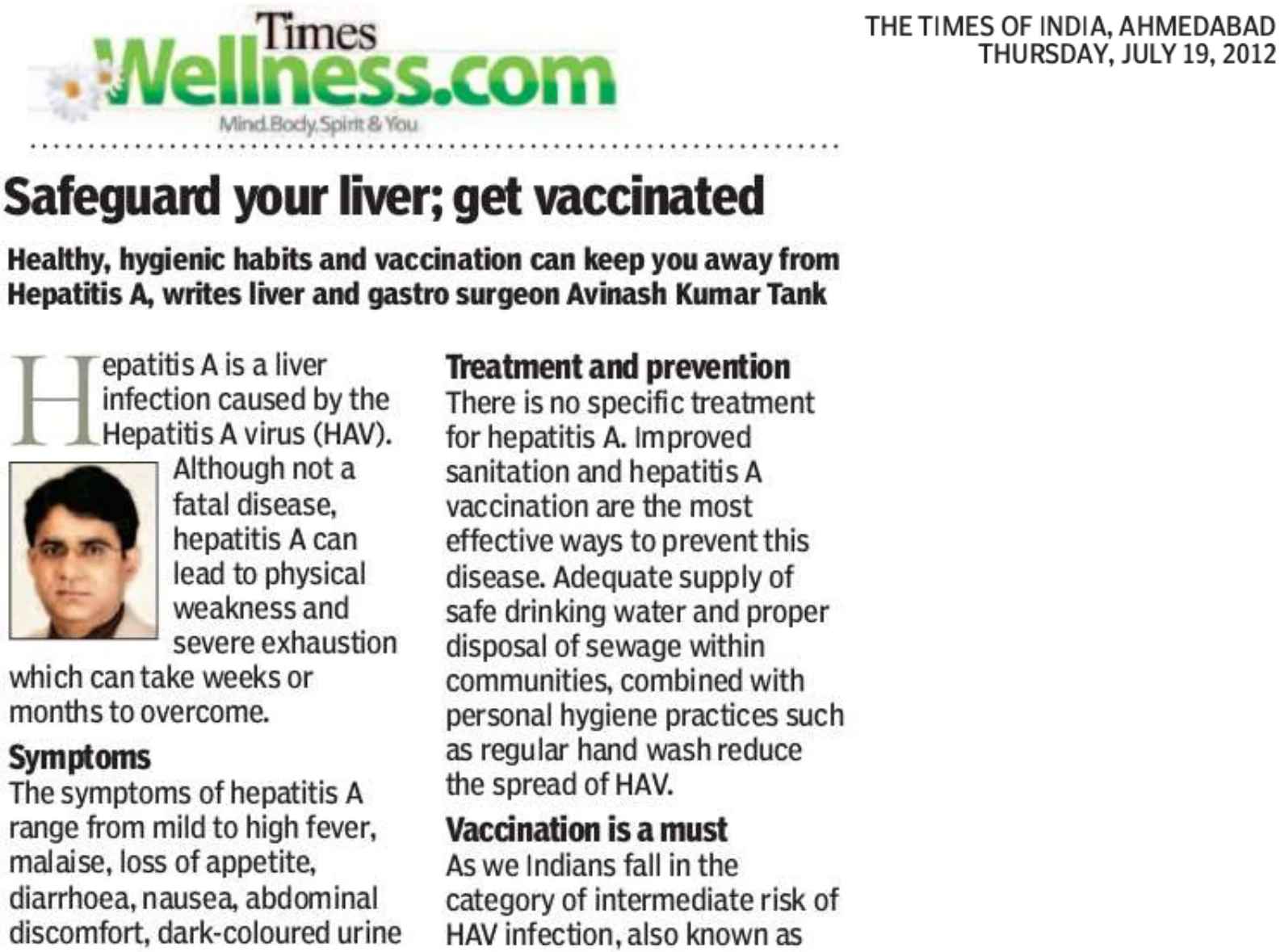 The Times of India · Jul 2012Safeguard your liver; get vaccinated
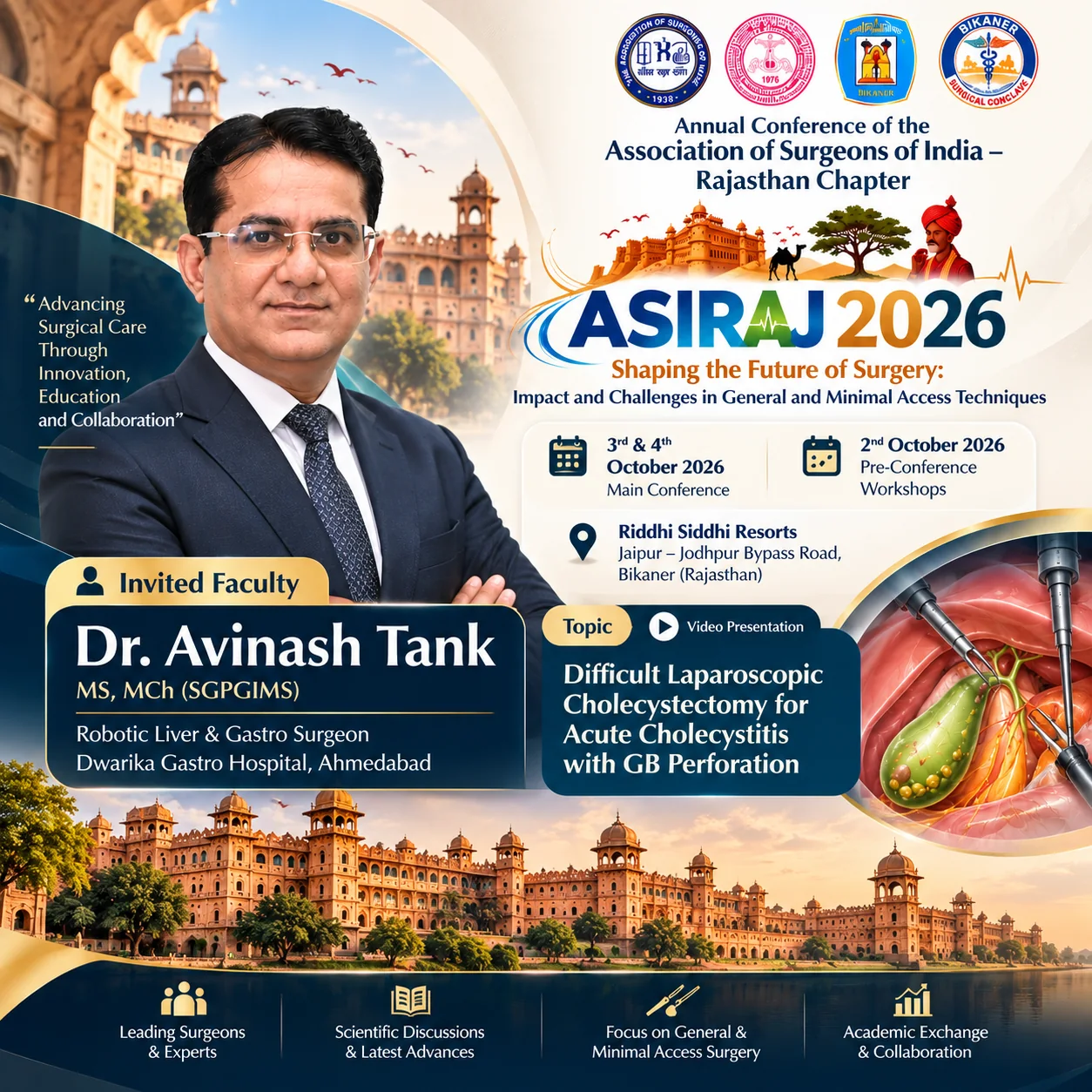 ASIRAJ 2026 · Sep 2026Dr. Avinash Tank Invited as Faculty at ASIRAJ 2026
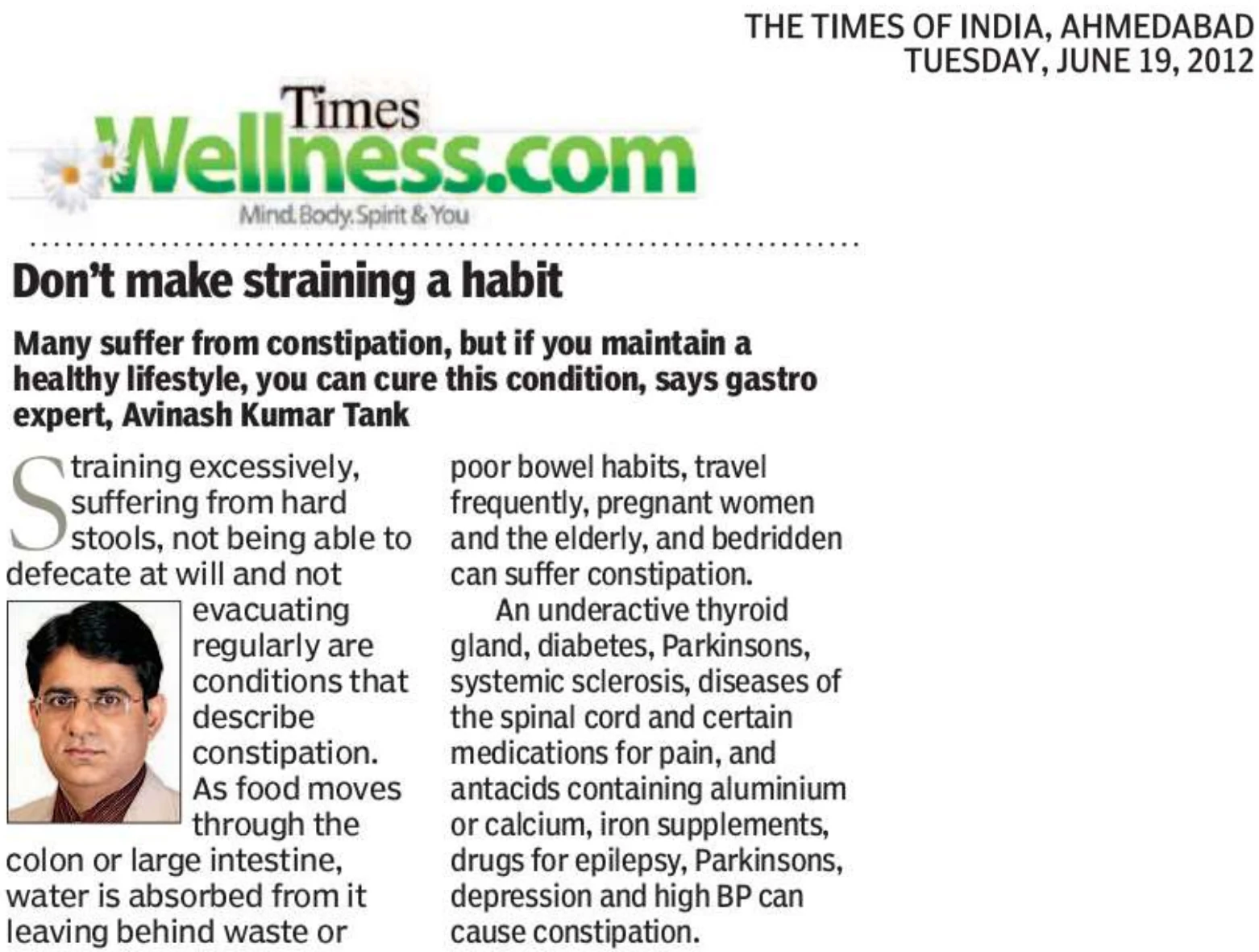 The Times of India · Jun 2012Don’t make straining a habit
Have a question about digestive, liver or GI health?
Get a clear, personalised answer from Dr. Avinash Tank and the clinical team — confidentially, with same-week slots.