


- IAGES
- ASI — Association of Surgeons of India
- SAGES
- International surgical societies
Quick answer
AI & snippet readyBuckwheat flour, known as “kutta ka aata” is a popular grain in India, especially during fasting periods. Buckwheat flour is gluten-free and has a low glycemic index, making it suitable for individuals with gluten sensitivities or diabetes. It is also a good source of dietary fiber, which aids in digestion and helps maintain stable blood […]
Key takeaways
Overview
Overview
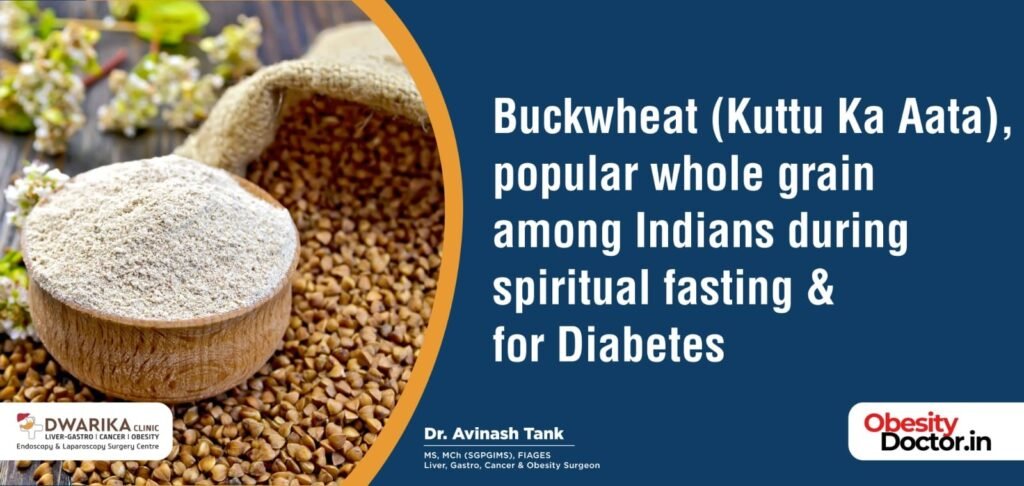
Buckwheat flour, known as "kutta ka aata" is a popular grain in India, especially during fasting periods.
Buckwheat flour is gluten-free and has a low glycemic index, making it suitable for individuals with gluten sensitivities or diabetes.
It is also a good source of dietary fiber, which aids in digestion and helps maintain stable blood sugar levels.
Buckwheat flour contains essential vitamins and minerals like magnesium, phosphorus, and B vitamins.
Here is some information about kuttu grain, its composition, and its various uses:
- Composition: Kuttu is not a cereal grain but a pseudo-cereal. It is gluten-free and belongs to the same family as rhubarb and sorrel. The grain is triangular in shape and has a distinctive nutty flavor. Kuttu is rich in dietary fiber, protein, essential amino acids, antioxidants, and minerals such as magnesium, manganese, and phosphorus. Here's the approximate nutritional composition per 100 grams of buckwheat flour:
- Kuttu is not a cereal grain but a pseudo-cereal. It is gluten-free and belongs to the same family as rhubarb and sorrel.
- The grain is triangular in shape and has a distinctive nutty flavor. Kuttu is rich in dietary fiber, protein, essential amino acids, antioxidants, and minerals such as magnesium, manganese, and phosphorus.
- Here's the approximate nutritional composition per 100 grams of buckwheat flour:
- Calories: 335 kcal
- Carbohydrates: 71 grams Dietary Fiber: 10 grams Sugars: 0 grams
- Dietary Fiber: 10 grams
- Sugars: 0 grams
- Protein: 13 grams
- Fat: 3 grams Saturated Fat: 0.7 grams Monounsaturated Fat: 0.6 grams Polyunsaturated Fat: 1.2 grams
- Saturated Fat: 0.7 grams
- Monounsaturated Fat: 0.6 grams
- Polyunsaturated Fat: 1.2 grams
- Vitamins: Thiamin (B1): 0.4 mg Riboflavin (B2): 0.3 mg Niacin (B3): 5.6 mg Vitamin B6: 0.2 mg Folate (B9): 30 mcg
- Thiamin (B1): 0.4 mg
- Riboflavin (B2): 0.3 mg
- Niacin (B3): 5.6 mg
- Vitamin B6: 0.2 mg
- Folate (B9): 30 mcg
- Minerals: Calcium: 18 mg Iron: 2.2 mg Magnesium: 231 mg Phosphorus: 347 mg Potassium: 460 mg Zinc: 2 mg
- Calcium: 18 mg
- Iron: 2.2 mg
- Magnesium: 231 mg
- Phosphorus: 347 mg
- Potassium: 460 mg
- Zinc: 2 mg
- Use during Fasting: Kuttu is commonly consumed during religious fasting periods, such as Navratri or Ekadashi, when certain food restrictions are followed. It is particularly favored during Hindu fasting because it is considered "satvik" (pure) and does not contain gluten.
- Kuttu is commonly consumed during religious fasting periods, such as Navratri or Ekadashi, when certain food restrictions are followed.
- It is particularly favored during Hindu fasting because it is considered "satvik" (pure) and does not contain gluten.
- Preparation: Kuttu grain is typically ground into flour to make various dishes. The flour has a grayish-brown color and a slightly coarse texture. It can be used alone or combined with other flours, such as water chestnut flour (singhare ka atta), to enhance its binding properties. Kuttu flour is used to cook variety in Indian foods: namely Rotis and Parathas, Pakoras and Cutlets, Porridge, Pancakes.
- Kuttu grain is typically ground into flour to make various dishes. The flour has a grayish-brown color and a slightly coarse texture.
- It can be used alone or combined with other flours, such as water chestnut flour (singhare ka atta), to enhance its binding properties.
- Kuttu flour is used to cook variety in Indian foods: namely Rotis and Parathas, Pakoras and Cutlets, Porridge, Pancakes.
Summary:
Kuttu grain is versatile and offers a nutritious alternative during fasting periods. It provides essential nutrients while being gluten-free.
However, it is important to note that kuttu flour is not suitable for individuals with celiac disease or gluten intolerance unless it is certified gluten-free.
How we get you better — step by step
From the blog
 Gallbladder
Incidental Left-Sided Gallbladder During Laparoscopic Cholecystectomy: Tips & Tricks
Gallbladder
Incidental Left-Sided Gallbladder During Laparoscopic Cholecystectomy: Tips & Tricks
Laparoscopic Cholecystectomy When a Left-Sided Gallbladder Is Found Incidentally: Tips & …
Read article →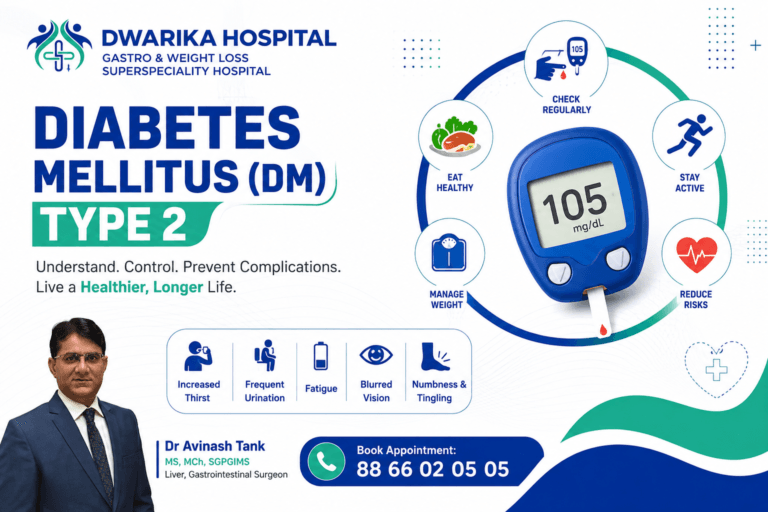 Diabetic
Type 2 Diabetes: What It Is, Why It Happens, and How to Control It
Diabetic
Type 2 Diabetes: What It Is, Why It Happens, and How to Control It
Type 2 Diabetes: What It Is, Why It Happens, and How to Control It Dr. Avinash Tank, MS, …
Read article → Obesity
Why Many Indians Look Slim but Have Dangerous Hidden Fat
Obesity
Why Many Indians Look Slim but Have Dangerous Hidden Fat
Thin-Fat Indian Obesity Phenotype: Why Many Indians Look Slim but Have Dangerous Hidden F…
Read article →Related patient videos
 DWARIKA HOSPITALVerified Patient Story
Verified
DWARIKA HOSPITALVerified Patient Story
Verified  DWARIKA HOSPITALVerified Patient Story
Verified
DWARIKA HOSPITALVerified Patient Story
Verified  DWARIKA HOSPITALVerified Patient Story
Verified
DWARIKA HOSPITALVerified Patient Story
Verified 
Super-specialist GI, bariatric & cancer surgeon. SGPGIMS (India's premier GI centre) + advanced training in Japan & South Korea. Read full profile →
Last reviewed: July 2026
Comments
Be the first to share your thoughts on this article.