

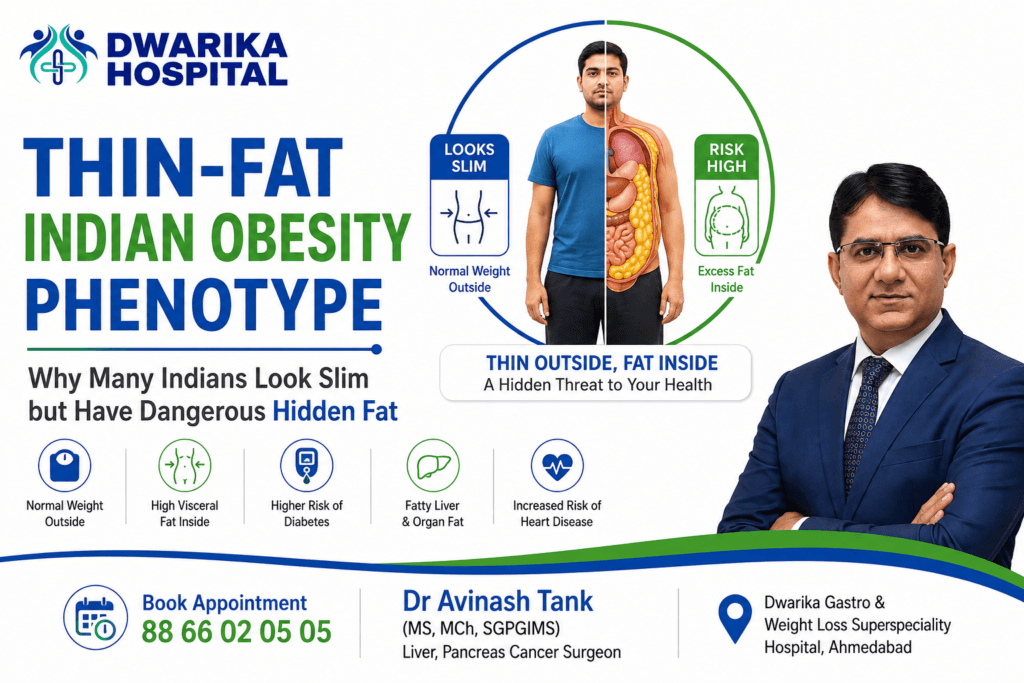
Thin-Fat Indian Obesity Phenotype: Why Many Indians Look Slim but Have Dangerous Hidden Fat
Author: Dr. Avinash Tank (MS, MCh, SGPGIMS)
Liver, Gastrointestinal & Obesity Surgeon
Dwarika Gastro & Weight Loss Superspeciality Hospital, Ahmedabad
Thin Outside, Fat Inside: The Hidden Obesity Epidemic in Indians
When most people think about obesity, they imagine someone who is visibly overweight.
But in India, obesity often looks very different.
Many Indians appear slim, normal, or only slightly overweight, yet they carry a dangerous amount of fat around their internal organs. This hidden fat increases the risk of diabetes, fatty liver, heart disease, high blood pressure, infertility, and even certain cancers.
Doctors call this the Thin-Fat Indian Phenotype or TOFI (Thin Outside, Fat Inside).
It explains why many Indians develop diabetes at a much younger age and at much lower body weight than people in Western countries.
What Is the Thin-Fat Indian Phenotype?
The Thin-Fat Indian Phenotype describes people who:
- Look thin or have a normal body weight
- Have relatively low muscle mass
- Store excessive fat inside the abdomen
- Have high body fat percentage despite normal BMI
- Develop metabolic diseases early
In simple words,
Your weight may look normal, but your body composition is unhealthy.
This hidden fat is far more dangerous than the fat visible under the skin.
Why Is It Called “Thin-Fat”?
Imagine two people who both weigh 65 kg.
Person A
- Strong muscles
- Low body fat
- Active lifestyle
- Healthy metabolism
Person B
- Less muscle
- More hidden abdominal fat
- Sedentary lifestyle
- High insulin resistance
Both weigh the same.
Both have the same BMI.
But Person B has a much higher risk of developing diabetes and heart disease.
This is the Thin-Fat Indian Phenotype.
Why Are Indians More Prone to This Condition?
Researchers have shown that South Asians have unique body characteristics compared with Europeans.
Indians generally have:
- More body fat
- Less muscle mass
- Smaller muscle size
- Greater abdominal fat
- Higher liver fat
- Greater pancreatic fat
- Higher insulin resistance
This means that Indians develop metabolic diseases at much lower body weights.
For example,
An American may develop diabetes with a BMI of 32–35.
An Indian may develop diabetes at a BMI of only 23–25.
The Body Fat You Cannot See Is the Most Dangerous
There are two major types of body fat.
1. Subcutaneous Fat
This fat lies under the skin.
Examples include:
- Fat on the arms
- Fat on the thighs
- Fat around the hips
Although excessive amounts are unhealthy, this fat is generally less harmful.
2. Visceral Fat
Visceral fat surrounds important organs such as:
- Liver
- Pancreas
- Intestines
- Kidneys
- Heart
This fat behaves like an active hormone-producing organ.
It releases inflammatory chemicals that damage the body.
Visceral fat is responsible for:
- Diabetes
- Fatty liver
- High cholesterol
- High blood pressure
- Heart attack
- Stroke
Most Thin-Fat Indians have excessive visceral fat.
Why BMI Alone Can Be Misleading
BMI (Body Mass Index) is calculated using height and weight.
Although useful for population studies, BMI cannot tell:
- How much fat you have
- Where the fat is located
- How much muscle you have
Two people with the same BMI may have completely different health risks.
That is why many Indians with a “normal BMI” still develop obesity-related diseases.
What Makes Indians Different?
Several factors contribute.
1. Lower Muscle Mass
Muscle burns calories continuously.
Most Indians naturally have less muscle than Western populations.
Less muscle means:
- Lower calorie burning
- Easier fat accumulation
- Increased insulin resistance
2. More Belly Fat
Even with normal weight, Indians tend to store fat around the abdomen.
This increases metabolic risk.
3. Fat Accumulates in Organs
Instead of storing fat safely under the skin, Indians often store fat inside organs.
Examples include:
Fat accumulates inside liver cells.
Fatty Pancreas
Fat damages insulin-producing cells.
Fat Around the Heart
Increases cardiovascular risk.
4. Early Insulin Resistance
Insulin helps move sugar from the blood into cells.
In many Indians, cells stop responding properly to insulin.
This condition is called insulin resistance.
The pancreas initially produces more insulin to compensate, but over time it cannot keep up.
Blood sugar rises, leading to prediabetes and eventually type 2 diabetes.
Why Does This Happen?
Scientists believe several factors contribute.
Genetics
South Asians have inherited genes that favor fat storage and efficient energy conservation.
Poor Nutrition During Pregnancy
If a baby receives inadequate nutrition before birth, the body adapts to conserve energy.
Later in life, when exposed to calorie-rich diets, this “thrifty” metabolism can promote fat accumulation and diabetes.
Childhood Undernutrition Followed by Adult Overnutrition
Many people experience poor nutrition in early life and excess calories later.
This mismatch increases metabolic risk.
Sedentary Lifestyle
Desk jobs, prolonged sitting, and reduced physical activity decrease muscle mass and encourage fat gain.
Refined Carbohydrate-Rich Diet
Many Indian meals contain large amounts of:
- White rice
- Refined wheat flour
- Sugary beverages
- Sweets
- Fried snacks
These foods can promote insulin resistance and visceral fat when consumed in excess.
Common Signs of the Thin-Fat Indian Phenotype
Many people have no symptoms initially.
Possible clues include:
- Normal weight but increasing waist size
- Fatty liver on ultrasound
- High triglycerides
- Low HDL (“good”) cholesterol
- Prediabetes
- Type 2 diabetes
- High blood pressure
- Fatigue
- Low muscle strength
- Difficulty losing belly fat
Are You at Risk?
You may be at higher risk if you:
- Have a family history of diabetes
- Have a waistline that is increasing despite stable weight
- Have fatty liver
- Have polycystic ovary syndrome (PCOS)
- Have gestational diabetes
- Have high triglycerides
- Spend most of the day sitting
- Exercise very little
Waist Size Matters More Than You Think
For Indians, waist circumference is a simple indicator of hidden abdominal fat.
A higher-risk waist circumference is generally:
- Men: More than 90 cm (35 inches)
- Women: More than 80 cm (31.5 inches)
Even if your BMI is normal, a larger waist may indicate excess visceral fat.
Better Ways to Measure Body Fat
Doctors may use:
- Waist circumference
- Waist-to-height ratio
- Body fat percentage analysis (BIA or DEXA)
- DEXA scan for body composition
- MRI or CT scan (mainly for research or selected clinical situations)
These methods provide more information than BMI alone.
Diseases Linked to the Thin-Fat Indian Phenotype
Hidden abdominal fat can increase the risk of:
- Type 2 diabetes
- Prediabetes
- Metabolic syndrome
- Fatty liver disease (MASLD)
- High blood pressure
- Heart attack
- Stroke
- Sleep apnea
- Polycystic ovary syndrome (PCOS)
- Infertility
- Chronic kidney disease
- Some cancers
Can Thin People Have Fatty Liver?
Yes.
This condition is often called lean fatty liver.
Many Indians with a normal BMI develop fatty liver because of excess visceral fat and insulin resistance rather than overall body weight.
Can You Reverse the Thin-Fat Phenotype?
Yes, in many cases.
The goal is not simply to lose weight.
The goal is to:
- Reduce visceral fat
- Increase muscle mass
- Improve insulin sensitivity
- Restore metabolic health
How to Improve Body Composition
1. Build Muscle
Strength training is one of the most effective ways to improve body composition.
Aim for resistance exercises at least 2–3 times per week.
2. Increase Daily Activity
Walk more.
Use stairs.
Avoid prolonged sitting.
Regular movement throughout the day supports metabolic health.
3. Eat Enough High-Quality Protein
Adequate protein helps preserve and build muscle.
Good sources include:
- Lentils and legumes
- Dairy products
- Eggs
- Fish
- Chicken
- Soy foods
- Nuts and seeds (in moderation)
4. Reduce Refined Carbohydrates
Limit:
- Sugary drinks
- White bread
- Refined flour products
- Sweets
- Ultra-processed foods
Choose whole grains, vegetables, fruits, and fiber-rich foods instead.
5. Improve Sleep
Poor sleep can increase hunger hormones, insulin resistance, and belly fat.
Aim for 7–9 hours of quality sleep each night.
6. Manage Stress
Long-term stress increases cortisol levels, which may encourage abdominal fat accumulation in some people.
Stress-management techniques such as mindfulness, yoga, or relaxation exercises can help.
Do Weight-Loss Medicines Help?
For people with obesity or obesity-related complications, medications such as GLP-1 receptor agonists or dual incretin therapies may reduce body weight and visceral fat when prescribed by a qualified doctor.
However, medicines work best when combined with healthy eating, regular physical activity, and strength training.
They are not recommended solely because someone appears “thin-fat” without a proper medical assessment.
When Is Bariatric or Metabolic Surgery Considered?
For people with significant obesity and related diseases, metabolic surgery may be considered according to established medical guidelines.
It is generally not recommended for individuals who simply have a normal BMI with hidden visceral fat.
A specialist evaluation is needed to determine the most appropriate treatment.
Frequently Asked Questions (FAQs)
Can a slim person have diabetes?
Yes. Many Indians develop type 2 diabetes despite appearing slim because of excess visceral fat and insulin resistance.
Is belly fat more dangerous than fat on the hips?
Yes. Visceral fat around internal organs is more strongly associated with diabetes, heart disease, and fatty liver than fat stored under the skin.
Is BMI enough to assess obesity?
No. BMI is useful for screening but does not measure body fat, muscle mass, or fat distribution.
Can strength training reduce hidden fat?
Yes. Resistance training helps increase muscle mass, improve insulin sensitivity, and reduce visceral fat when combined with healthy nutrition.
Should Indians be screened earlier for diabetes?
Yes. Because South Asians are at higher metabolic risk even at lower BMI, earlier screening is often appropriate, especially if there is a family history, central obesity, or other risk factors.
Key Takeaways
- Many Indians have hidden obesity despite a normal body weight.
- The Thin-Fat Indian Phenotype is characterized by low muscle mass and high visceral fat.
- BMI alone may miss people at high metabolic risk.
- Waist circumference and body composition provide additional useful information.
- Building muscle, reducing visceral fat, eating a balanced diet, staying active, and getting adequate sleep can significantly improve metabolic health.
- Early detection and lifestyle changes can help prevent diabetes, fatty liver, heart disease, and other obesity-related conditions.
When Should You Consult an Obesity Specialist?
You should consider a medical evaluation if you:
- Have increasing waist size despite normal weight
- Have fatty liver or prediabetes
- Have a family history of diabetes or heart disease
- Have PCOS or metabolic syndrome
- Struggle to lose abdominal fat despite lifestyle changes
A comprehensive assessment—including body composition, metabolic health, and lifestyle factors—can help identify hidden obesity and guide an individualized treatment plan.
Was this article helpful?
Super-specialist GI, bariatric & cancer surgeon. SGPGIMS (India's premier GI centre) + advanced training in Japan & South Korea. Read full profile →
Last reviewed: July 2026






Comments
Be the first to share your thoughts on this article.