

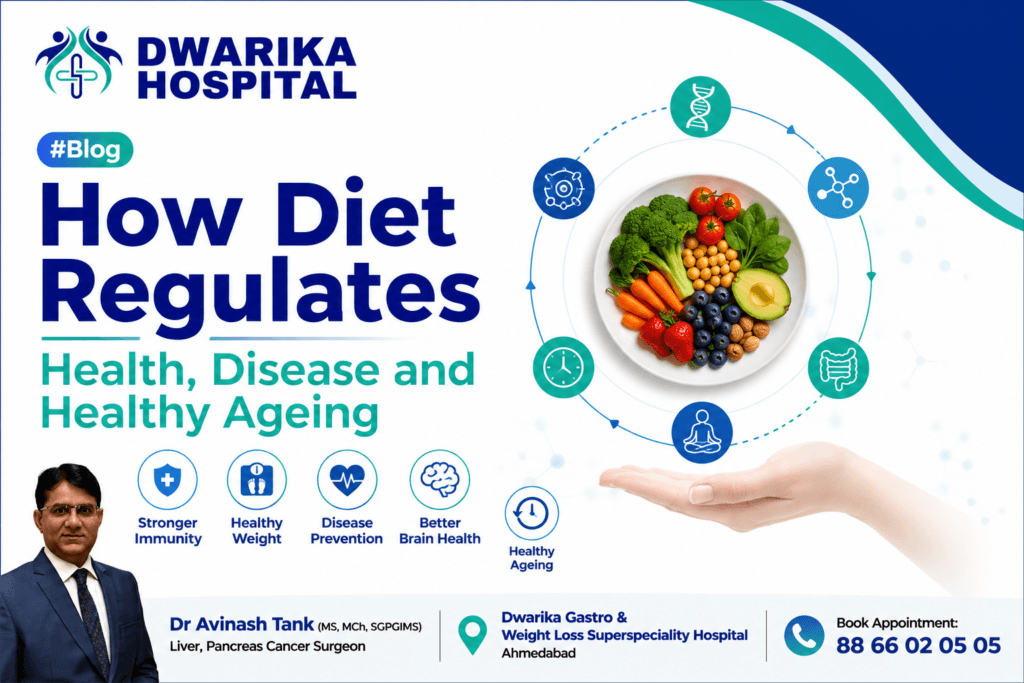
How Diet Regulates Health, Disease and Healthy Ageing: The Science of Food
Evidence-based insights from modern nutritional science
Introduction
For centuries, people have believed that food influences health. Today, modern science confirms that this relationship is far more profound than previously imagined.
Food is not simply a source of calories—it is biological information. Every meal delivers nutrients that communicate with your cells, influencing how they produce energy, repair damage, fight infections, regulate hormones, and age over time. These nutritional signals affect nearly every organ in the body, from the brain and heart to the liver, muscles, immune system, and gut.
Research over the past several decades has shown that dietary patterns can influence the risk of obesity, diabetes, heart disease, cancer, neurodegenerative disorders, and many other chronic illnesses. More importantly, scientists are discovering that certain eating patterns may improve healthspan—the number of years a person remains healthy and free from disease—rather than simply increasing lifespan.
At the same time, there is no single diet that works equally well for everyone. Age, genetics, lifestyle, existing medical conditions, and even the gut microbiome determine how an individual responds to different foods. This has given rise to the concept of precision nutrition, where dietary recommendations are tailored to each person’s unique biology.
Food Is More Than Fuel
Most people think of food as the body’s fuel, much like petrol powers a car.
In reality, food serves two equally important functions.
First, it provides energy for daily activities and essential body functions.
Second—and perhaps even more importantly—it acts as a powerful biological messenger.
Every nutrient consumed sends signals that tell cells whether they should:
- Grow and divide
- Store or burn fat
- Produce energy
- Repair damaged tissues
- Build proteins
- Activate immune responses
- Reduce inflammation
- Remove damaged cell components
- Protect against disease
- Slow or accelerate the ageing process
Your body continuously interprets these nutritional messages and adjusts thousands of cellular activities accordingly. This explains why long-term eating habits influence health far beyond body weight.
Why Modern Eating Habits Affect Our Health
Human biology evolved over thousands of years when food availability was unpredictable.
Our ancestors naturally experienced periods of eating and periods of fasting. Their diets consisted mainly of natural foods that contained fewer refined sugars, less salt, and minimal processing.
Modern lifestyles are very different.
Today, food is available 24 hours a day. Highly processed meals rich in sugar, unhealthy fats, refined carbohydrates, and excess calories have become common. Frequent snacking and prolonged eating hours keep the body’s nutrient-sensing pathways constantly activated.
Over time, this continuous exposure to excess nutrition can disrupt normal metabolism and increase the risk of obesity, type 2 diabetes, fatty liver disease, cardiovascular disease, and several other chronic conditions.
Your Cells Constantly Listen to What You Eat
Every cell in your body contains sophisticated molecular sensors that monitor nutrient availability.
These sensors determine whether the body is experiencing abundance or scarcity and adjust cellular behaviour accordingly.
Some pathways encourage growth and reproduction when nutrients are plentiful.
Others activate repair, recycling, stress resistance, and energy conservation during periods of reduced food intake.
The balance between these systems plays a major role in determining long-term health and healthy ageing.
The Four Master Controllers of Healthy Ageing
Scientists have identified several key biological pathways that respond directly to nutrition. Together, these pathways function like the body’s central control system.
1. mTOR – The Growth Controller
The mTOR pathway acts like a construction manager inside the body.
When nutrients—especially proteins and amino acids—are abundant, mTOR encourages cells to:
- Grow
- Produce proteins
- Build new tissues
- Divide and multiply
These processes are essential during childhood, pregnancy, wound healing, and tissue repair.
However, when mTOR remains constantly active because of continuous overnutrition, cells spend less time repairing themselves and more time growing. This imbalance has been linked with accelerated ageing and several chronic diseases.
Periods of reduced nutrient intake naturally decrease mTOR activity, allowing cells to shift from growth toward maintenance and repair.
2. AMPK – The Energy Sensor
If mTOR represents abundance, AMPK represents scarcity.
AMPK functions as the body’s internal fuel gauge.
Whenever energy levels fall—during fasting, prolonged exercise, or calorie restriction—AMPK switches on.
Once activated, it instructs cells to:
- Burn stored fat for energy
- Improve glucose utilization
- Produce more cellular energy
- Reduce unnecessary energy consumption
- Enhance stress resistance
Instead of promoting growth, AMPK focuses on survival, efficiency, and repair.
Many healthy lifestyle interventions naturally activate this pathway.
3. FOXO – The Cellular Protection System
The FOXO family of proteins acts like an emergency response team.
When cells encounter stress, FOXO proteins activate genes responsible for:
- DNA repair
- Protection against oxidative damage
- Improved metabolism
- Cellular maintenance
- Stress resistance
Rather than encouraging rapid growth, FOXO helps cells survive challenging conditions and maintain normal function over time.
This protective response is believed to be one of the important biological mechanisms associated with healthy ageing.
4. Sirtuins and NAD+ – The Repair Machinery
Sirtuins are a family of proteins that help maintain cellular health.
They require a molecule called NAD+ to function effectively.
As people grow older, NAD+ levels gradually decline. This reduction may impair the body’s ability to repair DNA, maintain healthy mitochondria, and regulate metabolism.
Certain dietary interventions increase sirtuin activity and improve NAD+ availability, helping cells remain metabolically efficient and more resistant to stress. Scientists are also actively investigating NAD+-boosting compounds as potential strategies to support healthy ageing.
Autophagy: Your Body’s Natural Recycling System
One of the most remarkable repair mechanisms inside the body is autophagy, which literally means “self-eating.”
Although the name sounds alarming, autophagy is actually one of the body’s most important housekeeping processes.
During autophagy, cells identify damaged proteins, worn-out organelles, and dysfunctional components, break them down, and recycle their building blocks to create new healthy structures.
This process helps:
- Remove damaged cellular waste
- Maintain healthy mitochondria
- Improve cellular efficiency
- Support adaptation during periods of reduced food intake
Autophagy becomes more active when nutrients are limited, allowing cells to prioritize repair over growth.
Healthy Mitochondria Mean Healthy Cells
Mitochondria are often called the powerhouses of the cell because they produce most of the body’s energy.
Nutrition strongly influences how efficiently these tiny structures work.
Healthy dietary patterns help mitochondria:
- Produce energy more efficiently
- Generate fewer harmful free radicals
- Replace damaged mitochondria with healthier ones
- Maintain normal metabolic function
Since every organ depends on energy, improving mitochondrial health has widespread effects throughout the body.
The Gut Microbiome: Your Hidden Metabolic Organ
Trillions of bacteria live inside the human intestine.
Together, they form the gut microbiome, an ecosystem that influences digestion, immunity, metabolism, inflammation, and even brain health.
The foods we eat determine which bacteria thrive.
Diets rich in vegetables, fruits, legumes, and whole grains provide fibre that beneficial bacteria convert into short-chain fatty acids (SCFAs). These compounds support intestinal health, strengthen the immune system, and contribute to better metabolic function.
Conversely, diets high in highly processed foods and low in fibre may reduce microbial diversity and impair these beneficial functions.
In the next section, we will examine the major dietary patterns—including intermittent fasting, calorie restriction, ketogenic diets, Mediterranean diets, plant-based diets, high-fibre diets, and protein restriction—and explore the scientific evidence behind their potential health benefits and limitations.
Was this article helpful?

Super-specialist GI, bariatric & cancer surgeon. SGPGIMS (India's premier GI centre) + advanced training in Japan & South Korea. Read full profile →
Last reviewed: July 2026





Comments
Be the first to share your thoughts on this article.