

Reading Time: 4 minutes
Do Emulsifiers Damage Gut Health? Link Between Food Additives, Inflammation, IBS & Obesity. Modern diet has changed significantly in the last few decades.
People are eating more packaged food, bakery food, frozen food, and ready-to-eat food than ever before.
These foods often contain:
- Emulsifiers
- Stabilizers
- Preservatives
- Artificial flavors
- Modified starch
- INS numbers
Emulsifiers are one of the most commonly used food additives. They help in improving texture, shelf life, and appearance of food. However, recent research suggests that excessive intake of emulsifiers may affect gut health and metabolism.
Many patients suffering from acidity, bloating, IBS, obesity, or fatty liver frequently consume ultra-processed food containing emulsifiers.
In this article, we will discuss:
- What emulsifiers do inside the body
- How emulsifiers affect gut bacteria
- Link between emulsifiers and inflammation
- Role of processed food in IBS and obesity
- How to protect gut health
Understanding this topic can help people make better dietary choices and prevent many lifestyle diseases.
What Happens in Gut When We Eat Food
Human intestine contains trillions of bacteria called the gut microbiome.
These bacteria help in:
- Digestion
- Immunity
- Vitamin production
- Metabolism
- Protection from infection
Healthy gut bacteria maintain balance in the body.
When diet contains too much processed food, this balance may get disturbed.
This disturbance is called gut dysbiosis.
Gut dysbiosis is linked with:
- IBS
- Obesity
- Diabetes
- Fatty liver
- Autoimmune diseases
- Inflammation
Emulsifiers may play a role in this imbalance.
What Are Emulsifiers and Why They May Affect Gut
Emulsifiers are chemicals added to food to mix fat and water.
Common emulsifiers:
- INS 471 (Mono-diglycerides)
- INS 322 (Lecithin)
- INS 407 (Carrageenan)
- INS 466 (Carboxymethyl cellulose)
- INS 415 (Xanthan gum)
- INS 1422 (Modified starch)
These substances are safe in small amounts, but regular intake through ultra-processed food may affect gut lining.
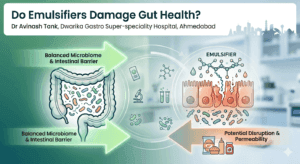
Some studies suggest that certain emulsifiers can:
- Change gut bacteria
- Damage mucus layer of intestine
- Increase inflammation
- Increase intestinal permeability
This condition is sometimes called leaky gut.
Emulsifiers and Gut Microbiome
The gut microbiome is very sensitive to diet.
Natural diet supports good bacteria.
Ultra-processed food may promote harmful bacteria.
Research shows that some emulsifiers can alter microbiome.
Possible effects:
- Reduced good bacteria
- Increased harmful bacteria
- Increased inflammation
- Poor digestion
When gut bacteria change, symptoms may appear:
- Gas
- Bloating
- Constipation
- Loose motion
- Abdominal pain
People with IBS are more sensitive.
Emulsifiers and Inflammation
Chronic inflammation is a major cause of modern diseases.
Inflammation is linked to:
- Obesity
- Diabetes
- Heart disease
- Fatty liver
- Arthritis
- IBS
Some food additives may increase inflammation indirectly.
Possible mechanism:
- Change in gut bacteria
- Damage to intestinal lining
- Increased immune response
- Chronic low-grade inflammation
Common additives studied:
- Carrageenan (INS 407)
- CMC (INS 466)
- Polysorbates
- Modified starch
Not every person is affected, but frequent intake increases risk.
Emulsifiers and IBS (Irritable Bowel Syndrome)
Many IBS patients complain that packaged food worsens symptoms.
Common symptoms:
- Bloating
- Abdominal pain
- Gas
- Loose motion
- Constipation
Possible reasons:
- Artificial additives
- High sugar
- Low fiber
- Emulsifiers
- Preservatives
Gut becomes sensitive in IBS.
Reducing processed food often improves symptoms.
Diet advice for IBS:
- Eat fresh food
- Avoid daily biscuits
- Limit bakery items
- Avoid frequent ice cream
- Reduce packaged snacks
Simple diet works better than complicated medicines.
Emulsifiers and Obesity
Obesity is increasing worldwide.
One major reason is ultra-processed food.
Processed food contains:
- Sugar
- Refined flour
- Fat
- Emulsifiers
- Flavor enhancers
Emulsifiers themselves do not cause obesity, but foods containing emulsifiers are high in calories.
Frequent intake leads to:
- Overeating
- Increased appetite
- Poor satiety
- Weight gain
Some research suggests gut microbiome changes may also affect metabolism.
People eating natural food have lower obesity risk.
Emulsifiers and Fatty Liver
Fatty liver is very common today.
Risk factors:
- High sugar
- Processed food
- Fast food
- Soft drinks
- Bakery food
These foods contain emulsifiers and additives.
Possible effects:
- Increased fat deposition
- Insulin resistance
- Inflammation
- Liver damage
Reducing processed food is important for fatty liver treatment.
Emulsifiers and Children Health
Children eat more processed food than adults.
Common foods:
- Biscuits
- Chocolate
- Ice cream
- Chips
- Packaged snacks
These foods contain multiple additives.
Possible problems:
- Obesity
- Poor digestion
- Hyperactivity
- Weak immunity
- Dental problems
Children should eat more natural food.
Parents should read food labels.
Which Emulsifiers Are More Controversial
Some emulsifiers are more studied for possible side effects.
Examples:
INS 407 – Carrageenan
INS 466 – CMC
INS 1422 – Modified starch
INS 471 – excess intake
Polysorbates
These are not banned, but should not be consumed daily.
Occasional intake is safe.
Daily intake may not be healthy.
How to Protect Gut Health
Simple rules:
Eat fresh food
Cook at home
Avoid daily biscuits
Limit bakery bread
Limit ice cream
Limit chocolate
Avoid daily packaged snacks
Eat fruits and vegetables
Eat fiber rich food
Drink enough water
Traditional diet supports gut health.
When You Should Be More Careful
People with these conditions should limit processed food:
- IBS
- Acidity
- Bloating
- Obesity
- Diabetes
- Fatty liver
- Children
- Elderly
Diet plays major role in treatment.
Conclusion
Emulsifiers are widely used in modern food to improve texture and shelf life.
Most emulsifiers are safe in small amounts, but frequent intake of ultra-processed food may affect gut microbiome, increase inflammation, and contribute to obesity, IBS, and fatty liver.
Healthy lifestyle does not require fear of food additives, but awareness.
The best way to protect gut health is:
Eat natural food
Limit processed food
Read labels
Avoid daily additives
Follow traditional diet
In next article:
How to Read Food Labels: Understanding INS Numbers, Emulsifiers & Hidden Additives