

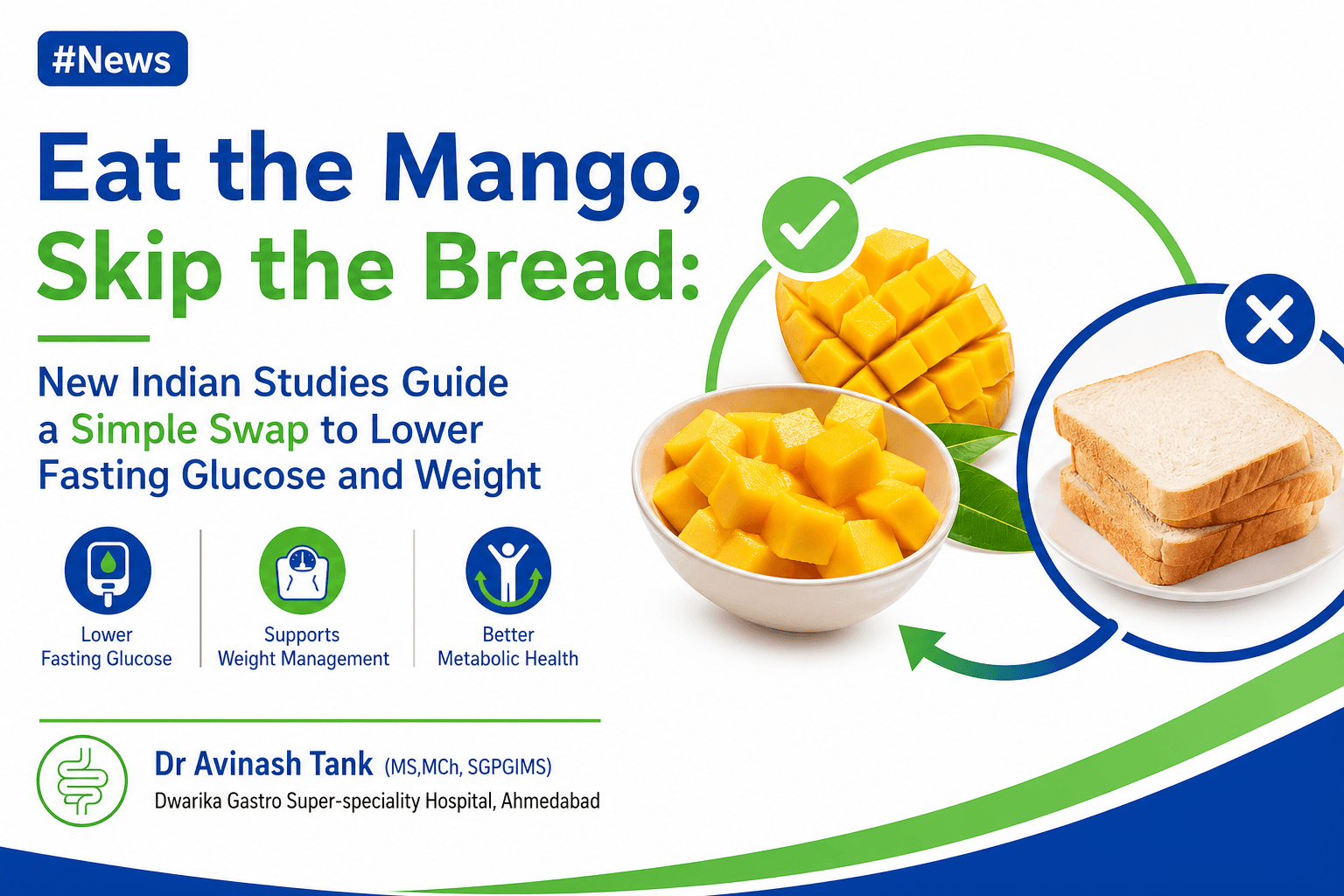
Eat the Mango, Skip the Bread: New Indian Studies Suggest a Simple Swap May Lower Fasting Glucose and Weight
For years, people living with Type 2 diabetes have often been told to avoid mangoes because of their sweetness.
The fruit, despite being rich in nutrients, was commonly placed in the “high sugar” category and excluded from diabetic meal plans. Bread, toast, biscuits, and processed breakfast items were often considered more practical or safer choices.
Now, fresh scientific evidence from India is challenging that belief.
Two new Indian studies suggest that when mango is used as a replacement for refined carbohydrates such as white bread—not added on top of them—it may help improve fasting blood sugar, insulin resistance, and even body measurements.
This is not a message to overeat mangoes. Instead, it introduces a smarter dietary strategy:
Eat the mango, skip the bread.
Why This Research Matters
India is often called the diabetes capital of the world, with millions of people living with prediabetes and Type 2 diabetes. At the same time, mango is India’s most loved seasonal fruit.
Until now, many patients faced a painful question:
Can I eat mango if I have diabetes?
Doctors often answered cautiously because mango contains natural sugars. But modern nutrition science now focuses less on fear of single foods and more on what one food replaces in the diet.
Replacing white bread with mango may be metabolically very different from eating mango alongside bread.
That distinction is at the heart of these new studies.
The New Indian Research: What Was Studied?
Researchers in India conducted two important studies in 2025 involving common Indian mango varieties such as:
- Safeda
- Dasheri
- Langra
These studies explored how mango affects blood sugar when compared with refined carbohydrate foods like white bread.
The key question:
Does mango raise blood sugar more than bread—or can it actually perform better when used wisely?
Study 1: Real-Time Glucose Tracking with Continuous Glucose Monitoring (CGM)
The first study involved approximately 95 participants and used Continuous Glucose Monitoring (CGM) devices.
CGM measures glucose levels throughout the day and night, showing not only fasting sugar but also:
- Meal spikes
- Sugar crashes
- Daily fluctuations
- Overall glucose stability
Lead Experts and Author Comments
Dr. Anoop Misra
“We need to judge foods not merely by sweetness, but by their total metabolic response. Whole fruits behave differently from refined carbohydrates.”
Dr. Sugandha Kehar
“The substitution model is practical for Indian households. Replacing refined breakfast starches with measured fruit portions may improve adherence.”
What They Found
Compared with white bread, mango produced:
- Lower glucose variability
- Smaller spikes in many participants
- Better satiety
- More stable glucose curves
This is significant because frequent sugar spikes and crashes can worsen long-term diabetes complications.
Study 2: The 8-Week Randomized Controlled Trial
The second and more structured study followed 35 adults with Type 2 diabetes over 8 weeks.
Participants replaced part of their usual refined carbohydrate intake with approximately:
250 grams of mango daily
This amount is roughly:
- One small mango
or - One cup to one and a half cups sliced mango depending on variety
Importantly:
Mango was used as a substitute, not an extra dessert.
That means calories remained controlled.
The Main Results: Lower Fasting Glucose
One of the most exciting findings was a reduction in Fasting Plasma Glucose (FPG).
Reported reductions ranged approximately:
26.9 mg/dL to 36.1 mg/dL
That is clinically meaningful for many patients.
Lower fasting glucose often reflects:
- Better overnight sugar control
- Improved insulin sensitivity
- Better liver glucose regulation
HbA1c Also Improved
HbA1c reflects average blood sugar over the previous 2–3 months.
The study reported reductions of:
0.2% to 0.6%
For perspective:
Even a 0.5% drop in HbA1c can be valuable when combined with lifestyle treatment.
Why Might Mango Help?
Many people assume sugar content alone determines whether a food is healthy. That is outdated thinking.
Whole mango contains:
- Fiber
- Water
- Vitamin C
- Vitamin A precursors
- Potassium
- Polyphenols
- Antioxidants
One compound receiving attention is:
Mangiferin
Mangiferin is a plant bioactive compound found in mango that may support:
- Insulin sensitivity
- Reduced inflammation
- Better glucose metabolism
Improvement in Insulin Resistance
Researchers also measured HOMA-IR, a marker of insulin resistance.
Reported improvements ranged:
1.2 to 1.7 points lower
This suggests the body may respond better to insulin after the substitution strategy.
That matters because insulin resistance is one of the root causes of Type 2 diabetes.
Waistline and Weight Benefits
Many people worry fruit causes weight gain.
But this study found:
- Reduced waist circumference
- Improved skinfold measurements
- No major weight gain when calories were controlled
Why?
Likely because mango can be more satisfying than white bread or processed snacks, reducing overeating later.
Why Bread May Perform Worse Than Expected
White bread is rapidly digested starch.
It can lead to:
- Quick glucose rise
- Higher insulin demand
- Faster hunger return
- More cravings later
Mango, despite sweetness, comes in a natural food matrix with fiber and water.
This slows digestion.
So the question is not:
“Is mango sweet?”
The better question is:
“Is mango better than refined bread?”
These studies suggest that in controlled portions, often yes.
The Golden Rule: Portion Control
Experts strongly warn against misreading this news.
This does not mean unlimited mangoes are safe.
Practical Safe Portion Used in Research:
Around 250 grams daily
That means:
- Replace bread with mango
- Do not add mango after a heavy meal
- Do not combine with sweets, juice, and excess carbs
How to Use This in Real Life
Breakfast Swap Example
Instead of:
- 3 slices white bread + jam
Try:
- Measured bowl of mango + protein source (curd / Greek yogurt / nuts / boiled eggs)
Evening Snack Swap
Instead of:
- Biscuits + tea
Try:
- Sliced mango + handful roasted chana
Dessert Swap
Instead of:
- Ice cream
Try:
- Chilled fresh mango portion
Who Should Still Be Careful?
Even with positive findings, some people need monitoring:
- Poorly controlled diabetes
- Very high HbA1c
- On insulin therapy
- Frequent hypoglycemia
- Kidney disease with dietary restrictions
- Severe obesity with calorie targets
Always individualize.
What Experts Recommend
Dr. Anoop Misra
“Traditional fruits need not be feared when scientifically portioned and incorporated into balanced diets.”
Dr. Sugandha Kehar
“Substitution is the key message. Replacing refined starches is very different from adding extra sugar calories.”
What This Means for India
This research is culturally important.
Instead of forcing patients to reject beloved seasonal foods, doctors may now discuss:
- Portion awareness
- Meal replacement strategies
- Glucose monitoring
- Sustainable eating habits
That improves long-term compliance.
Because diets people enjoy are easier to follow.
A Smarter Future for Diabetes Nutrition
Old rule:
Avoid sweet fruits.
New rule:
Choose wisely, portion wisely, replace wisely.
That is a far more modern approach.
Final Verdict
Can people with Type 2 diabetes eat mango?
According to these new Indian studies:
Yes—when eaten in measured portions and used to replace refined carbs like bread.
So this mango season, the smarter strategy may be:
Eat the mango, skip the bread.
SEO Keywords
Primary Keyword: Type 2 Diabetes Management
Secondary Keywords: