

Reading Time: 6 minutes
Head Ring for Safety During Surgery: A Complete Guide to Patient Positioning, Pressure Prevention & Better Surgical Outcomes
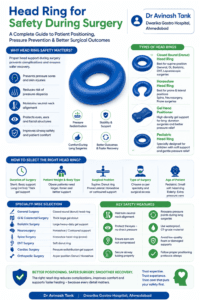
Surgery is not only about the skill of the surgeon or the precision of anesthesia. One of the most overlooked yet critically important aspects of safe surgery is proper patient positioning. Among all positioning aids used in the operation theatre (OT), the head ring plays a major role in protecting the patient’s head, neck, eyes, ears, scalp, and airway during surgery.
Whether a patient undergoes a short laparoscopic procedure or a prolonged liver, colorectal, bariatric, spine, or neurosurgical operation, improper head support can lead to complications such as:
- Pressure sores
- Postoperative headache
- Neck strain
- Facial edema
- Hair loss (pressure alopecia)
- Ear injury
- Eye pressure injuries
- Nerve compression
- Airway tube displacement
Modern OT safety protocols now emphasize the use of medical-grade gel head rings and positioning devices to improve surgical safety and patient recovery.
In this article, we will discuss:
- What is a surgical head ring?
- Why is head ring safety important?
- Types of head rings used in operation theatres
- How to select the correct head ring
- Specialty-wise selection criteria
- Common mistakes to avoid
- Safety protocols during anesthesia and surgery
What Is a Surgical Head Ring?
A surgical head ring is a specially designed positioning support device used during anesthesia and surgery to stabilize and protect the patient’s head.
It is commonly made from:
- Medical-grade silicone gel
- Polymer gel
- Memory foam
- Radiolucent OT-grade material
The main purpose of the head ring is to:
- Maintain neutral neck alignment
- Prevent excessive pressure on the scalp and occiput
- Improve comfort during prolonged surgeries
- Protect delicate structures such as ears and eyes
- Reduce pressure injuries
Head rings are used in:
- General surgery
- GI surgery
- Bariatric surgery
- Neurosurgery
- Orthopedic surgery
- ENT surgery
- Cardiac surgery
- Spine surgery
- Pediatric surgery
Why Is Head Ring Safety Important During Surgery?
During anesthesia, the patient cannot voluntarily adjust head position or respond to discomfort. Continuous pressure over one area for several hours can reduce blood circulation and damage tissues.
Potential Complications of Poor Head Positioning
1. Pressure Sores
Continuous pressure over the occipital scalp may lead to skin breakdown and ulcers.
2. Pressure Alopecia
Prolonged compression can temporarily or permanently damage hair follicles.
3. Neck Strain
Improper alignment may cause postoperative neck pain and stiffness.
4. Eye Injuries
Incorrect positioning in prone surgery can increase pressure on the eyes.
5. Ear Cartilage Damage
Improper support may compress the ears for long durations.
6. Nerve Compression
Occipital and cervical nerve compression can result in numbness or pain.
7. Airway Complications
Incorrect head positioning may kink or displace the endotracheal tube.
This is why modern operation theatres increasingly use gel-based pressure redistribution head rings instead of ordinary foam or cotton supports.
Types of Head Rings Used During Surgery
Different surgeries require different head positioning systems. Choosing the correct design improves safety and surgical efficiency.
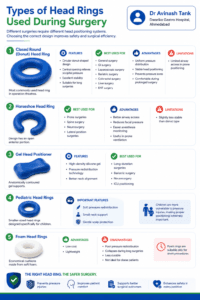
1. Closed Round (Donut) Head Ring
This is the most commonly used head ring in operation theatres.
Features
- Circular donut-shaped design
- Central opening relieves occipital pressure
- Excellent stability
- Suitable for long surgeries
Best Used For
- General surgery
- GI surgery
- Laparoscopic surgery
- Bariatric surgery
- Colorectal surgery
- Liver surgery
- ENT surgery
Advantages
- Uniform pressure distribution
- Stable head positioning
- Prevents pressure sores
- Comfortable during prolonged surgery
Limitations
- Limited airway access in prone positioning
2. Horseshoe Head Ring
This design has an open anterior portion.
Best Used For
- Prone surgeries
- Spine surgery
- Neurosurgery
- Lateral position surgeries
Advantages
- Better airway access
- Reduces facial pressure
- Easier anesthesia monitoring
- Useful in prone ventilation
Limitations
- Slightly less stable than donut type
3. Gel Head Positioner
These are anatomically contoured gel supports.
Features
- High-density silicone gel
- Pressure redistribution technology
- Better neck alignment
Best Used For
- Long-duration surgeries
- Bariatric surgery
- Neurosurgery
- ICU positioning
4. Pediatric Head Rings
Smaller-sized head rings designed specifically for children.
Important Features
- Soft pressure redistribution
- Small neck support
- Gentle scalp protection
Children are more vulnerable to pressure injuries, making proper positioning extremely important.
5. Foam Head Rings
These are economical cushions made from soft foam.
Advantages
- Low cost
- Lightweight
Disadvantages
- Poor pressure redistribution
- Collapses during long surgeries
- Less durable
- Not ideal for obese patients
Foam rings are suitable only for short procedures.
How to Select the Correct Head Ring?
Choosing the right head ring depends on multiple factors.
1. Duration of Surgery
Short Surgeries (<1 Hour)
- Standard foam or basic gel ring may suffice
Moderate Surgeries (1–4 Hours)
- Medium-density gel ring recommended
Long Surgeries (>4 Hours)
- Thick medical-grade gel head ring strongly recommended
Long surgeries increase the risk of pressure injury.
2. Surgical Position
Supine Position
Best option:
- Closed donut gel ring
Prone Position
Best option:
- Horseshoe head ring
Lateral Position
Best option:
- Contoured gel support
3. Patient Weight
Obese and bariatric patients require:
- Larger diameter head rings
- Thicker gel support
- Better neck neutrality
Thin foam cushions may collapse under heavy weight.
4. Age of Patient
Pediatric Patients
- Small soft head ring
Elderly Patients
- Pressure-relieving gel support
- Extra care for fragile skin
5. Type of Surgery
Different specialties require different positioning systems.
Specialty-Wise Selection Criteria for Head Rings
General Surgery
Recommended Head Ring
- Standard closed gel donut ring
Why?
Provides excellent stability and comfort during routine surgeries.
GI & Colorectal Surgery
Recommended Head Ring
- Thick large gel donut
Why?
Many GI surgeries are prolonged laparoscopic procedures requiring stable airway positioning and pressure protection.
Bariatric Surgery
Recommended Head Ring
- Large heavy-duty gel support
Why?
Obese patients have:
- Increased pressure load
- Difficult airway concerns
- Higher risk of pressure injury
Specialized positioning improves safety.
Neurosurgery
Recommended Head Ring
- Horseshoe support
- Contoured gel positioners
Why?
Requires:
- Precise head alignment
- Pressure prevention
- Better surgical exposure
Spine Surgery
Recommended Head Ring
- Horseshoe prone support
Why?
Protects:
- Eyes
- Face
- Airway
during prone positioning.
ENT Surgery
Recommended Head Ring
- Soft donut ring
Why?
Maintains neutral alignment while providing surgical access.
Cardiac Surgery
Recommended Head Ring
- Pressure redistribution gel support
Why?
Cardiac procedures are often prolonged and require excellent head stabilization.
Orthopedic Surgery
Recommended Head Ring
Depends on position:
- Supine → donut ring
- Lateral/prone → horseshoe ring
Key Safety Measures While Using Head Rings
1. Maintain Neutral Neck Alignment
Avoid:
- Excessive neck flexion
- Hyperextension
- Rotation
Improper alignment can compromise airway and blood flow.
2. Protect the Eyes
Especially important during:
- Prone surgery
- Long-duration procedures
Ensure:
- No direct pressure on eyes
- Adequate padding
3. Check Ear Position
Ears should not fold under the head ring.
Compressed ear cartilage may become painful postoperatively.
4. Reassess Pressure Points
For prolonged surgeries:
- Periodically reassess pressure areas
- Ensure proper support remains intact
5. Secure Airway Tubing
The endotracheal tube must not become kinked or displaced due to head positioning.
6. Use Waterproof OT-Grade Material
Preferred features:
- Seamless surface
- Easy disinfection
- Blood/fluid resistant
This improves infection control.
7. Avoid Cheap Low-Density Foam
Low-quality supports:
- Collapse easily
- Increase pressure injury risk
- Lose shape over time
Common Mistakes to Avoid
Using Small Head Rings in Adults
Causes:
- Neck strain
- Occipital pressure
Ignoring Bariatric Positioning Needs
Obese patients need specialized support.
Reusing Damaged Gel Supports
Leaking or deformed gel pads lose effectiveness.
Using Non-Medical Cushions
Ordinary pillows are unsafe for OT use.
Benefits of Proper Head Ring Selection
Correct positioning devices can help:
- Reduce pressure sores
- Improve patient comfort
- Reduce postoperative pain
- Lower nerve injury risk
- Improve airway safety
- Enhance recovery
- Improve OT ergonomics
- Reduce medico-legal risk
Future of Surgical Positioning Safety
Modern operating rooms are increasingly adopting:
- Pressure-mapping systems
- Advanced gel positioning devices
- Memory polymer supports
- Specialty-specific positioning systems
Enhanced perioperative care is becoming a major part of patient safety programs worldwide.
Conclusion
Head rings may appear to be simple OT accessories, but they are essential safety devices during anesthesia and surgery. Proper head support protects the patient from pressure injuries, nerve compression, airway complications, and postoperative discomfort thus minimising the medical negligence.
The ideal head ring should be selected based on:
- Surgical position
- Duration of surgery
- Patient body type
- Specialty requirements
- Pressure redistribution needs
Modern gel-based positioning systems provide significantly better safety compared to ordinary foam supports, especially during long and complex procedures.
Hospitals that prioritize advanced patient positioning systems contribute to safer surgeries, smoother recovery, and better patient outcomes.
Why Surgical Safety at Dwarika Hospital Makes Recovery Smoother
At Dwarika Gastro Super-speciality Hospital, patient safety extends beyond the surgery itself. Advanced OT safety protocols, modern anesthesia monitoring, pressure-relieving gel head rings, specialized positioning supports, and meticulous perioperative care are used to improve surgical comfort and reduce complications.
Special attention is given during:
- Bariatric surgery
- GI and colorectal surgery
- Liver surgery
- Long-duration laparoscopic procedures
- High-risk surgical cases
By focusing on proper positioning, pressure prevention, and anesthesia safety measures, the team aims to make your surgical experience safer and your postoperative recovery smoother.
Consult:
Dr. Avinash Tank (MS, MCh, SGPGIMS)
GI, Bariatric & Advanced Laparoscopic Surgeon
Dwarika Gastro Super-speciality Hospital, Ahmedabad
For appointments and surgical consultation, call on 88 66 02 05 05 or visit:
Dwarika Gastro Super-speciality Hospital