

Reading Time: 5 minutes
Turmeric (Curcuma longa): Complete Guide to Health Benefits, Nutrition, Uses, Dosage, Side Effects and Scientific Evidence
Amazing Facts About Turmeric (Curcuma longa)
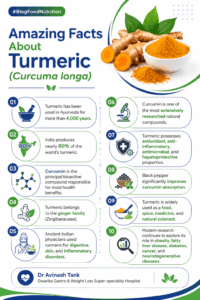
- Turmeric has been used in Ayurveda for more than 4,000 years.
- India produces nearly 80% of the world’s turmeric.
- Curcumin is the principal bioactive compound responsible for most health benefits.
- Turmeric belongs to the ginger family (Zingiberaceae).
- Ancient Indian physicians used turmeric for digestive, skin, and inflammatory disorders.
- Curcumin is one of the most extensively researched natural compounds.
- Turmeric possesses antioxidant, anti-inflammatory, antimicrobial, and hepatoprotective properties.
- Black pepper significantly improves curcumin absorption.
- Turmeric is widely used as a food, spice, medicine, and natural colorant.
- Modern research continues to explore its role in obesity, fatty liver disease, diabetes, cancer, and neurodegenerative diseases.
Introduction
Turmeric (Curcuma longa) is a bright yellow-orange spice obtained from the underground rhizome of a perennial herb belonging to the ginger family. It is one of the most important medicinal plants in Ayurveda and has been used for centuries in Indian households for cooking, wound healing, and disease prevention.
Today, turmeric is recognized worldwide for its therapeutic properties, primarily due to curcuminoids, especially curcumin.
Key Takeaways
- Supports digestive, liver, joint, heart, skin, brain, and immune health through antioxidant and anti-inflammatory effects.
- Curcumin is the primary active compound responsible for most researched benefits.
- Typical daily intake ranges from 1–3 grams of turmeric powder or 500–2000 mg of curcumin supplements.
- Combining turmeric with black pepper (piperine) and healthy fats can significantly improve curcumin absorption.
- Turmeric is generally safe when used in food amounts, but high-dose supplements may not be suitable for people with gallstones, bleeding disorders, or certain medical conditions.
- Excessive intake may cause digestive side effects such as nausea, stomach upset, diarrhea, or acid reflux.
Table of Contents
- Common Names of Turmeric in India
- Sanskrit Names of Turmeric
- Turmeric Cultivation in India
- Major Turmeric Producing States in India
- Turmeric Chemical Composition and Active Compounds
- Turmeric Nutritional Value and Nutrition Facts
- Health Benefits of Turmeric
- Turmeric for Digestive Health
- Turmeric for Liver Health
- Turmeric for Metabolic Health: Weight Management, Diabetes and Heart Health
- Turmeric for Joint Health and Arthritis
- Turmeric for Brain, Skin and Immune Health
- Recommended Turmeric Dosage
- How to Use Turmeric Daily
- Parts of Turmeric Used Medicinally
- Healthy Turmeric Recipes
- Turmeric Precautions and Safety Considerations
- Turmeric Side Effects
- Frequently Asked Questions About Turmeric
- Scientific References
Common Names of Turmeric in India
- Hindi: Haldi
- Gujarati: Haladar
- Marathi: Halad
- Bengali: Halud
- Tamil: Manjal
- Telugu: Pasupu
- Kannada: Arishina
- Malayalam: Manjal
- Punjabi: Haldi
Sanskrit Names of Turmeric
- Haridra
- Kanchani
- Gauri
- Nisha
- Krimighni
- Varvarnini
Turmeric Cultivation in India
Turmeric is cultivated extensively across tropical and subtropical regions of India. The crop thrives in warm temperatures, fertile soil, and adequate rainfall.
Major Turmeric Producing States in India
- Telangana
- Andhra Pradesh
- Maharashtra
- Karnataka
- Tamil Nadu
- Odisha
- West Bengal
- Assam
- Gujarat
- Kerala
India remains the world’s largest producer, consumer, and exporter of turmeric.
Turmeric Chemical Composition and Active Compounds
Turmeric contains more than 300 biologically active compounds.
Curcumin
Curcumin is the major active ingredient and contributes approximately 70–80% of total curcuminoids. It exhibits potent anti-inflammatory and antioxidant activities.
Demethoxycurcumin
This curcuminoid contributes additional antioxidant and anti-inflammatory properties.
Bisdemethoxycurcumin
Another important curcuminoid that enhances the therapeutic effects of turmeric.
Essential Oils
Turmeric contains aromatic oils such as:
- Zingiberene
- Atlantone
- Cineole
- Borneol
- Sabinene
These compounds contribute to its medicinal and aromatic properties.
Turmerones
Turmerones are bioactive compounds found in turmeric essential oil and may possess neuroprotective and anti-inflammatory effects.
Turmeric Nutritional Value and Nutrition Facts
Per 100 grams of turmeric powder:
| Nutrient | Amount |
| Energy | 354 kcal |
| Protein | 8 g |
| Fat | 10 g |
| Carbohydrates | 65 g |
| Fiber | 21 g |
| Calcium | 183 mg |
| Iron | 41 mg |
| Magnesium | 193 mg |
| Potassium | 2525 mg |
| Vitamin C | 25 mg |
Turmeric also contains numerous phytonutrients and antioxidants.
Health Benefits of Turmeric
Turmeric for Digestive Health
Turmeric has traditionally been used to support digestive function.
Potential benefits include:
- Improves bile secretion and fat digestion
- Reduces bloating and indigestion
- May improve symptoms of irritable bowel syndrome (IBS)
- Supports gut microbiota balance
Curcumin’s anti-inflammatory properties may help reduce gastrointestinal inflammation and support overall digestive health.
Turmeric for Liver Health
Turmeric is widely studied for liver support.
Potential benefits include:
- Reducing oxidative stress
- Protecting liver cells
- Supporting detoxification pathways
- Improving fatty liver disease markers
- Helping reduce liver inflammation
Several studies suggest curcumin supplementation may improve liver enzymes and reduce fat accumulation in individuals with non-alcoholic fatty liver disease (NAFLD).
Turmeric for Metabolic Health: Weight Management, Diabetes and Heart Health
Many metabolic disorders share underlying inflammation and oxidative stress, areas where curcumin may offer support.
Potential benefits include:
- Improving insulin sensitivity
- Supporting blood sugar control
- Protecting pancreatic beta cells
- Enhancing metabolic health and fat metabolism
- Improving endothelial function and vascular health
- Reducing oxidative stress and inflammation
- Supporting healthy lipid profiles
Although turmeric alone is unlikely to produce significant weight loss, it may complement a healthy diet, exercise program, and medical treatment. It should not replace prescribed medications for diabetes or cardiovascular disease.
Turmeric for Joint Health and Arthritis
One of turmeric’s most researched applications is joint health.
Potential benefits include:
- Reducing joint inflammation
- Decreasing pain
- Improving mobility
- Supporting osteoarthritis management
Several studies have reported benefits comparable to some anti-inflammatory medications in selected patients.
Turmeric for Brain, Skin and Immune Health
Turmeric’s antioxidant and anti-inflammatory properties may support multiple body systems.
Potential benefits include:
Brain Health
- Antioxidant protection
- Reduced neuroinflammation
- Support for cognitive function and healthy aging
- Potential role in neurodegenerative diseases
Skin Health
- Support for wound healing
- Reduction of inflammation
- Potential benefits for acne and skin appearance
- Protection against oxidative damage
Immune Health
- Modulation of immune responses
- Protection against oxidative stress
- Support for overall wellness
Research in these areas remains ongoing.
Recommended Turmeric Dosage
There is no universally accepted dose for all individuals.
General recommendations:
Turmeric Powder
- 1–3 grams daily
Curcumin Supplements
- 500–2000 mg daily
Higher doses should be taken only under medical supervision.
Curcumin is better absorbed when consumed with:
- Black pepper (piperine)
- Healthy fats
- Specialized formulations
How to Use Turmeric Daily
Turmeric can be incorporated into daily life in several ways:
- Added to curries, soups, and rice dishes
- Used in herbal teas or golden milk
- Blended into smoothies
- Taken as capsules or supplements
Combining turmeric with black pepper significantly improves absorption.
Parts of Turmeric Used Medicinally
The primary medicinal part is:
Rhizome
Used in:
- Fresh form
- Dried form
- Powder form
- Extract form
- Essential oil form
Healthy Turmeric Recipes
Golden Milk
Ingredients
- 1 cup milk
- ½ teaspoon turmeric
- Pinch of black pepper
- Honey (optional)
Method
Heat milk, add turmeric and pepper, stir well, and serve warm.
Turmeric Tea
Ingredients
- Water
- Turmeric powder
- Ginger
- Lemon
Method
Boil ingredients for 10 minutes and strain.
Turmeric Smoothie
Blend:
- Banana
- Yogurt
- Turmeric
- Cinnamon
- Almonds
Turmeric Rice
Add turmeric while cooking rice to enhance color, flavor, and nutritional value.
Immunity Drink
Mix:
- Warm water
- Turmeric
- Ginger
- Lemon juice
- Honey
Consume fresh.
Turmeric Precautions and Safety Considerations
Exercise caution if you have:
- Gallstones
- Bile duct obstruction
- Bleeding disorders
- Severe liver disease
- Planned surgery
- Pregnancy (high-dose supplements)
Always discuss supplementation with a healthcare professional if you are taking medications.
Turmeric Side Effects
Turmeric is generally safe when consumed in food quantities.
Excessive intake may cause:
- Nausea
- Stomach upset
- Diarrhea
- Acid reflux
- Headache
- Dizziness
Rarely:
- Increased bleeding tendency
- Allergic reactions
- Kidney stone risk in susceptible individual