

Reading Time: 4 minutes
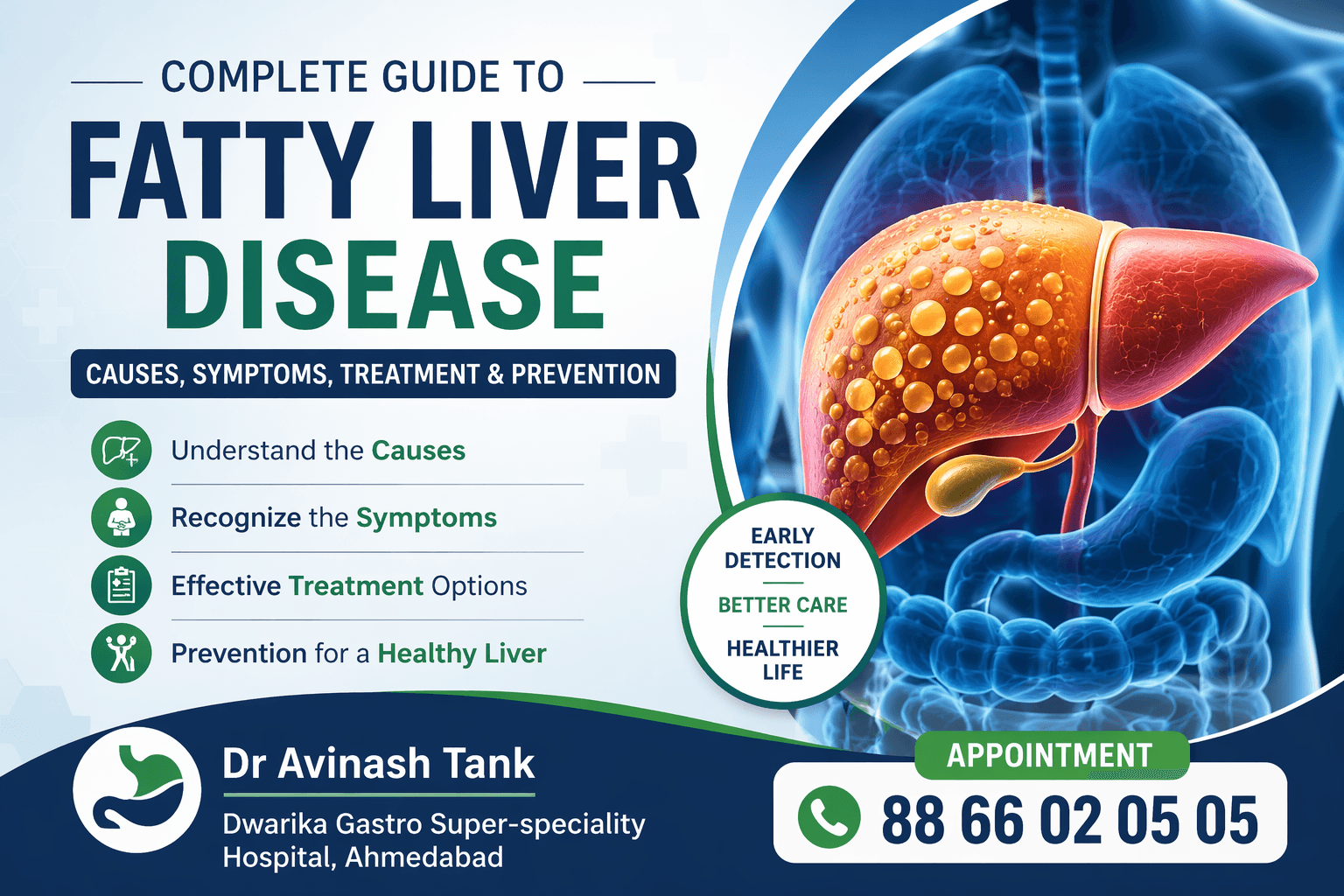
Fatty Liver Disease: Complete Guide to Causes, Symptoms, Treatment & Prevention (2026)
Dr. Avinash Tank (MS, MCh, SGPGIMS)
Dwarika Gastro & Obesity Care Super-speciality Hospital, Ahmedabad
Introduction: Why Fatty Liver Disease is a Silent Epidemic
Fatty liver disease has quietly become one of the most common health problems in India, especially in urban cities like Ahmedabad. What makes it dangerous is that most people don’t even realize they have it until it progresses to a serious stage.
Earlier, liver disease was mostly associated with alcohol consumption. However, today, a large number of patients suffering from fatty liver do not consume alcohol at all. This condition is known as Non-Alcoholic Fatty Liver Disease (NAFLD), and it is strongly linked with modern lifestyle habits.
With increasing obesity, diabetes, sedentary lifestyle, and unhealthy diets, fatty liver disease is now affecting even young adults and teenagers.
What is Fatty Liver Disease?
Fatty liver disease occurs when excess fat accumulates in liver cells. A healthy liver contains very little fat, but when fat exceeds 5–10% of liver weight, it is termed fatty liver.
There are two main types:
1. Non-Alcoholic Fatty Liver Disease (NAFLD)
- Occurs in people who drink little or no alcohol
- Most common type in India
- Associated with obesity and diabetes
2. Alcoholic Fatty Liver Disease (AFLD)
- Caused due to excessive alcohol intake
- Can progress rapidly if alcohol consumption continues
Stages of Fatty Liver Disease
Fatty liver progresses gradually. Understanding stages helps in early intervention:
Grade 1 (Mild Fatty Liver)
- Fat accumulation begins
- Usually reversible
- No major symptoms
Grade 2 (Moderate Fatty Liver)
- Increased fat with inflammation
- Early liver damage may begin
Grade 3 (Severe Fatty Liver)
- Significant fat and inflammation
- High risk of complications
NASH (Non-Alcoholic Steatohepatitis)
- Advanced stage of NAFLD
- Inflammation + liver cell damage
- Permanent liver scarring
- Can lead to liver failure or cancer
Causes of Fatty Liver Disease
Fatty liver is primarily a lifestyle-related disease. The most common causes include:
1. Obesity
Excess body fat leads to fat deposition in the liver.
2. Type 2 Diabetes
High blood sugar increases fat accumulation.
3. High Cholesterol & Triglycerides
Dyslipidemia plays a major role in liver fat buildup.
4. Sedentary Lifestyle
Lack of physical activity reduces fat metabolism.
5. Unhealthy Diet
- Junk food
- Refined carbohydrates
- Sugary beverages
6. Rapid Weight Loss
Sudden fat breakdown can overload the liver.
7. Hormonal Disorders
Conditions like PCOS are linked with fatty liver.
Symptoms of Fatty Liver Disease
Fatty liver is often called a “silent disease” because symptoms are minimal in early stages.
Early Symptoms:
However, as the condition progresses, patients may experience:
- Fatigue and weakness
- Mild pain or heaviness in right upper abdomen
- Bloating
- Loss of appetite
- Unexplained weight gain or difficulty losing weight
Advanced Symptoms
- Jaundice
- Swelling in legs
- Abdominal fluid (ascites)
Diagnosis of Fatty Liver Disease
Early diagnosis is key to reversing fatty liver.
1. Ultrasound Abdomen
Most common and initial test.
2. Liver Function Tests (LFT)
May show elevated liver enzymes.
3. Fibroscan
Measures liver stiffness and fat content.
4. CT Scan / MRI
Used in selected cases.
5. Liver Biopsy
Gold standard but rarely needed.
Complications of Untreated Fatty Liver
Ignoring fatty liver can lead to serious complications:
- NASH
- Liver fibrosis
- Cirrhosis
- Liver failure
- Liver cancer
Fatty liver is also associated with:
- Heart disease
- Stroke
- Kidney disease
Can Fatty Liver Be Reversed?
Yes, fatty liver—especially in early stages—is completely reversible.
The liver has a remarkable ability to heal itself if the right steps are taken.
Treatment of Fatty Liver Disease
There is no single “magic pill” for fatty liver. Treatment focuses on lifestyle correction.
1. Weight Loss
- Aim for 7–10% body weight reduction
- Gradual weight loss is safest
2. Diet Modification
- Reduce sugar and refined carbs
- Increase protein intake
- Avoid processed food
3. Exercise
- At least 150 minutes/week
- Combination of cardio + strength training
4. Control Diabetes & Cholesterol
Strict medical management is essential.
5. Avoid Alcohol
Even small amounts can worsen liver damage.
Best Diet for Fatty Liver (Indian Context)
Foods to Include
- Green vegetables
- Fruits (low glycemic)
- Whole grains
- Nuts and seeds
- Lean protein (dal, paneer, eggs)
Foods to Avoid
- Fried food
- Bakery items
- Sugary drinks
- White bread and maida
Sample Daily Diet Plan
Morning
- Warm water + lemon
- 5 soaked almonds
Breakfast
- Vegetable poha / oats
Mid-Morning
- Fruit (apple / papaya)
Lunch
- 2 roti + dal + sabzi + salad
Evening
- Green tea + roasted chana
Dinner
- Light meal (soup + salad + protein)
Role of Exercise in Fatty Liver
Exercise improves insulin sensitivity and reduces liver fat.
Recommended Activities
- Brisk walking
- Cycling
- Swimming
- Yoga
Consistency matters more than intensity.
Myths About Fatty Liver
Myth 1: Only alcohol causes fatty liver
Truth: NAFLD is more common than alcohol-related liver disease.
Myth 2: Fatty liver is harmless
Truth: It can lead to cirrhosis and cancer.
Myth 3: Medicines alone can cure fatty liver
Truth: Lifestyle change is the cornerstone.
Fatty Liver in India: Why Cases Are Increasing
India is witnessing a surge in fatty liver due to:
- Urban lifestyle
- High-carb diets
- Increasing obesity
- Rising diabetes cases
Even non-obese individuals (lean NAFLD) are at risk.
Prevention Tips for Fatty Liver
- Maintain ideal body weight
- Exercise regularly
- Eat a balanced diet
- Avoid alcohol
- Regular health check-ups
When Should You See a Doctor?
Consult a gastroenterologist if you have:
- Persistent fatigue
- Abnormal liver tests
- Obesity or diabetes
- Ultrasound showing fatty liver
Early consultation can prevent complications.
Expert Advice from Dr. Avinash Tank
Fatty liver is not just a liver disease—it is a metabolic warning sign. If ignored, it can lead to serious health issues.
The good news is that with timely diagnosis and proper lifestyle changes, it is completely reversible in most patients.
Conclusion
Fatty Liver Disease: Complete Guide to Causes, Symptoms, Treatment & Prevention. Fatty liver disease is a growing health concern, but it is also one of the most preventable and reversible conditions.
The key lies in:
- Awareness
- Early detection
- Lifestyle modification
Taking action today can protect your liver for a lifetime.
FAQs on Fatty Liver Disease
1. Can fatty liver go away completely?
Yes, especially in early stages with proper lifestyle changes.
2. How long does it take to reverse fatty liver?
Usually 3–6 months with strict diet and exercise.
3. Is fatty liver dangerous?
If untreated, it can lead to cirrhosis and liver failure.
4. Which doctor should I consult?
A gastroenterologist or liver specialist.
Call to Action (For Website Conversion)
If you or your loved ones are diagnosed with fatty liver, don’t ignore it.