

Five Traffic Violations in a Year? Government Tightens Traffic Rules to Improve Road Safety. Why Stronger Traffic Laws Matter for Preventing Serious Abdominal Injuries and Road Accident Deaths
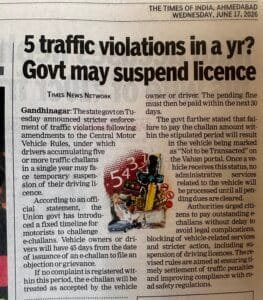
Source: The Times of India (Ahmedabad Edition), June 17, 2026
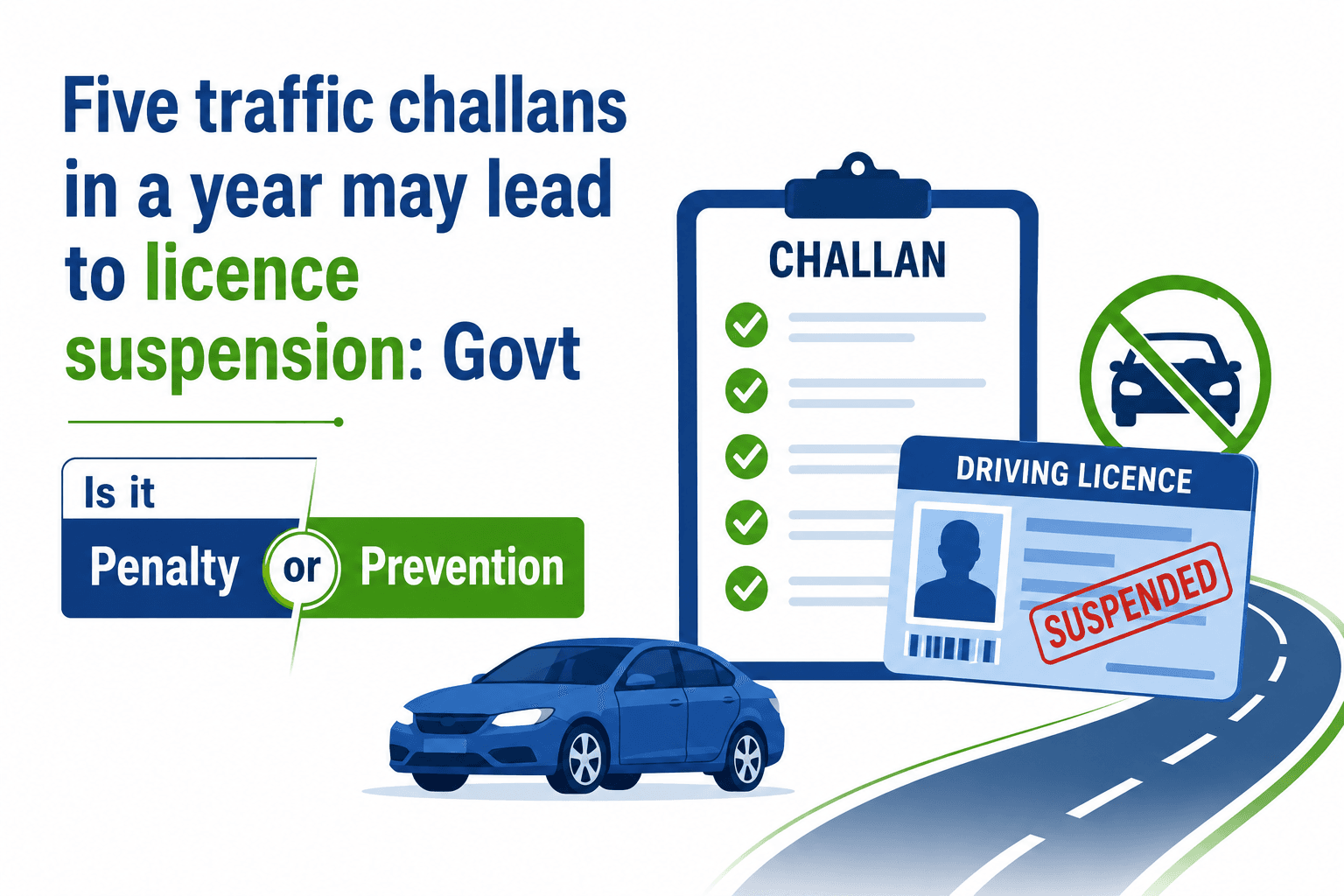
“Five traffic challans in a year may lead to licence suspension: Govt”
By Dr. Avinash Tank (MS, MCh, SGPGIMS)
Liver, Gastrointestinal & Obesity Surgeon
Dwarika Gastro & Weight Loss Superspeciality Hospital, Ahmedabad
The Government of India has recently announced stricter enforcement of traffic regulations under amendments to the Central Motor Vehicle Rules.
As news published in TOI, according to the new provisions, drivers accumulating five or more traffic challans within a single year may face temporary suspension of their driving licence.
The revised framework also introduces a structured timeline for handling e-challans.
Vehicle owners and drivers will have a limited period to challenge or dispute traffic penalties. Failure to pay pending challans may result in restrictions on vehicle-related services.
At first glance, this may appear to be an administrative measure focused solely on traffic discipline.
However, from a healthcare perspective, particularly in trauma and emergency surgery, these regulations have a much larger purpose: preventing road traffic accidents, reducing disability, and saving lives.
Every day, surgeons across India treat patients whose lives change forever because of a momentary lapse in road safety.
Behind every traffic violation lies a potential tragedy involving severe injuries to the liver, spleen, pancreas, intestines, and other vital organs.
The government’s move should therefore be viewed not merely as a punitive measure but as a public health intervention aimed at reducing preventable deaths and serious trauma.
Road Traffic Accidents: A Silent Public Health Emergency
India records one of the highest numbers of road traffic accidents globally.
While media reports often focus on fatalities, the burden of non-fatal injuries is equally alarming.
Thousands of individuals survive accidents only to face prolonged hospitalization, multiple surgeries, lifelong disabilities, and significant financial hardship.
Road accidents affect:
- Young working professionals
- Students
- Breadwinners of families
- Senior citizens
- Pedestrians
- Two-wheeler riders
Many victims are healthy individuals whose lives are abruptly disrupted by a preventable collision.
Every emergency surgeon understands that most major trauma cases are not random events. They frequently result from:
- Overspeeding
- Signal jumping
- Drunk driving
- Mobile phone use while driving
- Helmet non-compliance
- Seatbelt negligence
- Reckless overtaking
- Wrong-side driving
These behaviors often begin as traffic violations and eventually culminate in catastrophic injuries.
Why Five Traffic Violations Should Be Taken Seriously
Many drivers consider traffic challans as minor inconveniences.
However, repeated traffic violations often indicate a pattern of unsafe driving behavior.
Research consistently demonstrates that drivers with multiple violations have a significantly higher risk of being involved in serious accidents.
Five traffic challans in a year may reflect:
- Habitual overspeeding
- Repeated signal violations
- Dangerous driving practices
- Lack of road safety awareness
- Disregard for traffic regulations
The proposed suspension serves as an early warning system.
Instead of waiting for a serious accident to occur, authorities are attempting to identify high-risk drivers and intervene before lives are lost.
From a public health standpoint, prevention is always better than emergency treatment.
The Human Cost Behind Every Road Accident
When emergency services bring an accident victim to a hospital, doctors rarely see a simple injury.
High-impact collisions often produce multiple injuries simultaneously.
These may include:
- Head injury
- Chest trauma
- Rib fractures
- Limb fractures
- Internal bleeding
- Organ rupture
In severe cases, patients arrive in shock due to uncontrolled internal hemorrhage.
Minutes become critical.
Immediate diagnosis and specialized surgical care often determine whether a patient survives.
Hidden Injuries: The Dangerous Reality of Internal Organ Damage
One of the greatest dangers following a road accident is internal organ injury.
Unlike external wounds, internal injuries may not be immediately visible.
A patient may appear stable initially and deteriorate rapidly within hours.
Commonly injured abdominal organs include:
Liver
The liver is the largest solid organ in the abdomen and highly susceptible to blunt trauma.
Spleen
The spleen is particularly vulnerable during high-speed collisions.
Pancreas
Pancreatic injuries are less common but extremely serious.
Small Intestine and Large Intestine
Bowel injuries may cause leakage of intestinal contents into the abdominal cavity.
Mesentery
Blood vessels supplying the intestines can tear, causing massive bleeding.
Diaphragm
High-impact accidents may rupture the diaphragm.
Each of these injuries can become life-threatening without timely treatment.
Liver Injury: One of the Most Common Fatal Abdominal Injuries
The liver receives a large blood supply.
During road accidents, especially those involving motorcycles and cars, the liver can sustain:
- Contusions
- Lacerations
- Deep tears
- Major vascular injuries
Patients may develop:
- Severe internal bleeding
- Shock
- Multi-organ failure
Symptoms may include:
- Right upper abdominal pain
- Dizziness
- Falling blood pressure
- Rapid pulse
- Abdominal distension
Without rapid intervention, significant liver injuries can be fatal.
Splenic Rupture: The Hidden Killer
The spleen is located in the upper left side of the abdomen.
Blunt trauma can cause:
- Splenic tears
- Splenic rupture
- Massive internal hemorrhage
A patient may initially appear well but collapse hours later due to ongoing bleeding.
Warning signs include:
- Left-sided abdominal pain
- Shoulder pain
- Weakness
- Low blood pressure
- Fainting episodes
Early diagnosis through ultrasound and CT scan is critical.
Pancreatic Injuries: Rare but Extremely Complex
Pancreatic trauma often occurs when the abdomen strikes:
- Motorcycle handlebars
- Steering wheels
- Dashboard structures
The pancreas lies deep within the abdomen, making diagnosis challenging.
Delayed detection may lead to:
- Pancreatic leaks
- Abscess formation
- Severe infection
- Organ failure
These injuries frequently require advanced surgical expertise and prolonged treatment.
Intestinal Injuries Can Become Life-Threatening
Road accidents can tear the intestines or disrupt their blood supply.
If untreated, intestinal contents leak into the abdominal cavity.
This causes:
- Peritonitis
- Severe infection
- Septic shock
- Multi-organ failure
Early recognition significantly improves outcomes.
Why Early Trauma Care Saves Lives
The first hour after a major accident is often called the “Golden Hour.”
During this period, rapid assessment and treatment can dramatically improve survival.
Key steps include:
- Ambulance stabilization
- Trauma evaluation
- FAST ultrasound
- CT scanning
- Blood transfusion
- Emergency surgery when required
Delay in reaching a specialized center can increase complications and mortality.
Modern Trauma Management Has Improved Survival
Advances in trauma care now allow many patients to survive injuries that were once fatal.
These advances include:
Advanced Imaging
Rapid CT scans identify hidden injuries.
Interventional Radiology
Bleeding vessels can sometimes be controlled without open surgery.
Damage Control Surgery
Life-saving operations focus on controlling bleeding and contamination.
Intensive Care Support
Modern ICUs provide sophisticated monitoring and organ support.
Minimally Invasive Techniques
Selected injuries can be managed using laparoscopic approaches.
However, these technologies are only effective when patients reach specialized centers in time.
Prevention Is Better Than Trauma Surgery
As surgeons, we witness the devastating consequences of road accidents daily.
Families often ask:
“Could this accident have been prevented?”
In many cases, the answer is yes.
Simple measures save lives:
- Wear helmets correctly
- Use seatbelts consistently
- Avoid speeding
- Never drink and drive
- Avoid mobile phone use while driving
- Follow traffic signals
- Maintain safe distance
- Ensure vehicle maintenance
The new traffic regulations aim to encourage exactly these behaviors.
How Stricter Traffic Enforcement Can Reduce Hospital Admissions
Studies worldwide have demonstrated that stricter traffic enforcement leads to:
- Fewer collisions
- Reduced fatalities
- Lower trauma admissions
- Reduced healthcare costs
- Improved public safety
When drivers understand that repeated violations can lead to licence suspension, they are more likely to comply with traffic rules.
The ultimate beneficiaries are not government agencies but ordinary citizens and their families.
The Economic Impact of Road Accidents
Road accidents create enormous financial burdens.
Costs include:
Direct Medical Costs
- Emergency treatment
- Surgery
- ICU care
- Rehabilitation
Indirect Costs
- Loss of income
- Disability
- Long-term caregiving
- Psychological trauma
For many families, a serious accident becomes both a medical and financial crisis.
Preventing accidents is therefore an investment in national productivity and family wellbeing.
Dwarika Gastro & Weight Loss Superspeciality Hospital: Advanced Care for Abdominal Trauma
While prevention remains the primary goal, specialized medical care becomes essential when accidents occur.
At Dwarika Gastro & Weight Loss Superspeciality Hospital, Ahmedabad, patients with complex abdominal injuries can access advanced gastro-surgical evaluation and treatment.
The hospital offers expertise in:
- Liver surgery
- Pancreatic surgery
- Gastrointestinal surgery
- Advanced laparoscopic surgery
- Emergency abdominal surgery
- Critical care support
Dr. Avinash Tank: Expertise in Complex Gastrointestinal and Hepatopancreatobiliary Surgery
Dr. Avinash Tank (MS, MCh, SGPGIMS) is a super-specialist Gastrointestinal, Liver, Pancreatic and Obesity Surgeon with extensive experience in managing complex abdominal conditions.
His training includes advanced fellowships in:
- Liver surgery
- Liver transplantation
- Pancreatic surgery
- Advanced laparoscopic surgery
- Bariatric surgery
Patients requiring specialized evaluation for liver, spleen, pancreatic or intestinal injuries may benefit from expert gastro-surgical consultation and multidisciplinary care.
A Message for Every Driver
A traffic challan is not merely a fine.
It is a warning.
Repeated violations indicate behaviors that may eventually cause serious injury or death.
The government’s decision to consider licence suspension after multiple traffic violations should be viewed as an opportunity to improve road safety rather than a punishment.
Every avoided accident means:
- A life saved
- A family protected
- A disability prevented
- A hospital admission avoided
- A surgery that never becomes necessary
Road safety begins with personal responsibility.
Conclusion
The proposed suspension of licences for drivers accumulating five or more traffic violations in a year represents an important step toward safer roads in India. While the policy may initially appear strict, its broader objective is to reduce preventable accidents, serious injuries, and fatalities.
As trauma surgeons and healthcare professionals, we see firsthand the devastating consequences of reckless driving. Severe injuries to the liver, spleen, pancreas, intestines, and other abdominal organs often require emergency intervention and can leave lasting physical, emotional, and financial scars.
Traffic regulations are not barriers to freedom—they are safeguards designed to protect lives.
The safest accident is the one that never happens.
Need Expert Gastro-Surgical Care After Abdominal Injury?
If you or your loved one experiences abdominal trauma following a road accident, timely specialist evaluation can be lifesaving.
Consult Dr. Avinash Tank
MS, MCh (SGPGIMS)
Super-specialist Liver, Gastrointestinal & Obesity Surgeon
Dwarika Gastro & Weight Loss Superspeciality Hospital
South Bopal, Ahmedabad
Services
✔ Liver & Pancreatic Surgery
✔ Gastrointestinal Surgery
✔ Emergency Abdominal Surgery
✔ Advanced Laparoscopic Surgery
✔ Bariatric & Metabolic Surgery
✔ Endoscopy & Colonoscopy Services
Appointment & Emergency Consultation
Websites
🌐 www.dravinashtank.in
🌐www.dwarikahospital.com
Early diagnosis. Timely surgery. Better outcomes.
For expert evaluation of liver, spleen, pancreatic, intestinal and other complex abdominal conditions, contact Dwarika Gastro & Weight Loss Superspeciality Hospital, Ahmedabad. Five Traffic Violations in a Year? Government Tightens Traffic Rules to Improve Road Safety.