

Reading Time: 5 minutes
Gallbladder Stones: A Silent Warning Sign for Future Heart Attack? What Every Patient Should Know
Quick Answer
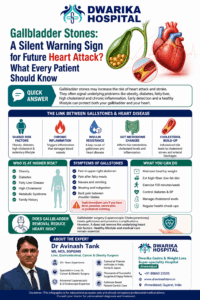
Gallbladder stones may be more than just a digestive problem. Multiple large studies have found that people with gallstone disease have a significantly higher risk of developing cardiovascular diseases such as heart attacks and strokes.
While gallstones do not directly cause heart attacks, they often indicate underlying metabolic problems including obesity, diabetes, fatty liver disease, inflammation, and insulin resistance, all of which contribute to cardiovascular risk.
Recent analyses suggest that gallstone patients may have approximately 20–30% higher cardiovascular risk compared with individuals without gallstones. (Dravinashtank)
Key Takeaways
- Gallbladder stones and heart disease share common risk factors.
- Patients with gallstones may have a higher future risk of heart attack and stroke.
- Obesity, diabetes, fatty liver disease, and insulin resistance link both conditions.
- Chronic inflammation may contribute to cardiovascular damage.
- Gallstones should be considered a metabolic warning sign.
- Weight management may reduce the risk of both conditions.
- Gallbladder surgery treats gallstones but does not eliminate cardiovascular risk.
- Regular health screening is important in patients with gallstone disease.

Introduction
Most people think of gallbladder stones as a simple surgical problem that causes abdominal pain after meals.
However, emerging research suggests that gallstones may represent something much more important: an early warning sign of future cardiovascular disease.
Over the past decade, several international studies involving millions of patients have identified a consistent relationship between gallstone disease and an increased risk of heart attack, stroke, and other cardiovascular events.
Researchers now believe that gallstones and cardiovascular disease may be different manifestations of the same underlying metabolic dysfunction. (PMC)
For patients, this raises an important question:
Could your gallstones be warning you about your heart health?
What Are Gallbladder Stones?
Gallbladder stones, also known as gallstones or cholelithiasis, are hardened deposits that form inside the gallbladder.
The gallbladder is a small organ located beneath the liver. Its primary function is to store bile, which helps digest dietary fats.
When bile becomes imbalanced, cholesterol and other substances may crystallize and form stones.
Types of Gallstones
Cholesterol Stones
- Most common type
- Usually yellow-green
- Associated with obesity and metabolic syndrome
Pigment Stones
- Dark-colored stones
- More common in liver disease and blood disorders
Mixed Stones
- Combination of cholesterol and pigment components
How Common Are Gallstones?
Gallstones affect millions of people worldwide.
Studies estimate that approximately 10–15% of adults develop gallstones during their lifetime. The prevalence is increasing alongside obesity, diabetes, and sedentary lifestyles. (PLOS)
The Groundbreaking Link Between Gallstones and Heart Disease
Recent international research has demonstrated a significant association between gallstone disease and cardiovascular disease.
A major analysis involving over 200,000 gallstone patients found a 23% increased risk of cardiovascular disease among individuals with gallstones. (Dravinashtank)
A newer 2025 meta-analysis involving more than 7.4 million participants reported a 29% increased risk of cardiovascular disease among patients with gallstone disease. (PLOS)
These findings remained significant even after adjusting for:
- Age
- Sex
- Obesity
- Diabetes
- Smoking
- Cholesterol levels
- Physical activity
This suggests that gallstones may be an independent marker of cardiovascular risk. (Dravinashtank)
Why Might Gallbladder Stones Increase Heart Attack Risk?
1. Shared Risk Factors
Both gallstones and heart disease frequently occur in patients with:
| Common Risk Factors |
| Obesity |
| Diabetes |
| High Cholesterol |
| Fatty Liver Disease |
| Metabolic Syndrome |
| Sedentary Lifestyle |
These conditions promote both gallstone formation and atherosclerosis.
2. Chronic Inflammation
Gallstone disease may trigger low-grade chronic inflammation.
Inflammation contributes to:
- Arterial damage
- Plaque formation
- Blood vessel dysfunction
- Heart attacks
Researchers believe inflammation may be one of the strongest biological links between the gallbladder and the cardiovascular system. (PLOS)
3. Insulin Resistance
Insulin resistance is central to both diseases.
It promotes:
- Cholesterol supersaturation in bile
- Gallstone formation
- Obesity
- Diabetes
- Coronary artery disease
4. Gut Microbiome Changes
Recent studies suggest that alterations in gut bacteria may affect:
- Cholesterol metabolism
- Bile acid production
- Systemic inflammation
These changes may influence both gallstones and cardiovascular disease. (Tulane University News)
Symptoms of Gallstones
Many gallstones remain silent for years.
When symptoms occur, they may include:
| Symptom | Description |
| Upper abdominal pain | Usually right-sided |
| Pain after fatty meals | Common presentation |
| Nausea | Frequently associated |
| Vomiting | May occur during attacks |
| Bloating | Common digestive complaint |
| Indigestion | Often mistaken for acidity |
Red Flag Symptoms Requiring Immediate Attention
Seek urgent medical evaluation if you develop:
- Fever
- Jaundice
- Severe abdominal pain
- Persistent vomiting
- Pancreatitis symptoms
- Dark urine
- Pale stools
Who Is Most At Risk?
High-Risk Groups
Obesity
One of the strongest risk factors for both gallstones and cardiovascular disease.
Diabetes
Diabetic patients have a significantly increased risk of gallstone formation.
Fatty Liver Disease
Frequently coexists with gallstones and heart disease.
Women Over 40
Hormonal influences increase gallstone risk.
Rapid Weight Loss
Sudden weight reduction may promote gallstone formation.
Can Gallbladder Removal Reduce Heart Risk?
The answer is complex.
Recent studies suggest that patients who undergo cholecystectomy may experience lower cardiovascular risk compared with patients who continue to have active symptomatic gallstones. However, surgery should not be considered a treatment for heart disease. (Dravinashtank)
Gallbladder surgery treats:
- Gallstone pain
- Cholecystitis
- Pancreatitis
- Bile duct obstruction
It does not eliminate:
- Obesity
- Diabetes
- Insulin resistance
- High cholesterol
These underlying conditions must still be addressed.
How to Protect Both Your Gallbladder and Heart
Maintain a Healthy Weight
Even modest weight loss improves metabolic health.
Follow a High-Fiber Diet
Include:
- Fruits
- Vegetables
- Whole grains
- Legumes
Exercise Regularly
Aim for at least:
150 minutes per week
Control Diabetes
Good blood sugar control benefits both the gallbladder and heart.
Manage Cholesterol
Regular screening and treatment may reduce long-term risk.
Myths vs Facts
Myth:
Gallstones only affect digestion.
Fact:
They may signal broader metabolic and cardiovascular risk.
Myth:
Gallbladder surgery eliminates all future risk.
Fact:
Underlying metabolic abnormalities remain.
Myth:
Only overweight individuals develop gallstones.
Fact:
Gallstones can occur in individuals of normal weight.
Expert Insights from Dr. Avinash Tank
In my surgical practice, I frequently encounter patients who view gallstones as an isolated digestive problem. Modern evidence suggests we should think differently.
Gallstones often represent a metabolic alarm bell. Many patients simultaneously have fatty liver disease, obesity, diabetes, elevated cholesterol, and increased cardiovascular risk.
When gallstones are diagnosed, it provides an excellent opportunity to assess overall metabolic health and implement preventive strategies before more serious cardiovascular complications develop.
Frequently Asked Questions
Can gallstones directly cause a heart attack?
No. Gallstones do not directly cause heart attacks, but they are associated with higher cardiovascular risk.
Are gallstones a warning sign of heart disease?
They may act as a warning sign of underlying metabolic abnormalities linked to heart disease.
Can fatty liver and gallstones occur together?
Yes. These conditions commonly coexist.
Should gallstone patients undergo cardiac evaluation?
Patients with multiple cardiovascular risk factors should discuss screening with their physician.
Does gallbladder surgery prevent heart attacks?
May be Yes according to latest study. More studies are needed before it’s accepted universally.
Related Articles
Disease Hub
Gallbladder Disease: Complete Patient Guide
Service Page
Laparoscopic Gallbladder Stone Surgery
Related Blogs
- Gallstone Symptoms
- Gallstones treatment in Children
- Gallbladder Diet After Surgery
- Silent Gallstones: Should They Be Removed?
Author
Dr. Avinash Tank, MS, MCh (SGPGIMS)
Liver, Gastrointestinal, Cancer & Obesity Surgeon
Director, Dwarika Gastro & Weight Loss Superspeciality Hospital, Ahmedabad
More than 20 years of experience in advanced laparoscopic, hepatobiliary, gastrointestinal, obesity and cancer surgery.
References
- Fairfield CJ et al. Gallstone disease and cardiovascular disease association. Scientific Reports. (Dravinashtank)
- Hasan R et al. Gallstones as a predictor of elevated cardiovascular disease risk: Meta-analysis of over 7.4 million participants. PLOS ONE 2025. (PLOS)
- Tulane University cardiovascular risk analysis involving over 840,000 participants. (Tulane University News)